Streamlining Development: itch.io Integrates Butler CLI into Desktop App with New GUI
The landscape of indie game development is constantly evolving, with tools becoming more sophisticated and user-friendly. For developers on the itch.io platform, the process of pushing updates—once a task reserved for those comfortable with command-line interfaces—has just undergone a significant transformation. In a major update to the official itch.io desktop application, the platform has integrated "Butler," its proprietary command-line tool, directly into a user-friendly Graphical User Interface (GUI). This development marks a pivotal shift in how creators manage their projects, promising to save time, reduce bandwidth consumption, and lower the barrier to entry for developers who previously found terminal-based workflows intimidating.
The Evolution of Deployment: From CLI to GUI
For years, Butler has served as the backbone of the itch.io distribution network. Unlike standard browser-based uploads, which require developers to manually package, compress, and upload entire game files, Butler operates on a patch-based architecture. When a developer pushes a build, Butler analyzes the project, compares the current files against the previous iteration, and transmits only the delta—the specific data that has changed.
This mechanism is not just a convenience; it is a fundamental efficiency tool. By only uploading the modified bytes, developers can significantly reduce the time spent waiting for uploads to complete. Furthermore, the benefit extends to the end-user. When a player receives an update through the itch.io app, they download a lightweight patch rather than a full reinstall. This results in faster download speeds and minimal data usage, a critical advantage for games that receive frequent hotfixes or content updates.
However, despite its power, Butler was historically restricted to the command line. This created a bifurcated ecosystem: developers who were proficient with terminals enjoyed the speed and efficiency of the system, while those who preferred a visual, drag-and-drop experience were forced to rely on traditional, slower upload methods. With the latest update to the itch.io app (version v26.12.0 and higher), this gap has been effectively bridged.
Chronology of the Update: A Seamless Transition
The integration of the Butler GUI did not happen overnight. It represents the culmination of a long-term strategy to unify the developer experience within the itch.io ecosystem.
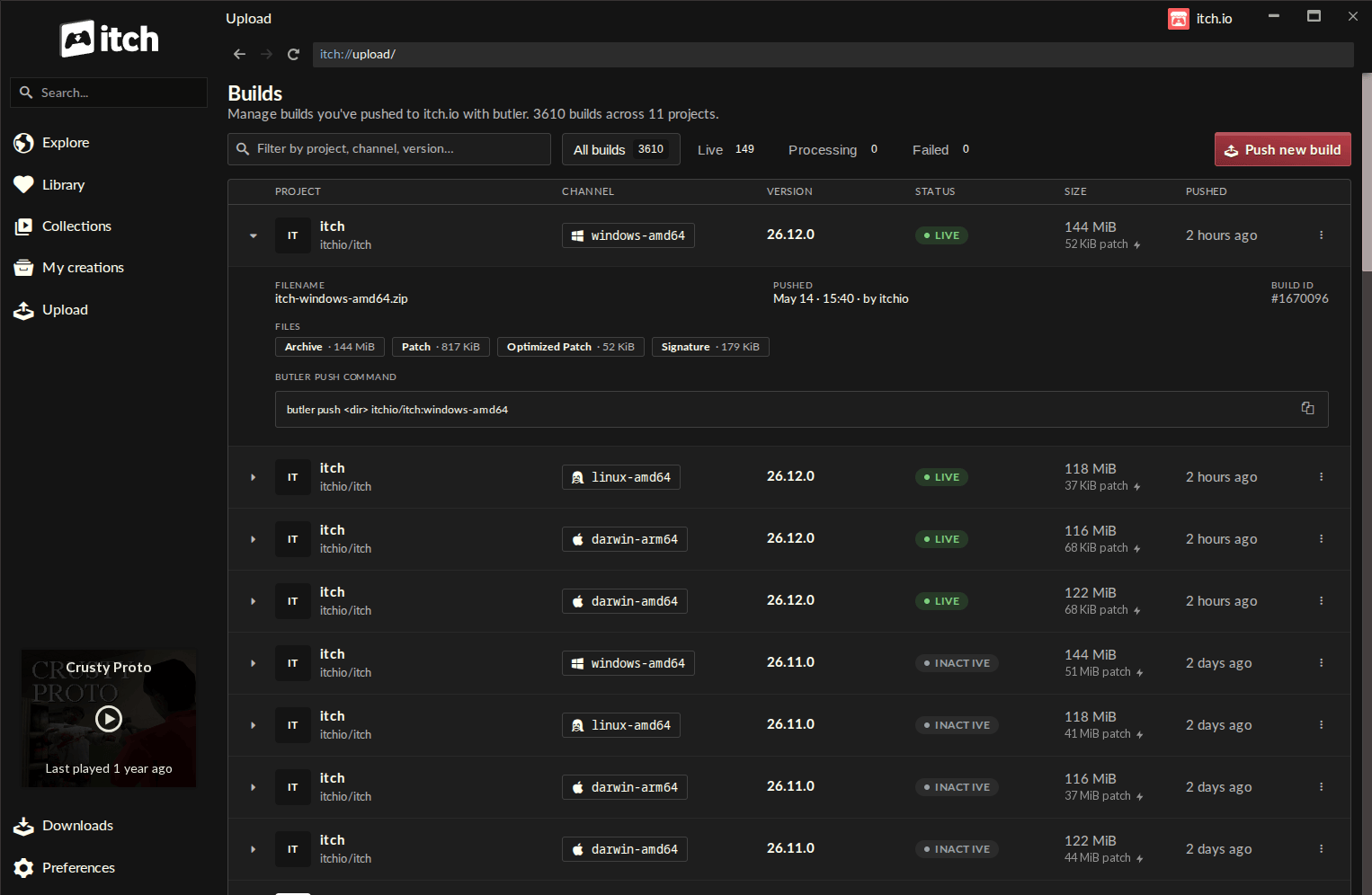
- The Butler Era (The Foundation): Since its inception, Butler established itself as the gold standard for itch.io developers. By introducing the concept of "channels" (such as
windows-betaorlinux-arm64), it allowed for sophisticated version management that browser uploads struggled to replicate. - The Development Phase: The itch.io engineering team identified that while the CLI was robust, its "fiddly" nature—prone to human error and intimidating for newcomers—was a hurdle. The team began working on an internal GUI that would wrap the existing Butler functionality.
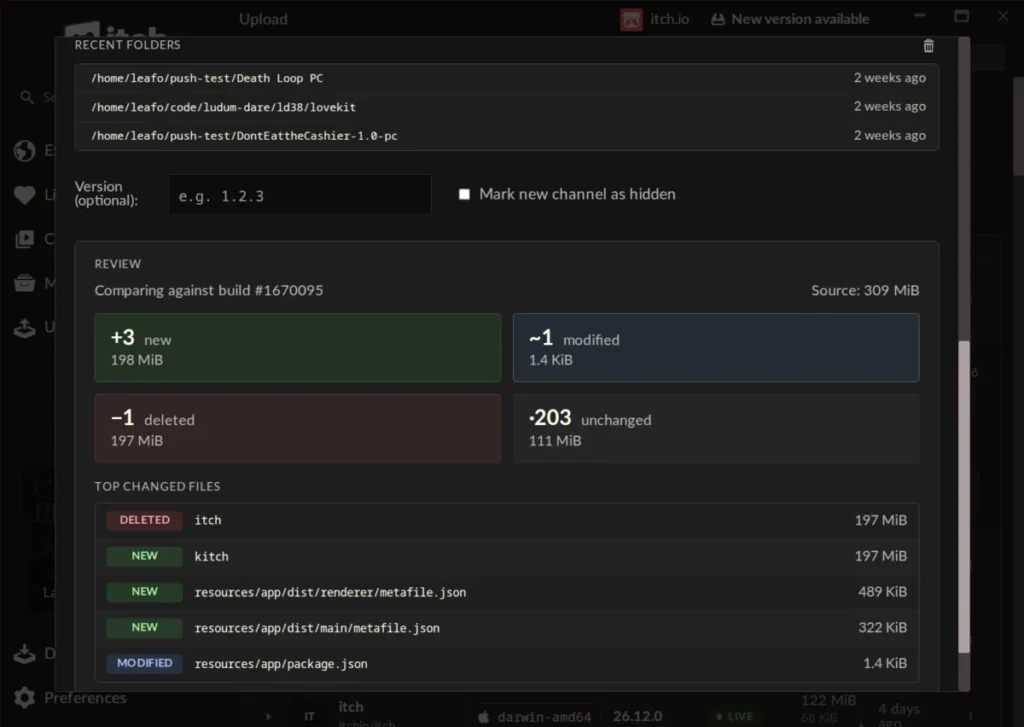
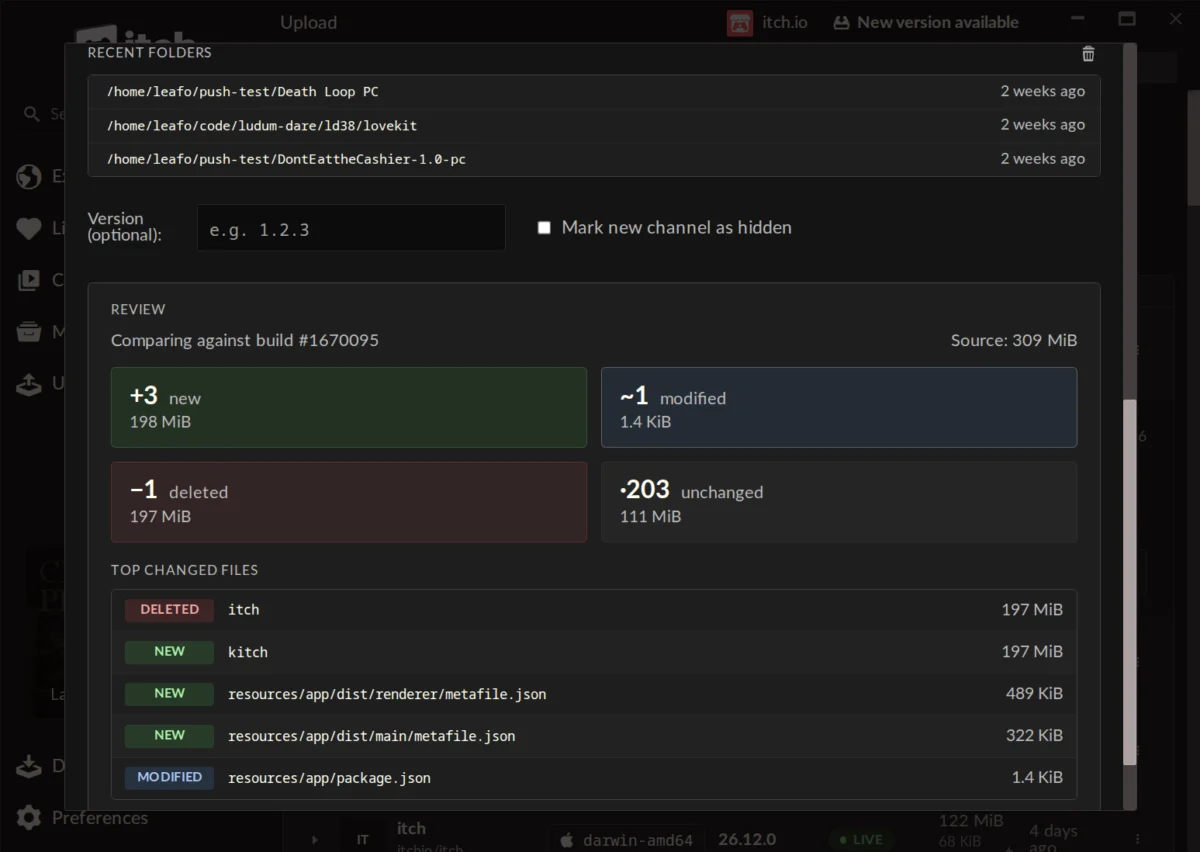
- Internal Beta and Feedback: Throughout the development cycle, the team focused on ensuring that the GUI would not merely be a "skin," but a functional dashboard. The inclusion of a pre-push "diff" analysis was prioritized to ensure developers could verify changes before finalizing an upload.
- Public Deployment: With the release of version
v26.12.0, the "Upload" tab appeared in the sidebar of the desktop application. This rollout was automated, ensuring that existing users received the upgrade seamlessly without needing to manually reinstall the client.
Supporting Data: Understanding the Impact
The shift to a GUI-based Butler environment is supported by several technical enhancements designed to streamline the developer workflow:
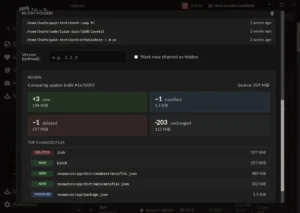
- Pre-Upload Verification: The new Build screen provides a detailed breakdown of changes. Developers can see exactly how many files are new, modified, or deleted before they hit the "Push" button. This transparency prevents accidental uploads of debug folders or unnecessary junk files.
- Automatic Dependency Management: One of the most significant pain points of CLI tools is keeping them updated. The integrated version of Butler within the app is managed by the itch.io client. As the app updates, the underlying engine updates, ensuring that developers are always using the most efficient version of the tool without manual intervention.
- Multi-Account Management: Many indie developers and small studios manage multiple itch.io accounts for various projects. The app now allows for seamless switching between profiles, with the Butler GUI automatically utilizing the credentials of the currently active user, significantly reducing the risk of pushing to the wrong project.
Official Responses and Developer Community Feedback
The reaction from the developer community has been largely enthusiastic. In the official release thread, user Warpzone noted, "I used butler some years ago, but I remember it being complicated and fiddly. The itch app has none of these problems." This sentiment highlights the success of the UX design, which manages to maintain the power of the CLI while stripping away the complexity.
However, the transition has also prompted questions regarding legacy support. When asked by user traxiss if existing games not originally pushed via Butler could be converted to the system, itch.io founder leafo provided clarity: "Unfortunately, it’s not possible right now, as a butler push needs additional metadata alongside the file that’s computed when you’re uploading." While there are no immediate plans to implement a "conversion" tool for legacy builds, the acknowledgment of this technical limitation provides developers with a clear roadmap for their future projects.
Implications for the Future of Indie Distribution
The integration of Butler into the desktop GUI is more than just a convenience feature; it is an indicator of where the indie game industry is heading.
Lowering the Barrier to Professionalism
For solo developers and hobbyists, the "professional" workflow of incremental patching was previously obscured by the steep learning curve of the terminal. By making this accessible, itch.io is effectively raising the standard of game distribution. Players can now expect more frequent, smaller, and more reliable updates from a broader range of developers, not just those with technical backgrounds.
Centralized Management
The move cements the itch.io app as a central hub for the developer lifecycle. By housing the deployment process alongside game discovery and community interaction, the platform is creating a "sticky" ecosystem. Developers who use the app to push their games are more likely to use it to monitor their analytics, interact with their community, and manage their store pages.
Potential for Expansion
The success of this implementation suggests that other CLI-heavy features could see similar GUI treatment in the future. As the platform continues to scale, the focus on "quality of life" improvements for developers—rather than just store-front features for consumers—will likely remain a core differentiator for itch.io in a crowded market.
Conclusion
The inclusion of a Butler GUI in the itch.io desktop application represents a significant step forward for the platform. It effectively democratizes the most efficient distribution method available to indie developers, removing the fear of the command line while preserving the technical integrity of the patch-based delivery system.
For the average developer, this means fewer hours spent troubleshooting deployment scripts and more time spent on actual development. As the community continues to adopt this new workflow, the benefits will ripple outward, leading to a more efficient, responsive, and professional experience for the players themselves. As the platform evolves, one thing remains clear: itch.io is committed to ensuring that the power of high-end distribution technology is available to everyone, regardless of their technical pedigree.