Shaping the Spatial Frontier: Google Unveils Android XR SDK Developer Preview 4
The landscape of wearable computing is undergoing a profound transformation. As developers look beyond the smartphone to the next generation of spatial computing, Google has stepped up its commitment to the ecosystem with the release of Developer Preview 4 of the Android XR SDK. This update marks a significant milestone in Google’s roadmap, signaling a move toward a unified, cross-device development environment that encompasses XR headsets, tethered XR glasses, and a new generation of intelligent eyewear.
As the platform matures, Google is refining its taxonomy to better reflect the capabilities of these devices. Moving forward, the industry will refer to “AI glasses” as audio glasses, and “display AI glasses” as display glasses. This nomenclature shift is already live across all official documentation, reflecting a strategic move toward clearer, more intuitive categorization for hardware partners and developers alike.
The Core Evolution: Moving Toward Beta
The latest developer preview is not merely an incremental update; it is a structural refinement of the Android XR foundation. The suite of core libraries—including XR Runtime, Jetpack SceneCore, and ARCore for Jetpack XR—is officially transitioning to a Beta release status in the coming weeks.

To support this shift, Google has overhauled the SDK’s underlying architecture. By stripping away legacy dependencies like Guava and RxJava3 in favor of a clean, Kotlin-first architecture, the company is ensuring that developers can build performant, future-proof applications that are easier to maintain and scale across varying hardware constraints.
Bridging the Physical and Digital: Audio and Display Glasses
A primary focus of Developer Preview 4 is the refinement of "Projected" experiences. The Jetpack Projected library, designed to bridge mobile phone applications into the user’s field of view through glasses, has received a significant boost in functionality.
Simplifying Device Lifecycle Management
The introduction of the Device Availability API allows developers to track the hardware’s status—specifically whether the glasses are being worn or are idle—using standard Android Lifecycle.State values. This integration is critical for power management and user privacy; applications can now seamlessly transition between a "connected" and "worn" state, ensuring that compute-heavy processes only run when the user is actively engaged.

Streamlined Testing with ProjectedTestRule
One of the most frequent pain points in XR development has been the difficulty of emulating device environments without physical hardware. The new ProjectedTestRule API automates the configuration of virtual testing environments. By removing the need for excessive boilerplate code, developers can now write clean, reliable unit tests, accelerating the iteration cycle from initial concept to deployment.
Visual Polish with Jetpack Compose Glimmer
For developers building on display glasses, the Jetpack Compose Glimmer library has been upgraded with the integration of Google Sans Flex. This variable font is specifically optimized for optical see-through displays, ensuring that text remains legible even when overlaid against complex, real-world backgrounds.
Immersive Power: Advancements in XR Headsets
While glasses focus on light-touch augmentation, the latest updates to Jetpack SceneCore and ARCore for Jetpack XR provide the muscle required for fully immersive experiences in high-fidelity headsets.

Advanced 3D Model Control
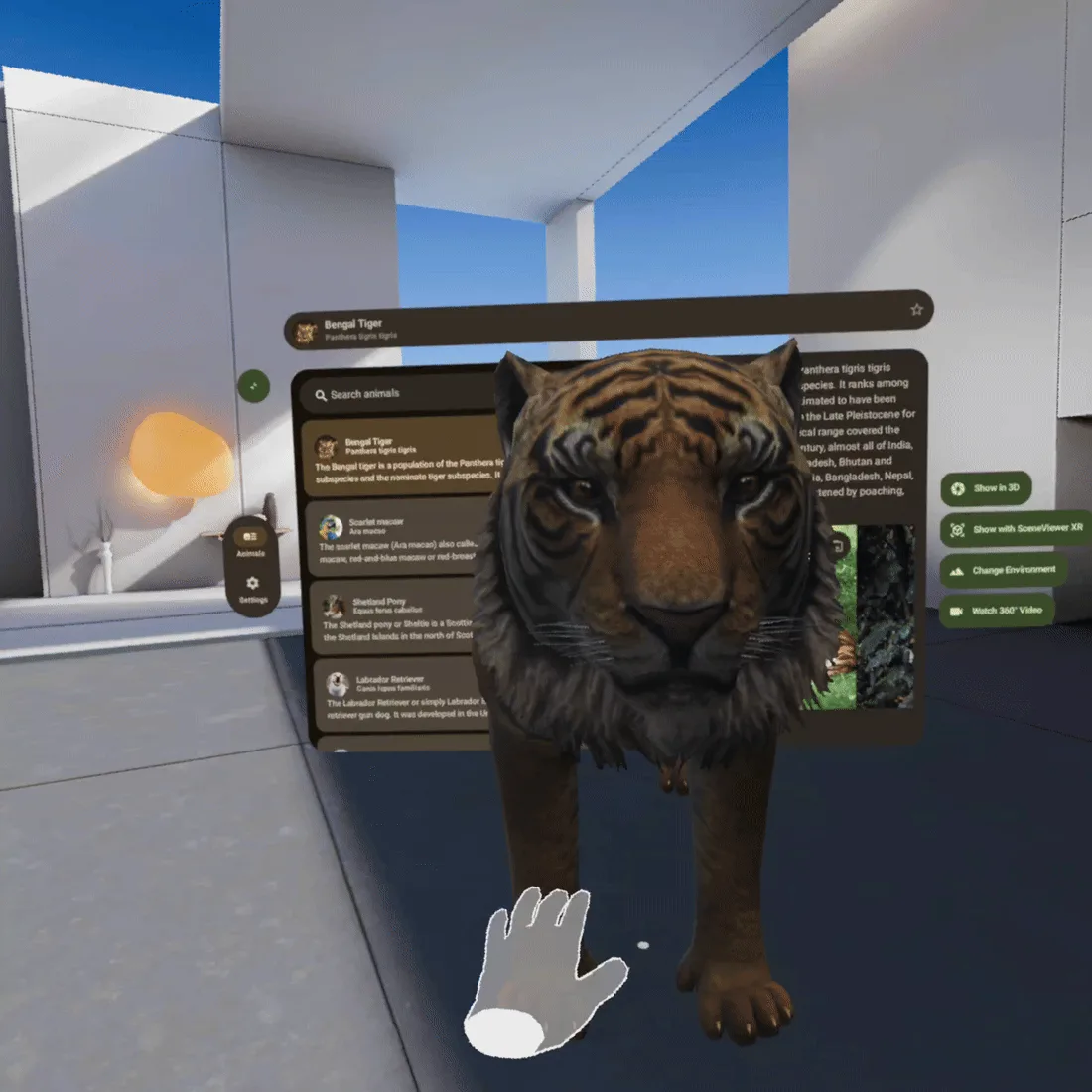
The update introduces granular control over 3D assets. Using the GltfModelNode class, developers can now dynamically manipulate 3D models at the node level. This allows for real-time adjustments to materials, textures, and even the ability to trigger specific animations within a complex 3D scene. The inclusion of Khronos PBR (Physically Based Rendering) materials ensures that digital objects react realistically to simulated lighting, drastically increasing the sense of "presence" within a virtual environment.
Experimental Custom Meshes
Perhaps the most ambitious addition is the experimental support for Custom Meshes. This feature allows developers to programmatically generate geometry on the fly. Whether creating complex terrain, procedural user interfaces, or dynamic environmental feedback, custom meshes open the door to highly reactive 3D worlds that do not rely on pre-baked assets.
Integrating AI: The Geospatial Frontier
The convergence of spatial computing and generative AI is perhaps best exemplified by the preview of the Geospatial API for wired XR glasses. By leveraging ARCore’s Visual Positioning System (VPS), developers can now anchor digital content to specific global coordinates with centimeter-level precision.

When paired with the Gemini Live API, this creates a potent toolset for context-aware applications. Imagine a walking tour application that doesn’t just display a map, but uses the user’s line of sight to identify historic landmarks, provide real-time audio descriptions, and render 3D historical reconstructions over the physical landscape. This is the promise of the "intelligent" era of XR—a device that understands not just where it is, but what it is looking at.
Official Support for Game Engines
Recognizing that the gaming community drives much of the innovation in 3D development, Google has expanded its reach into the game engine ecosystem. Beyond existing support, the company has introduced:
- Official Engine Integration: Full support for Unreal Engine and Godot.
- Android XR Interaction Framework (AXRIF): A dedicated toolkit to simplify the complex task of hand-tracking and gesture-based interaction.
- Android XR Engine Hub: A centralized portal that allows developers to launch and debug their experiences directly from their preferred engine, bypassing the friction of manual deployment.
Implications for the Developer Community
The implications of these updates are significant. Google is positioning Android XR as the definitive platform for spatial computing, effectively lowering the barrier to entry for developers coming from a mobile-first background.

The launch of the Android XR Developer Catalyst Program is the final piece of the puzzle. By providing early access to proprietary hardware—including prototypes for display and audio glasses and the much-anticipated XREAL Project Aura—Google is seeding the ecosystem with the talent required to populate its app store with high-quality, native spatial experiences.
Chronology of Development
- Early 2026: Initial framework established for Android XR; primary focus on hardware-agnostic SDKs.
- Mid 2026: Shift toward unified nomenclature and integration of Jetpack libraries.
- Today (Preview 4): Expansion of API feature sets, transition to Beta for core libraries, and initiation of the Developer Catalyst Program.
- Late 2026: Targeted general availability of the Android XR SDK and launch of consumer-facing Android XR devices.
Looking Ahead
As we approach the public launch of the first wave of consumer-ready Android XR hardware later this year, the toolkit provided by Developer Preview 4 will serve as the foundation for the next decade of digital interaction.
For developers, the call to action is clear: the transition from mobile to spatial is no longer a theoretical exercise. With the introduction of standardized APIs, high-precision geospatial anchoring, and deep integration with game engines, the infrastructure is finally in place. Those who begin experimenting with the Android XR Developer Catalyst Program today are likely to define the standard for user experiences in the spatial computing era.

For further technical documentation, sample code, and to apply for the Catalyst program, developers are encouraged to visit the official Android Developers XR portal. The future of computing is not just in our hands; it is in our line of sight.