Bridging the Skills Gap: Launch of Free, Real-Time Live Project Software Testing and QA Training Initiative
By Tech & Careers Desk
Published: October 2023
In the rapidly evolving landscape of information technology, the demand for skilled Software Quality Assurance (QA) professionals continues to surge. However, a persistent challenge remains: aspiring testers often struggle to transition from theoretical knowledge to practical, hands-on industry experience.
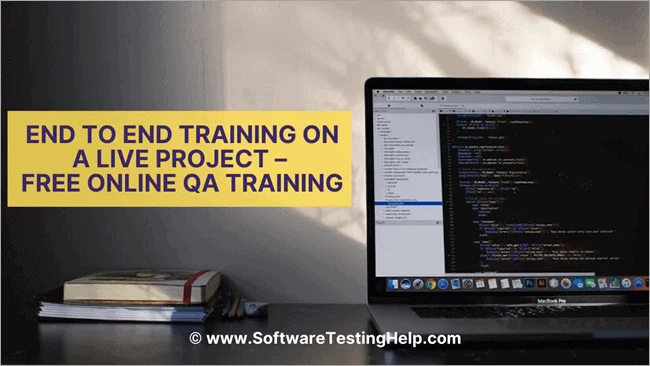
Addressing this critical industry bottleneck head-on, a comprehensive, free online Software Testing training initiative has been rolled out. Designed specifically to mimic real-world corporate software development life cycles (SDLC), the program utilizes a live, publicly accessible enterprise application to train beginners and upskill current professionals in rigorous QA practices.
Main Facts: A Blueprint for Practical QA Mastery
The newly structured online curriculum departs from traditional, purely academic training formats by embedding learners directly into a simulated corporate project environment. Spearheaded by industry experts, the initiative breaks down the Software Testing Life Cycle (STLC) step-by-step, utilizing the open-source OrangeHRM demo application as its core testing ground.
Key highlights of the training program include:
- Cost: 100% free online access for beginners and upskilling professionals.
- Format: End-to-end training utilizing a live web application.
- Scope: Covers foundational testing theory up to advanced concepts such as test planning, test case authoring, execution, defect tracking, and regression testing.
- Target Audience: Aspiring QA engineers, manual testers looking to transition into automation, and IT professionals seeking formal certification preparation or practical portfolio building.
Chronology: The Evolution of the Training Roadmap
To ensure participants develop a well-rounded understanding of how QA operates within a professional software house, the course follows a strict, phase-by-phase chronological roadmap mirroring traditional project delivery frameworks:
Phase 1: Initiation and Requirements Walkthrough
The program kicks off with an introduction to the client’s business model and a thorough walkthrough of a sample Software Requirements Specification (SRS) or Functional Requirements Specification (FRS) document. Participants are provided with a downloadable sample SRS document based on the OrangeHRM project to study how raw business ideas translate into technical documentation.
Phase 2: Analysis and Test Scenario Generation
Once the requirements are dissected, learners transition to reviewing the SRS document for ambiguities, missing requirements, and testability. From there, they map out high-level test scenarios.

Phase 3: Test Planning and Documentation
Participants learn the art of constructing a comprehensive Test Plan from scratch. This includes resource allocation, identifying scope, scheduling, risk analysis, and defining entry and exit criteria.
Phase 4: Test Case Design and Execution
The course delves deep into writing granular test cases using standard test management tools or spreadsheets. Learners then move to the application walkthrough phase, executing test cases against the live environment and systematically recording pass/fail results.
Phase 5: Defect Tracking and Quality Sign-Off
When bugs are inevitably uncovered, students learn how to log, track, and verify defects. The journey concludes with regression testing cycles and the ultimate milestone: issuing a formal QA Sign-Off.
Supporting Data: Understanding the Project Framework
To ground the training in realistic enterprise scenarios, the curriculum uses a clearly defined business case study.
- The Client: Orange, a fictionalized medium-sized enterprise seeking a robust, globally scalable Human Resources Management (HRM) portal.
- The Application: The OrangeHRM open-source demo platform, featuring Professional and Enterprise versions.
- The Focus Area: To maintain an optimal learning scope without overwhelming novices, the training zeroes in on the HRM portal’s Employee Module, specifically focusing on the personal information management workflows.
The Traditional Waterfall SDLC Context
The course contextualizes software testing within a traditional Waterfall Software Development Life Cycle (SDLC), breaking down the foundational phases that precede and run parallel to QA:
- Initiate Phase: Agreement on terms between the client and the software producer, culminating in project kick-off.
- Define Phase: Finalization of business requirements, leading directly to the creation of the foundational SRS document consumed by the QA team.
- Design & Implementation Phases: Code construction, database setup, and unit testing performed by developers before handing builds over to the independent testing team.
- Testing Phase: Comprehensive system, integration, and regression testing executed by QA engineers to validate code integrity against business requirements.
Official Insights: Bridging Theory and Practice
Industry veterans behind the initiative note that the program was born out of persistent demand from readers and aspiring engineers.
"We frequently receive queries from our community asking us to share the exact, unvarnished software testing process followed by professional QA teams in enterprise environments," notes Swati Seela, a core team member leading the training series. "By documenting and executing the complete STLC using a live, internet-accessible sample application, we aim to demystify corporate QA workflows and give learners a true taste of real-world project experience."
Historically, training bootcamps charge exorbitant fees for simulated project experience. By offering this end-to-end curriculum publicly, the initiative seeks to democratize entry into the tech sector, leveling the playing field for candidates who lack professional references or corporate internships.

Implications: Impact on the Job Market and Career Development
The introduction of structured, project-based free training carries profound implications for both job seekers and the broader software development industry:
1. Combating the "Experience Paradox"
A major hurdle for entry-level QA job seekers is the catch-22 of needing experience to get a job, but needing a job to get experience. By completing a simulated project—complete with professional artifacts like SRS reviews, test plans, and defect logs—learners can showcase tangible proof of competence on their resumes and portfolios.
2. Elevating Industry Quality Standards
As software systems become increasingly complex, reliance on superficial, textbook-only testing knowledge is no longer sufficient. Programs that emphasize rigorous traceability from requirements to test execution help produce QA professionals who can think critically about edge cases, user experience, and risk mitigation.
3. Fostering Continuous Professional Development
For manual testers or IT support professionals looking to pivot into automation, performance, or specialized QA management, starting with a rigorous review of core testing foundations acts as a vital stepping stone toward advanced specializations.
Looking Ahead
As the training series progresses through its structured modules, participants are encouraged to read the provided documentation in parallel, review the sample SRS files, and actively participate in the exercises.
For aspiring software testers ready to transform theory into practical expertise, this free live-project initiative offers a reliable, structured bridge toward a rewarding career in software quality assurance.
Stay tuned for the next installment in the series, focusing on advanced SRS reviews and the mechanics of crafting robust test scenarios.