SEATTLE — Amazon Web Services (AWS), the titan of cloud computing and a foundational pillar of the modern internet, has announced a dramatic paradigm shift in how developers, startups, and hobbyists begin their cloud journey. In a move designed to eliminate the friction that has historically slowed down early-stage prototyping, AWS is rolling out a fully simplified, AI-optimized onboardingexperience tailored for builders working at the speed of artificial intelligence.
The new approach sweeps away the traditional administrative hurdles—such as entering credit card information upfront, manually configuring complex networking topologies, and navigating the labyrinthine permissions of AWS Identity and Access Management (IAM). Instead, new users can sign up using familiar third-party credentials, receive immediate free credits, leverage coding agents to spin up fully realized serverless architectures in minutes, and scale seamlessly into enterprise-grade infrastructure without ever needing to perform a disruptive data migration.
Main Facts: A New Front Door for the Cloud
For nearly two decades, AWS has scaled its offerings to meet the needs of the world’s largest banks, governments, and multinational corporations. While this enterprise-grade depth—spanning thousands of features across security, networking, governance, and global availability zones—makes AWS the undisputed market leader, it has often created an intimidating barrier to entry for a lone developer with a fresh idea.
The core elements of this new AWS experience include:
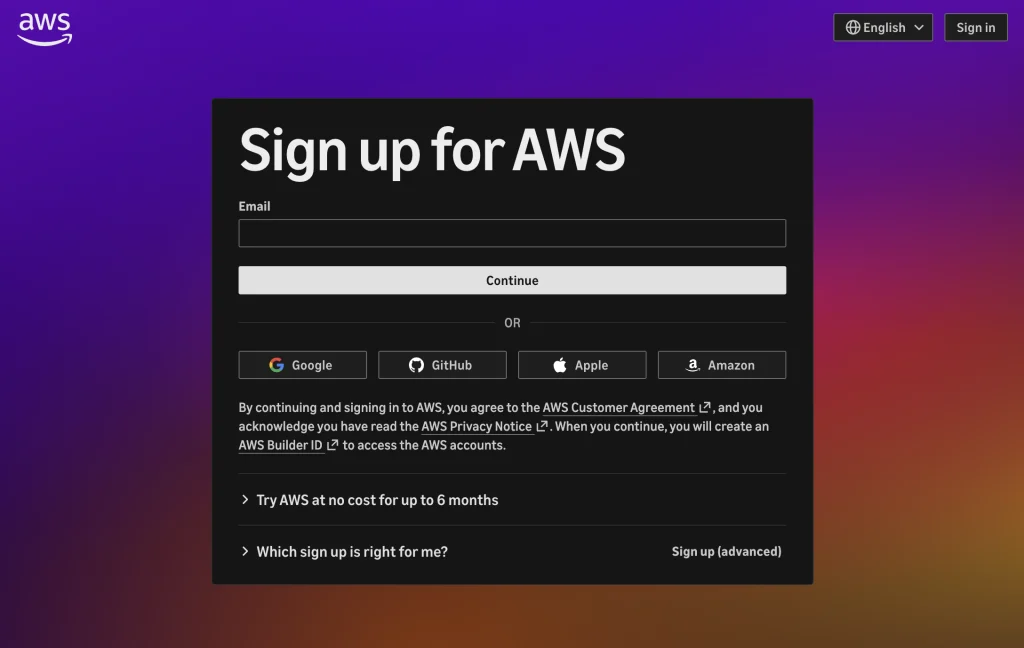
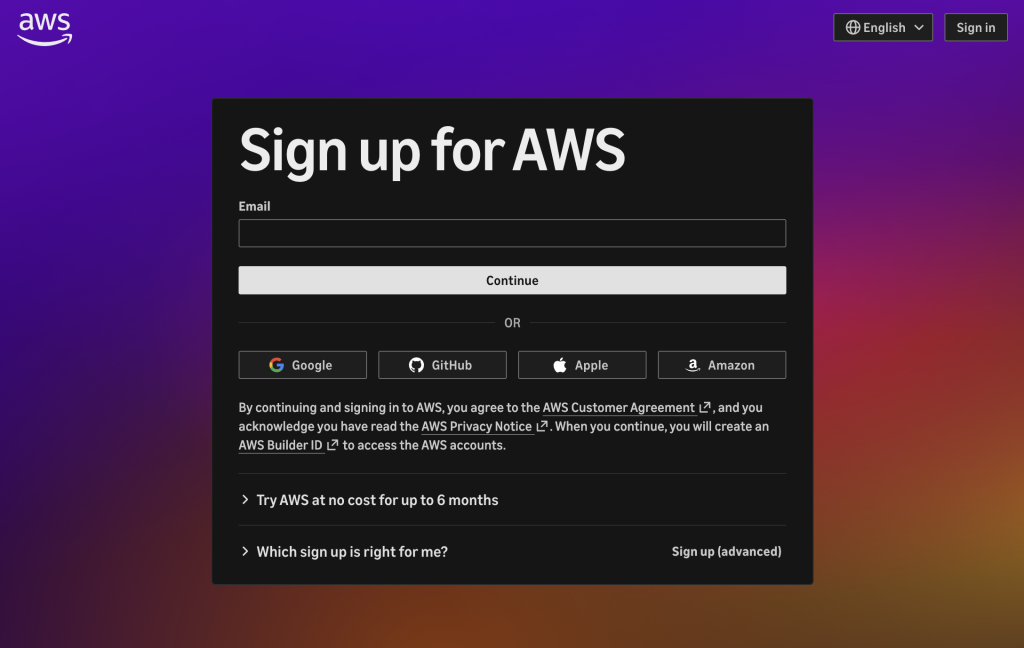
Frictionless Authentication: Users can register using existing identities from popular providers, including Google, GitHub, and Apple.
No Upfront Credit Card Required: For the vast majority of new customers, the registration process does not demand a payment instrument to get started.
Instant Free Tier Credits: New accounts are automatically seeded with $100 in free credits to encourage immediate experimentation.
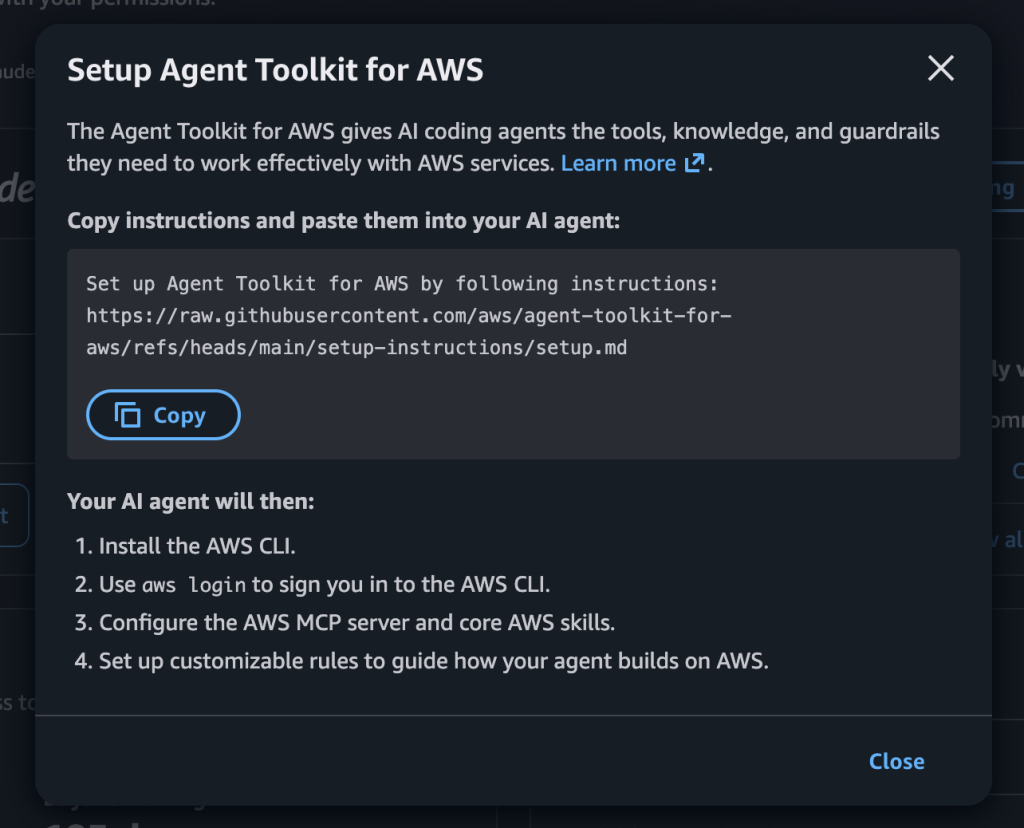
AI-First Integration: A native handoff mechanism generates a precise prompt that users paste directly into their coding agents, configuring the AWS CLI and the Agent Toolkit for AWS automatically.
Project-Centric Architecture: Work is organized into isolated "projects" that bundle AWS accounts, team collaboration permissions, and billing controls under a single logical umbrella.
Automated Permission Management: Cross-service resource permissions are handled out-of-the-box, eliminating the manual drafting of IAM policies.
Strict Spend Caps: To protect hobbyists and budget-conscious founders from unexpected bills, projects feature customizable monthly spending limits (starting at $20) that automatically pause workloads rather than accumulating uncontrolled debt.
Zero-Migration Scaling: When projects mature into multi-region deployments or require rigorous corporate governance, advanced AWS features can be toggled on instantly within the existing infrastructure.
Chronology: From Infrastructure Pioneer to AI-Speed Prototyping
The evolution of AWS reflects the changing demands of the software development landscape over the past twenty years.
The Genesis of Cloud Infrastructure (Early 2000s)
When AWS first emerged, it introduced a handful of foundational building blocks—such as Amazon Simple Storage Service (Amazon S3), Amazon Elastic Compute Cloud (Amazon EC2), and Amazon Simple Queue Service (Amazon SQS). These primitives allowed anyone with an internet connection and a credit card to rent computing power on demand, bypassing the immense capital expenditure of buying physical servers.
The Enterprise Expansion Era (2010s–Early 2020s)
As massive global enterprises migrated mission-critical workloads to the cloud, their demands shaped the trajectory of AWS development. Organizations required deep compliance frameworks, granular multi-account governance via AWS Organizations, complex virtual private cloud (VPC) peering, and exhaustive security controls. AWS obliged, expanding its footprint globally and compounding its service catalog. However, this hyper-focus on enterprise customization inadvertently turned the initial account creation and setup process into a multi-hour chore of reading documentation and clicking through configuration menus.
The AI Generation and the Shift to Speed (Present)
With the advent of advanced generative AI and autonomous coding agents, the bottleneck in software development shifted. Writing code and constructing backend architectures can now happen in seconds rather than weeks. Recognizing that manual cloud setup was the last remaining anchor holding back rapid innovation, AWS engineering teams spent recent years rethinking the onboarding funnel. The result is the new simplified experience, which debuted its public rollout in late August 2026.
Supporting Data: Analyzing the New Onboarding Mechanics
To understand how the new system operates in practice, consider the lifecycle of a typical developer project under the revamped framework.
1. Registration and Setup
A user visits the AWS sign-up portal, authenticates via Google, and is instantly provisioned a project workspace. Behind the scenes, AWS provisions an isolated AWS account and applies a suite of baseline security controls designed to protect the environment without requiring user intervention.
2. Coding Agent Pairing
Upon entering the new console, the user is presented with a pre-formatted prompt block. Copying and pasting this block into an AI coding agent (such as Claude or similar development assistants) automatically triggers the installation of the AWS Command Line Interface (CLI) and the Agent Toolkit for AWS. The agent authenticates the session and writes a localized configuration guide (CLAUDE.md) directly into the project repository.
3. Rapid Prototyping in Action
In benchmark tests conducted during the rollout, a developer issued a single natural-language instruction to their coding agent: "Build an API that returns a new unique sequential ID on every request."
Without human intervention, the coding agent:
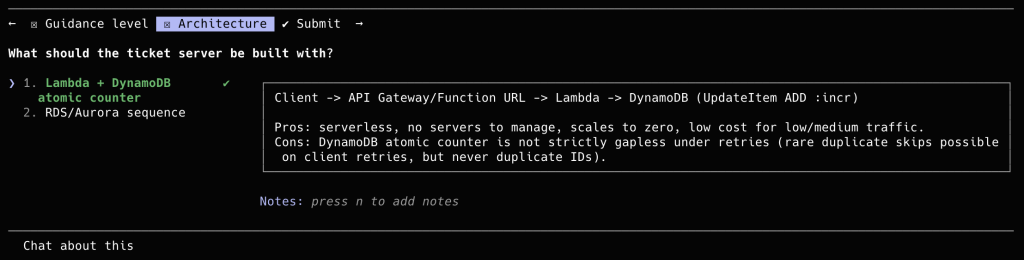
Evaluated architecture options and selected AWS Lambda (for serverless compute), Amazon DynamoDB (for durable, low-latency state management), and Amazon API Gateway (for public HTTP endpoints).
Automatically generated and deployed the infrastructure code.
Configured the necessary execution roles and resource permissions natively, bypassing traditional IAM configuration.
Brought a live public endpoint online within minutes.
Crucially, the successful deployment of the AWS Lambda function triggered an additional $20 promotional credit injection, supplementing the initial $100 starting balance.
4. Collaborative Team Management
Scaling a project to include co-founders or fellow engineers no longer requires mastering IAM Identity Center or generating programmatic access keys. An administrator simply inputs a collaborator’s email address into the project settings. AWS automatically handles access control, provisioning the invited user with permissions exclusively for the specified project.
5. Financial Guardrails and Spend Limiting
Billing transparency is managed at the project level. Users on the paid tier can set monthly expenditure caps starting at $20. If usage trends indicate approaching limits, AWS issues automated warnings. If the cap is reached, AWS pauses the project rather than letting costs spiral out of control—a safety net designed to protect amateur developers and student entrepreneurs from sudden financial liability. Project budgets can be adjusted upward independently as individual workloads gain traction.
Official Responses and Strategic Rationale
AWS leadership stresses that this new experience does not dilute the power of the cloud; rather, it acts as a smarter on-ramp to the existing global ecosystem.
"We’ve heard clearly from builders that they do not want to spend their first hours configuring an AWS environment," noted an AWS product spokesperson during the initial release briefing. "They want to build what they came to build, and we listened. AWS began as a place where anyone with an idea could start building, and this new simplified experience brings that starting point back—backed by sensible defaults so you can begin immediately, with the global reach, breadth, and depth of AWS still waiting when your idea needs to scale."
Industry analysts have praised the move as a necessary evolution. For years, competing cloud platforms and specialized Platform-as-a-Service (PaaS) providers have successfully courted early-stage developers by offering frictionless, zero-configuration entry points. By lowering its own barriers to entry while preserving a seamless migration path to advanced enterprise features, AWS is aggressively positioning itself to capture the next generation of AI-native applications.
Implications: What This Means for Developers and the Cloud Market
The introduction of this streamlined, AI-integrated onboarding experience carries profound implications for various segments of the technology ecosystem:
For Solo Developers and Startups: The cognitive load of cloud architecture has plummeted. Founders can now validate concepts, prototype APIs, and deploy production-ready serverless microservices without hiring a dedicated DevOps engineer or spending days debugging permissions.
For Coding Agent Ecosystems: By providing native hooks and toolkit configurations for AI agents, AWS is signaling that the future of cloud management will be conversational and automated. Developers will increasingly interact with cloud infrastructure through natural language prompts interpreted by specialized developer agents.
For Enterprise IT and Governance: While the front door is dramatically simplified, the back-end reality of AWS remains unchanged. When a startup outgrows its sandbox and needs to integrate with corporate compliance frameworks, multi-region failover, or strict organizational policies, it can activate advanced features with a single click. There are no data migrations, no domain transfers, and no system downtime. Everything established in the simplified phase ports over cleanly into an enterprise-ready AWS Organization structured according to industry best practices.
Competitive Pressure Across Cloud Providers: Other hyperscalers and cloud hosting providers will be forced to re-evaluate their own developer funnels. The benchmark for cloud onboarding is no longer just "easy registration"—it is deep, native integration with the AI development workflows that modern engineers use every day.
Getting Started
The new simplified AWS experience is rolling out gradually to new customers globally. Developers eager to test the workflow can sign up by visiting the official AWS account creation portal and authenticating with their preferred third-party identity provider. Comprehensive documentation detailing the new sign-up mechanics and project management interface is available via the AWS Documentation Center.