Project Gigapixel Unveiled: DIY Ingenuity Shatters Megapixel Barriers to Capture Billions of Pixels
Hackaday Europe 2026 witnessed a groundbreaking presentation that challenged conventional wisdom in digital photography, as Yannick Richter introduced "Project Gigapixel." This ambitious endeavor, born from the repurposing of an everyday flatbed scanner, demonstrates a remarkable method for capturing images not in millions, but in billions of pixels, pushing the boundaries of resolution far beyond commercial offerings.
Main Facts
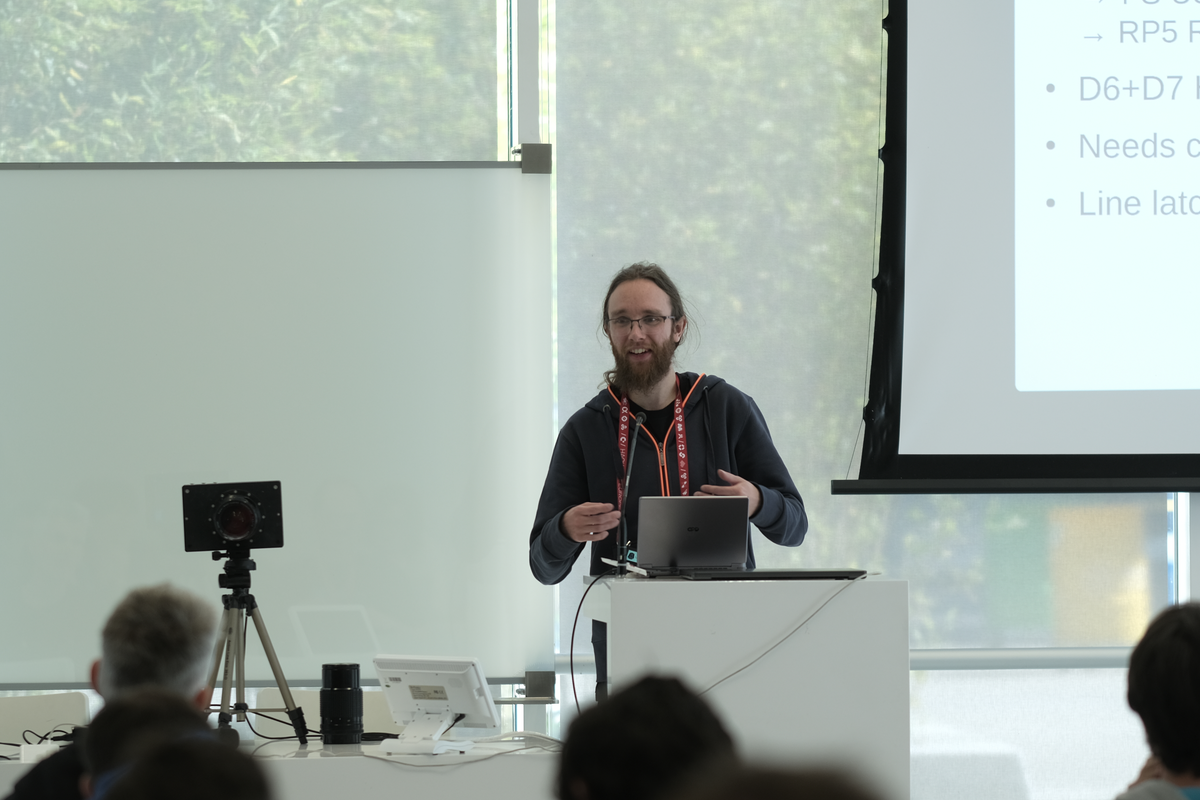
At the heart of Project Gigapixel is an innovative approach to ultra-high-resolution imaging that sidesteps the prohibitive costs and technical complexities of manufacturing large, multi-gigapixel image sensors. Instead, Richter leveraged the inherent linear resolution of a Sony CCD sensor salvaged from an Epson V370 flatbed scanner. By meticulously integrating this linear sensor with a precision mechanical drive and a high-quality medium-format Pentax lens, he developed a portable camera capable of producing staggering 3.2-gigapixel images (40800 x 80000 pixels).
The project represents a triumph of reverse engineering, custom electronics, and bespoke software development. Richter interfaced the scanner’s core imaging hardware with a Raspberry Pi 5 and an RP2350, creating a fully functional, albeit specialized, photographic instrument. While its scanning nature renders it unsuitable for capturing fast-moving subjects, Project Gigapixel excels in documenting static scenes with an unprecedented level of detail, revealing intricacies invisible to standard digital cameras.
The Genesis of Gigapixel Vision
Beyond the Megapixel Myth
For years, the digital camera market was dominated by a relentless "megapixel race." Manufacturers vied to equip their cameras with ever-higher pixel counts, often presenting these figures as the ultimate arbiter of image quality. Consumers, eager for the sharpest possible digital photos, were largely swayed by these escalating numbers. However, seasoned photographers and imaging scientists understood that true image fidelity is a complex interplay of multiple factors. Optics, for instance, play a crucial role; a high-megapixel sensor paired with a mediocre lens will inevitably produce soft, unsharp images. Similarly, the quality of image processing — how the camera interprets raw sensor data, handles noise reduction, and applies color science — significantly impacts the final output. Furthermore, the inherent qualities of the image sensor itself, such as pixel size, dynamic range, and low-light performance, often contribute more to a superior image than sheer pixel density alone. The industry gradually matured, recognizing these nuances and shifting focus towards holistic image quality improvements rather than just increasing pixel counts.
It is precisely against this backdrop of nuanced understanding that Yannick Richter’s Project Gigapixel emerges as a fascinating counterpoint. While acknowledging the limitations of a purely megapixel-driven narrative, Richter’s work re-examines the very concept of resolution, not by simply packing more pixels onto a conventional sensor, but by reimagining the capture process itself. His innovation demonstrates that extreme resolution still holds immense value for specific applications, provided it can be achieved through clever, unconventional means.
The Inspiration: A Scanner’s Unseen Potential
Richter’s journey into the gigapixel realm began not with cutting-edge camera components, but with an unassuming piece of office equipment: an old Epson flatbed scanner. This choice was far from arbitrary; it was a stroke of genius rooted in an understanding of scanner technology. Unlike traditional digital cameras that employ a large, two-dimensional array sensor to capture an entire image simultaneously, flatbed scanners utilize a linear image sensor. This sensor, often a Charge-Coupled Device (CCD) array, consists of a single line of light-sensitive elements. To capture a full image, the scanner’s mechanism moves this linear sensor across the document or photograph, sequentially capturing narrow strips of the image, which are then stitched together by the scanner’s internal processing.
The key advantage of this design, particularly with higher-end scanners like the Epson V370, is that the linear CCD sensor boasts incredibly high resolution along its single dimension. While a conventional camera sensor might have millions of pixels spread across a square or rectangular area, a scanner’s linear sensor might have thousands of pixels packed into a line just a few millimeters wide. Richter realized that if this linear sensor could be freed from its flatbed confines and mounted behind a high-quality lens, then by precisely moving it across a scene, one could effectively "scan" a photographic image with extraordinary detail. The Epson V370 was specifically chosen for its superior Sony CCD element, which offers better image fidelity and color reproduction compared to cheaper Contact Image Sensor (CIS) alternatives commonly found in modern, low-cost scanners. This critical distinction was foundational to the project’s success, promising a higher-quality raw data stream for processing.
The Core Concept: Stitching for Immensity
The fundamental principle behind Project Gigapixel is elegant in its simplicity, yet complex in its execution: capture an image not as a single instantaneous snapshot, but as a series of ultra-fine, sequential strips. Imagine painting a vast mural with an extremely thin brush; each stroke adds to the overall picture, and if done meticulously, the final result can be incredibly detailed. Similarly, Richter’s camera moves its linear sensor across the focal plane of the lens. Each movement captures a new "line" of pixels. These lines are then meticulously assembled into a cohesive, two-dimensional image.
This method is conceptually akin to panoramic photography, where multiple individual photographs are stitched together to form a wider field of view. However, Project Gigapixel operates at a much finer, sub-frame level. Instead of stitching together distinct images, it stitches individual pixel lines. This continuous, linear scanning approach allows for an extremely high effective resolution in one dimension, which, when combined with the precision movement of the sensor, translates into an unprecedented total pixel count. The challenge, of course, lies in ensuring perfect synchronization between sensor readout, mechanical movement, and subsequent digital stitching, all while maintaining consistent lighting and focus across the entire scanned area.
A Deep Dive into the Engineering Odyssey
Reverse Engineering the Epson V370
The journey from a discarded flatbed scanner to a gigapixel camera was paved with significant reverse-engineering challenges. Epson, like most manufacturers, does not openly publish detailed specifications or interface protocols for its internal components. To harness the Sony CCD sensor, Richter had to embark on a painstaking process of discovery. This "deep dive" involved acquiring service manuals, which often contain invaluable block diagrams, pinouts, and timing specifications meant for repair technicians. Beyond manuals, it likely involved careful probing of circuit boards with oscilloscopes and logic analyzers to decipher the electrical signals controlling the sensor.
The goal was to understand how the 12-line RGB sensor operated. This meant identifying the clock signals that trigger pixel readout, the data lines carrying the analog pixel information, and the various control signals that govern the sensor’s operation (e.g., gain, integration time). The fact that the sensor uses multiple lines for R, G, and B pixels (likely an interleaved arrangement) added another layer of complexity, requiring precise timing to reconstruct a coherent color image. Richter’s success in reusing the scanner’s original Analog-to-Digital Converter (ADC) and timing generation hardware was crucial, as these components are finely tuned to the sensor’s specific characteristics, simplifying the task of converting analog light signals into digital data that could be processed by modern microcontrollers.
The Brains of the Operation: Raspberry Pi Integration
At the core of Project Gigapixel’s control and processing architecture are two powerful yet accessible microcontrollers: the Raspberry Pi 5 and the RP2350. The Raspberry Pi 5, with its significantly enhanced processing power, ample RAM, and robust operating system (Raspberry Pi OS), serves as the primary computational hub. It handles the complex tasks of overall system management, user interface, file storage, and the demanding image stitching and processing algorithms. Its GPIO (General Purpose Input/Output) pins provide the necessary interface for controlling the mechanical linear drive and communicating with the RP2350.
The RP2350, likely used as a companion microcontroller, is ideal for real-time, low-latency tasks. It’s plausible that the RP2350 was specifically tasked with the high-speed, precise communication required to directly interface with the scanner’s ADC and timing generation hardware. This separation of duties allows the RP2350 to focus on the time-critical acquisition of pixel data, while the Raspberry Pi 5 manages the heavier computational load. Developing the software for these devices involved writing custom drivers to interpret the sensor data, implementing algorithms for precise synchronization between sensor readout and mechanical movement, and developing sophisticated image processing routines to handle the sheer volume of data and reconstruct the final gigapixel image.
Precision in Motion: Mechanical Design
The mechanical aspect of Project Gigapixel is as critical as its electronics. The linear sensor must move with extraordinary precision across a 100-millimeter path behind the medium-format Pentax lens. This movement cannot be jerky or uneven; any vibration or deviation would result in visible banding or distortion in the final image. Richter likely employed a high-quality linear stage, possibly driven by a stepper motor with micro-stepping capabilities, coupled with a lead screw or belt drive. The selection of materials for the camera body and sensor mount would also be crucial, prioritizing rigidity and stability to minimize flex and vibration.
Integrating the medium-format Pentax lens was another engineering feat. Medium-format lenses are renowned for their exceptional optical quality, large image circles, and ability to resolve fine detail, making them an ideal choice for a gigapixel camera. The custom camera body had to precisely position the linear sensor at the lens’s focal plane and maintain consistent focus across the entire 100mm scan. This involved careful calculations of flange distance and sensor alignment, often requiring iterative adjustments and calibration.
The Color Conundrum: Pixel Alignment
One of the most intricate technical challenges Richter faced was properly offsetting and aligning the R, G, and B pixels into a coherent color image. A typical linear RGB sensor doesn’t have all three color filters directly stacked on top of each pixel. Instead, it often uses separate, slightly offset lines of red, green, and blue sensitive pixels. This means that at any given instant during the scan, the red data for a particular point in the image might be captured slightly before or after the green and blue data for the same point.
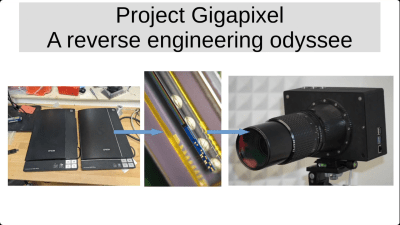
To correct for this, Richter’s software had to implement sophisticated interpolation and alignment algorithms. This process involves digitally shifting the color channels relative to each other by a precise number of pixels (or sub-pixels) to compensate for their physical offset on the sensor. Without this meticulous alignment, the resulting image would exhibit color fringing or misregistration, particularly noticeable at high magnifications. This required a deep understanding of the sensor’s physical layout and precise mathematical transformations to reconstruct a true-color, high-resolution image.
Navigating the Unknown: Live Preview and User Experience
A significant departure from traditional digital photography is the absence of an instantaneous live preview from a scanning image sensor. A conventional camera continuously captures and displays frames, allowing the photographer to compose and focus in real-time. A scanning camera, however, builds the image line by line over a period, making a traditional live feed impractical.
Richter ingeniously solved this by integrating a standard, low-resolution Raspberry Pi camera into the build. This secondary camera provides a conventional live preview, allowing the photographer to frame the shot and achieve initial focus before initiating the gigapixel scan. This pragmatic solution drastically improves the usability of the camera, transforming it from a mere technical curiosity into a practical tool. Beyond the live preview, Richter also had to consider other aspects of user experience, such as controls for initiating scans, managing exposure settings, storing the massive image files, and providing feedback on the scanning process.
Unveiling the Gigapixel Panorama: Results and Performance
Detail Unbound: The Visual Evidence
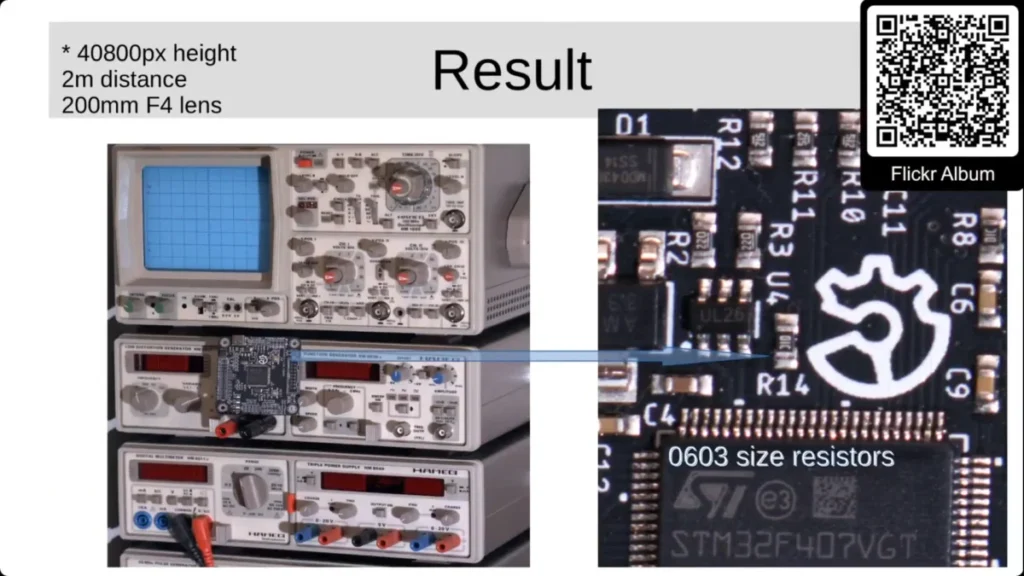
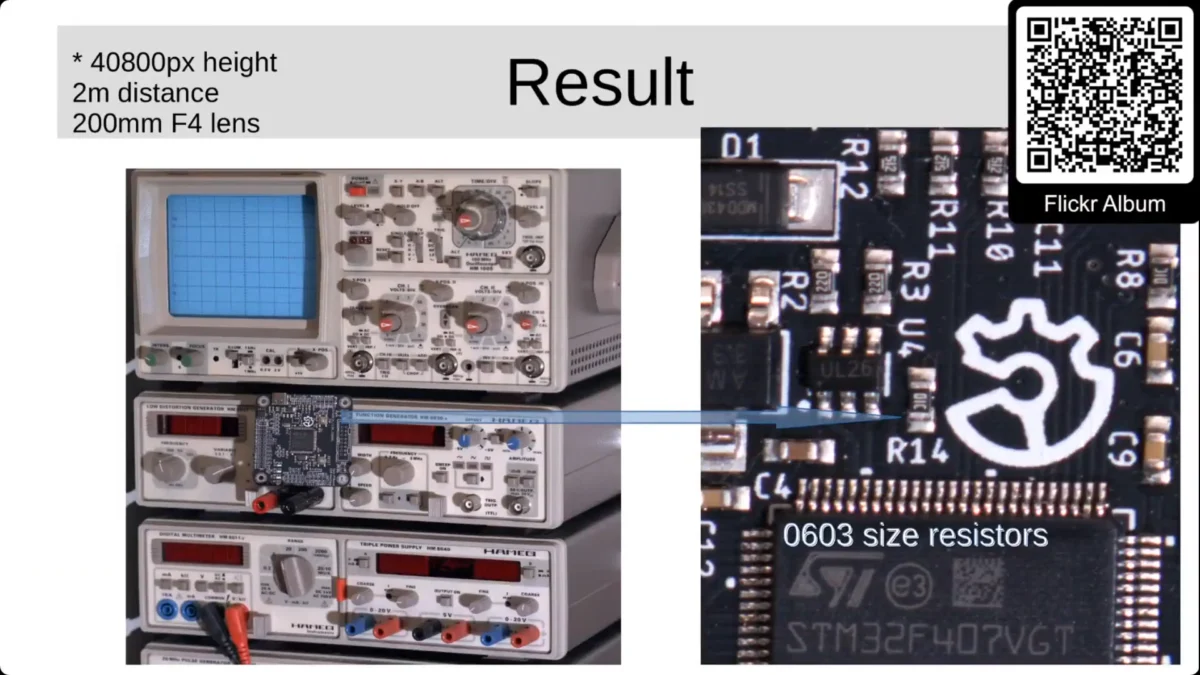
The ultimate validation of Project Gigapixel lies in its output. The final images, measuring an astounding 40800 x 80000 pixels, or 3.2 gigapixels, transcend conventional photographic detail. Richter’s demonstration at Hackaday Europe, showcasing a seemingly ordinary shot of benchtop instruments, left the audience in awe. What appeared to be a standard photograph, upon extreme digital cropping and magnification, revealed the intricate codes printed on a minute 0603 SMD resistor – a level of detail typically associated with electron microscopy, not a portable camera built from repurposed parts. This "forensic" capability underscores the immense potential of such high-resolution capture. Every scratch, every texture, every microscopic imperfection is rendered with astonishing clarity, inviting viewers to explore scenes with unprecedented depth.
Strengths and Limitations: A Balanced Perspective
Like any specialized instrument, Project Gigapixel possesses distinct strengths and limitations that define its niche:
Strengths:
- Unparalleled Resolution: For static subjects, the camera captures detail far beyond the capabilities of even high-end commercial digital cameras, making it ideal for tasks requiring extreme scrutiny.
- Cost-Effective Ultra-High Resolution: By repurposing readily available scanner components, Richter has demonstrated a significantly more affordable path to gigapixel imaging compared to custom-built, large-area sensors which are astronomically expensive.
- Educational and Inspirational: The project serves as a powerful testament to DIY innovation, open-source principles, and the hacker ethos, inspiring others to experiment and push technological boundaries.
- Forensic Detail: The ability to zoom into minute details opens up possibilities for scientific documentation, art conservation, and industrial inspection where every tiny feature matters.
Limitations:
- Speed: Capturing a 3.2-gigapixel image is not instantaneous. The linear sensor must physically traverse the scene, a process that takes time, making it unsuitable for spontaneous photography.
- Motion Blur: Any movement within the scene during the scanning process will result in severe motion blur or ghosting, rendering the image unusable. This fundamentally restricts its application to completely static subjects.
- Immense File Sizes: Gigapixel images generate colossal file sizes, demanding significant storage capacity and powerful computing resources for processing and viewing.
- Specialized Use Case: Due to its inherent limitations, Project Gigapixel is a highly specialized tool, not a general-purpose camera. Its utility is confined to specific scenarios where extreme resolution outweighs speed and portability concerns.
The "Cromulent" Approach: Validating an Unconventional Method
The original article aptly describes Richter’s method as "perfectly cromulent." This colloquialism, meaning "acceptable or legitimate," perfectly encapsulates the essence of Project Gigapixel. While unconventional and certainly outside the mainstream of camera design, Richter’s approach is undeniably effective within its defined parameters. It proves that there isn’t just one path to innovation in photography. By thinking outside the box and creatively repurposing existing technology, it’s possible to achieve results that rival or even surpass those of highly specialized, commercially produced equipment. This validates the hacker philosophy that ingenuity can often overcome seemingly insurmountable technical or financial barriers.
Broader Implications and Future Horizons
Democratizing Ultra-High Resolution
Project Gigapixel is more than just a fascinating technical demonstration; it represents a significant step towards democratizing access to ultra-high-resolution imaging. Historically, gigapixel-level imaging has been the domain of government agencies, specialized scientific institutions, or multi-million dollar industrial setups. Richter’s work showcases that with readily available components, open-source software, and considerable ingenuity, individuals can construct their own high-performance imaging systems. This shift has profound implications, potentially fostering innovation in fields previously limited by the cost and availability of such technology. It empowers hobbyists, independent researchers, and small businesses to explore applications that were once out of reach.
Potential Applications
Beyond stunning landscapes and architectural marvels, the capabilities of a gigapixel camera like Richter’s could unlock a myriad of applications across various sectors:
- Art Conservation and Cultural Heritage: Museums and conservationists could document priceless artifacts, paintings, and historical documents with unprecedented detail, allowing for minute examination of brushstrokes, textures, and deterioration without physical contact. This also aids in creating highly accurate digital archives for preservation and study.
- Forensics and Law Enforcement: The ability to capture "forensic" levels of detail could revolutionize crime scene documentation, allowing investigators to zoom into evidence with microscopic precision from a single high-resolution image.
- Scientific Research: In fields like material science, biology, and botany, researchers could capture expansive views of samples while retaining the ability to examine individual cells or material structures at extremely high magnification.
- Industrial Inspection: For quality control in manufacturing, especially in microelectronics or precision engineering, gigapixel images could facilitate automated inspection systems to detect minute flaws or misalignments that would be invisible to standard cameras.
- Urban Planning and Infrastructure Monitoring: Detailed aerial or ground-level gigapixel images could assist in monitoring urban development, assessing infrastructure integrity, or conducting environmental surveys with granular detail.
The Hacker Ethos in Action
Project Gigapixel perfectly embodies the core tenets of the hacker ethos celebrated at events like Hackaday Europe. It’s about curiosity, problem-solving, open-source collaboration, and the creative repurposing of technology. Richter didn’t wait for a commercial solution; he engineered one himself, sharing his knowledge and inspiring others. This spirit of innovation drives technological progress from the grassroots, proving that some of the most exciting advancements often come from passionate individuals tinkering in their workshops.
The Road Ahead
The potential for Project Gigapixel, or similar endeavors it inspires, is vast. Future iterations could explore:
- Faster Scanning Mechanisms: Integrating more advanced linear motors or multi-line sensors to reduce capture time, potentially making the camera viable for slightly less static scenes.
- AI-Enhanced Processing: Leveraging artificial intelligence for more sophisticated stitching algorithms, noise reduction, and perhaps even motion compensation, pushing the boundaries of image quality further.
- Compact and Modular Designs: Refining the mechanical design for greater portability and modularity, allowing for easier adaptation to different lenses or sensor types.
- Real-time Feedback: Developing innovative ways to provide more immediate feedback during the scanning process, potentially through advanced computational imaging techniques.
Yannick Richter’s Project Gigapixel stands as a powerful reminder that in the world of technology, boundaries are often self-imposed, and true innovation frequently emerges from questioning established norms and fearlessly exploring alternative paths. His work not only delivers stunningly detailed images but also opens up a vista of possibilities for the future of ultra-high-resolution photography.