Revolutionizing Recommendation Engines: How Developers Can Harness Large Language Models and TensorFlow


By Wei Wei, Developer Advocate
The landscape of artificial intelligence is undergoing a seismic shift. Large Language Models (LLMs) have captured the global imagination, showcasing an unprecedented capacity to generate nuanced text, perform seamless language translation, and answer complex queries with remarkable coherence. Building upon this momentum, Google’s public preview release of the PaLM API at Google I/O 2023 opened new frontiers for developers looking to integrate state-of-the-art generative AI into their applications.
While the PaLM API documentation offers extensive guidance on general usage and best practices, machine learning engineers are increasingly asking a more targeted question: How can LLMs actively augment and elevate traditional machine learning pipelines?
To answer this, we must examine one of the most commercially vital applications in modern computing: the recommendation system. By integrating LLMs like the PaLM API with robust frameworks like TensorFlow, developers can construct smarter, more intuitive, and highly personalized recommendation engines.
The Architecture of Modern Recommendations: Retrieval and Ranking
To understand where LLMs fit into the equation, one must first examine the architecture of modern recommendation systems. At enterprise scale—whether streaming a movie, browsing an e-commerce catalog, or reading the news—systems cannot evaluate every single item for every single user in real-time. Doing so would introduce prohibitive computational latency.
Instead, modern recommendation engines rely on a multi-stage funnel architecture, typically divided into two core phases:

- The Retrieval Phase: The system sifts through millions of candidate items to quickly narrow them down to a few hundred relevant possibilities based on broad user preferences and historical patterns.
- The Ranking Phase: The system takes those hundreds of candidates and meticulously scores, sorts, and ranks them to maximize user utility and engagement before presenting the final selection on the screen. Post-ranking filters are then applied for business logic or diversity.
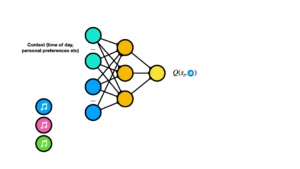
Traditionally, this pipeline relies entirely on collaborative filtering and deep learning models built using specialized libraries like TensorFlow Recommenders and TensorFlow Ranking. However, the introduction of LLMs bridges the gap between structured machine learning and unstructured natural language, transforming how systems understand user intent, sequence behavior, and item characteristics.
Chronology of AI-Driven Discovery: From Static Rules to Dynamic Dialogues
The evolution of recommendation systems has been defined by a continuous quest to better understand human context.
- Early Era (Rule-Based and Collaborative Filtering): Early recommendation systems relied heavily on explicit user ratings and simple matrix factorization. If User A and User B liked the same three items, the system recommended User A’s fourth item to User B. While effective, these systems were blind to semantic context, genre subtleties, or temporal shifts in user mood.
- Deep Learning Era: The introduction of neural networks allowed systems to process side features, handle sparse data more effectively, and capture non-linear relationships. Frameworks like TensorFlow became the industry standard for deploying these scalable pipelines.
- The Generative AI Era (Present Day): With the arrival of LLMs and conversational interfaces like Bard, users no longer need to navigate rigid filter menus or browse static carousels. They can express nuanced, multi-layered intents in plain language. By embedding LLMs into the retrieval-ranking pipeline, developers can now merge the speed of traditional vector retrieval with the deep contextual reasoning of generative AI.
Practical Integration: Four Ways to Supercharge Recommenders with the PaLM API
Integrating LLMs into recommendation systems is not about replacing traditional infrastructure entirely; rather, it is about strategically enhancing specific touchpoints within the existing pipeline.
1. Conversational Recommendations
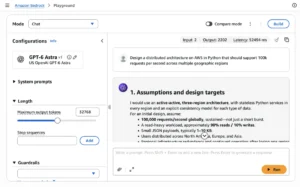
Modern users expect fluid, human-like interactions. When a user asks an assistant, "I’m in the mood for some drama movies with artistic elements tonight. Could you recommend three? Titles only," an LLM can parse this unstructured prompt instantly.
Developers can replicate this interactive functionality in their own applications using the PaLM API Chat service with minimal code:
prompt = """You are a movie recommender and your job is to recommend new movies based on user input.
So for user 42, he is in the mood for some drama movies with artistic elements tonight.
Could you recommend three? Output the titles only. Do not include other text."""
response = palm.chat(messages=prompt)
print(response.last)

# Sure, here are three drama movies with artistic elements that I recommend for user 42:
#
# 1. The Tree of Life (2011)
# 2. 20th Century Women (2016)
# 3. The Florida Project (2017)
Furthermore, the PaLM API Chat service allows users to continue the exploration in a dialogue—requesting substitutions or refining criteria dynamically—providing a personalized concierge experience within a shopping or media app.

2. Sequential Recommendations
Understanding what a user likes is only half the battle; understanding the order of their interactions is crucial for sequential recommendation. Traditional setups require complex ML pipelines to infer intent from a sequence of actions.
Using the PaLM API Text service, developers can pass a historical sequence of user activity directly into a prompt, instructing the model to weigh the chronological order heavily:
prompt = """You are a movie recommender and your job is to recommend new movies based on the sequence of movies that a user has watched. You pay special attention to the order of movies because it matters.

User 42 has watched the following movies sequentially:
"Margin Call",
"The Big Short",
"Moneyball",
"The Martian",

Recommend three movies and rank them in terms of priority. Titles only. Do not include any other text."""

response = palm.generate_text(
    model="models/text-bison-001", prompt=prompt, temperature=0
)
print(response.result)

# 1. The Wolf of Wall Street
# 2. The Social Network
# 3. Inside Job
3. Rating Predictions and Pointwise Ranking
During the ranking phase, candidate items must be sorted meticulously. Using the PaLM API, developers can prompt the model to predict numerical user ratings based on historical feedback:
prompt = """You are a movie recommender and your job is to predict a user's rating (ranging from 1 to 5, with 5 being the highest) on a movie, based on that user's previous ratings.

User 42 has rated the following movies:
"Moneyball" 4.5
"The Martian" 4
"Pitch Black" 3.5
"12 Angry Men" 5

Predict the user's rating on "The Matrix". Output the rating score only. Do not include other text."""
response = palm.generate_text(model="models/text-bison-001", prompt=prompt)
print(response.result)

# 4.5
By predicting ratings for a list of candidate items one by one, developers can execute a pointwise ranking strategy, sorting items effectively before final display. Similar prompts can be adapted for pairwise or listwise ranking strategies.
4. Text Embedding-Based Recommendations and Cold-Start Mitigation
A common concern among engineers is whether LLMs are limited strictly to well-known items present in their training data. What happens when an application introduces private, proprietary, or newly released items that the LLM has never seen?
This is where the PaLM API for Embeddings becomes essential. By converting text associated with items—such as product descriptions, movie plots, or news articles—into high-dimensional vectors, developers can perform nearest neighbor searches (using tools like TensorFlow’s tf.math.top_k, Google ScaNN, or Chroma) to identify similar items.

Consider a news application looking to recommend related articles at the bottom of a page. First, articles are embedded via the API:
embedding = palm.generate_embeddings(
    model='embedding-gecko-001', text='example news article text'
)['embedding']
Next, a recommendation function calculates dot product similarities against pre-computed embeddings stored in a Pandas DataFrame:
def recommend_news(query_text, df, topk=5):
  """Recommend news based on user query"""
  query_embedding = palm.generate_embeddings(
      model='embedding-gecko-001', text=query_text
  )
  dot_products = np.dot(
      np.stack(df['embedding']), query_embedding['embedding']
  )
  result = tf.math.top_k(dot_products, k=topk)
  indices = result.indices.numpy()
  return df.loc[indices]['news_text']

recommend_news('news currently being read', dataframe, 5)
This vector-based retrieval approach serves as a robust solution for the notoriously difficult item cold-start problem, ensuring that newly added content can be recommended immediately based on semantic similarity.
Supporting Data: Text Embeddings as Rich Side Features
Beyond direct retrieval, text embeddings generated by LLMs can be injected directly into traditional TensorFlow recommendation models as side features. Because these embeddings encapsulate deep semantic information from descriptive text, they significantly enhance model accuracy.
In TensorFlow Recommenders, injecting a pre-computed movie plot embedding into a custom Keras model is straightforward:
class MovieModel(tf.keras.Model):
  # ......

  def call(self, inputs):
    return tf.concat(
        [
            self.title_embedding(inputs["movie_title"]),
            self.title_text_embedding(inputs["movie_title"]),
            inputs["movie_plot_embedding"],  # inject movie plot embedding
        ],
        axis=1,
    )
Because the default PaLM Embedding service outputs a 768-dimensional vector, developers can easily compress dimensions by passing the embedding matrix through a tf.keras.layers.Embedding layer paired with a fully connected projection layer.

Official Perspectives and Implications
As machine learning practices evolve, the integration of generative AI into core infrastructure carries profound technical and operational implications.
Industry experts and Google developers emphasize that while LLMs offer extraordinary flexibility, they are not a silver bullet. Engineering teams must carefully weigh the cost and latency trade-offs of API calls against the real-time demands of large-scale production environments. Consequently, hybrid architectures—where lightweight embeddings and vector search handle heavy lifting at the retrieval stage, and targeted LLM prompts or ranking models handle user interaction—represent the most viable path forward.
Furthermore, organizations adopting these architectures must consider data privacy, model drift, and the governance of generated outputs. Nonetheless, the ability to seamlessly blend natural language understanding with rigorous quantitative ranking frameworks marks a definitive turning point for software engineering.
Looking Forward
The methods explored here represent only the surface of what is possible when combining Large Language Models with structured recommendation pipelines. As tooling matures, developers have unprecedented opportunities to move beyond static, click-based metrics toward dynamic, conversational, and semantically rich user experiences.
For engineers eager to dive deeper into these concepts, official educational resources—such as the full-stack movie recommendation codelab using TensorFlow and Flutter—provide hands-on pathways to production-ready implementations.
To continue this exploration, developers and industry professionals are invited to attend the upcoming online Developer Summit on Recommendation Systems, hosted by Google. The event features deep dives into cutting-edge products and architectural patterns designed to help teams build the next generation of intelligent recommendation systems.