Beyond the Small Edit: How “Prime Assembly” is Revolutionizing Genetic Medicine
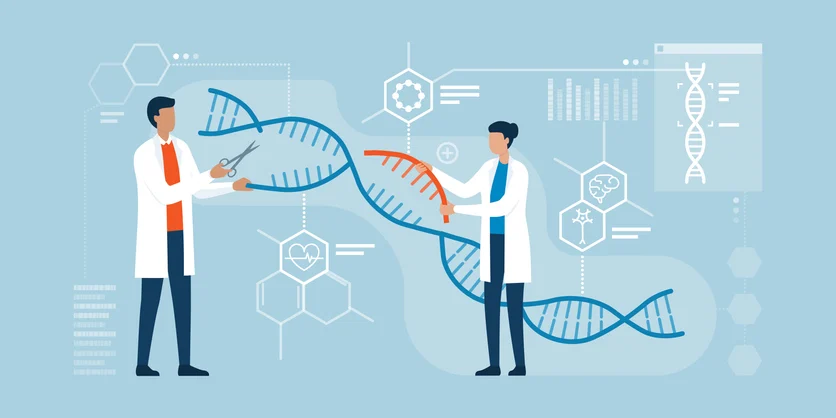
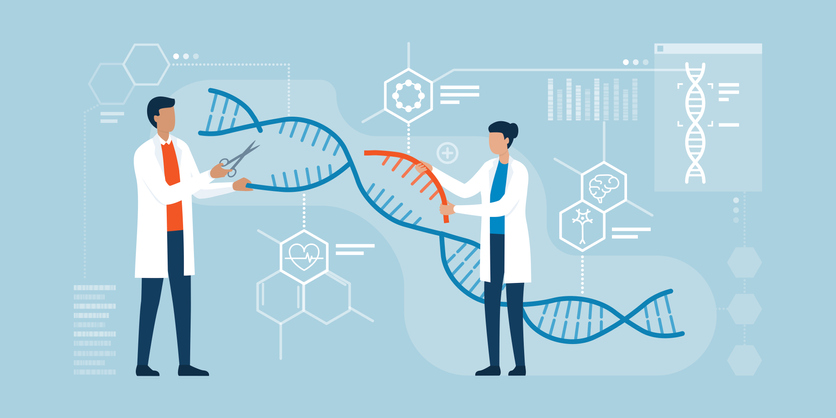
The landscape of genetic engineering is undergoing a tectonic shift. For over a decade, the CRISPR-Cas9 system has dominated the scientific conversation, offering a "molecular scissor" capable of cutting DNA to correct genetic errors. However, as the field has matured, the limitations of these early tools have become increasingly apparent: the reliance on double-strand breaks, the difficulty of targeting non-dividing cells, and the restriction to small-scale edits have created a ceiling for therapeutic potential.
A landmark study published in the journal Nature, titled "Targeted genomic integration and rearrangement using prime assembly," introduces a transformative technology that promises to break through these barriers. Developed by researchers seeking to move beyond the constraints of current CRISPR methodologies, "prime assembly" offers a sophisticated, programmable method to integrate large DNA fragments into specific, predetermined locations within the genome. By moving from simple "cuts" to precise "construction," this technology brings the dream of universal, durable gene therapy closer to reality.
The Evolution of Genome Editing: A Chronology of Precision
To understand the magnitude of prime assembly, one must first look at the trajectory of gene editing history.
The CRISPR Revolution (2012–2015)
The introduction of CRISPR-Cas9 revolutionized biotechnology by allowing researchers to create double-strand breaks (DSBs) at specific genomic loci. While groundbreaking, the reliance on the cell’s internal repair mechanisms—specifically non-homologous end joining (NHEJ)—often led to unpredictable insertions or deletions. Furthermore, creating DSBs carries the risk of chromosomal instability and toxicity.
The Rise of Prime Editing (2019)
In 2019, David Liu and his team introduced "prime editing," often described as a "molecular word processor." By combining a catalytically impaired Cas9 with a reverse transcriptase enzyme, prime editing allowed for small, precise insertions, deletions, and base swaps without the need for double-strand breaks. While highly accurate, prime editing was largely limited to small DNA changes, leaving the challenge of inserting large, functional genes (transgenes) largely unresolved.
The Breakthrough: Prime Assembly (2024–2026)
The current research represents the next logical, yet monumental, step. Prime assembly builds directly upon the prime editing architecture but adds a crucial layer of "dual flap synthesis." By utilizing CRISPR-targeted mechanisms to write in specific DNA flaps that act as biochemical "tethers," the technology allows for the controlled, site-specific integration of single- or double-stranded DNA fragments. This allows scientists to treat the genome not just as a text to be edited, but as a modular system where entire genetic sequences can be added or rearranged with surgical precision.
Supporting Data: Why Prime Assembly Changes the Game
The technical superiority of prime assembly over traditional methods is rooted in its biochemical efficiency and safety profile.
Precision vs. Randomness
Traditional viral-based gene therapies—the current standard for many rare diseases—rely on random integration. These vectors deposit genetic payloads into the genome at unpredictable sites, which carries the inherent risk of insertional mutagenesis, where the therapeutic gene disrupts a tumor-suppressor gene or activates an oncogene, potentially leading to cancer. Prime assembly, by contrast, is "programmable." It uses guide RNAs to dictate exactly where a sequence is placed, drastically reducing off-target risks.
The Non-Dividing Cell Challenge
Most homology-directed repair (HDR) methods, which were historically used for precise insertions, are only active during the S and G2 phases of the cell cycle. This means they are effectively useless in non-dividing (quiescent) cells, such as neurons or mature muscle cells. Because prime assembly does not rely on the cell’s natural repair machinery in the same way, it remains highly active in both dividing and non-dividing cells. This opens the door to treating neurodegenerative diseases and other conditions where the target tissues do not replicate.
Megabase-Scale Rearrangements
Perhaps the most striking data point from the study is the ability of prime assembly to facilitate megabase-scale rearrangements. By enabling the precise integration of gene-sized DNA pieces, researchers can now contemplate "exon recoding" or the insertion of entire, functional gene cassettes to replace malfunctioning ones. This is a leap forward from earlier iterations that were limited to changing one or two nucleotides.
Official Responses and Expert Perspectives
Dr. Daniel Bauer, director of the Gene Therapy Program at Boston Children’s Hospital and a lead voice in this research, emphasized that the transition from small edits to large-scale assembly is what will ultimately bridge the gap between bench and bedside.
"By using prime editing to write in one flap per strand of the genome, the method controls exactly where the DNA replacement starts and ends," Dr. Bauer explained. "Because the method is based on prime editing, it is much less likely to cause off-target effects compared to other gene editing methods. We are not just making a cut; we are curating a specific architectural change to the genome."
Regarding the clinical trajectory, Dr. Bauer highlighted the team’s commitment to safety and accessibility. "We’re working to improve the delivery of the prime assembly components to disease-relevant human cells in vivo, such as hematopoietic stem cells for blood disorder therapies," he noted. "We’re also exploring a number of applications of prime assembly to deliver genetic payloads as mutation-agnostic therapies to restore gene control for devastating inherited human diseases with unmet clinical need."
The consensus among independent observers is that prime assembly effectively solves the "delivery vs. precision" dilemma that has hampered clinical trials for years. By removing the reliance on toxic DNA double-strand breaks, the therapy is inherently safer for patient use, providing a cleaner, more predictable therapeutic outcome.
Implications for the Future of Medicine
The implications of this technology are vast, potentially shifting the paradigm of medicine from symptomatic management to permanent, genetic resolution.
Mutation-Agnostic Therapies
One of the most promising applications is the development of "mutation-agnostic" therapies. Currently, many genetic therapies must be custom-tailored to the specific mutation a patient carries. With prime assembly, researchers could potentially deliver a "universal" therapeutic gene cassette that functions correctly regardless of the specific upstream mutation, simplifying the drug development process and making treatments more scalable.
Treating Complex Genetic Disorders
Many diseases are caused by the loss of large chunks of genetic code or the need for a compensatory gene that is too large for current viral delivery systems. Prime assembly provides the scaffold to integrate these large, therapeutic payloads safely. This could revitalize the treatment landscape for Duchenne muscular dystrophy, cystic fibrosis, and various metabolic disorders that have proven resistant to smaller, simpler gene editing tools.
The Path Toward Clinical Integration
Despite the excitement, the path to the clinic remains methodical. The research team is currently focusing on three critical pillars:
- In Vivo Delivery: Refining the delivery vehicles—such as lipid nanoparticles or specialized viral vectors—to ensure that the prime assembly machinery reaches the target tissues (e.g., bone marrow, liver, or brain) efficiently.
- Molecular Optimization: Fine-tuning the enzymatic components to increase the efficiency of flap synthesis and DNA integration, ensuring that the process is robust enough for human therapeutic applications.
- Long-Term Safety Monitoring: Conducting longitudinal studies to ensure that these large-scale integrations remain stable and do not induce cellular stress or long-term genomic instability.
Conclusion
Prime assembly represents a maturation of the CRISPR era. By evolving from the crude "cut and paste" mechanics of early gene editing into a sophisticated, programmable "prime assembly" system, science has moved significantly closer to the goal of true genomic surgery.
While there is still much to learn regarding the long-term impacts of such substantial genomic modifications, the foundational work published in Nature provides a clear roadmap for the future. As the scientific community continues to refine these tools, we are entering a new epoch where the "tyranny of the genome"—the idea that inherited diseases are permanent, unchangeable destinies—may finally be coming to an end. The ability to write, rearrange, and integrate large-scale genetic information with high fidelity is not merely a technical milestone; it is the cornerstone upon which the next generation of life-saving medicine will be built.