Elevating the Intelligent App Ecosystem: Mastering Hybrid AI with Firebase AI Logic
In the rapidly evolving landscape of mobile development, the boundary between local on-device processing and powerful cloud-based computation is becoming increasingly fluid. For Android developers, the challenge is no longer just about integrating AI, but about orchestrating a seamless, cost-effective, and highly performant experience that balances user privacy with global intelligence.
The Android Developer Relations team—represented by Thomas Ezan, Jolanda Verhoef, and Caren Chang—has unveiled the third chapter in their comprehensive series, "Build Intelligent Android Apps." This installment focuses on the implementation of Firebase AI Logic, a robust framework designed to bridge the gap between resource-constrained local environments and the vast, generative capabilities of cloud-hosted LLMs. By dissecting the "Jetpacker" sample application, the team provides a blueprint for developers to build agentic, personalized experiences that remain functional even when connectivity is intermittent.
The Core Philosophy: Why Hybrid AI?
At the heart of modern AI-driven application design is a fundamental trade-off: On-device inference offers unparalleled privacy, zero latency, and offline availability, but it is limited by hardware constraints. Conversely, Cloud-hosted models (such as the Gemini 3 series) offer massive context windows, deep world knowledge, and complex reasoning capabilities, but they require consistent network access and incur operational costs.

Firebase AI Logic addresses this dichotomy by providing a unified interface that allows developers to toggle between these environments dynamically. As the Jetpacker app demonstrates, the goal is to provide a "best-of-both-worlds" architecture: local execution for simple, repetitive tasks and a seamless fallback to the cloud for heavy-lifting queries.
Chronology: Implementing Cloud and Hybrid Features
The transition from a basic application to an "intelligent" one follows a structured, iterative progression. Through the Jetpacker project, the development team highlighted three key implementation milestones.
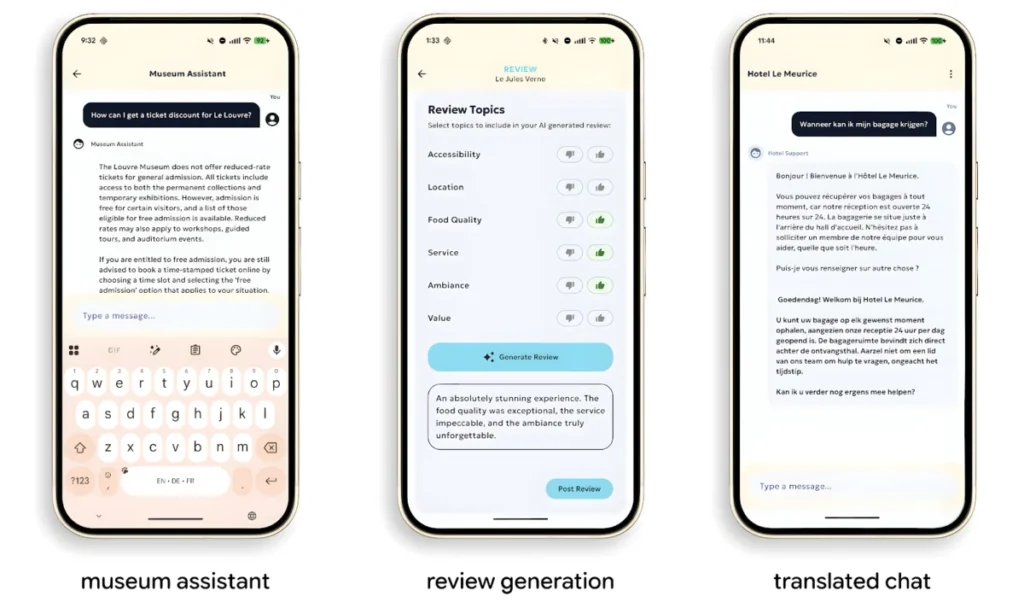
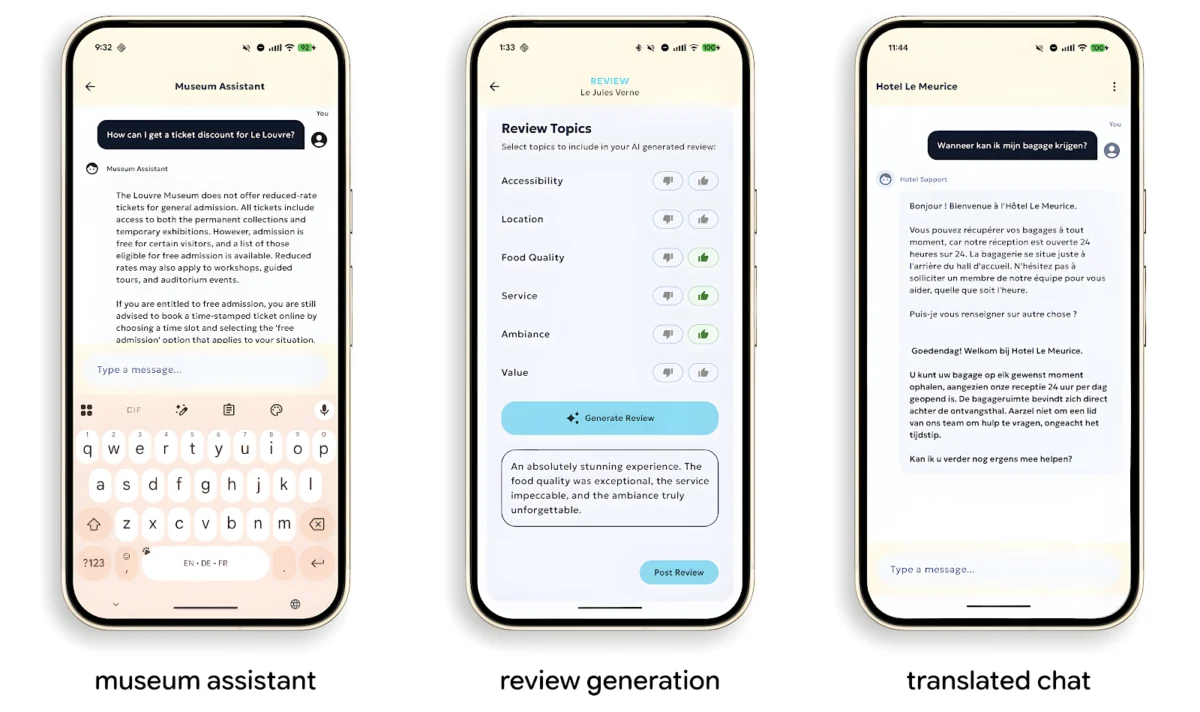
1. The Museum Assistant: Bridging Knowledge Gaps with Grounding
The Museum Assistant serves as the first proof-of-concept for LLM Grounding. Traditional LLMs, while highly knowledgeable, often suffer from "hallucinations" or outdated information regarding real-world events. By integrating Firebase AI Logic, developers can "ground" the model in real-time data.

In the Jetpacker implementation, the assistant provides up-to-the-minute details on museum hours and ticket pricing. By dynamically constructing tools—specifically Tool.googleSearch() and Tool.urlContext()—the developer forces the model to reference live web resources before generating a response. This ensures that when a user asks about a specific discount for the Louvre, the response is not based on stale training data, but on the most recent, verified URL context provided by the app’s internal logic.
2. Restaurant Reviews: The Hybrid Inference Standard
The second milestone involves the restaurant review feature. This module prioritizes Gemini Nano (on-device) to draft reviews, minimizing cloud costs and latency. However, if the device lacks the necessary hardware resources, the system automatically redirects the task to a cloud-based model like gemini-3.1-flash-lite. This seamless failover mechanism ensures that the feature is available to the widest possible range of users, regardless of their hardware specifications.
3. Hotel Support Chat: Complex Routing and Translation
The most sophisticated implementation in the Jetpacker suite is the Hotel Support Chat. This feature utilizes system instructions to simulate a receptionist persona, localized to the hotel’s specific environment. The challenge here is linguistic: the hotel may operate in a native language (e.g., French), while the user expects communication in their preferred language. The team implemented a custom routing stack that utilizes ML Kit for language identification, then intelligently selects between an on-device translation model for high-confidence language pairs and a cloud-based model for more complex translation requirements.

Supporting Data and Technical Architecture
To understand the efficacy of these implementations, one must look at the technical architecture. The Jetpacker application relies on a multi-layered stack:
- Generative Model Initialization: Using
Firebase.ai(backend = GenerativeBackend.googleAI()), developers define the model version and system instructions. - Custom Routing Logic: The translation module utilizes a sophisticated decision tree. If the source language is identified as English or Korean (where on-device translation quality is verified), the system uses local resources. For all other languages, it routes to the cloud.
- Performance Metrics: By offloading common translation tasks to on-device models, the app significantly reduces the number of network round-trips, directly impacting user experience (UX) by lowering latency and reducing the backend burden.
Official Perspective: Security and Scalability
A critical component of this integration is Firebase App Check. In a cloud-integrated environment, API abuse is a significant risk. By utilizing Play Integrity (for production) and a Debug Provider (for development), the Jetpacker team ensures that every request to the generative model is verified.
"Security cannot be an afterthought when exposing powerful AI endpoints," the authors emphasize. By installing the DebugAppCheckProviderFactory and triggering anonymous authentication via Firebase Auth, developers create a secure session that allows for rigorous testing on emulators without sacrificing production-grade security. This setup ensures that only authorized instances of the app can interact with the cloud AI pipelines, effectively mitigating the risk of unauthorized billing or quota exhaustion.

Implications for the Future of Android Development
The shift toward hybrid AI has profound implications for the industry. As developers adopt these patterns, we can expect to see several key trends:
- Increased User Trust: By keeping sensitive data on-device whenever possible—a hallmark of the "Privacy-First" approach—developers can build more robust trust with their user base.
- Adaptive UX: Applications will become more "context-aware," adjusting their behavior based not just on user input, but on current network conditions and hardware capacity.
- Agentic Workflows: The move toward "agentic" apps—where the software acts on behalf of the user, such as booking a hotel or drafting complex reviews—will become the new standard. As the upcoming Part 5 of this series promises, we are moving toward a future where apps autonomously handle complex, multi-step tasks.
- Democratization of Complex AI: By abstracting the complexities of model routing and grounding behind the Firebase AI Logic SDK, Google is effectively lowering the barrier to entry for developers who are not machine learning experts but wish to build sophisticated, AI-driven features.
Conclusion: The Path Forward
The Jetpacker series is more than a set of coding tutorials; it is a vision for the future of the Android ecosystem. By mastering the interplay between on-device Gemini Nano and cloud-based Gemini Flash models, developers are equipped to build applications that are as intelligent as they are resilient.
As we look toward the final parts of this series—covering System Integration via AppFunctions and Agentic Workflows—it is clear that the role of the developer is evolving from building static interfaces to architecting intelligent, reasoning systems. For those ready to begin, the documentation for Firebase AI Logic and the open-source repository for Jetpacker provide the foundational tools needed to turn this vision into reality.

For further exploration, developers are encouraged to follow the official Android Developers channels, ensuring they stay ahead of the rapid advancements in on-device intelligence. As noted by the team, the journey from basic app to intelligent agentic experience is not merely an upgrade—it is the next logical step in the evolution of mobile software.
Copyright 2026 Google LLC. SPDX-License-Identifier: Apache-2.0