Revolutionizing Edge Intelligence: Harvard Researchers Unveil Wake Vision, a Massive 6-Million-Image Dataset for TinyML Computer Vision

CAMBRIDGE, Mass. — In the rapidly evolving landscape of artificial intelligence, one of the most transformative frontiers is TinyML—the practice of deploying sophisticated machine learning models onto ultra-low-power edge devices, such as microcontrollers, wearable health monitors, and smart-home sensors. However, the advancement of TinyML computer vision has long been bottlenecked by a critical shortage: the absence of large-scale, high-quality, domain-specific datasets.
To bridge this widening gap, a team of researchers from Harvard University—comprising Colby Banbury, Emil Njor, Andrea Mattia Garavagno, and Vijay Janapa Reddi—has officially introduced Wake Vision. Clocking in at an unprecedented 6 million images, Wake Vision is a massive, high-quality dataset engineered specifically to supercharge research and development in TinyML person detection, the foundational computer vision task for resource-constrained environments.
Main Facts: What is Wake Vision?
Wake Vision represents a generational leap forward for edge AI data infrastructure. Designed to replace legacy datasets that are either too small, overly simplistic, or unsuited for micro-architectures, Wake Vision scales up data availability by roughly two orders of magnitude compared to previous standards.
- Scale: The dataset boasts approximately 6 million images, making it nearly 100 times larger than the Visual Wake Words (VWW) dataset, which has served as the baseline for TinyML person detection for years.
- Dual-Training Architecture: Wake Vision provides two distinct training subsets, allowing researchers to experiment directly with the trade-offs between dataset volume and label purity.
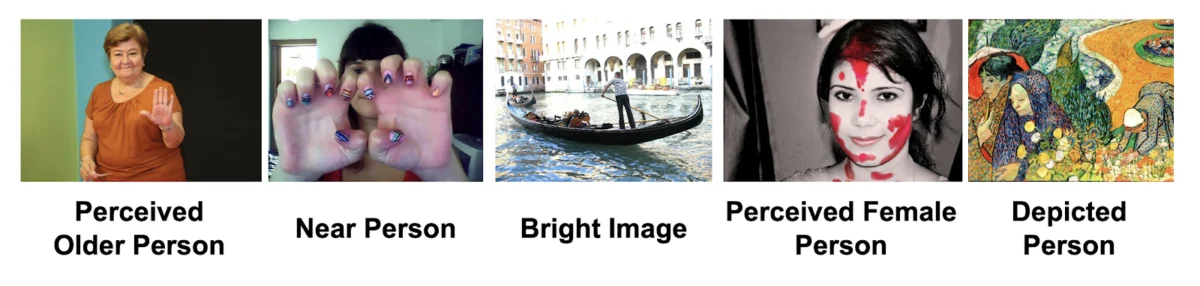
- Fine-Grained Benchmarks: Moving beyond binary classification (person vs. no person), the dataset incorporates rigorous testing suites to evaluate models against real-world complexities—such as varying lighting conditions, proximity to the camera, and demographic diversity.
- Open Accessibility: Distributed under a permissive Creative Commons (CC-BY 4.0) license, the dataset is natively integrated into major machine learning repositories, complete with a dedicated public leaderboard.
Chronology: The Journey to TinyML’s New Standard
The creation of Wake Vision did not happen overnight; it is the culmination of years of observation regarding the unique constraints and failures of traditional deep learning paradigms when applied to edge hardware.

Phase 1: The Limitations of Legacy Data (Pre-2023)
For years, the machine learning community relied on massive internet-scale datasets like ImageNet or localized edge benchmarks like Visual Wake Words (VWW). While VWW played a pivotal role in establishing early person-detection capabilities for microcontrollers, its limited scope—consisting of tens of thousands of images—hindered the training of robust, production-grade models capable of surviving wild, uncontrolled real-world environments.
Phase 2: Harvard’s Data-Centric Discovery (2023–2024)
As the Harvard research team investigated the scaling laws of ultra-compact neural networks (often restricted to a few hundred kilobytes of memory), they uncovered a counterintuitive truth. While massive, overparameterized cloud models thrive primarily on data quantity, under-parameterized TinyML models are hyper-sensitive to data quality. This realization catalyzed the development of Wake Vision, shifting the focus from simply scraping the web to meticulous filtering, curation, and structured labeling.
Phase 3: Launch and Deployment (Late 2024 – Present)
Following extensive internal stress-testing, the Harvard team formally unveiled Wake Vision to the global AI community, launching the official website (wakevision.ai), setting up competitive leaderboards, and integrating the dataset with premier ML platforms to ensure seamless adoption by both academic institutions and enterprise engineers.
Supporting Data: Why Data Quality Trumps Quantity in TinyML
In mainstream cloud-based deep learning, conventional wisdom dictates that data quantity supersedes data quality. Massive models containing hundreds of billions of parameters can effortlessly memorize, gloss over, or mathematically adapt to noise and labeling errors in massive training sets.

However, Wake Vision’s underlying empirical research proves that TinyML operates under entirely different economic and mathematical laws. Because edge models are heavily under-parameterized—often operating with parameter counts ranging from 78,000 to 11 million—they lack the capacity to absorb noisy labels.
[Under-Parameterized TinyML Models]
       │
       ├──> Hyper-sensitive to label noise (Garbage in, catastrophic failure out)
       ├──> High-quality labels yield exponentially better test scores than raw volume
       └──> Optimal Pipeline: Pre-train on massive sets ──> Fine-tune on high-quality sets
Empirical evaluations conducted using Wake Vision demonstrate that pristine, high-quality labels (characterized by exceptionally low error rates) deliver significantly higher performance gains for small models than simply scaling up dirty, uncurated data.
To capitalize on this dynamic, Wake Vision’s dual-training set structure empowers researchers to deploy a sophisticated two-stage training pipeline: utilizing the massive raw dataset for initial model pre-training, followed by targeted fine-tuning on the high-quality subset. This synergy unlocks unprecedented performance metrics, drastically lowering false-positive rates on microcontrollers.
Official Responses and Expert Insights
The introduction of Wake Vision has drawn widespread acclaim from the embedded machine learning community, who view it as a critical milestone for commercial Internet of Things (IoT) deployment.

"TinyML represents the ultimate frontier of accessible artificial intelligence, bringing smart vision to billions of low-power devices," noted lead researcher Vijay Janapa Reddi. "Yet, until now, developers have been flying blind due to inadequate datasets. Wake Vision provides the empirical foundation and scale necessary to build the next generation of reliable, privacy-preserving edge vision systems."
Industry engineers have echoed these sentiments, noting that reliable person-detection on microcontrollers is the linchpin for numerous consumer and industrial applications—from automated smart-building climate controls that shut off rooms when empty, to battery-operated home security cameras that must reliably distinguish between humans, pets, and swaying tree branches without draining their power cells in days.
Implications: What Wake Vision Means for the Future of Edge AI
The release of Wake Vision extends far beyond a simple academic dataset update; it introduces profound implications for privacy, hardware manufacturing, and real-world AI deployment.
1. Advancing Privacy-Preserving Computing
Because TinyML models run locally on the device (the "edge"), they eliminate the need to stream raw video feeds to cloud servers. With Wake Vision providing the robust training data required to make these local models hyper-accurate, consumers can enjoy intelligent automation (such as wake-up-on-approach displays or occupancy detection) without sacrificing personal privacy or risking cloud-based data breaches.

2. Eliminating Bias Through Fine-Grained Benchmarking
Traditional open-source datasets have frequently suffered from severe demographic and environmental biases, leading to erratic performance when deployed globally. Wake Vision’s advanced, fine-grained benchmarks specifically test model resilience across diverse real-world conditions—including varying lighting spectrums, distinct physical proximities, and diverse demographic groups. This allows developers to audit and mitigate algorithmic bias before hardware ships to consumers.
3. Lowering the Barrier to Entry for Hardware Manufacturers
By establishing a standardized, high-performance dataset and a transparent public leaderboard, Wake Vision democratizes cutting-edge computer vision. Smaller hardware startups and academic labs can now benchmark their ultra-low-power microcontrollers against standardized metrics, accelerating time-to-market for innovative edge devices.
Getting Started with Wake Vision
The research team has ensured that Wake Vision is immediately accessible to the global engineering community.
- Availability: The dataset is fully accessible through major open-source dataset repositories and platforms.
- Licensing: Distributed freely under the permissive Creative Commons Attribution 4.0 (CC-BY 4.0) license, making it viable for both academic exploration and commercial product development.
- Resources: Researchers, students, and enterprise developers can access the complete dataset, associated training code, fine-grained evaluation benchmarks, and active leaderboards by visiting the official project portal at wakevision.ai.
As the industry pivots toward sustainable, local, and privacy-first artificial intelligence, Wake Vision stands ready to serve as the bedrock upon which the next decade of TinyML innovation will be built.