The Quest for the Perfect Loop: Can AI-Optimized Toroidal Propellers Revolutionize Aerodynamics?
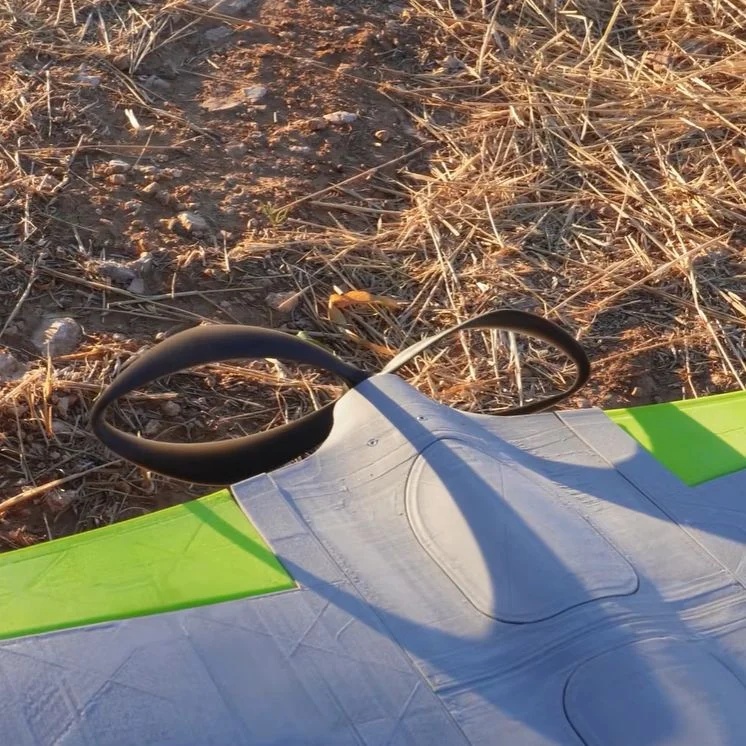
Despite centuries of development in aeronautical engineering, the fundamental shape of the propeller remains a subject of intense debate. While traditional blade designs have reached a point of high optimization, a radical alternative—the toroidal (loop-shaped) propeller—continues to hover at the edges of mainstream acceptance. Recent investigations by the engineering project [Neuronautics] have sought to strip away the conjecture and determine, through rigorous computational fluid dynamics (CFD) and artificial intelligence, whether these continuous-loop designs can truly compete with conventional propulsion systems.
Main Facts: The Battle of the Blade
The core of the investigation was a head-to-head performance analysis between a standard, industry-grade optimized propeller and a purpose-built toroidal design. For years, the toroidal propeller has been hailed in fringe aviation circles as a potential "silver bullet" for noise reduction and efficiency. Unlike traditional blades, which feature distinct tips where vortices often shed and create drag, the toroidal design is a continuous, closed-loop structure.
[Neuronautics] established a performance baseline using a high-end commercial propeller. Through high-resolution 3D scanning, the exact geometry of this baseline propeller was imported into a CFD environment. The simulation yielded an efficiency rating of approximately 73%. The goal was simple yet ambitious: could a toroidal propeller, optimized via modern algorithmic techniques, match or exceed this 73% threshold?
The findings, while perhaps disappointing for proponents of the "toroidal revolution," were enlightening. After exhaustive cycles of machine-learning-assisted design, the best-performing iteration—dubbed the "G1401"—only achieved an efficiency of 62.9%. While the experiment highlighted the immense potential for AI in aerodynamic modeling, it also underscored the difficulty of displacing the highly refined, conventional blade designs that have benefited from over a century of iterative human and industrial testing.
Chronology: A Two-Month Digital Journey
The development of the G1401 was not a matter of simple trial and error; it was a complex engineering workflow that spanned two months of continuous computation.
Phase 1: Establishing the Baseline
The project began with the acquisition of a conventional propeller of known high efficiency. By digitizing its geometry, the team created a high-fidelity CAD model. This model was subjected to a rigorous CFD analysis to confirm its 73% efficiency, ensuring that the benchmark was set against a high-performance, real-world object rather than a theoretical ideal.
Phase 2: Algorithmic Optimization (MRF)
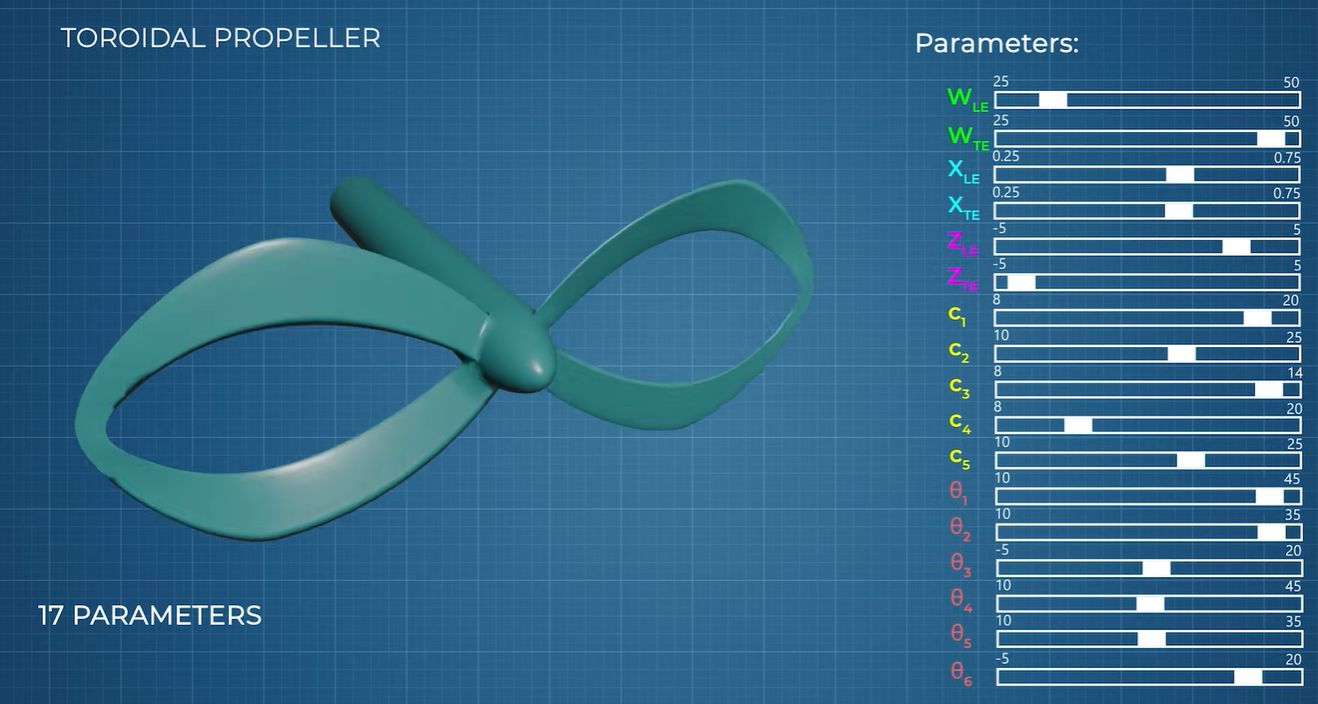
The primary challenge in designing a toroidal propeller is the massive parameter space. With seventeen distinct variables defining the shape of a single loop, brute-forcing every configuration would have required years of computing power. To bypass this, the team employed the Multiple Reference Frame (MRF) method. This technique allows for the simulation of rotating machinery by creating a moving reference frame around the propeller, drastically reducing the time required to calculate flow fields.
Phase 3: AI-Driven Selection
Even with MRF, the sheer volume of data produced was insurmountable for manual review. [Neuronautics] implemented a custom-trained artificial neural network to act as a filter. This AI was tasked with parsing the output of thousands of simulations, discarding ineffective geometries and narrowing the field to the most promising candidates. This process eventually converged on the G1401 design.
Phase 4: Airfoil Iteration and Physical Realization
Once the global shape was finalized, the team performed a secondary optimization on the airfoil profiles themselves. This was followed by the transition from the virtual to the physical world via high-resolution resin 3D printing. However, the physical reality presented new obstacles: the initial prints were structurally insufficient, lacking the rigidity required to withstand the forces of high-RPM rotation without deformation.
Supporting Data: Understanding the CFD Hurdles
To appreciate the complexity of this project, one must understand the technical constraints of CFD. The study relied on the principles discussed in the 2019 research by [Randi Franzke] et al., published in Energies, which detailed the efficacy of MRF in modeling propeller performance.
The simulation process revealed that the toroidal design faces significant fluid dynamic challenges that conventional blades avoid. Traditional propellers are optimized to manage tip vortices—the "swirling" air at the end of a blade that creates drag. Toroidal blades eliminate the tip, but they introduce new challenges related to surface area and skin friction. The G1401 design, while mathematically "optimal" for its specific configuration, could not overcome the inherent drag penalties associated with its closed-loop geometry.
Furthermore, the data suggests a discrepancy between virtual performance and physical reality. The transition from a simulated environment to a 3D-printed object introduced variables such as material elasticity and surface roughness. The final physical test yielded an efficiency of under 62%, a noticeable drop from its simulated performance, highlighting that the "ideal" aerodynamic shape often requires material properties that are difficult to achieve with current additive manufacturing techniques.
Official Responses and Peer Perspective
The engineering community has responded to the [Neuronautics] findings with a mix of pragmatism and analytical rigor. In the open forum of the project’s release, several key observations were made:
- The "Commercial vs. DIY" Variable: Critics pointed out that the conventional baseline was a commercial product, likely manufactured with precision molding or carbon-fiber composites, whereas the toroidal design was a DIY resin print. This discrepancy in material science inevitably skewed the results in favor of the commercial blade.
- The Efficiency Plateau: Experts noted that if toroidal propellers were significantly more efficient, they would have already been adopted by major aerospace manufacturers. The fact that they remain a niche research interest suggests that the current "standard" blade shape is, in fact, near the limit of physical efficiency for its class.
- The Role of AI: There was universal praise for the use of neural networks in this project. The consensus is that while the toroidal design may not have "won," the methodology—using AI to prune simulation parameters—is a transformative development for amateur and professional engineering alike.
Implications: Where Does Aerodynamics Go From Here?
The failure of the toroidal propeller to outperform a conventional blade in this specific study does not render the concept dead; rather, it clarifies its role in modern aviation.
Noise Reduction vs. Efficiency
One of the primary drivers behind the interest in toroidal propellers is not raw efficiency, but acoustic signature. While the G1401 failed to beat the commercial propeller in terms of power-to-thrust efficiency, the study acknowledged that toroidal designs often exhibit different harmonic frequencies. In the future, the focus may shift from "which shape is more efficient" to "which shape is quieter." For urban air mobility (UAM) and drone delivery, noise pollution is a more significant barrier to entry than a 5% difference in propeller efficiency.
The Democratization of CFD
Perhaps the most lasting implication of the [Neuronautics] study is the accessibility of advanced design tools. By utilizing open-source CFD platforms and training their own neural networks, a small team was able to perform research that would have required a supercomputer center a decade ago. This democratization means that unconventional designs—not just toroidal, but biomimetic, fractal, and variable-geometry propellers—will be explored at an accelerated rate.
Future Research Directions
The path forward for toroidal design likely involves moving away from resin printing and toward carbon fiber or metal additive manufacturing. If the structural flexibility of the blade can be solved without adding weight, the aerodynamic profile of the toroidal shape may finally get a fair chance to compete.
In conclusion, while the conventional propeller remains the king of the skies for now, the [Neuronautics] experiment serves as a vital reminder that engineering is a process of constant challenge. We may not have found the "perfect" propeller yet, but through the marriage of AI and CFD, we are getting closer to understanding exactly why the current standard works—and where the next breakthrough might be hiding. The quest for the loop continues, but for now, the straight blade remains the standard by which all others are measured.