The Ghost in the Machine: How Modern AI Finally Cracked a Century-Old WWI Mystery
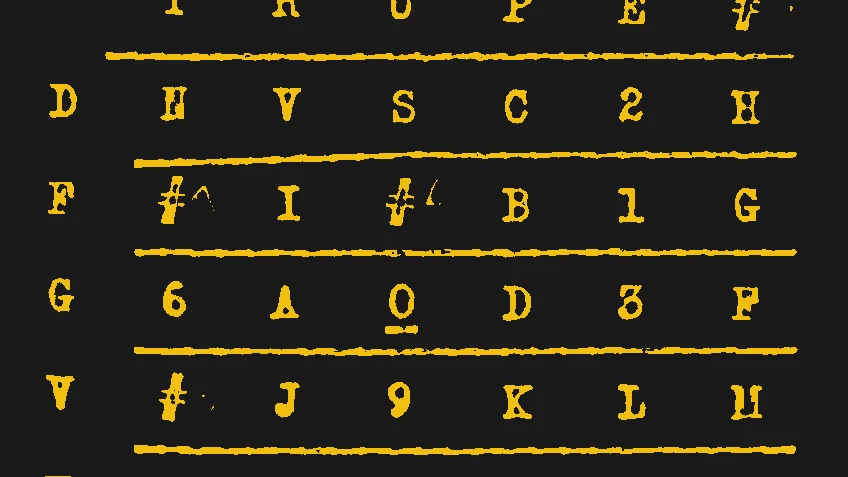
When the history of cryptography is written, the narrative often centers on the mid-20th century: the rhythmic clatter of Enigma rotors at Bletchley Park and the desperate, high-stakes brilliance of Alan Turing. However, the art of digital-age intelligence has just reached back into the trenches of the First World War to illuminate a dark corner of history that had remained obscured for over a century.
In a landmark demonstration of machine learning’s analytical prowess, an AI model known as GPT-6 Astra has successfully deciphered a German radio transmission from November 1918—a message that had stubbornly resisted human attempts at decryption for 106 years. This breakthrough does not merely represent a triumph of computational speed; it serves as a bridge between the analog ingenuity of the past and the synthetic intelligence of the future.
The ADFGVX Cipher: A Masterclass in Complexity
To understand the significance of this achievement, one must appreciate the sheer mechanical complexity of the ADFGVX cipher. Introduced by the German Army in the spring of 1918, the cipher was a response to the Allies’ growing proficiency in intercepting and breaking simpler field codes.
The cipher’s name was not chosen at random. The letters A, D, F, G, V, and X were specifically selected because their Morse code representations are highly distinct from one another. In the chaotic, interference-heavy environment of World War I wireless telegraphy, these characters were less likely to be garbled during transmission, ensuring that the integrity of the encrypted message remained intact even over damaged or low-fidelity radio equipment.
The system operated on a "fractionating" principle, combining a Polybius square (a substitution method) with a columnar transposition. Initially, the Germans utilized an ADFGX system—a 5×5 grid containing the alphabet. However, the operational needs of the Great War required more than just the basic alphabet; they needed numbers and specialized tactical data. By mid-1918, the system evolved into the 6×6 ADFGVX grid, which incorporated the entire alphabet plus the digits 0 through 9.
The process was agonizingly manual for the sender:
- Substitution: Each plaintext letter was identified by its grid coordinates (e.g., an "A" might become "FG").
- Transposition: These resulting pairs were then written out beneath a keyword (the transposition key). The columns were then rearranged based on the alphabetical order of that keyword.
For a human codebreaker, this meant untangling two layers of obfuscation simultaneously. Without the benefit of modern computing, this was a Herculean task of statistical analysis and raw persistence.
Chronology of a Cold Case
The historical context of this specific message is as vital as the mathematics behind it. By November 1918, the German Empire was crumbling. The war was effectively ending, yet the German military continued to transmit highly sensitive tactical intelligence using their most advanced encryption tools.
- Spring 1918: The German Army introduces the ADFGVX cipher, a code deemed "unbreakable" by their military intelligence.
- June 1918: French cryptanalyst Georges Painvin, working for the Bureau du Chiffre, achieves a breakthrough. His work is so intense and mentally taxing that it reportedly leaves him physically ill. His efforts are credited with helping the Allies predict German movements during the final phases of the war.
- November 27, 1918: A late-war message is intercepted. Despite the armistice having been signed weeks earlier, the German military continued to operate secure channels. This specific message, however, remained a stubborn outlier.
- 2024-2025: Researchers leveraging advanced AI models begin testing the limits of pattern recognition on historical data.
- Present Day: GPT-6 Astra, through iterative processing and probabilistic analysis, identifies the underlying key and successfully reconstructs the plaintext.
The Human Element: Painvin and the Limits of Biology
It is impossible to discuss the cracking of the ADFGVX cipher without acknowledging Georges Painvin. In 1918, Painvin was a mathematician fighting a war of wits. Working in a small office with nothing but paper, pencils, and his own formidable intellect, he tackled the cipher by identifying the frequency patterns of the transposition columns.
The fact that Painvin succeeded at all is a testament to the human capacity for pattern recognition. Yet, the message intercepted on November 27, 1918, utilized a "super-encrypted" key—TRUPPENVERSCHIEBUNG (German for "troop movement"). This key was not supposed to enter service until December. The early implementation of this key suggests a level of operational security that surpassed even the high standards the French had come to expect. While Painvin cracked the earlier iterations, this specific transmission became a "ghost" in the archives, waiting for a machine powerful enough to see the patterns he could only sense.
Decoding the Mystery: What the Message Said
The AI-deciphered message reveals a snapshot of the final, confused days of the conflict. The plaintext, written in German, contains a report regarding the movements of a British vessel near the port of Sevastopol.
Historical cross-referencing confirms that the HMS Canterbury was indeed operating in that region during the dates specified in the transmission. The message serves as a chilling reminder that even as the guns fell silent on the Western Front, the Great Game of intelligence gathering continued in the maritime theaters of the East. The message was not merely a tactical update; it was a testament to the German military’s attempt to maintain order and intelligence, even as their empire collapsed around them.
Implications for Modern AI and Cryptography
The successful decryption of this message by GPT-6 Astra has profound implications for both historical research and modern cybersecurity.
The Power of Probabilistic Reasoning
Unlike traditional brute-force decryption, which attempts every possible combination, AI models like Astra utilize probabilistic reasoning. They "guess" at the structure of the language and the logic of the cipher based on vast datasets of linguistic and mathematical patterns. This allows the AI to bypass the "combinatorial explosion" that would typically stop a standard computer in its tracks.
Digital Archaeology
We are entering an era of "Digital Archaeology," where AI acts as a sophisticated lens, sharpening the blurry images of our past. There are thousands of intercepted messages from both World Wars, as well as older diplomatic and military correspondences, that remain unread. AI provides a scalable, cost-effective way to finally close these historical files.
The "Arms Race" of Security
While the news is exciting, it also serves as a warning. If an AI can crack a century-old cipher with relative ease, it underscores the fragility of current encryption standards. As we move toward a world of quantum computing, the very methods we use to secure our banking, personal data, and national secrets will need to evolve. The cracking of the ADFGVX cipher is a reminder that in the world of cryptography, nothing is ever truly "unbreakable"—only temporarily secure.
Conclusion: A Respectful Glance Backward
There is a poetic irony in using the most advanced technology of the 21st century to solve a puzzle from the 20th. While we are rightfully impressed by the capabilities of GPT-6 Astra, we should remain humble. The machine has merely finished the work that Georges Painvin began.
The ADFGVX cipher was a triumph of human engineering, a complex machine built of logic and ink. Its eventual defeat at the hands of an AI is not a sign that human intellect is obsolete, but rather that our reach has been extended. As we continue to uncover the secrets of the past, we are reminded that history is never really written in permanent ink—sometimes, it is merely waiting for the right code to be broken.