Empowering the Future of AI: Google Hosts the 3rd Annual Women in Machine Learning Symposium 2023
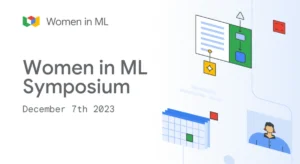
SAN FRANCISCO, CA — As artificial intelligence and machine learning (ML) continue to redefine the boundaries of human capability and technological innovation, the imperative for diversity, inclusivity, and collaborative growth within the sector has never been more urgent. Addressing this critical need head-on, Google proudly announced the return of the Women in Machine Learning (WiML) Symposium.
Marking its third consecutive year, this premier virtual event is scheduled for December 7, 2023, running from 9:30 AM to 1:00 PM PT. Spearheaded by Sharbani Roy, Senior Director of Product Management at Google, the symposium is designed as an immersive, high-impact gathering tailored for machine learning practitioners, researchers, students, and enthusiasts across all tiers of experience.
By bringing together brilliant minds from across the global technology landscape, the symposium seeks to dismantle historical gender barriers, elevate the voices of women leading the AI revolution, and provide a comprehensive roadmap for the future of intelligent systems.
Main Facts
The 2023 Women in Machine Learning Symposium stands as one of the definitive virtual gatherings for technologists seeking to deepen their understanding of cutting-end AI architectures, ethical frameworks, and cross-industry implementations.
Key Event Details:
- Event Name: 3rd Annual Women in Machine Learning Symposium 2023
- Host Organization: Google (led by Sharbani Roy, Senior Director of Product Management)
- Date: December 7, 2023
- Time: 9:30 AM – 1:00 PM PT
- Format: Virtual (Global accessibility via live stream and interactive digital modules)
- Cost & Registration: Free and open to the public; registration is currently live via the official Google AI Developers event portal.
Core Technological Pillars:
The symposium’s curriculum is meticulously engineered to address the most pressing frontiers in modern computer science, focusing on four foundational pillars:
- Generative AI & Large Language Models (LLMs): Exploring the mechanics, creative capabilities, and safety protocols governing modern generative systems.
- Privacy-Preserving AI: Examining cryptographic techniques, federated learning, and data anonymization methods that ensure user privacy without sacrificing model efficacy.
- Hardware Accelerators & Frameworks: Delving into the foundational silicon, infrastructure, and ML frameworks (such as TensorFlow and JAX) that power compute-heavy model training.
- Cross-Industry Applications: Demonstrating real-world use cases where ML drives operational efficiencies and breakthroughs in healthcare, creative arts, enterprise software, and beyond.
Chronology
To fully appreciate the significance of the 2023 symposium, it is essential to trace the historical trajectory of the Women in Machine Learning initiative and its evolution within Google’s broader developer ecosystem.
The Genesis and Evolution of WiML
- Pre-2021 (The Industry Landscape): For decades, the fields of artificial intelligence and machine learning suffered from a stark gender imbalance. Academic institutions and corporate boardrooms alike reported low percentages of women holding senior technical roles or publishing breakthrough research in AI conferences. Industry stakeholders recognized that homogeneous development teams risked baking systemic biases into algorithms that would soon govern critical societal infrastructure.
- December 2021 (Laying the Groundwork): Recognizing the need for dedicated platforms that foster mentorship, skill-building, and visibility, Google conceptualized targeted initiatives to support underrepresented groups in AI development, laying the groundwork for specialized developer symposia.
- December 2022 (The 2nd Annual Symposium): Building on early successes, the 2022 Women in Machine Learning Symposium expanded its global footprint. It featured comprehensive deep dives into responsible AI deployment, attracting thousands of virtual attendees ranging from university undergraduates to seasoned principal engineers. The event established a blueprint for combining technical mastery with discussions on diversity, equity, and inclusion (DEI).
- December 2023 (The 3rd Annual Symposium – Current Milestone): Today, the event has matured into an institutional fixture on the tech calendar. The 2023 edition introduces an expanded curriculum that reflects the seismic shifts brought on by the mainstream explosion of generative AI throughout the year. Featuring cross-industry leaders from Google Health, Nvidia, and Adobe, this year’s chronology marks a transition from foundational awareness to advanced, applied technical deployment.
Supporting Data
The necessity for targeted interventions like the WiML Symposium is underscored by extensive industry data regarding workforce demographics, educational pipelines, and the exponential economic impact of machine learning technologies.
Workforce and Gender Demographics in AI
According to reports from organizations such as the World Economic Forum (WEF) and Stanford University’s Human-Centered AI (HAI) institute:
- The Gender Gap: Women account for roughly 26% to 30% of the overall data and AI workforce globally. However, that percentage drops significantly when examining senior research scientist positions, patent holders, and executive leadership roles, where women frequently occupy fewer than 15% to 20% of positions.
- Academic Pipelines: While university enrollment in computer science and data science programs has risen steadily over the past decade, female enrollment in specialized machine learning and neural network tracks remains disproportionately low.
- The Representation Effect: Studies in organizational psychology repeatedly demonstrate that visible mentorship and representation drastically improve retention rates for women in STEM (Science, Technology, Engineering, and Mathematics) fields. Events that spotlight female pioneers directly combat the "imposter syndrome" and isolation frequently reported by women in male-dominated technical spaces.
The Explosive Growth of Machine Learning Adoption
Concurrently, the demand for qualified ML practitioners is skyrocketing. Industry forecasts indicate:
- Market Valuation: The global artificial intelligence market size is projected to scale past hundreds of billions, if not trillions, of dollars by the end of the decade, permeating nearly every sector of the global economy.
- Skill Shortages: Enterprises across healthcare, finance, logistics, and creative industries report a critical shortage of talent capable of building, auditing, and scaling secure ML models. By democratizing access to training through free, high-caliber events like the WiML Symposium, Google and its industry partners are actively working to bridge this talent gap.
Official Responses
Leadership and industry experts have expressed immense enthusiasm regarding the upcoming event, emphasizing both its technical rigor and its cultural importance.
Perspectives from Google Leadership
Sharbani Roy, Senior Director of Product Management at Google and the driving force behind the event’s public announcement, emphasized the symposium’s dual mission of technical empowerment and community building:
"We’re thrilled to bring back the Women in Machine Learning Symposium for its third consecutive year. This event is not merely about celebrating the achievements of women in tech; it is about rolling up our sleeves, diving deep into the code, exploring generative AI and privacy-preserving frameworks, and equipping practitioners at every level with the tools they need to build the next generation of intelligent systems. Technology performs at its absolute best when the minds building it reflect the diverse world it serves."
Industry Collaboration: Insights from Partners
Beyond Google’s internal teams, the 2023 symposium draws heavily on the expertise of seasoned industry leaders from powerhouse technology and research institutions, including Nvidia, Adobe, and Google Health.
Spokespersons from these collaborating organizations have noted that the complexity of modern AI—ranging from multimodal generative models to ethical bias mitigation—requires an unprecedented degree of cross-pollination. By featuring keynote addresses and panel discussions curated by cross-industry pioneers, the event ensures that attendees receive a holistic view of how machine learning is deployed in enterprise environments, clinical research laboratories, and creative studios.
Implications
The long-term implications of the 3rd Annual Women in Machine Learning Symposium extend far beyond the three-and-a-half-hour virtual broadcast on December 7, 2023. The event acts as a catalyst for systemic change across multiple dimensions of the technology sector.
1. Shaping Responsible and Ethical AI
As machine learning models take on increasingly autonomous decision-making roles in criminal justice, finance, hiring, and healthcare, the ethics of AI development have become a matter of global urgency. Homogeneous development teams historically risk overlooking edge cases, cultural nuances, and potential biases that disproportionately harm marginalized communities.
By empowering a diverse cohort of women engineers and researchers to lead the conversation on privacy-preserving AI and algorithmic fairness, the WiML Symposium directly contributes to the creation of safer, more equitable AI systems. Diverse teams ask different questions, test for different failure modes, and ultimately build products that are safer for society at large.
2. Democratizing Access to Cutting-Edge Education
High-level education in machine learning has traditionally been bottlenecked by expensive university programs, proprietary training materials, or exclusive industry networks. By offering the symposium as a free, virtual event accessible to anyone with an internet connection, Google lowers the barrier to entry for aspiring developers worldwide. A college freshman in a developing nation has the exact same digital front-row seat to keynote insights from Google Health and Nvidia engineers as a senior developer working in Silicon Valley. This democratization accelerates global talent development.
3. Fostering Long-Term Mentorship and Networking Networks
One of the most profound barriers to career advancement for women in tech is the lack of informal networking channels (often referred to as the "old boys’ club"). Events like the WiML Symposium create vibrant virtual communities, chat ecosystems, and post-event collaboration channels. These connections frequently blossom into formal mentorships, research partnerships, co-founded startups, and internal career promotions.
4. Setting a Precedent for Corporate Accountability
Finally, the sustained success of the WiML Symposium sets a high benchmark for the broader technology industry. It signals to stakeholders, investors, and job seekers that diversity and technical excellence are not mutually exclusive pursuits; rather, they are mutually reinforcing imperatives. Companies that fail to invest in inclusive developer ecosystems risk falling behind in both innovation and talent acquisition.
Conclusion and Call to Action
The 3rd Annual Women in Machine Learning Symposium 2023 arrives at a pivotal juncture in technological history. As generative AI transforms from a futuristic novelty into the operational bedrock of global commerce, society must ensure that the architects of this new digital era are as diverse as humanity itself.
Whether you are an absolute beginner writing your first lines of Python code, an intermediate developer looking to master TensorFlow and JAX frameworks, or an advanced researcher pushing the frontiers of privacy-preserving neural networks, the December 7 event offers invaluable insights.
Secure Your Spot: Don’t miss this opportunity to learn from world-class leaders at Google, Nvidia, Adobe, and beyond. RSVP today through the official Google AI Developers event portal to claim your virtual seat and explore the full agenda. Join the global conversation and help shape the inclusive future of machine learning.