The Viral Saboteur: How a Single Protein Turns the Immune System Against the Lungs in Severe COVID-19

For years, the medical community has grappled with the devastating aftermath of severe COVID-19. Beyond the initial viral assault, many patients suffer from persistent, life-altering lung damage that defies simple explanations. It is not merely a case of the virus killing airway cells; rather, it is a complex, self-destructive inflammatory loop where the body’s own defense mechanisms are co-opted to accelerate tissue decay.
A groundbreaking study published in Science Advances has finally unmasked a primary culprit behind this physiological betrayal. Researchers at the Gladstone Institutes and the University of California, San Francisco (UCSF), have identified the viral protein ORF8 as a pivotal driver of this destructive process. By effectively "reprogramming" the immune system’s foot soldiers, ORF8 transforms the body’s natural defenses into catalysts for lung infection and chronic inflammation.
Main Facts: The Mechanism of Viral Hijacking
The study, titled "Secreted ORF8 reprograms macrophages to enhance SARS-CoV-2 infection of lung epithelial cells," sheds light on why SARS-CoV-2 is so adept at causing severe pulmonary distress.
At the center of this discovery are macrophages—the "big eaters" of the immune system tasked with clearing debris and signaling for help during an infection. The research team discovered that the viral protein ORF8 is secreted by the virus and acts as a molecular "hacker." It enters macrophages and forces them to increase the expression of angiotensin-converting enzyme 2 (ACE2), the very receptor that SARS-CoV-2 exploits to enter and infect cells.
By forcing macrophages to produce more ACE2, ORF8 makes these immune cells hyper-susceptible to infection themselves. Once a macrophage is infected, it loses its antiviral capabilities. Instead of neutralizing the virus, the macrophage undergoes a form of inflammatory cell death, releasing a storm of signaling molecules that inflame surrounding lung tissue. This creates a "feedforward" circuit: the infected macrophage makes the surrounding lung epithelial cells more vulnerable to viral entry, which in turn leads to higher viral replication and more severe tissue scarring.
Chronology of Discovery: From Puzzling Data to Breakthrough
The road to this discovery began with a comprehensive effort by Gladstone and UCSF scientists to map the "interactome"—the complex web of interactions—between SARS-CoV-2 proteins and human proteins. The goal was to identify "viral vulnerabilities" that could be neutralized with existing or novel pharmaceutical agents.
The ORF8 Paradox
Early in the research, ORF8 emerged as a confounding variable. In isolated lung cell cultures, the protein appeared to inhibit viral replication—a counterintuitive finding given that clinical observations consistently showed that SARS-CoV-2 variants lacking the ORF8 protein resulted in milder disease. If ORF8 limited viral replication, why did its absence correlate with less severe disease?
The Macrophage Pivot
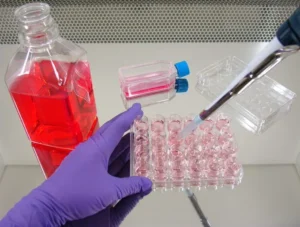
To resolve this contradiction, the team, led by Dr. Melanie Ott, director of the Gladstone Infectious Disease Institute, shifted their focus from isolated epithelial cells to the broader cellular environment of the lung. They hypothesized that the immune system was the missing link. By co-culturing macrophages with lung epithelial cells and introducing ORF8, the team observed a radical shift. The inhibitory effect of ORF8 vanished, replaced by an aggressive enhancement of infection.
Testing in Vivo
The final piece of the puzzle came through mouse models. Researchers compared the impact of SARS-CoV-2 with and without the ORF8 protein. The findings were stark: mice exposed to the virus carrying ORF8 exhibited significantly higher viral burdens, rampant pulmonary inflammation, and increased fibrosis (scarring) compared to those exposed to the ORF8-deficient virus.
Supporting Data: Understanding the Immune Betrayal
The data presented in Science Advances provides a clear look at the "hijacking" process. In co-culture experiments, the presence of macrophages effectively overrode the previously reported "inhibition" of infection. The researchers noted that in the presence of macrophages, the virus was able to restore high-level production of infectious particles.

Key metrics from the study included:
- ACE2 Upregulation: ORF8 exposure consistently increased the density of ACE2 receptors on the surface of macrophages.
- Inflammatory Signaling: Infected macrophages, primed by ORF8, exhibited higher levels of pyroptosis—a highly inflammatory form of cell death—which acted as a beacon for further immune system recruitment, amplifying the local tissue damage.
- Pulmonary Fibrosis: Histological analysis of mouse lungs showed that ORF8-positive infections led to a measurable increase in collagen deposition and lung wall thickening, hallmarks of permanent fibrotic damage.
Official Responses and Expert Perspective
The research team emphasized the unexpected nature of their findings. "We were surprised to see how effectively ORF8 turns our own immune defenses against us," said Dr. Yusuke Matsui, the study’s first author and a staff research scientist in the Ott lab. "ORF8 is essentially hijacking macrophages to enhance infection of the surrounding tissue."
Dr. Melanie Ott highlighted the significance of the findings for clinical medicine. "By showing that this single viral protein is the main bridge between viral growth and tissue damage, we’ve found a clear target for new treatments," she noted.
The scientific community has lauded the study for bridging the gap between molecular biology and clinical pathology. By focusing on the interaction between viral proteins and immune cells rather than just the virus itself, the researchers have moved the goalposts for how we define "severe disease" in the context of COVID-19.
Implications: A New Frontier in Therapeutic Strategy
Perhaps the most promising aspect of this research is that it points to an existing pharmaceutical solution. The team investigated the role of the receptor IL-17RA, which had been previously linked to ORF8 activity.
They tested brodalumab, an FDA-approved monoclonal antibody currently used to treat plaque psoriasis. By blocking the IL-17RA receptor, the drug effectively neutralized the harmful effects of ORF8 in mouse models. The treated mice showed a significant reduction in viral burden and, crucially, a dramatic attenuation of pulmonary inflammation and fibrosis.
Repurposing for Pandemic Response
The use of an already-approved drug for a different application (drug repurposing) is a hallmark of efficient translational medicine. If clinical trials confirm that IL-17RA inhibitors can mitigate the severe respiratory outcomes of COVID-19, it could provide a potent, readily available weapon against the most dangerous complications of the virus.
Future Research Directions
The identification of ORF8 as a primary pathogen-host interface also opens doors to other therapies. Researchers are now looking at:
- Small Molecule Inhibitors: Can we design compounds that specifically prevent ORF8 from binding to the IL-17RA receptor?
- Early Intervention: Could monitoring ORF8-driven inflammatory markers help clinicians identify which patients are at the highest risk for developing chronic lung fibrosis before the damage becomes irreversible?
- Broad-Spectrum Application: Does this mechanism of macrophage hijacking play a role in other respiratory viruses? If so, this could fundamentally change how we manage viral pneumonia in general.
Conclusion
The study from the Gladstone Institutes and UCSF serves as a sobering reminder of the sophistication of SARS-CoV-2. It does not simply invade the lung; it exploits the body’s protective instincts to ensure its own success. By transforming macrophages from defenders into facilitators of viral replication, ORF8 creates a cycle of violence that leads to the scarring and respiratory failure seen in the most severe cases.
However, the identification of this protein also provides a roadmap for intervention. By turning the spotlight onto the inflammatory loop driven by ORF8, medical researchers have moved closer to a future where severe COVID-19 is no longer a life-threatening, long-term debilitation, but a manageable condition. The road ahead requires further clinical verification, but the discovery of a targeted approach to "de-arm" the virus’s most dangerous protein offers a beacon of hope for patients worldwide.