The State of the Global Software Testing Services Market: Growth, AI Integration, and Career Outlook
As digital transformation accelerates across all industry verticals, software testing has evolved from a routine post-development chore into a cornerstone of product engineering. Backed by multi-billion-dollar market projections, the integration of artificial intelligence, and widespread adoption of continuous testing frameworks, quality assurance (QA) professionals are finding themselves at the epicenter of modern software development.
Main Facts
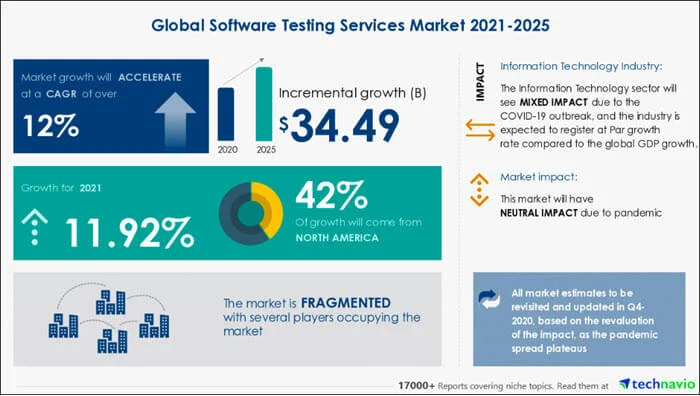
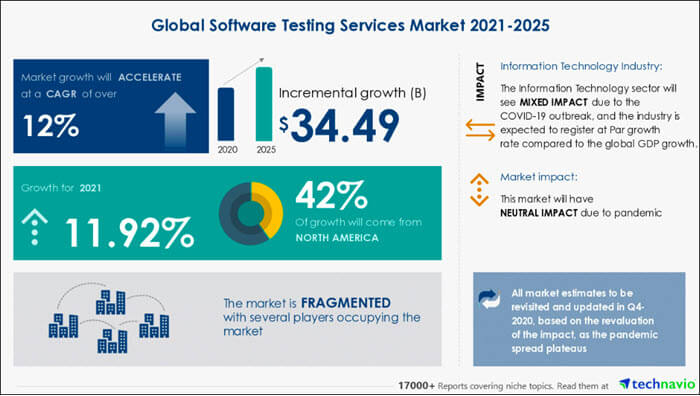
The global software testing services market is experiencing a golden era of growth and technological evolution. Industry analysts project that the market will surge by an impressive $90 billion between 2021 and 2030, driven by a robust Compound Annual Growth Rate (CAGR) of 12.39%, according to insights from PR Newswire. Concurrently, data from Global Market Insights indicates that the market crossed the $40 billion threshold in 2020 and is maintaining a steady 7% CAGR through the decade.
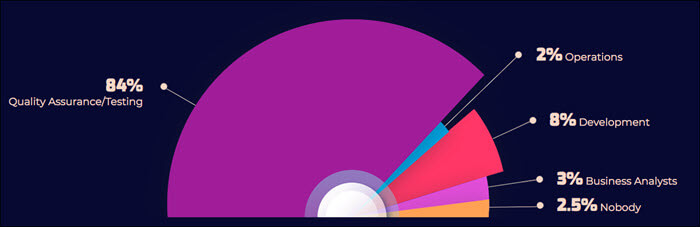
Once viewed merely as a reactive mechanism to catch bugs before product deployment, software testing is now an indispensable, proactive pillar of product development teams. Surveys conducted by Tricentis reveal that in over 80% of organizations, dedicated testers or QA engineers now spearhead functional test automation. This shift underscores a broader industry realization: high-quality software requires specialized, continuous validation to meet escalating consumer expectations and stringent cybersecurity standards.

Chronology and Industry Evolution
To understand the current maturity of the software testing market, it is helpful to trace its trajectory from traditional methodologies to modern continuous pipelines:
- The Manual Testing Era (Pre-2010s): Software testing was predominantly manual, siloed, and executed at the very end of the software development lifecycle (SDLC). It was often viewed as a bottleneck that delayed product releases.
- The Rise of Automation (2010–2015): With the rise of web and mobile applications, frameworks like Selenium and JUnit gained massive traction. Organizations began automating repetitive functional tests to accelerate release cycles.
- Agile and DevOps Integration (2015–2020): Continuous integration and continuous delivery (CI/CD) pipelines forced testing to shift left. QA engineers became integrated members of cross-functional agile teams, performing continuous testing alongside developers.
- The Intelligent Automation & AI Surge (2020–Present): Artificial Intelligence (AI) and Machine Learning (ML) entered the QA mainstream. Organizations began leveraging intelligent automation, Robotic Process Automation (RPA) for security testing, and codeless testing tools to optimize test coverage and efficiency.
Supporting Data and Market Insights
A deep dive into recent research reports from leading market intelligence firms highlights the financial and operational vitality of the software testing sector:
Market Projections and Spending
- Market Valuation: PR Newswire projects a $90 billion market expansion from 2021 to 2030 at a 12.39% CAGR. Global Market Insights values the baseline at over $40 billion in 2020 with a steady 7% growth trajectory through 2030.
- Quality Assurance Budgets: According to the World Quality Report by Micro Focus, QA and testing budgets are now deeply embedded as an indivisible segment of overall software engineering budgets. The report notes that 69% of businesses are successfully meeting their quality goals through structured QA practices.
- Cybersecurity Expenditures: Amzur research highlights that 68% of large enterprises view cybersecurity threats as an escalating risk. Consequently, global spending on cybersecurity and automated security testing is projected to reach $133.7 billion.
Tooling and Technology Preferences
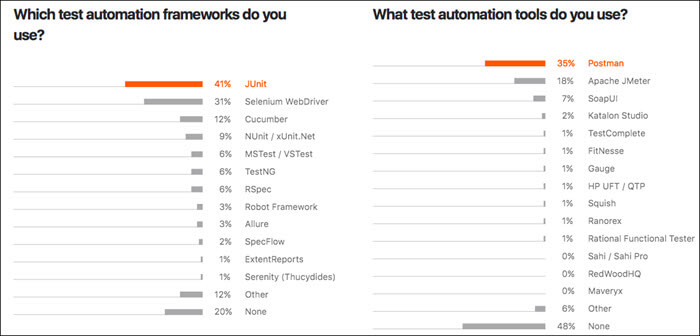
Research from JetBrains sheds light on the developer ecosystem’s preferred frameworks and languages:
- Programming Languages: Java remains the undisputed heavyweight for test automation scripting.
- Frameworks & Tools: JUnit and Selenium WebDriver lead the pack for test automation frameworks, while Postman and Apache JMeter dominate API and performance testing toolchains.
Workforce Demographics and Skills
Data from QA Lead outlines the human capital landscape of the industry:
- Per Capita Density: Globally, there is an average of 5.2 software testers per 100,000 people.
- Education and Training: 56% of practitioners rely on self-study and books, while 44% have completed formal classes and professional certifications.
- Core Competencies: Employers value soft skills alongside technical prowess. Approximately 75% of respondents emphasize strong communication skills, while 63% prioritize scripting and automation capabilities.
Official Responses and Expert Perspectives
Industry leaders and global enterprises are increasingly vocal about the strategic value of software testing in mitigating operational risk and driving revenue.
According to findings synthesized in the World Quality Report, 90% of businesses are currently experiencing organizational growth driven by AI initiatives. Executives recognize that as applications multiply in complexity and scale, the margin for error narrows significantly. Enterprise leaders emphasize that automated testing is no longer just a tool for error detection—it is a vital component of brand protection and customer experience management.
Forte Group research further highlights this sentiment, noting that test automation is experiencing impulse growth. While 12% of QA practitioners report operating in a fully automated environment, another 35% state they are halfway toward complete automation maturity.
Experts from Katalon emphasize that AI will remain omnipresent across innovative technologies, with the broader AI market projected to skyrocket to $200 billion by 2030. In the realm of software testing, this translates to AI-driven test maintenance, self-healing scripts, and predictive analytics that foresee potential system failures before they impact end-users.
Implications for Businesses and Professionals
The rapid expansion of the software testing services market carries profound implications for both corporate strategy and individual career paths.
For Businesses
- Mandatory Investment in Continuous Testing: Organizations that fail to integrate continuous testing and DevOps practices risk falling behind competitors in release velocity and application stability. Mission-critical systems—ranging from fintech platforms to healthcare portals—demand rigorous, automated validation.
- Mitigating Security Risks: With cyber threats multiplying, companies must adopt AI-driven and RPA-powered cybersecurity testing. Protecting digital infrastructure is no longer optional; it is a regulatory and consumer trust imperative.
- Embracing Next-Gen Methodologies: Forward-thinking organizations are exploring emerging trends such as codeless test automation, IoT-driven testing, blockchain testing, and performance engineering to achieve comprehensive test coverage across diverse platforms and scenarios.
For Career Seekers
- Robust Career Longevity: The old query—"What is the future of the software testing business?"—has been emphatically answered by market data. Software testing is a thriving, high-demand career path with lucrative financial prospects and long-term stability.
- Upskilling Requirements: Aspiring and current testers must move beyond basic manual execution. Mastery of automation frameworks (such as Selenium and JUnit), scripting languages (like Java), API testing tools (Postman), and an understanding of AI/ML-driven testing tools are essential for career advancement.
- The Balance of Technical and Soft Skills: Success in modern QA requires a dual threat: sharp technical acumen in automation coupled with exceptional communication skills to collaborate effectively within cross-functional agile product teams.
Conclusion
The global software testing services market stands at a fascinating intersection of rapid financial growth and technological innovation. Driven by multi-billion-dollar investments, the integration of artificial intelligence, and the universal adoption of agile and DevOps methodologies, quality assurance has shed its historical image as a secondary phase of development.
Today, software testers and QA analysts are indispensable guardians of digital quality, user experience, and enterprise security. For businesses, prioritizing automated, intelligent testing is the key to thriving in a competitive digital economy. For professionals, the sector offers a dynamic, rewarding career path defined by continuous learning, high demand, and limitless potential.