AWS Unveils Amazon CloudWatch Omni: A Paradigm Shift Toward AI-Powered, Application-Centric Observability
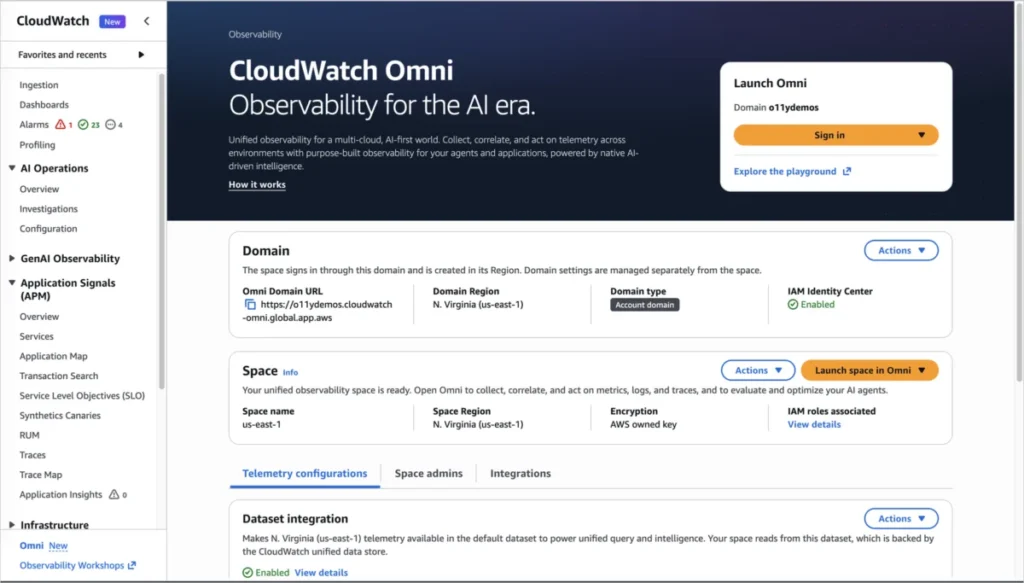
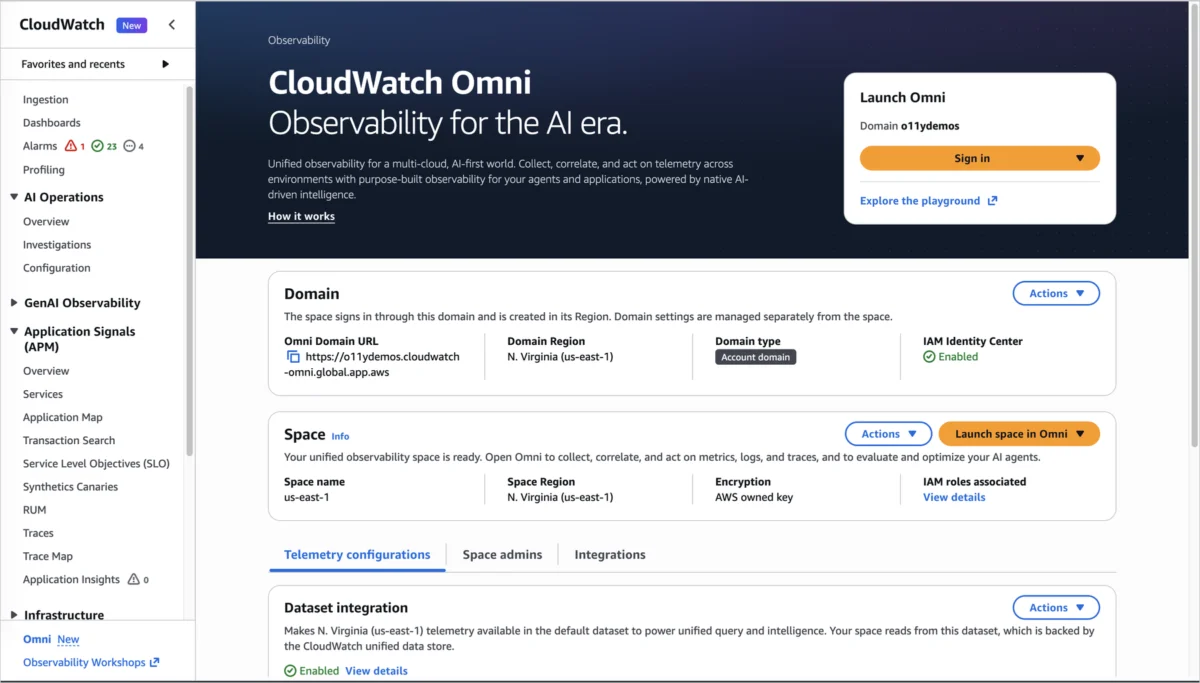
SEATTLE — In an announcement poised to redefine how engineering organizations monitor complex digital ecosystems, Amazon Web Services (AWS) has officially launched Amazon CloudWatch Omni. This next-generation observability experience is architected specifically to bridge the gap between traditional application infrastructure and modern generative AI or agentic workloads. By unifying disparate monitoring workflows, eliminating the need for tedious manual dashboard maintenance, and embedding generative AI directly into incident response pipelines, CloudWatch Omni promises to drastically reduce mean time to resolution (MTTR) while fostering unprecedented cross-functional collaboration.
Engineered to operate on top of OpenTelemetry standards, CloudWatch Omni allows teams to leverage their existing telemetry data streams instantly. Crucially, the platform decouples advanced monitoring from the traditional AWS Management Console, introducing an independent, secure, and application-focused workspace designed to adapt dynamically to modern, fast-evolving software architectures.
Main Facts: What is Amazon CloudWatch Omni?
At its core, Amazon CloudWatch Omni is an AI-powered observability layer built to tackle the fatigue engineering teams face when maintaining static dashboards, tuning alert thresholds, and manually stitching together clues across isolated silos.
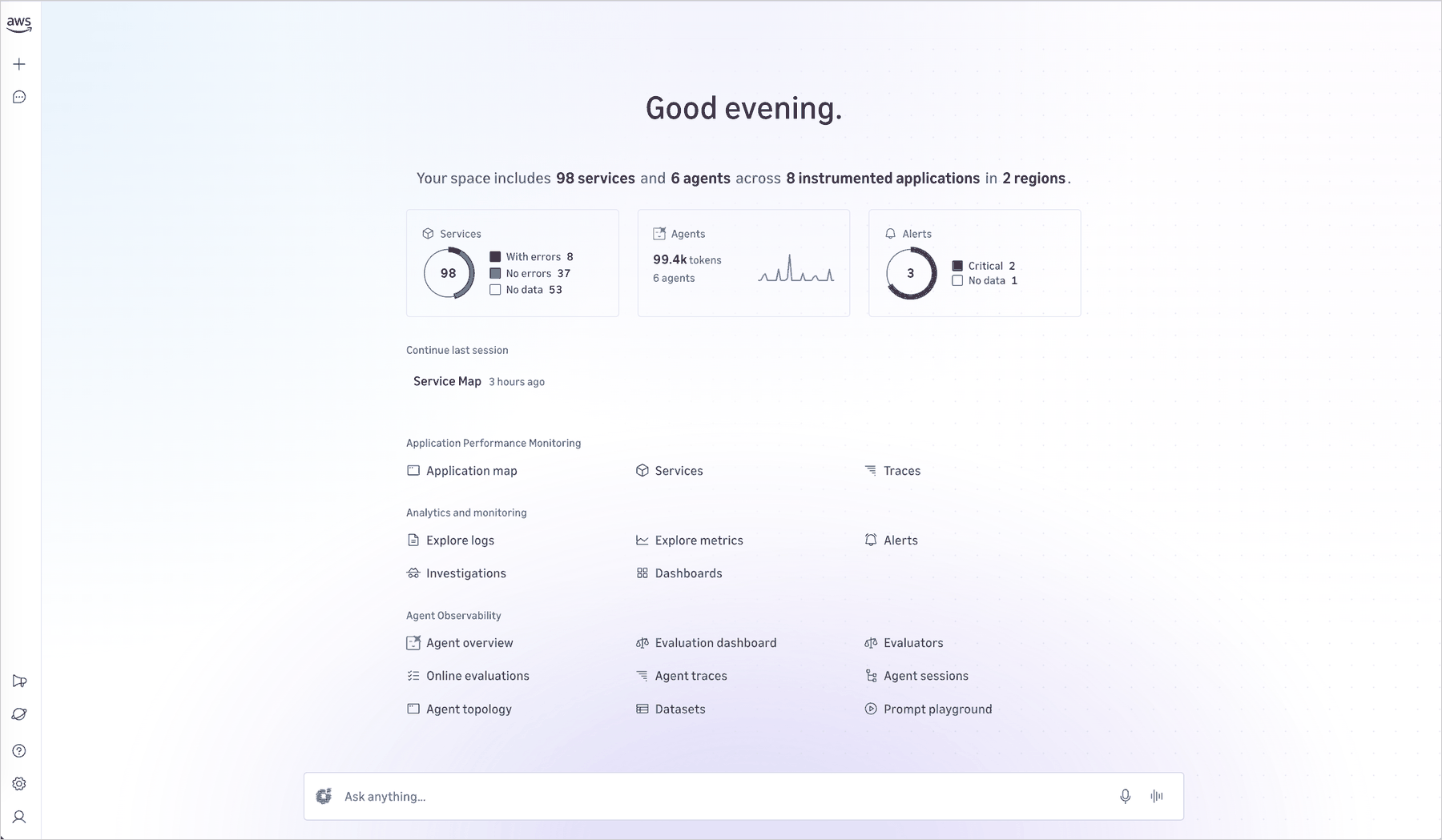
- Unified Access Without Console Constraints: Omni provides a dedicated, organization-specific URL where team members sign in via enterprise Single Sign-On (SSO) using AWS IAM Identity Center. Supporting major identity providers such as Okta and Azure AD, the platform enables SREs, developers, database administrators, and engineering managers to collaborate in real time without requiring direct access to the AWS Management Console.
- OpenTelemetry Foundation: Built natively on OpenTelemetry, Omni requires no re-configuration for telemetry already piped into CloudWatch. Workloads instrumented elsewhere can seamlessly forward data via an OpenTelemetry Protocol (OTLP) endpoint.
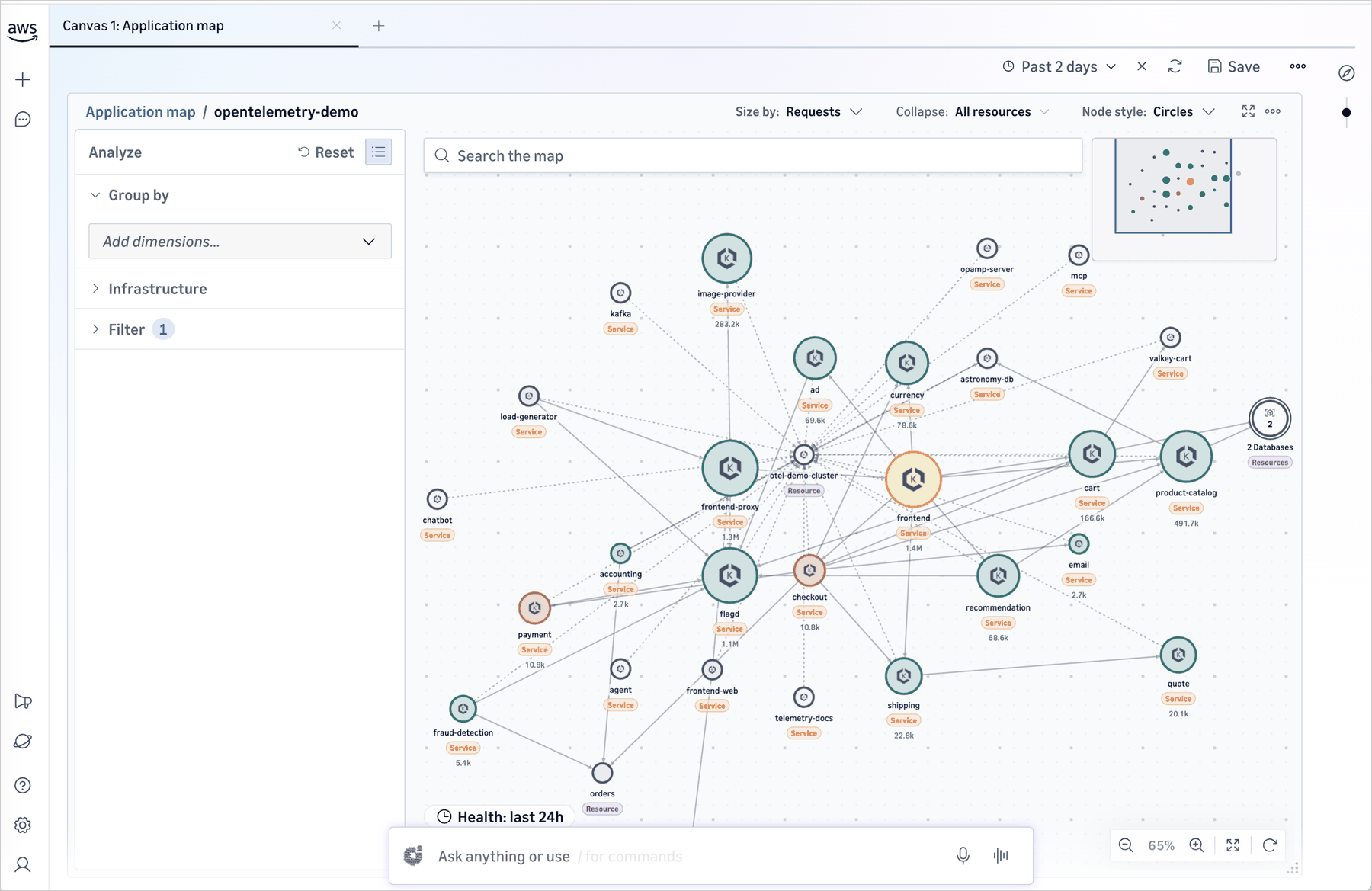
- Application-Centric Organization: Rather than organizing telemetry by isolated infrastructure components or raw metrics, Omni structures data around whole applications. It automatically discovers services, maps dependency topologies, and groups related workloads into dedicated team workspaces known as "Spaces."
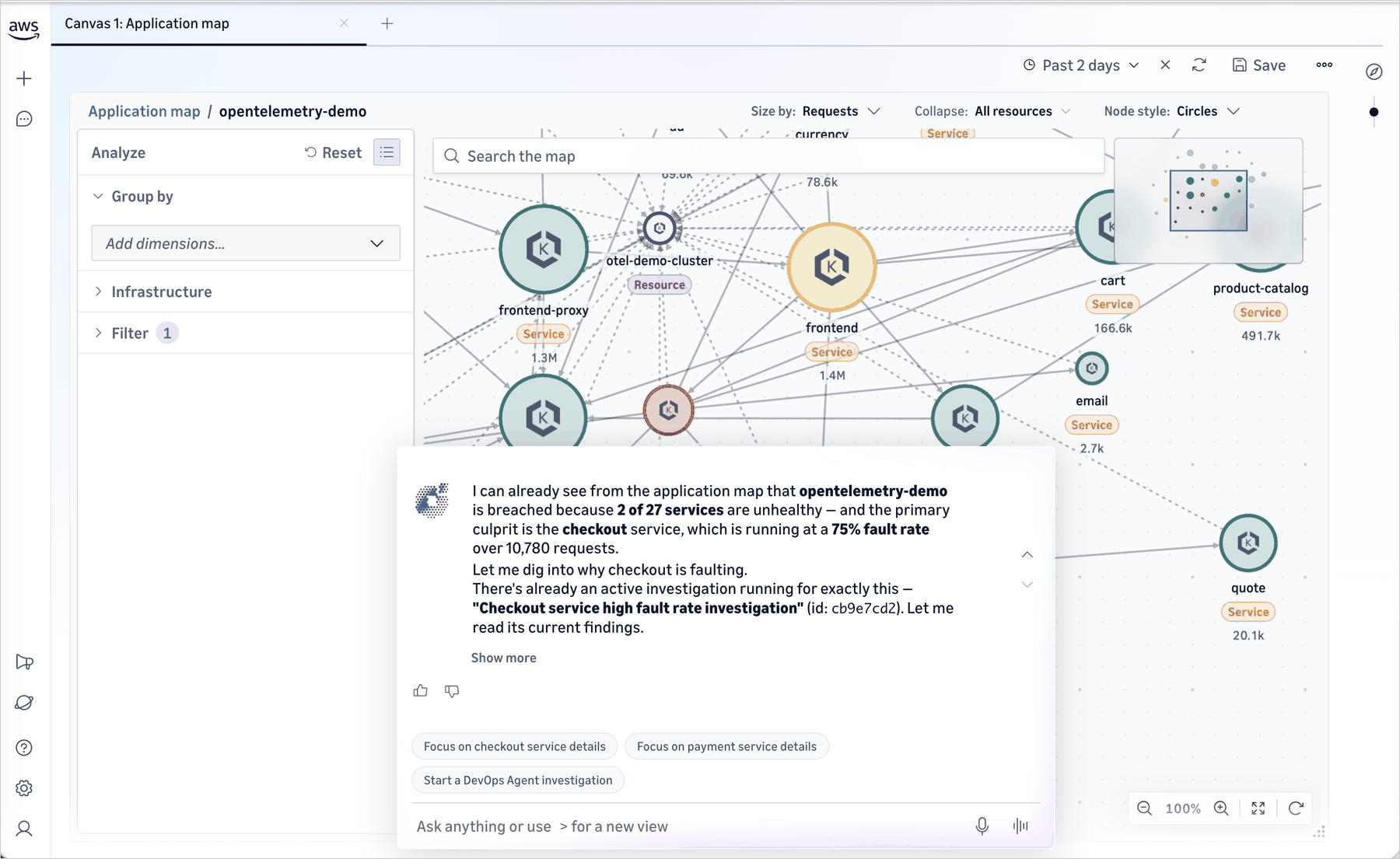
- Amazon DevOps Agent Integration: Omni features an embedded AI assistant—the Amazon DevOps Agent—which actively participates in investigation sessions. Grounded in real-time telemetry, the agent correlates signals across services, traces root causes through dependency graphs, and automatically drafts investigation histories for post-incident reviews.
- Dual Observability Scope: CloudWatch Omni delivers a comprehensive two-fold approach, offering robust application observability alongside purpose-built agent observability for generative AI applications and autonomous agents.
Chronology: The Evolution Toward Autonomous Observability
The journey toward CloudWatch Omni reflects a broader industry-wide reckoning with the limits of traditional monitoring tools.
The Era of Static Dashboards and Silos
For decades, engineering teams relied on siloed tools to monitor CPU utilization, memory thresholds, network latency, and application logs independently. While effective for monolithic applications, this fragmented approach fractured under the weight of microservices, distributed cloud-native architectures, and ephemeral serverless functions. Teams spent countless hours manually constructing dashboards, setting brittle alerts, and losing critical troubleshooting context inside scattered chat threads and screenshots when incidents crossed team boundaries.
The Rise of OpenTelemetry and AI
Over recent years, the industry standardization around OpenTelemetry laid the technical groundwork for unified telemetry pipelines. Simultaneously, the explosion of generative AI and autonomous agents introduced a new tier of complexity. Systems were no longer just processing deterministic code paths; they were executing probabilistic workflows involving Large Language Models (LLMs) and multi-step agentic decision-making.

Recognizing that legacy monitoring paradigms were inadequate for these hybrid workloads, AWS engineering teams—spearheaded by product leaders like Daniel Abib—began developing an observability layer that could natively understand both traditional microservices and generative AI agents. The result is CloudWatch Omni, which transitions observability from a reactive, dashboard-checking chore into an autonomous, collaborative, and AI-guided workflow.
Supporting Data and Architecture: Under the Hood of CloudWatch Omni
To understand how CloudWatch Omni achieves its seamless user experience, one must examine its foundational architecture and operational mechanisms.
Breaking Down the Three Core Pillars
AWS designed CloudWatch Omni to solve three persistent bottlenecks identified through extensive feedback from enterprise engineering organizations:
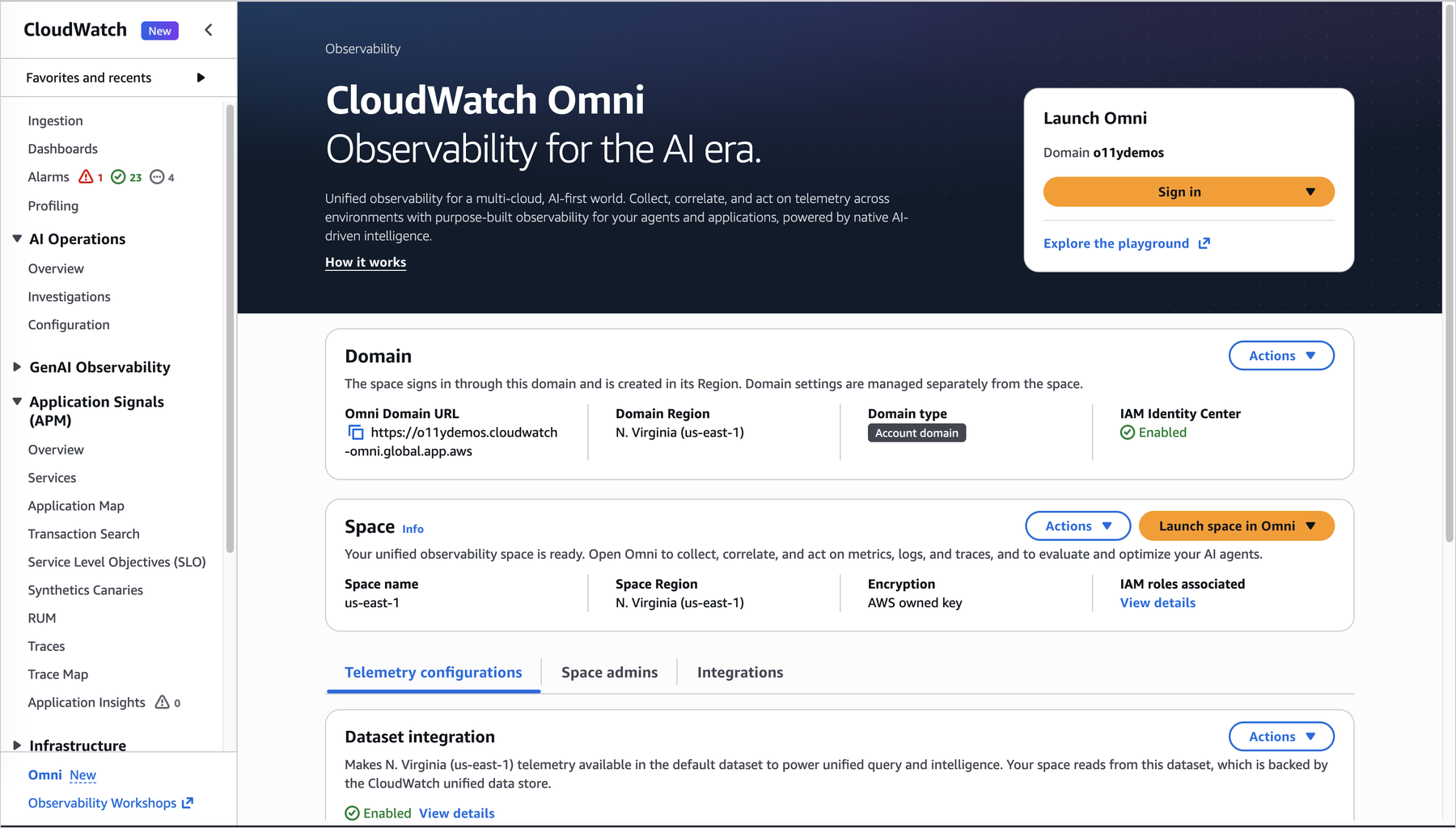
- Collaborative Workspaces ("Spaces"): By establishing a single enterprise-authenticated URL per organization, Omni eliminates friction during major outages. When an incident escalates from a front-end developer to a specialized database engineer or payment gateway expert, bringing a new team member into the investigation no longer requires explaining historical context or sharing screenshots. Every participant enters the exact same live session, viewing the identical state of telemetry, logs, metrics, and traces.
- Dynamic Topology and Self-Adapting Systems: Manual dashboard maintenance has long been an administrative tax on engineering bandwidth. Omni automates this by continuously discovering services and mapping dependencies using telemetry data alongside AWS Config resource discovery. Instead of curating static graphs, teams declare their operational intent—such as availability targets, latency budgets, and error rate thresholds. As services scale, deploy, or deprecate, the application topology and underlying alarms dynamically adapt.
- Grounded AI Investigations: Unlike generic chatbots that hallucinate based on generalized training data, the Amazon DevOps Agent works directly from the active telemetry stream of the impacted application. During an outage, the agent parses the dependency graph, identifies anomalous patterns (such as a correlation between a recent code deployment and a spike in downstream API latency), and recommends targeted mitigation steps.
Typical Incident Lifecycle in Omni
To illustrate the platform’s utility, consider a real-world incident scenario facilitated by CloudWatch Omni:
- Detection: An automated alarm fires, signaling elevated error rates in an enterprise checkout service.
- Initial Triage: Omni instantly opens a collaborative investigation session. It pre-loads the service topology, highlights a deployment that occurred 10 minutes prior, and notes increased latency originating from a downstream payment API. The Amazon DevOps Agent provides an initial correlation summary.
- Cross-Team Escalation: The on-call Site Reliability Engineer (SRE) verifies the deployment correlation, reviews the trace view to pinpoint failing endpoints, and loops in the payments engineering team.
- Root Cause Identification: The payments engineer joins the active session instantly, viewing all prior findings alongside the DevOps Agent’s detection of a recent configuration change within the payment provider’s API gateway. The team confirms the root cause, initiates a rollback, and mitigates the issue.
- Automated Reporting: Because every action, chat query, and telemetry correlation was captured in real time within the Omni session, the historical record of the incident is complete. The need for a separate, time-consuming manual post-incident report is effectively eliminated.
Official Responses and Perspectives
The launch of CloudWatch Omni marks a significant milestone in AWS’s broader strategy to infuse generative AI into every layer of cloud infrastructure management.
Industry analysts and early-access enterprise users have highlighted the platform’s potential to alter operational culture. Speaking on the architectural philosophy behind the tool, AWS engineering leads emphasized that observability should mirror how modern software is built—around connected applications rather than isolated infrastructure components.
"Engineering teams should not have to spend valuable cycles wrestling with dashboard configurations or translating tribal knowledge across communication channels during a crisis," noted Daniel Abib in the official AWS release documentation. "CloudWatch Omni brings the entire organization together into a single, living workspace where human expertise and artificial intelligence operate in tandem."
Furthermore, AWS has emphasized that Omni does not require disruptive data migration. By pointing directly to existing CloudWatch data stores and accepting OpenTelemetry Protocol (OTLP) feeds from external environments, the platform lowers the barrier to entry for enterprises operating across multi-cloud or hybrid architectures.
Implications: What CloudWatch Omni Means for the Future of Engineering
The introduction of Amazon CloudWatch Omni carries profound implications for software development, IT operations, and the broader enterprise observability market.
1. The Death of Manual Dashboarding
For years, specialized monitoring tools treated dashboards as art projects that required continuous curation. CloudWatch Omni signals a shift toward intent-based monitoring. By allowing teams to declare high-level operational boundaries and letting the system automatically map underlying topologies, engineering organizations can redirect hundreds of hours of administrative overhead toward feature development and system resilience.
2. Redefining Incident Response and SRE Culture
The integration of enterprise SSO with application-specific "Spaces" democratizes data access across organizational boundaries. In traditional setups, data silos often created friction between development and operations teams. Omni’s shared workspace model ensures that debugging is inherently collaborative, reducing the finger-pointing that often plagues high-stress incident responses. Moreover, the automation of post-incident documentation via session logging saves administrative time while ensuring accurate root-cause analyses.
3. Maturation of AI Agents in Production
While generative AI has made immense strides in code generation and documentation, its application to mission-critical production troubleshooting has faced valid skepticism regarding reliability and hallucinations. By anchoring the Amazon DevOps Agent strictly to real-time, domain-specific telemetry graphs, AWS is pioneering a pragmatic model for AI utility: agents that act as rigorous analytical co-pilots rather than autonomous actors operating in a vacuum.
4. Market Competitiveness in Observability
The observability market—currently dominated by specialized third-party SaaS platforms and native cloud tools alike—will face heightened competitive pressure. By offering a deep, AI-native observability experience that integrates seamlessly with existing AWS infrastructure and open standards like OpenTelemetry, AWS provides a compelling economic and architectural incentive for enterprises to consolidate their monitoring stack.
Getting Started and Availability
Amazon CloudWatch Omni is generally available starting today.
- Existing CloudWatch Customers: Users can initiate the experience immediately by logging into the Amazon CloudWatch console and selecting "Try CloudWatch Omni." All historical logs, metrics, traces, and alarms are instantly accessible without data re-indexing or movement.
- Organization-Wide Deployment: IT administrators can configure dedicated domains, connect corporate identity providers via IAM Identity Center, and provision custom Spaces for individual development squads.
- Multi-Environment Support: Built-in connectors allow organizations to ingest telemetry from non-AWS environments, unifying hybrid cloud estates within a single pane of glass.
- Pricing: Detailed pricing structures and tier breakdowns are available directly on the official Amazon CloudWatch Pricing Page.
As modern software systems continue to scale in velocity and complexity—driven heavily by the rapid adoption of AI agents—tools like CloudWatch Omni represent the necessary evolution of how humans understand, manage, and trust the digital systems they build.