High-Tech Microscopic Warfare: Ledger Donjon Pierces the RP2350’s Defenses Using a Quarter-Million-Dollar Laser Setup
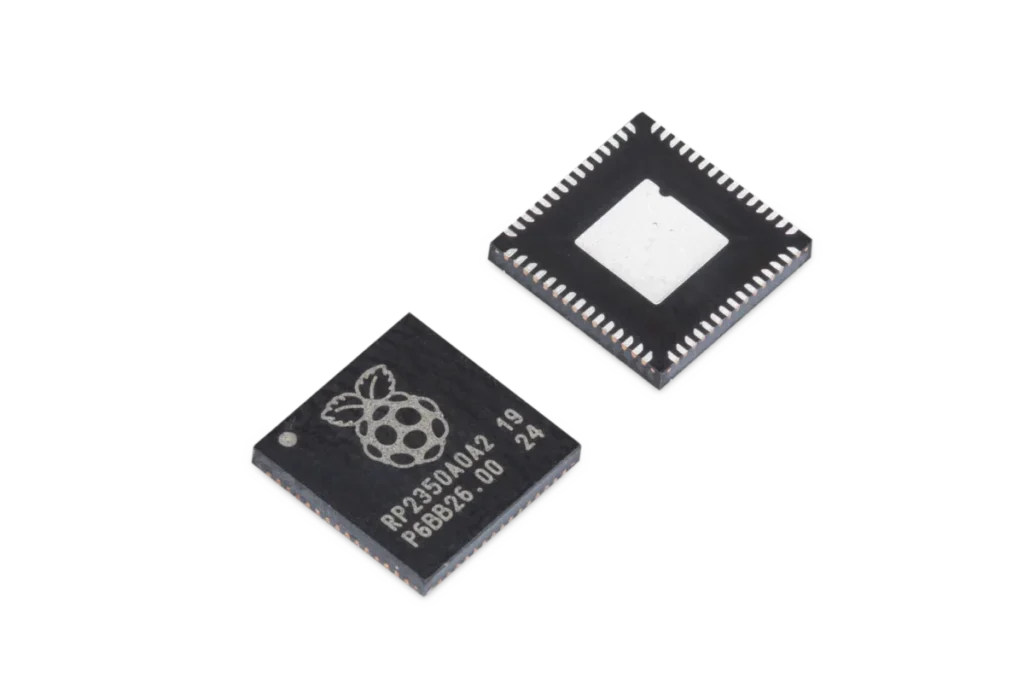
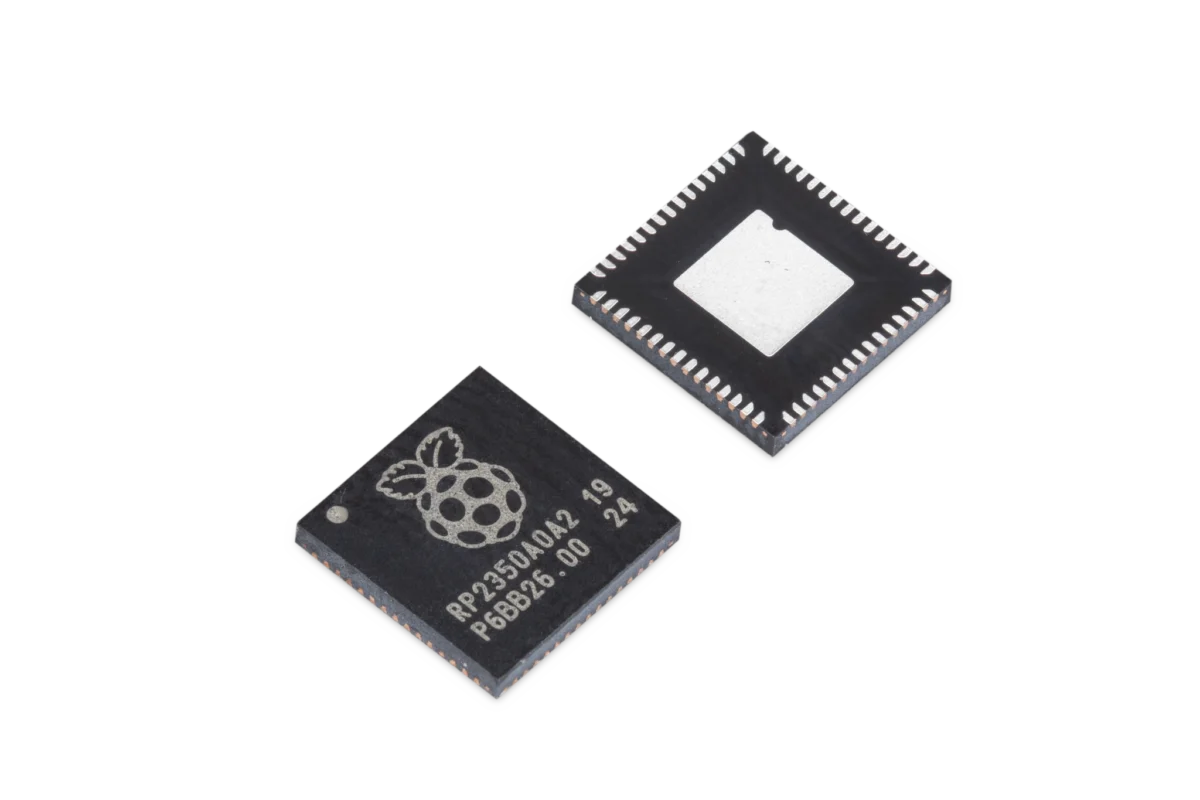
CAMBRIDGE, UK — In the high-stakes arena of modern silicon design, security is never a static destination; it is an ongoing, evolving arms race. Raspberry Pi, a brand globally revered for democratizing computing through its low-cost, high-performance hobbyist boards, has spent the last year deeply entrenched in the gritty realities of hardware security engineering.
Following the August 2024 launch of their flagship secure microcontroller, the RP2350, the company initiated a high-profile public crusade to test the chip’s mettle: a pair of comprehensive Hacking Challenges designed to stress-test the silicon’s robust internal defenses.
The latest twist in this ongoing security narrative comes courtesy of Ledger Donjon, the renowned adversarial research and security evaluation arm of hardware wallet manufacturer Ledger. Utilizing a formidable arsenal of advanced, six-figure laboratory equipment—including high-precision microscopy and specialized infrared lasers—the Ledger Donjon team successfully executed a laser fault injection attack. Their objective? To bypass the cryptographic and hardware security locks of a secured RP2350-A4 chip, re-enable the restricted debug interface, and read out One-Time Programmable (OTP) memory.
While the feat reads like a sci-fi thriller, it underscores the staggering sophistication required to compromise modern microcontrollers, while highlighting Raspberry Pi’s transparent, collaborative approach to vulnerability management.
1. Main Facts: The Laser Fault Injection Breakthrough
The core revelation of the Ledger Donjon disclosure centers on hardware-level physical tampering, specifically Laser Fault Injection (LFI).
What is Laser Fault Injection?
Microcontrollers like the RP2350 are constructed from millions of microscopic transistors etched onto a silicon die. Under normal operating conditions, these circuits execute instructions sequentially and reliably. However, physical security researchers have long used electromagnetic pulses, clock glitching, and localized lasers to disrupt these operations.
When a finely tuned laser beam strikes a specific microscopic junction on an active silicon die, it can temporarily inject energy, causing local photoelectric effects. This transient disruption can flip bits in registers, alter the execution path of the bootloader, or bypass security checks.
The Ledger Donjon Attack
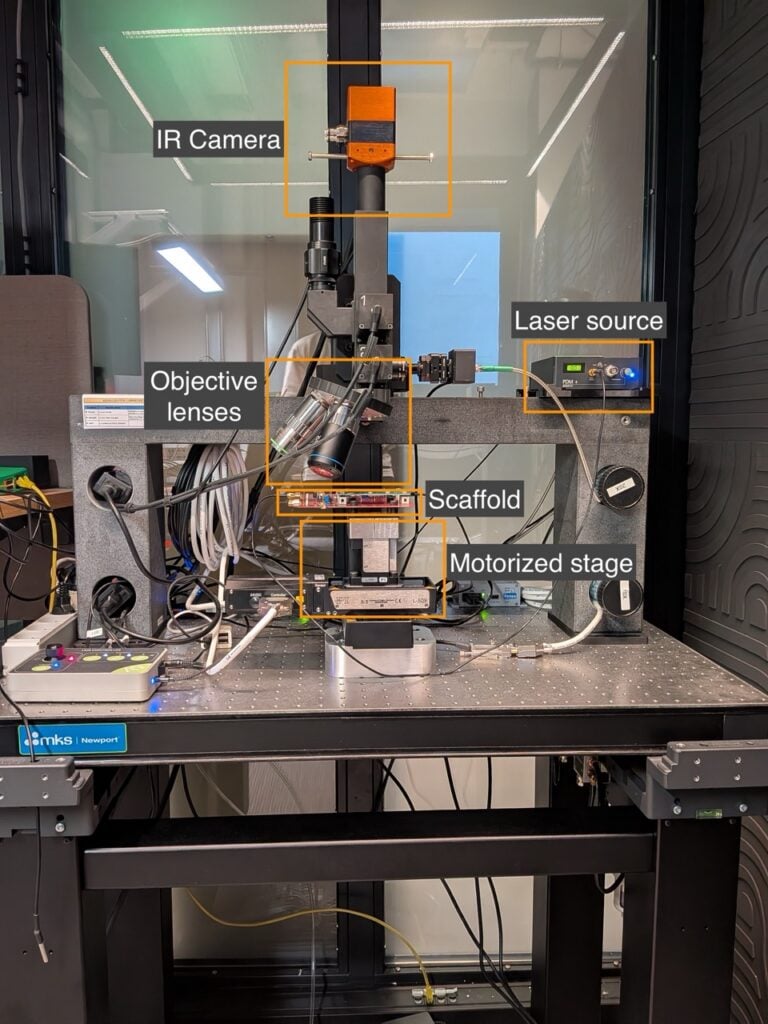
The Ledger Donjon researchers demonstrated that with a lab environment equipped with roughly $250,000 worth of specialized microscopy and laser optics, an attacker can map the RP2350-A4 die down to the micrometer.
- By identifying the precise physical locations governing debug access controls, the team targeted a highly focused infrared laser beam directly at those regions.
- This calculated optical disruption meddled with specific register contents within the chip.
- The Result: The secured debug interface—which Raspberry Pi engineered specifically to remain locked and inaccessible on production-secure devices—was successfully re-enabled.
Once the debug interface is unlocked, an attacker gains deep introspection capabilities into the chip’s internal state, opening the door for reading sensitive data out of the OTP memory banks. Despite the severity of the breach under laboratory conditions, Raspberry Pi has confirmed that these findings do not warrant a costly physical respin of the silicon, a testament to the high baseline resilience built into the A4 stepping.
2. Chronology: From the RP2350 Launch to Modern Disclosures
To fully appreciate the significance of the Ledger Donjon breakthrough, it is necessary to trace the timeline of the RP2350’s security lifecycle, from its commercial debut to the present day.
- August 2024: Raspberry Pi officially launches the RP2350 secure microcontroller. Alongside the commercial rollout, the company launches its inaugural Hacking Challenge, inviting the global security and hacker community to find flaws in the chip’s security architecture.
- Late 2024 (First Hacking Challenge Finds): Multiple security researchers identify vulnerabilities in the initial silicon steppings (specifically the A2 stepping). Among the standout entries is an independent researcher known as "Courk," who constructs a homebrew infrared laser setup to glitch the chip. Raspberry Pi rewards the winners and subsequently uses the data to engineer a revised boot ROM and die stepping—the A4 stepping.
- Early 2025 (The Respin): Raspberry Pi officially respins the RP2350 silicon to patch the physical and logical security flaws discovered during the first wave of testing, resulting in the hardened A4 version.
- Late 2025 / Early 2026: The smart minds at Ledger Donjon turn their professional analytical tools toward the updated RP2350-A4. Utilizing state-of-the-art laboratory microscopy, they map out a sophisticated laser fault injection methodology capable of bypassing the newly hardened protections.
- Mid-2026 (Responsible Disclosure): Ledger Donjon contacts Raspberry Pi to responsibly disclose their findings. Raspberry Pi evaluates the research, expresses deep admiration for the technical execution, and documents the results publicly.
- Present Day (The Second Challenge): Raspberry Pi’s Second Hacking Challenge—which heavily emphasizes side-channel analysis (SCA)—nears its final deadline, having resisted all attempts thus far despite multiple deadline extensions.
3. Supporting Data & Technical Anatomy of the Breaches
Understanding the mechanics of hardware hacking requires looking closely at both the amateur-to-pro continuum of laser setups and the sheer capital investment required to mount these attacks.
The Homebrew Pioneer vs. The Enterprise Lab
It is fascinating to contrast the methods used by independent researchers against those of corporate security labs:

- Courk’s Homebrew Setup (First Challenge): During the initial bug bounty phase, independent researcher Courk engineered a custom, homebrew IR laser apparatus using off-the-shelf and modified components. This garage-science approach successfully targeted the earlier A2 stepping of the chip. While ingenious, it highlighted vulnerabilities that could theoretically be replicated by dedicated hobbyists with moderate technical budgets.
- Ledger Donjon’s Professional Suite (Current Disclosure): In contrast, the Ledger Donjon team leveraged an industrial-grade lab environment valued at $250,000. This included high-magnification infrared microscopes, sub-micron positioning stages, and synchronized laser triggering hardware.
| Metric / Feature | Courk’s Homebrew Setup (A2 Stepping) | Ledger Donjon Lab (A4 Stepping) |
|---|---|---|
| Equipment Cost | Estimated in the hundreds of dollars | ~$250,000 professional microscopy suite |
| Target Silicon | RP2350-A2 (Initial release) | RP2350-A4 (Hardened revision) |
| Attack Vector | Custom IR laser fault injection | Precision micro-optical laser fault injection |
| Remediation | Fixed via Boot ROM and A4 die revision | Acknowledged; no respin required |
The progression from a homebrew setup bypassing early hardware to requiring a quarter-million-dollar optical lab to bypass the later A4 stepping illustrates a massive leap in Raspberry Pi’s security maturity between iterations.
4. Official Responses & Industry Implications
The relationship between consumer-facing hardware manufacturers and elite security auditors is frequently adversarial. However, Raspberry Pi and Ledger Donjon have modeled a masterclass in professional, responsible vulnerability disclosure.
Raspberry Pi’s Stance
Rather than becoming defensive or downplaying the findings, Raspberry Pi’s engineering team offered public praise for the Ledger Donjon researchers. In their official communication, they commended the team for their "hard work, professionalism, and responsible disclosure."
Crucially, Raspberry Pi evaluated the practical threat model of the Ledger Donjon attack. In hardware security, vulnerabilities are weighed against the attack vector economics:
- Physical vs. Remote Attacks: A remote software exploit that allows arbitrary code execution over the internet is an immediate catastrophe requiring emergency patching.
- Physical Lab Attacks: An attack requiring physical access to the silicon die, removal of chip encapsulation, and a $250,000 laser microscope represents an entirely different threat tier. It is categorized as a high-cost physical attack, primarily relevant to nation-states, highly specialized forensic investigators, or organized counter-feiters attempting to clone high-value secure elements.
Because the average consumer device deployed in the field is not susceptible to remote exploitation via this vector, Raspberry Pi concluded that a costly silicon respin was unwarranted for the A4 stepping. The security posture remains robust for standard threat models.
Ledger Donjon’s Perspective
For Ledger Donjon, publishing research of this caliber serves a dual purpose. It demonstrates the elite capabilities of their hardware security evaluation services while contributing foundational knowledge to the broader embedded systems community. Their detailed technical blog post provides invaluable insights for silicon vendors on how microcontrollers behave under extreme optical stress.
5. What’s Next: The Battle Continues
While the physical fault injection chapters of the RP2350 security saga continue to write themselves, the focus at Raspberry Pi headquarters has largely shifted to algorithmic leakage.
The Second RP2350 Hacking Challenge, hosted on GitHub, has been running for an extended period. Unlike the first challenge—which heavily explored physical tampering, boot ROM glitches, and fault injection—the second challenge centers entirely on Side-Channel Analysis (SCA).
Side-channel attacks do not require physical destruction or laser microscopes; instead, they monitor power consumption, electromagnetic emissions, or timing variations while cryptographic algorithms execute, mathematically deducing secret keys from the "noise" of the chip’s operation.
Despite granting multiple deadline extensions to encourage the global research community, the second challenge remains unbeaten. However, rumors within the security community suggest that several determined teams are inching frustratingly close to a breakthrough. With the challenge window drawing to a close at the end of next month, the microcontroller community is holding its collective breath for the next major disclosure.
Conclusion
The journey of the Raspberry Pi RP2350 proves that building secure silicon is an iterative dialogue between designers and attackers. By opening their hardware to the world’s most capable minds—from garage hackers utilizing homebrew lasers to corporate audit labs wielding quarter-million-dollar microscopes—Raspberry Pi has forged a microcontroller that is not merely secure by design, but battle-tested by reality.