Decoding the Microbial Dark Matter: New CRISPR-Based Platform Revolutionizes Phage Engineering
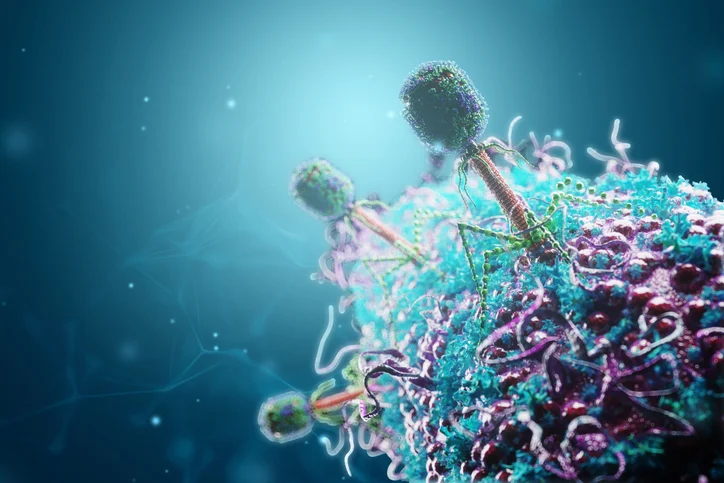
In a significant breakthrough for synthetic biology and antimicrobial research, scientists at the University of Otago—Ōtākou Whakaihu Waka—in New Zealand have unveiled a novel, CRISPR-based platform that promises to decode the mysterious genetic architecture of bacteriophages. The study, titled "Defining the essential genome of diverse phages with phage Tn-seq," published in the journal Nature Microbiology, marks a departure from traditional, slow-moving phage modification techniques, offering a streamlined, systematic approach to both discovery and genetic design.
As the global health community grapples with the escalating crisis of antimicrobial resistance (AMR), bacteriophages—viruses that exclusively infect and kill bacteria—have emerged as a potent, natural alternative to conventional antibiotics. Yet, despite their potential, the field has been hampered by a massive knowledge gap: a majority of phage genes remain categorized as "microbial dark matter," their functions completely unknown to science. This new platform, known as "phage Tn-seq," effectively turns on the lights, providing researchers with a toolkit to map these viral genomes with unprecedented speed and precision.
The Landscape of the Unknown: Why Phages Remain an Enigma
To understand the gravity of the Otago team’s discovery, one must first appreciate the complexity of the bacteriophage. Phages are the most abundant biological entities on Earth, playing critical roles in shaping microbial ecosystems. For decades, they have been viewed as nature’s precision-guided missiles against bacterial infections. Unlike broad-spectrum antibiotics, which often wipe out beneficial commensal bacteria along with pathogens, phages are highly specific, targeting only the bacteria they are programmed to infect.
However, the "black box" nature of their genomes has prevented widespread clinical adoption. "Our knowledge of phages is probably like the understanding of antibiotics back in the 1950s," explains senior author Dr. Peter Fineran. "Many phage genes are currently in the area of microbial dark matter—encoding functions we just don’t understand—which is limiting our ability to use phages in healthcare and biotechnology."
Without a map of which genes are essential for survival and which are dispensable, scientists have been unable to reliably "reprogram" phages. Modifying a phage to carry a payload—such as a therapeutic gene—is currently a hit-or-miss process. Disrupting the wrong gene could render the virus inert, while failing to identify non-essential regions limits where new genetic material can be inserted without causing the phage to collapse.
Chronology of the Breakthrough: From Concept to CRISPR
The development of the phage Tn-seq platform did not happen overnight; it was the result of a deliberate, multi-year effort to integrate disparate technologies into a cohesive workflow.
The Foundation: Transposon Insertion Sequencing (Tn-seq)
The researchers began by leveraging transposon insertion sequencing (Tn-seq). In this methodology, a transposon—a "jumping gene"—is introduced into the phage population. The transposon randomly inserts itself into the phage genome, effectively "knocking out" or disrupting a specific gene. By sequencing the population before and after infection, researchers can observe which phages survive and which die. If a phage with a transposon in Gene X dies, then Gene X is essential for the virus’s life cycle. If the phage survives, Gene X is dispensable.
The Catalyst: CRISPR-Anti-CRISPR Selection
While Tn-seq is a powerful tool in bacterial research, applying it to phages is notoriously difficult because phages replicate so rapidly that it is hard to isolate individual mutants. To overcome this, the Otago team introduced a sophisticated selection mechanism based on CRISPR-Cas technology. They engineered a system where the presence of the transposon (the mutation) is coupled with a CRISPR-based selection pressure. This allowed the team to systematically recover only the mutated phages, effectively "cleaning up" the experimental data and allowing for high-resolution mapping of the essential versus non-essential genome.
Expansion: From Discovery to Design
Once the team proved they could accurately map the essential genes of diverse phages, they shifted their focus to application. They hypothesized that if they could identify the "safe" regions of a phage genome—areas where insertions didn’t kill the virus—they could use that same transposon mechanism to "drop in" new genetic cargo. This led to the successful insertion of fluorescent markers into phage genomes, demonstrating that the platform could function as a sophisticated genetic engineering tool.
Supporting Data: Validating the Workflow
The data presented in the Nature Microbiology study highlights the efficiency of the platform. By testing across a diverse set of phages, the researchers demonstrated that the method is not limited to a single model organism but is broad-reaching.
- Systematic Mapping: The researchers successfully categorized genes into essential (required for replication) and non-essential (dispensable) groups with high confidence scores.
- High-Throughput Potential: The workflow significantly reduces the time required to characterize a phage genome. What previously took months of labor-intensive genetic work can now be performed in a matter of weeks, or even days, depending on the scale of the investigation.
- Engineering Versatility: By successfully inserting a fluorescent marker, the team provided a "proof-of-concept" that the system can be used to insert therapeutic payloads. This opens the door to creating "smart phages" that could express proteins to degrade bacterial biofilms or sensitize resistant bacteria to existing antibiotics.
Official Perspectives: The Voices Behind the Science
The collaborative nature of the research is underscored by the team at the University of Otago, who see this platform as a transformative milestone in synthetic biology.
Dr. Peter Fineran, Senior Author:
Dr. Fineran emphasizes that the bottleneck in phage therapy has always been our inability to "read" the virus’s intent. By shedding light on the microbial dark matter, the platform allows for a more rational approach to phage design. "We are moving from a reactive understanding—observing what phages do—to a proactive design phase, where we can eventually tailor these viruses to specific clinical needs," he noted.
Dr. Manuela Fuchs, Co-lead Author:
Dr. Fuchs reflected on the transition from discovery to application during the study. "Once we had that established, we thought we could expand the technique and also use it to add genes directly into the phage genomes," she stated. Her contribution highlights the iterative nature of the research, moving from a diagnostic tool to a creative one.
Dr. Leah Smith, Senior Author:
Dr. Smith underscored the economic and practical advantages of the platform. "This is a systematic, broadly applicable, and cost-effective way to not only investigate gene function, but also rapidly engineer phage genomes," Dr. Smith said. In a field where experimental costs can be prohibitive, the scalability of this method is a key selling point for its future adoption in both academia and the biotech industry.
Implications: A New Era for Biotechnology and Medicine
The implications of the phage Tn-seq platform extend far beyond the laboratory walls of the University of Otago.
Transforming Phage Therapy
For patients suffering from multidrug-resistant infections, current treatment options are dwindling. Phage therapy, once considered a "fringe" science, is now being taken seriously by regulatory bodies like the FDA. The ability to quickly engineer phages to carry genes that dismantle bacterial defense mechanisms (like CRISPR-Cas systems that bacteria use to kill phages) could make phage therapy more reliable and effective.
Agricultural Applications
The impact is not limited to human medicine. Agrochemicals used to treat bacterial blights in crops are under increasing scrutiny for their environmental impact. Engineered phages could provide a targeted, biodegradable alternative, protecting food supplies without the chemical runoff associated with traditional bactericides.
Fundamental Scientific Discovery
On a basic science level, the platform provides a systematic way to study viral evolution. By observing which genes are essential and how they vary across different phage families, researchers can reconstruct the evolutionary history of these viruses, providing deeper insights into the co-evolutionary arms race between bacteria and phages.
Safety and Regulatory Considerations
The authors are careful to temper the excitement with a note of caution. While the platform is a powerful tool for building variants, any clinical application involving engineered phages will require rigorous safety testing. The regulatory pathway for "living medicines" like phages is still evolving, and the team acknowledges that extensive trials will be necessary to ensure that modified phages remain stable and do not pose unintended risks to the host or the environment.
Conclusion: The Path Forward
The University of Otago’s development of the phage Tn-seq platform represents a significant leap forward in our ability to interface with the microbial world. By effectively bridging the gap between genomic discovery and synthetic engineering, the team has provided a blueprint for the future of phage research.
As the scientific community continues to address the looming threat of antimicrobial resistance, the ability to rapidly "read and write" phage genomes will likely prove to be one of the most critical developments of the decade. While there is still much to learn about the vast, mysterious landscape of the microbial dark matter, this new tool ensures that we are no longer just looking at it—we are finally beginning to understand it.