Africa’s First Sub-Terahertz Measurement Facility Opens at the University of Pretoria, Powered by Anritsu
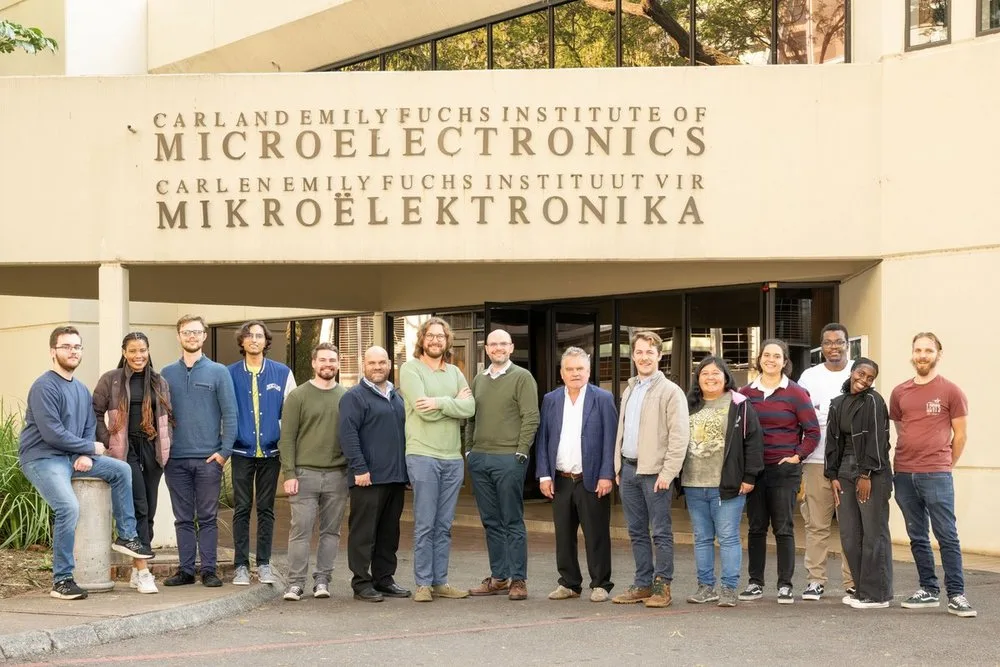
PRETORIA, SOUTH AFRICA — In a milestone development for African scientific infrastructure, the Carl and Emily Fuchs Institute for Microelectronics (CEFIM) at the University of Pretoria has officially inaugurated the continent’s first complete sub-terahertz (sub-THz) measurement facility.
At the technological core of this pioneering laboratory is the advanced Anritsu VectorStar™ Broadband Vector Network Analyzer (VNA), capable of continuous operations up to 220 GHz. Supported by South Africa’s National Research Foundation (NRF), the facility bridges a critical geographical and technological gap, offering researchers across Africa high-frequency device characterization capabilities that previously could only be accessed at overseas institutions.
Main Facts
The newly established sub-terahertz measurement laboratory represents a quantum leap for South African engineering and scientific research.
- Core Equipment: Anritsu VectorStar Broadband VNA delivering continuous broadband coverage up to 220 GHz, complemented by high-performance harmonic mixers and calibrated noise analysis tools.
- Capabilities: Enables precise electromagnetic wave and device characterization in the microwave, millimeter-wave, and sub-terahertz frequency spectra.
- Funding & Support: Established under the National Equipment Programme (NEP) managed by South Africa’s National Research Foundation (NRF).
- Local Partnership: Delivered and integrated through Tamashi Technology Investments, Anritsu EMEA’s authorized representative in South Africa.
- Key Applications: Next-generation wireless communications (beyond 5G and into 6G), advanced radio astronomy receivers, water vapor radiometry, and participation in international scientific endeavors such as the African Millimetre Telescope (AMT) project.
Chronology of Development
The realization of Africa’s premier sub-terahertz laboratory is the culmination of strategic planning, national grant acquisition, and international technical collaboration.
1. Identifying the Regional Technology Gap
For years, South African academic and industrial researchers working on high-frequency electronics faced a significant bottleneck. While theoretical designs for millimeter-wave and sub-THz devices were advancing rapidly, local physical validation infrastructure stalled at 110 GHz. Researchers needing to test components operating above this threshold were forced to ship prototypes overseas or rely on international partnerships, introducing significant delays and prohibitive costs.
2. Securing National Research Foundation (NRF) Funding
Recognizing the impediment this posed to national competitiveness in advanced telecommunications and radio astronomy—fields where South Africa plays a global leadership role—CEFIM submitted a targeted proposal under the NRF’s National Equipment Programme. The proposal highlighted the urgent need for a domestic, world-class sub-THz measurement ecosystem. The grant was approved, unlocking the capital necessary to procure top-tier international testing infrastructure.
3. Procurement and Partnership
Following the grant allocation, CEFIM evaluated global instrumentation leaders. The institute selected the Anritsu VectorStar Broadband VNA platform for its unmatched precision, continuous frequency sweeps, and reliability. The procurement and localized logistical deployment were executed in close collaboration with Tamashi Technology Investments, Anritsu EMEA’s trusted local representative.
4. Installation, Calibration, and Commissioning
Engineers and specialists from Anritsu EMEA, Tamashi Technology Investments, and the University of Pretoria—including key figures such as Professor Tinus Stander, Dr. Heinrich Laue, Darius Opperman, and Stefano Balzarini—collaborated to install and calibrate the system. The successful integration successfully extended CEFIM’s operational ceiling from 110 GHz to a staggering 220 GHz.
Supporting Data & Technical Architecture
To understand the magnitude of this technological upgrade, one must examine the engineering specifications that make sub-terahertz measurement uniquely challenging.
Breaking the 110 GHz Barrier
Prior to the installation of the Anritsu VectorStar system, CEFIM’s infrastructure maxed out at 110 GHz. While sufficient for standard microwave and early millimeter-wave applications, modern research demands characterization well into the sub-terahertz domain (100 GHz to 300 GHz and beyond). By pushing this threshold to 220 GHz, the institute can now evaluate components designed for ultra-high-data-rate wireless networks and high-resolution imaging systems.
The Role of the VectorStar Broadband VNA
Vector Network Analyzers are critical instruments used to measure the electrical performance of high-frequency components (such as amplifiers, mixers, filters, and antennas) by analyzing how they reflect and transmit electromagnetic signals.
- Continuous Sweep: Unlike banded systems that require manual reconfiguration or suffer from coverage gaps, the VectorStar broadband configuration delivers uninterrupted sweeps up to 220 GHz.
- Harmonic Mixers & Noise Analysis: The inclusion of calibrated noise figure and harmonic measurement tools allows engineers to assess the signal-to-noise performance of active devices under real-world operational frequencies.
Official Responses and Perspectives
Leaders from academia and industry have hailed the launch as a transformative moment for African science and technology.
Professor Tinus Stander of the Carl and Emily Fuchs Institute for Microelectronics at the University of Pretoria emphasized the historical significance of the facility:
"As an emerging field of research, no facility previously existed in South Africa to measure electromagnetic waves and devices at these frequencies. The establishment of this facility will support research in future wireless communications, radio astronomy, and a range of emerging applications that require measurement capabilities well above 100 GHz."
Marco Bordin, Sales Director for the Southern Region at Anritsu EMEA, highlighted the trust placed in Anritsu’s engineering solutions:
"Leading research institutions require reliable measurement solutions when they push the boundaries of microwave and millimeter-wave technology. We are proud that CEFIM has chosen Anritsu’s VectorStar Broadband VNA for their facility, and we see this project as a further example of the trust that universities and research organizations place in Anritsu for advanced high-frequency measurements."
Implications for Regional Research and Global Collaboration
The opening of the sub-terahertz facility at the University of Pretoria carries profound implications across multiple scientific and industrial domains:
1. Catalysing Next-Generation Wireless Communications (6G and Beyond)
As global telecommunications standards begin looking past 5G toward 6G, carrier frequencies are shifting into the millimeter-wave and sub-terahertz bands to achieve terabit-per-second data rates. Having local testing facilities ensures that African engineers, startups, and academic researchers can design, prototype, and validate homegrown wireless components without relying on foreign infrastructure.
2. Advancing Global Radio Astronomy Initiatives
South Africa is already a heavyweight in global astronomy, notably through the MeerKAT telescope and its role in hosting the international Square Kilometre Array (SKA). The new CEFIM facility directly supports this ecosystem by enabling the development and testing of ultra-sensitive radio receivers operating at higher frequency bands. Furthermore, the laboratory enhances South Africa’s contributions to the African Millimetre Telescope (AMT) project, which seeks to integrate African sites into the global Event Horizon Telescope network.
3. Environmental Monitoring and Radiometry
Sub-terahertz frequencies interact uniquely with atmospheric constituents, making them invaluable for water vapor radiometry. The precision measurement tools now available at CEFIM will empower researchers to model atmospheric conditions, aiding climate science, weather forecasting, and environmental monitoring across the continent.
4. Retaining and Attracting Engineering Talent
Historically, a lack of advanced domestic testing hardware forced many of Africa’s brightest radio frequency (RF) and microwave engineering minds to emigrate. By providing access to world-class tools locally, CEFIM is positioning South Africa as a competitive hub for high-frequency research, encouraging homegrown talent to stay and lead global innovations from African soil.
Conclusion
The integration of the Anritsu VectorStar Broadband VNA at the University of Pretoria’s Carl and Emily Fuchs Institute for Microelectronics marks a definitive turning point for high-frequency engineering in Africa. By removing geographic barriers to sub-terahertz measurement, the NRF-backed facility empowers local researchers to contribute directly to the global vanguard of telecommunications, radio astronomy, and advanced electronics.