AWS and Open Source Communities Converge at Open Source Summit Korea 2026 and MCP DevSummit Seoul 2026
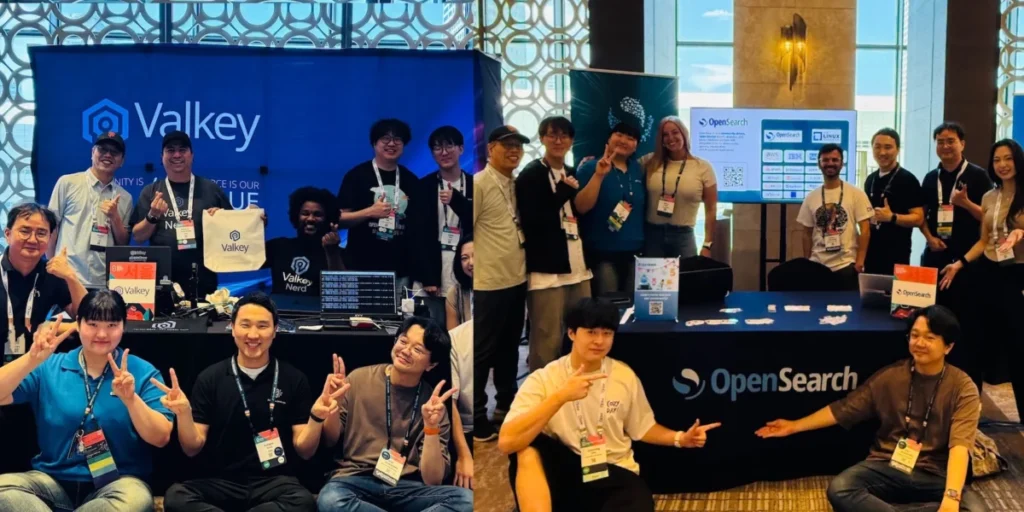
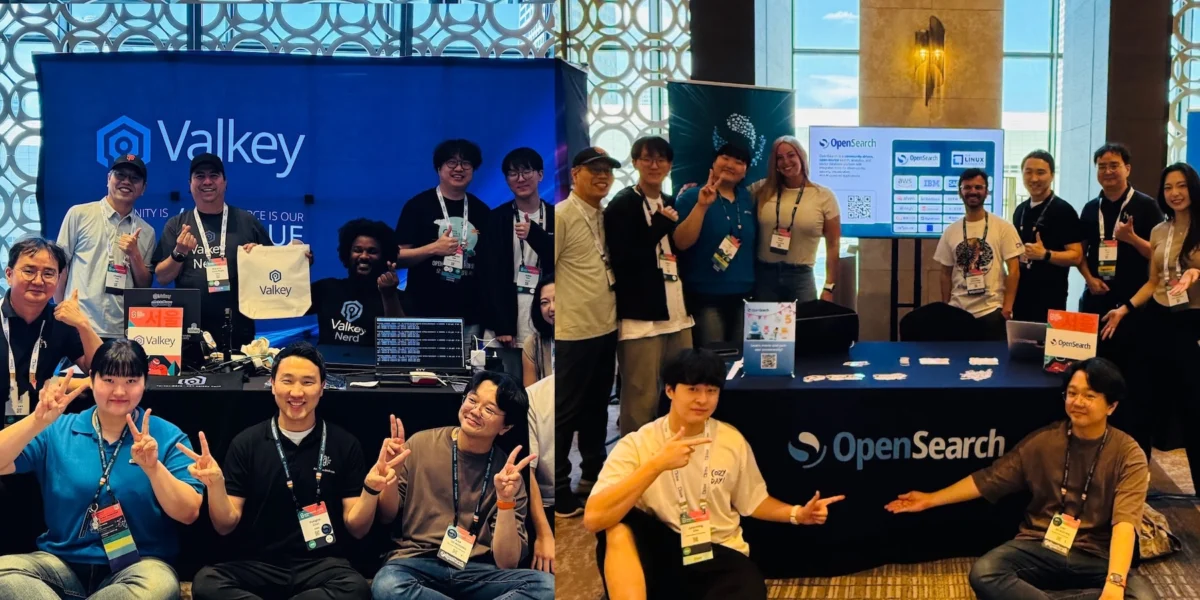
SEOUL, SOUTH KOREA — In a vibrant display of international developer collaboration, Amazon Web Services (AWS) contributors recently joined forces with the global OpenSearch and Valkey communities at the prestigious Open Source Summit Korea 2026 and the MCP DevSummit Seoul 2026. Over the course of four action-packed days, the event served as a melting pot for prominent community leaders, software engineers, and enterprise architects dedicated to advancing critical Linux Foundation open source technologies.
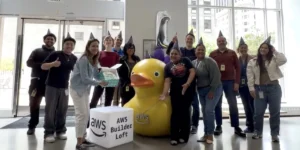
The gathering underscored the increasingly vital role that community-driven, enterprise-grade open source software plays in modern cloud architectures. From bustling exhibition booths staffed by enthusiastic local OpenSearch community volunteers to vibrant user group meetups across Seoul, the event provided a unique platform for knowledge sharing, hands-on collaboration, and face-to-face networking.
Main Facts: A Convergence of Cloud Giants and Open Source Innovation
The joint presence of AWS, OpenSearch, and Valkey at the 2026 summits in Seoul highlights a broader strategic alignment: empowering developers with high-performance, open-source data management and search tools that scale seamlessly in cloud environments.
Key highlights from the event and the surrounding ecosystem updates include:
- Community-Led Engagement: Korean OpenSearch community leaders played an instrumental role in driving engagement, participating directly in exhibition booths, and hosting a dedicated user group meetup that drew massive crowds of local developers.
- OpenSearch 3.7 Integration: Showcasing the latest advancements in enterprise search and observability, developers explored OpenSearch 3.7—released on June 9, 2026—and its subsequent deployment capabilities on Amazon OpenSearch Service starting July 30, 2026.
- Valkey 9.1 Performance Leaps: Attendees dove deep into Valkey 9.1, which launched on May 19, 2026, featuring a ground-up redesign of its I/O threading model and striking memory optimizations. These improvements became globally available for cloud builders via Amazon ElastiCache starting June 23, 2026.
- A Shared Vision: The events emphasized open governance, enterprise security, multi-tenancy support, and extreme performance optimization for vector search, caching, and distributed data workloads.
Chronology: A Timeline of Technical Milestones leading to the Seoul Summits
To fully appreciate the momentum behind the discussions at Open Source Summit Korea 2026 and MCP DevSummit Seoul 2026, it is essential to trace the recent technological trajectory of both OpenSearch and Valkey. The timeline below illustrates how recent software releases paved the way for the enthusiasm witnessed in Seoul.
Q2 2026: Setting the Stage for Performance
- May 19, 2026 — Valkey 9.1 Release: The Valkey project officially launched version 9.1. This major update introduced a completely redesigned I/O threading model, drastically boosting overall system throughput and decreasing memory overhead for smaller string payloads.
- June 9, 2026 — OpenSearch 3.7 Launch: The OpenSearch project rolled out version 3.7. This release was heralded for introducing revolutionary tools designed to unify logs, metrics, and traces under a single observability interface while introducing massive acceleration for vector search capabilities.
- June 23, 2026 — Amazon ElastiCache Integration: AWS swiftly integrated the performance breakthroughs of Valkey 9.1 into Amazon ElastiCache, making the optimized data store readily available for node-based enterprise clusters.
Q3 2026: Bringing the Innovations to South Korea
- Late July 2026 — Amazon OpenSearch Service Update: Building upon the June release, AWS rolled out support for OpenSearch 3.7 on Amazon OpenSearch Service on July 30, 2026, enabling customers to leverage heightened vector search performance and advanced Query Insights.
- August 2026 — Open Source Summit Korea 2026 & MCP DevSummit Seoul 2026: Bringing together months of upstream development and cloud deployment milestones, AWS contributors, community leaders, and local developers converged in Seoul for four days of intensive collaboration, technical deep-dives, and community-building.
Supporting Data: Quantifying Performance Gains in OpenSearch and Valkey
The technical sessions in Seoul focused heavily on concrete benchmarks. Both OpenSearch 3.7 and Valkey 9.1 have introduced architectural optimizations that deliver measurable performance improvements for modern enterprise workloads.
OpenSearch 3.7: Redefining Scale and Observability
Unstructured data management at scale often comes with latency and infrastructure overhead penalties. OpenSearch 3.7 addresses these challenges through targeted algorithmic and architectural enhancements:
- Up to 5.5x Faster Vector Retrieval: For organizations building modern Generative AI applications, semantic search engines, and recommendation systems, vector search speed is paramount. OpenSearch 3.7 achieves up to a 5.5x improvement in vector retrieval speeds, significantly reducing query response times.
- Unified Observability: The 3.7 release introduces streamlined tools that allow engineering teams to query logs, traces, and metrics, set up alerts, and track Service Level Objectives (SLOs) through a single, cohesive interface.
- Managed Excellence: Through Amazon OpenSearch Service, users can instantly tap into these performance boosts alongside enhanced search relevance algorithms and advanced Query Insights without managing the underlying infrastructure clusters manually.
Valkey 9.1: Maximizing Throughput and Memory Efficiency
As a high-performance, open-source key/value datastore frequently utilized for caching, real-time message queues, and primary databases, Valkey requires ruthless efficiency. Valkey 9.1 introduced critical core updates:
- 17% Increase in Throughput: Thanks to a redesigned I/O threading model, Valkey 9.1 handles concurrent request loads far more efficiently, pushing throughput ceilings up by as much as 17%.
- 20% Reduction in Memory Footprint: For string keys under 128 bytes, memory usage has been optimized by up to 20%. In large-scale, memory-bound caching architectures, this reduction translates to direct infrastructure cost savings.
- Enterprise-Grade Multi-Tenancy: By running Valkey 9.1 on Amazon ElastiCache, organizations running multi-tenant workloads benefit not only from these raw performance metrics but also from robust access controls and isolated node-based clustering.
Official Responses and Perspectives from the Ground
The collaborative spirit of the Seoul summits was captured by community advocates and AWS representatives alike. The convergence of upstream open source maintainers and cloud service providers has proven to be a powerful catalyst for project adoption and maturation.
Channy, a prominent voice within the AWS builder community, emphasized the importance of these regional touchpoints in a weekly roundup:
"Last week, AWS contributors joined the OpenSearch and Valkey communities at Open Source Summit Korea 2026 and MCP DevSummit Seoul 2026 to meet open source developers and contributors. At the four-day event, community leaders and users of these Linux Foundation open source projects gathered to share knowledge, collaborate on solutions, and push the projects forward."
Local community leadership was equally vital to the event’s success. Leaders of the Korean OpenSearch communities not only volunteered their time to manage the project booths but also fostered an inclusive environment for mentorship, troubleshooting, and architectural discussions during the dedicated Seoul user group meetup.
Implications: What This Means for Developers, Enterprises, and the Open Source Ecosystem
The success of Open Source Summit Korea 2026 and MCP DevSummit Seoul 2026 points to several broader implications for the global technology landscape:
1. The Maturation of Open-Source Alternatives
Events like the MCP DevSummit and Open Source Summit demonstrate that community-led projects like OpenSearch and Valkey are no longer just alternative choices—they are primary drivers of enterprise infrastructure. With robust backing from cloud giants like AWS and active contributions from global developer pools, these projects offer the stability, security, and scalability required by Fortune 500 enterprises.

2. Accelerated AI and Vector Search Adoption
The integration of up to 5.5x faster vector retrieval in OpenSearch 3.7 directly addresses the bottlenecks of Generative AI implementation. As enterprises race to deploy Retrieval-Augmented Generation (RAG) pipelines and semantic search capabilities, the availability of these optimized search engines in managed cloud environments—such as Amazon OpenSearch Service—lowers the barrier to entry for developers worldwide.
3. Economic and Operational Efficiency
With Valkey 9.1 delivering a 17% throughput boost and a 20% memory reduction for small strings, organizations grappling with rising cloud infrastructure costs gain immediate economic relief. Efficient multi-tenant clustering via Amazon ElastiCache means companies can pack more workloads onto fewer nodes, lowering their carbon footprint and infrastructure budget simultaneously.
4. The Power of In-Person Developer Communities
While digital forums, Slack channels, and GitHub repositories remain the backbone of open-source development, regional summits in tech hubs like Seoul prove that face-to-face interaction is irreplaceable. By bridging the gap between upstream maintainers, local evangelists, and cloud providers, these events accelerate knowledge transfer and foster long-term loyalty to open-source ecosystems.
Looking Forward
As the open-source community continues its relentless pace of innovation, developers and architects are encouraged to stay engaged. AWS contributors will continue making appearances at upcoming regional and global OpenSearch events and Valkey community events.
For builders eager to dive deeper into upcoming AWS-led in-person gatherings, startup events, and developer-focused conferences—including upcoming AWS Summits and AWS Community Days—the official AWS Events and AWS Builder Center portals provide comprehensive schedules and networking opportunities.
Stay tuned to the What’s New with AWS page and the AWS Blogs for ongoing updates, technical deep-dives, and architectural guides as the ecosystem continues to evolve.