Navigating the Future of Enterprise IoT: Why Global Connectivity Demands Strategy Beyond SGP.32
As enterprise Internet of Things (IoT) deployments continue to expand across countries, continents, and complex regulatory jurisdictions, ensuring reliable, secure, and compliant connectivity has emerged as one of the most formidable challenges facing modern organizations. Supporting thousands—or even millions—of distributed, connected devices requires far more than simply selecting the latest connectivity standard or deploying off-the-shelf hardware. It demands a sophisticated, resilient strategy built explicitly for global scale.
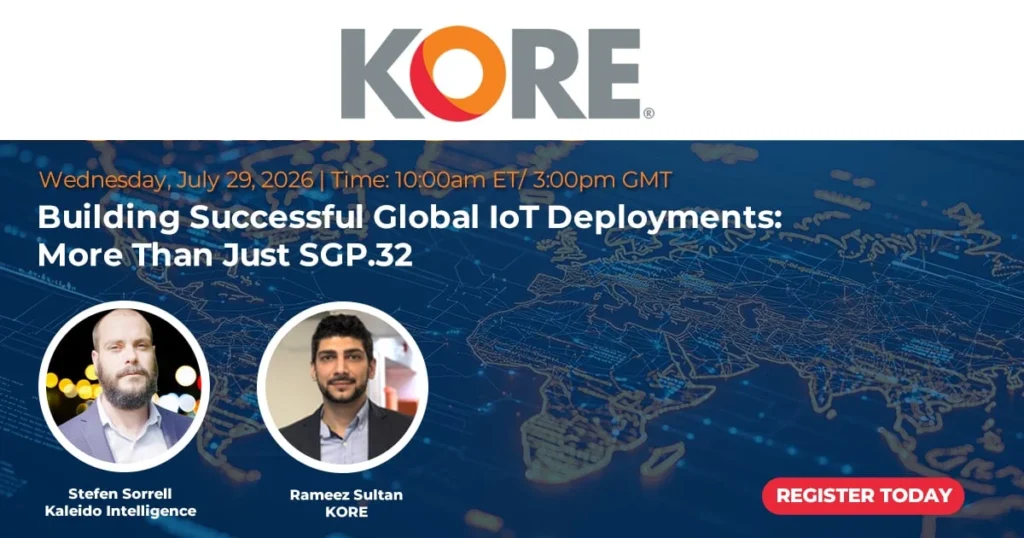
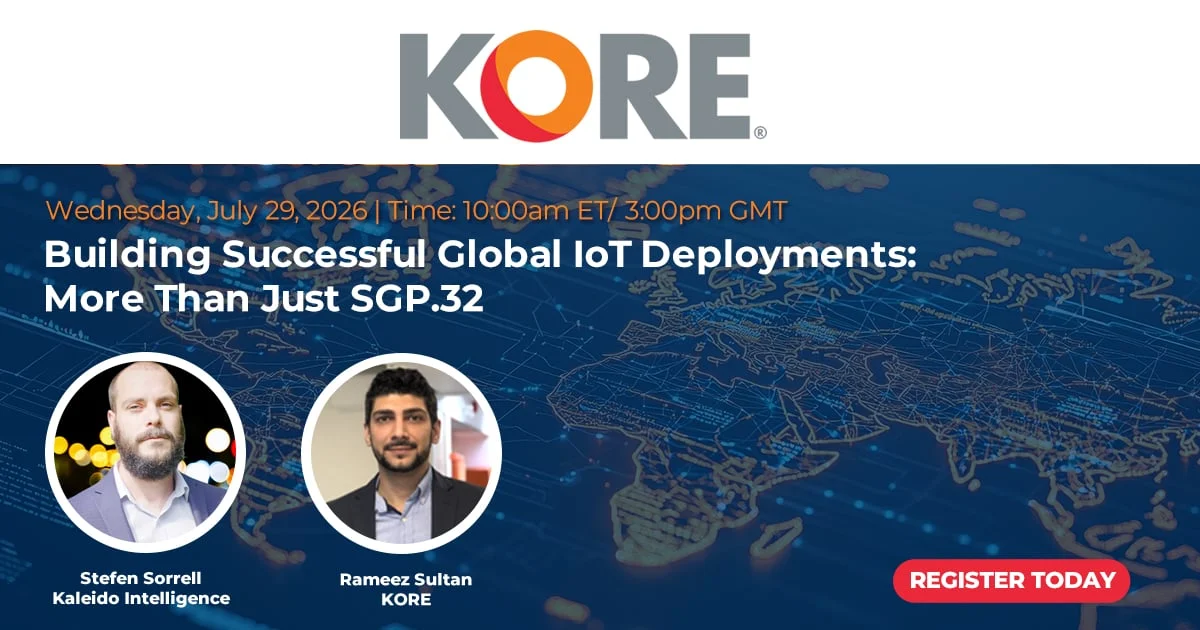
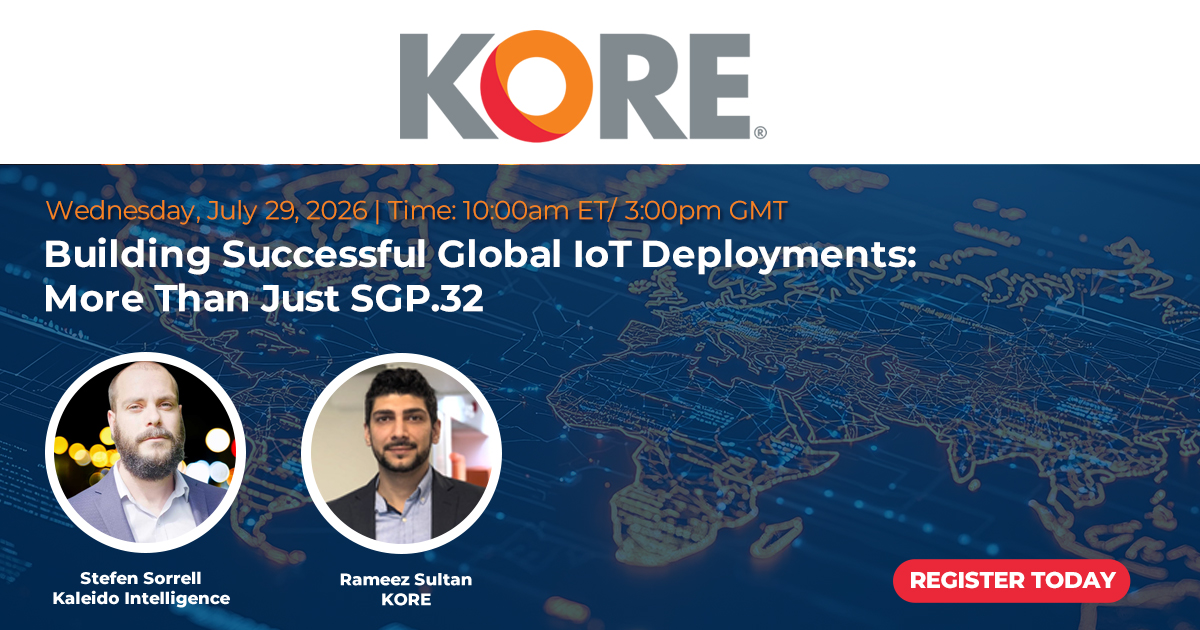
To address these escalating complexities, industry leaders KORE and Kaleido are partnering to host an exclusive, highly informative webinar titled "Building Successful Global IoT Deployments: More Than Just SGP.32." Scheduled for Wednesday, July 29, 2026, at 10:00 a.m. ET / 3:00 p.m. GMT, the session aims to demystify the intersection of emerging standards and practical enterprise operations.
Whether an organization is in the early stages of planning its first international IoT rollout or actively managing a massive, established global fleet of connected assets, this upcoming session promises invaluable insights. Attendees will learn how to architect a holistic connectivity strategy designed to keep devices connected, compliant, and fully operational no matter where business takes them.
Main Facts: The Modern IoT Connectivity Dilemma
The rapid maturation of the Internet of Things has transformed it from a novelty into the operational backbone of global enterprise. Today, connected devices manage everything from international supply chains and smart logistics to healthcare equipment, industrial automation, and smart city infrastructure. However, as the physical footprint of these deployments widens, the underlying technical and regulatory challenges grow exponentially.
At the core of the upcoming KORE and Kaleido webinar is a vital reality check for the tech sector: while technological advancements like SGP.32 represent major milestones for remote SIM provisioning, they are merely pieces of a much larger, highly intricate puzzle.
Key Event Details:
- Hosts: KORE and Kaleido
- Event Building Successful Global IoT Deployments: More Than Just SGP.32
- Date: Wednesday, July 29, 2026
- Time: 10:00 a.m. ET / 3:00 p.m. GMT
- Registration: Secure your spot via GoToWebinar
Enterprise leaders frequently fall into the trap of viewing connectivity solely through the narrow lens of technical specifications. By relying on a single standard to solve complex international challenges, organizations often run into unforeseen roadblocks—ranging from local carrier restrictions and data sovereignty compliance failures to unexpected roaming charges and device lifecycle management bottlenecks.
The KORE and Kaleido webinar will tackle these realities head-on, offering a comprehensive roadmap for enterprises striving to move beyond patchwork solutions and build enduring, scalable IoT ecosystems.
Chronology: The Evolution of Global IoT and Remote SIM Provisioning
To understand why the dialogue has shifted toward strategies "beyond SGP.32," it is helpful to examine the historical trajectory of IoT connectivity management and how enterprise requirements have evolved over the past decade.
Phase 1: The Era of Static SIMs and Localized Silos (Early 2010s)
In the early days of large-scale IoT deployments, enterprises relied heavily on traditional, physical subscriber identity modules (SIM cards). Expanding a deployment into a new country meant physically swapping SIM cards, negotiating localized roaming agreements with foreign mobile network operators (MNOs), or managing disparate regional connectivity providers. This approach resulted in fragmented management platforms, high operational overhead, and recurring connectivity blind spots.
Phase 2: The Promise of M2M and Consumer eUICC Standards (Mid-to-Late 2010s)
The introduction of embedded SIM (eSIM) technology and early machine-to-machine (M2M) remote SIM provisioning (RSP) standards—such as GSMA SGP.01 and SGP.02—offered the first glimpse of over-the-air profile management. Organizations could theoretically switch carrier profiles without physically accessing the device. However, these early standards were primarily designed for consumer electronics (like smartwatches and smartphones) or rigid industrial environments, often lacking the flexibility, automation, and lightweight profile management required for headless, low-power IoT devices distributed globally.
Phase 3: The Advent of SGP.32 and Modern Enterprise Demands (Present Day)
Recognizing the limitations of existing standards, the GSMA developed SGP.32—a groundbreaking technical specification tailored specifically for enterprise IoT applications. SGP.32 streamlines remote profile management for IoT devices that lack a local user interface or are constrained by power and processing limitations.
However, as KORE and Kaleido emphasize, the introduction of SGP.32 does not render broader strategic planning obsolete. While SGP.32 solves critical provisioning challenges, it must be integrated into a wider operational framework that accounts for multi-carrier flexibility, regional regulatory compliance, data routing, and continuous lifecycle management. The webinar on July 29, 2026, arrives at a critical juncture as enterprises transition into this mature, highly regulated phase of IoT adoption.
Supporting Data & Market Context: Why a Broader Strategy is Non-Negotiable
Industry analysts consistently point to a widening gap between enterprises that successfully scale their IoT initiatives and those that stall during international expansion. According to recent market research by Kaleido Intelligence and related telecom insights:
- Exponential Device Growth: The global tally of active IoT connections continues to surge into the tens of billions, driven by demands for real-time visibility, predictive maintenance, and digital transformation.
- The Compliance Maze: Operating across multiple continents means navigating divergent regulatory frameworks. From strict data residency laws in the European Union (such as GDPR) to localized permanent roaming restrictions enforced by national telecom regulators in regions like India, Turkey, and Brazil, compliance failures can result in heavy fines or sudden network disconnection.
- The Cost of Downtime: For mission-critical deployments—such as remote patient monitoring, cold-chain logistics for pharmaceuticals, or smart grid monitoring—network downtime is not merely an inconvenience; it represents a direct threat to revenue, safety, and brand reputation.
These data points underscore why relying exclusively on a provisioning standard like SGP.32 is insufficient. An enterprise may have the most advanced remote SIM provisioning framework available, but if its underlying carrier agreements conflict with local telecom laws, or if its data routing fails to comply with regional privacy mandates, the entire deployment remains vulnerable.
Official Insights & Expert Perspectives: Understanding Where SGP.32 Fits
During the upcoming KORE and Kaleido webinar, industry-leading experts will unpack the complex relationship between emerging technical standards and practical business execution.
SGP.32: Complement, Not Substitute
SGP.32 represents a major leap forward for remote SIM provisioning, introducing unprecedented flexibility and streamlined device management for modern IoT deployments. By allowing enterprises to download, enable, disable, or delete profiles over the air without requiring complex back-end architectures for every device type, SGP.32 significantly lowers the barrier to entry for international rollouts.

However, KORE and Kaleido experts stress that SGP.32 is a tool, not a complete strategy. Implementing SGP.32 does not automatically resolve:
- Carrier Flexibility: Ensuring access to tier-one network operators worldwide without locking the enterprise into rigid, long-term vendor lock-ins.
- Global Coverage Optimization: Balancing cost and coverage across cellular, satellite, and hybrid networks to eliminate connectivity dead zones.
- End-to-End Security: Securing data in transit across public and private networks while protecting against evolving cyber threats.
- Lifecycle Management: Maintaining visibility and control over connected assets from manufacture and deployment through decommissioning.
By positioning SGP.32 as a powerful component within a broader, multi-layered connectivity framework, organizations can harness its benefits while avoiding common deployment pitfalls.
What Attendees Will Learn
Designed for maximum practical impact, the webinar will equip participants with actionable insights and industry best practices. Attendees will walk away with a deeper understanding of:
- The Realities of Global IoT: How to identify and overcome the hidden friction points of cross-border deployments, including regulatory hurdles, roaming restrictions, and carrier negotiations.
- Decoding SGP.32: A clear, jargon-free breakdown of what SGP.32 is, how it works, and where it fits within your organization’s technical architecture.
- Holistic Connectivity Planning: Strategies for integrating remote SIM provisioning with robust multi-carrier management, global coverage strategies, and carrier redundancy.
- Security and Compliance Best Practices: How to maintain strict adherence to local data sovereignty laws and secure connected device fleets against modern cyber vulnerabilities.
- Future-Proofing Your Architecture: Proven methods to design IoT deployments that can scale seamlessly today while adapting to future technological shifts and business growth.
Who Should Attend?
Because global IoT touches multiple facets of modern enterprise operations, this webinar is tailored for a diverse audience of decision-makers and technical leaders. It is highly recommended for:
- Chief Technology Officers (CTOs) and CIOs seeking to align their organization’s digital transformation roadmap with scalable, secure connectivity architectures.
- IoT Product Managers and Project Leads responsible for planning, executing, and scaling international connected device rollouts.
- Operations and Supply Chain Executives looking to leverage real-time IoT data without being hindered by regional network failures or compliance bottlenecks.
- Network and Security Directors tasked with protecting distributed IoT fleets and ensuring airtight compliance with evolving international data regulations.
- Enterprise Architects and Engineers who want a technical, forward-looking assessment of remote SIM provisioning standards and multi-carrier strategies.
Implications: The Path Forward for Global Enterprises
The decisions enterprises make today regarding their IoT connectivity strategies will dictate their operational agility and competitive edge for the next decade. As international markets become increasingly regulated and the scale of connected device fleets continues to multiply, "winging it" with localized or fragmented connectivity is no longer a viable business model.
By joining forces for the "Building Successful Global IoT Deployments: More Than Just SGP.32" webinar on Wednesday, July 29, 2026, KORE and Kaleido are providing enterprises with a timely opportunity to refine their strategies, embrace modern standards intelligently, and ensure long-term operational resilience.
Secure Your Spot Today
Don’t let connectivity challenges stall your international growth. Gain the practical insights, strategic frameworks, and technical clarity needed to simplify your global deployments and keep your devices online wherever business takes you.