Transforming Your Smartphone into a Universal Control Console: The Rise of Openterface KeyMod
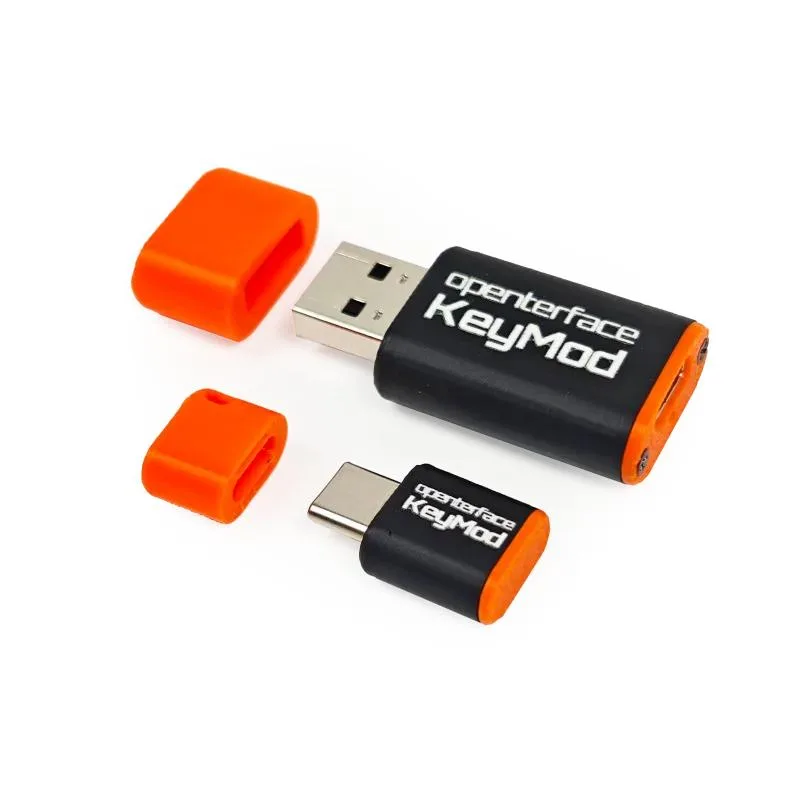
In an era where smartphones possess more computing power than the desktop systems of a decade ago, the boundary between mobile devices and heavy-duty IT infrastructure continues to blur. Enter the Openterface KeyMod, a revolutionary, pocket-sized USB bridge developed by TechxArtisan that fundamentally redefines how technicians, systems administrators, embedded developers, and enthusiasts interact with machines. Designed to turn any modern smartphone into a full-fledged control console for computers, servers, kiosks, and embedded systems, this minimalist hardware dongle eliminates the need to lug around bulky laptops, dedicated monitors, or convoluted cable setups for emergency troubleshooting and routine administration.
Currently the focus of a major Crowd Supply crowdfunding campaign, the Openterface KeyMod is capturing the attention of the tech community not only for its versatile hardware design, but also for its staunch commitment to open-source principles. By marrying composite USB device emulation with secure wireless and wired connectivity—and even dipping its toes into local artificial intelligence integration—TechxArtisan has positioned the KeyMod as an essential Swiss Army knife for modern digital infrastructure management.
Main Facts: What is the Openterface KeyMod?
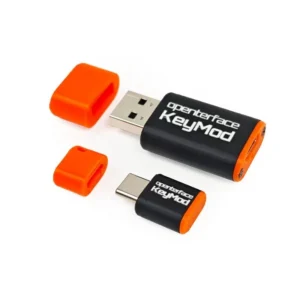
At its core, the Openterface KeyMod is a hardware USB bridge that connects directly to a target machine (such as a server, desktop, kiosk, or microcontroller development board) and interfaces seamlessly with a mobile companion application called KeyCmd. Available in two distinct iterations—the Mini and the Plus—the device operates by presenting itself to the target host as a composite USB device.
This composite nature allows the KeyMod to simultaneously act as a Human Interface Device (HID)—providing keyboard, mouse, touchpad, gamepad, presentation, and macro controls—and as a USB network bridge via the CDC-ECM (Communication Device Class Ethernet Control Model) standard.
The division between the two models caters to different use cases:
- Openterface KeyMod Mini: Built for ultra-portability, the Mini connects to the smartphone wirelessly via Bluetooth Low Energy (BLE) 5.3, reaching data rates up to 2 Mbps within a reliable operating range of 5 to 10 meters. It measures an astonishing 25 × 15 × 5 mm and weighs a mere 2.4 grams.
- Openterface KeyMod Plus: Designed for environments requiring heavier data transfers and zero wireless latency, the Plus connects directly to the smartphone via a wired USB connection, unlocking higher bandwidths up to 10 Mbps. It measures 44 × 20 × 10 mm and weighs 8.9 grams.
Power management is remarkably frictionless: the KeyMod draws its minimal operational power directly from the target machine’s USB port. Consequently, users never have to worry about charging the dongle itself, ensuring it is always ready for immediate deployment. The companion KeyCmd app is broadly accessible, supporting Android 5.0 and above, as well as iOS 17.0 and newer, ensuring compatibility with the vast majority of modern smartphones.
Chronology of Development and Release
The journey from a conceptual idea to a crowd-funded, production-ready piece of hardware reflects a methodical approach to product development by TechxArtisan. While open-source hardware projects often face hurdles regarding manufacturability and software stability, the timeline of the Openterface KeyMod demonstrates a clear path toward community empowerment.
- Conceptualization and Prototyping: TechxArtisan initially set out to solve a perennial pain point for systems administrators and embedded engineers: the friction of field-diagnosing headless servers or microcontrollers without carting out full-sized peripherals. By leveraging ubiquitous smartphone screens and processing power, the team conceptualized a physical bridge capable of translating mobile inputs into standard USB host commands.
- Architecture Selection: Early prototypes focused on balancing power draw, footprint, and protocol reliability. The integration of a CH32 HID controller alongside dedicated BLE 5.3 modules allowed for reliable dual-mode connectivity (wireless for the Mini, wired for the Plus).
- Crowd Supply Launch: TechxArtisan officially launched their campaign on Crowd Supply, providing transparent documentation of the hardware architecture, software ecosystem, and initial pricing tiers. Alongside the campaign launch, the team committed to releasing comprehensive hardware design files.
- Open-Source Transition & OSHWA Certification: Emphasizing transparency, TechxArtisan announced plans to make the firmware fully open-source following the conclusion of the funding campaign. Furthermore, the project is slated to receive official Open Source Hardware Association (OSHWA) certification, cementing its place within the open-source hardware pantheon and encouraging community-driven modifications.
Supporting Data and Technical Specifications
To truly understand the technical prowess packed into the Openterface KeyMod, one must examine the underpinnings of its networking, security, and input emulation frameworks.
Network Bridge and IP Architecture
One of the most powerful features of the KeyMod is its built-in CDC-ECM network bridge. When plugged into a target machine, the device instantly establishes a private point-to-point Ethernet network over USB.
- Target Machine IP: Assigned a fixed address of
192.168.11.2 - Host Smartphone IP: Assigned a fixed address of
192.168.11.1
This zero-configuration setup bypasses the need for complex DHCP servers, Wi-Fi credentials, or physical routers. Within seconds of plugging the dongle in, administrators have a direct TCP/IP channel open to the target machine. This enables immediate SSH terminal sessions, frictionless file transfers, and out-of-band management tasks without disturbing existing network configurations.
Security Architecture
Recognizing that exposing a hardware bridge to a smartphone introduces potential vector risks, TechxArtisan baked robust security protocols directly into the BLE connection layer of the Mini model. The wireless link utilizes AES-128 encryption paired with ECDH (Elliptic-Curve Diffie-Hellman) P-256 key exchange, complete with support for authenticated pairing. This ensures that unauthorized nearby devices cannot intercept keystrokes or hijack the administrative terminal session.
HID Profiles and Control Modes
The KeyCmd application transforms the smartphone screen into a dynamic control surface. Users can toggle between multiple input profiles depending on their immediate needs:
- Keyboard & Touchpad: Standard remote desktop and terminal control.
- Gamepad: Turns the smartphone into a wireless controller for gaming setups or testing environments.
- Presentation Mode: Converts the phone into a slide remote.
- Macro & Shortcuts Mode: Automates repetitive keystroke sequences with single-tap execution.
The Experimental "Agent Mode" (AI Integration)
Pushing the boundaries of traditional IT tools, TechxArtisan has introduced an experimental Agent Mode within the software ecosystem. This feature integrates a lightweight Large Language Model (LLM)—specifically tested using a local 0.6B Qwen model—directly into the control workflow.
Agent Mode allows users to prompt the AI in natural language to plan and execute complex sequences of terminal commands, HID inputs, and macros. During internal testing, the local 0.6B model demonstrated impressive efficiency, successfully transmitting 1,130 characters of executed instructions in under a minute. For embedded developers and field engineers, this opens the door to conversational automation without requiring cloud connectivity or heavy computational overhead on the host machine.
| Technical Parameter | Openterface KeyMod Mini | Openterface KeyMod Plus |
|---|---|---|
| Dimensions | 25 × 15 × 5 mm | 44 × 20 × 10 mm |
| Weight | ~2.4 grams | ~8.9 grams |
| Connectivity | Bluetooth Low Energy (BLE) 5.3 | Wired USB Connection |
| Max Data Rate | Up to 2 Mbps (Wireless) | Up to 10 Mbps (Wired) |
| Wireless Range | 5 meters optimal (up to 10m max) | N/A (Wired) |
| Core Controller | CH32 HID Controller + BLE 5.3 Module | CH32 HID Controller + USB Bridge |
| Power Source | Target Machine USB Port | Target Machine USB Port |
| OS Compatibility | Android 5.0+, iOS 17.0+ | Android 5.0+, iOS 17.0+ |
Official Responses and Developer Philosophy
TechxArtisan’s public communications throughout the Crowd Supply campaign underscore a deep dedication to the maker and systems administration communities. Rather than locking down their intellectual property behind proprietary walls, the creators have embraced an open-source ethos that invites scrutiny, collaboration, and adaptation.
In official campaign statements, the development team highlighted that security, portability, and modularity were treated as foundational pillars rather than secondary considerations. By releasing the hardware design files early and promising open-source firmware upon the completion of funding, TechxArtisan aims to foster an ecosystem where developers can write custom plugins, expand the capabilities of the KeyCmd app, and adapt the KeyMod hardware for specialized industrial applications.
The pursuit of OSHWA certification further reinforces this stance. Independent verification ensures that the hardware design meets strict open-source standards, guaranteeing that schematics, board layouts, and bill of materials (BOM) data remain accessible for educational, commercial, and personal replication. Early feedback from hardware reviewers and open-source advocates has been overwhelmingly positive, praising the project for bridging the gap between mobile convenience and professional-grade engineering tools.
Implications for IT Administration, Embedded Development, and Beyond
The introduction of the Openterface KeyMod carries significant implications across several technological domains, effectively lowering the barrier to entry for professional-grade hardware control and emergency systems recovery.
1. Streamlining IT and Server Administration
For systems administrators and DevOps professionals managing racks of servers, headless nodes, or remote kiosks, physical access has always been a logistical hurdle. Carrying crash carts, dedicated monitors, or serial cables is impractical for quick audits. With the KeyMod, an admin can walk up to any server, plug in the dongle, connect via their smartphone, and immediately establish an SSH terminal session or inspect boot logs via the CDC-ECM network bridge. The elimination of Wi-Fi dependency ensures that management is possible even in air-gapped or heavily shielded server rooms.
2. Empowering Embedded Systems Development
Embedded developers working with microcontroller development boards, single-board computers like the Raspberry Pi 5, or custom industrial controllers frequently encounter debugging bottlenecks. Connecting a laptop requires dedicated desk space and cable management. The KeyMod turns a smartphone into an instant serial terminal and debugging console. Developers can flash firmware, monitor serial outputs, and send macro commands directly from their pocket device while standing over a workbench.
3. Expanding the Boundaries of Edge Automation
The inclusion of Agent Mode and local LLM integration hints at a future where field troubleshooting is assisted by artificial intelligence. Imagine diagnosing a faulty daemon on an embedded Linux kiosk by simply typing a natural language request into your smartphone—such as "Check system logs for memory leaks and restart the web service"—and watching the local AI model generate and execute the exact terminal commands via the KeyMod interface. This shifts the paradigm from manual command-line entry to conversational edge administration.
4. Gaming, Presentations, and Everyday Utility
Beyond enterprise and engineering use cases, the consumer-facing modes of the KeyCmd app offer broad utility. Turning a smartphone into a zero-latency wireless gamepad or a presentation remote control without pairing hassles makes the KeyMod a versatile gadget for casual users and professionals alike.
Conclusion
The Openterface KeyMod is much more than a clever hardware accessory; it is a masterclass in functional minimalism. By harnessing the processing power and vibrant displays already present in modern smartphones, TechxArtisan has successfully replaced bulky diagnostic gear with a dongle that weighs less than three grams.
With its clever dual-mode connectivity, robust AES-128 encryption, zero-configuration network bridging, and forward-looking AI automation features, the KeyMod addresses real-world pain points for engineers and administrators alike. Backed by an open-source hardware philosophy and upcoming OSHWA certification, the project invites the global tech community to inspect, modify, and build upon its foundation. For anyone looking to streamline their workflow, reduce hardware clutter, and turn their smartphone into an ultimate utility console, the Openterface KeyMod is an innovation well worth watching.