AWS Unveils Amazon Bedrock AgentCore Runtime Instances: A Paradigm Shift for Long-Running, Multi-Agent AI Infrastructure
SEATTLE — As artificial intelligence transitions rapidly from experimental prototypes to mission-critical production environments, software engineering teams are confronting a hard technological ceiling. While building a conversational wrapper or a simple single-turn prompt router is trivial, orchestrating autonomous AI systems that must execute for hours, days, or even weeks presents immense infrastructure hurdles.
Enterprises deploying advanced generative AI workloads face severe friction: how to maintain state across long-running, multi-step workflows; how to facilitate seamless, low-latency collaboration between distinct, specialized agent frameworks; and how to provision resource-intensive architectures—such as Graphics Processing Units (GPUs) and direct operating system access—without sinking engineering hours into custom infrastructure management.
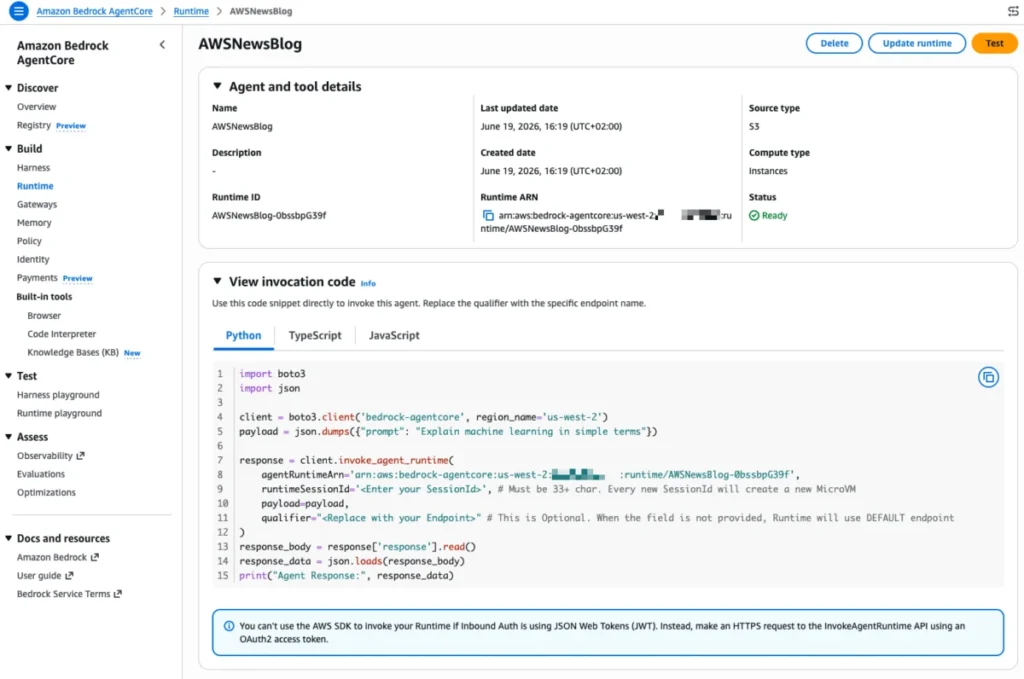
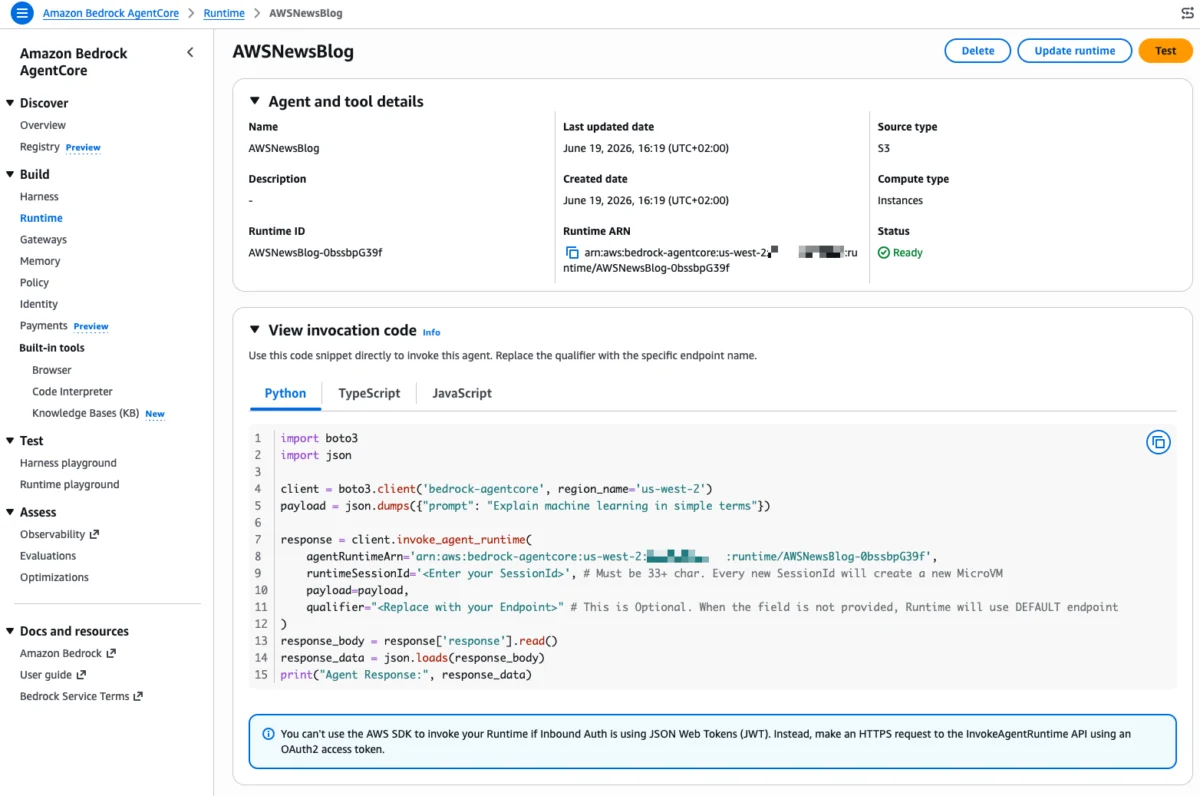
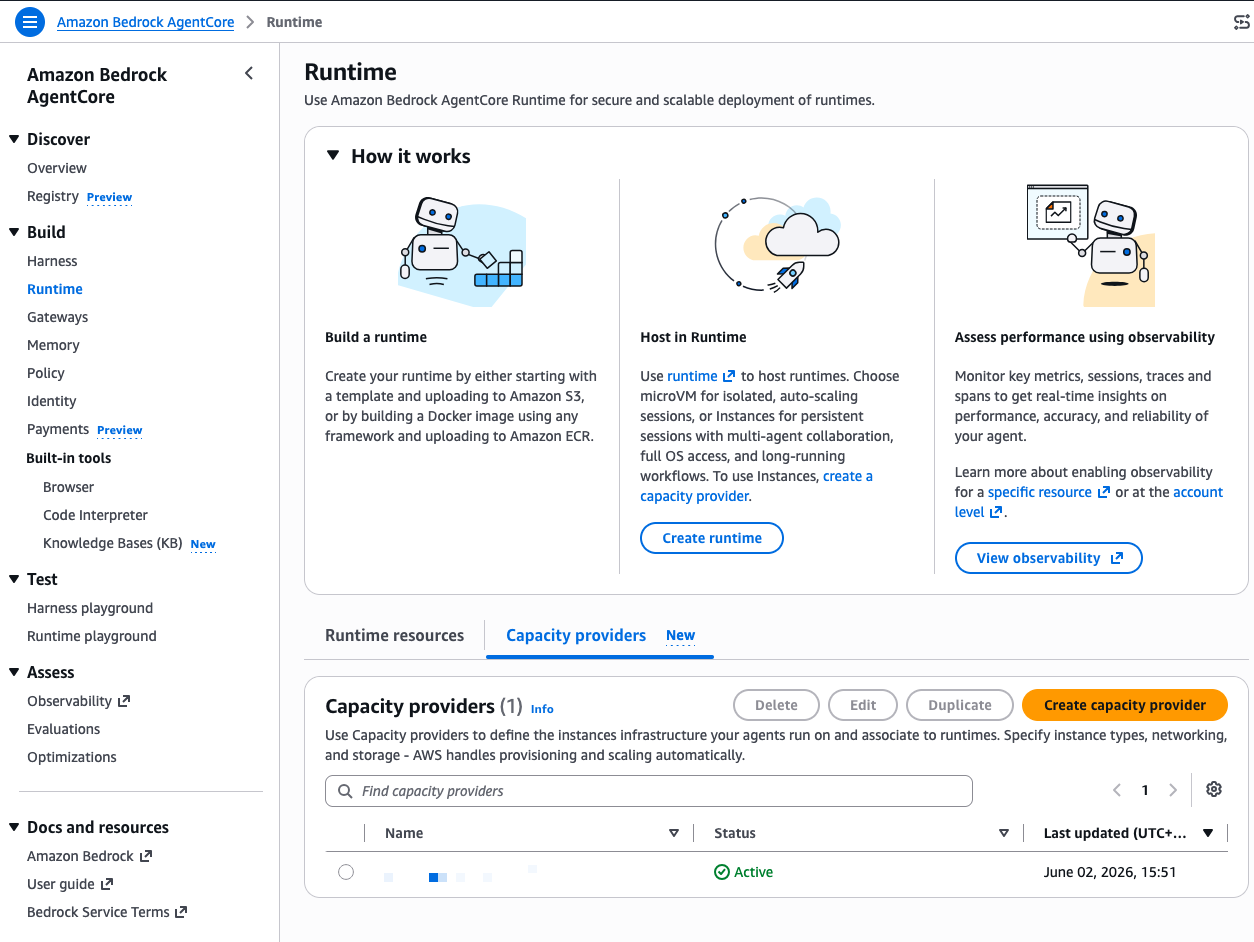
Addressing these foundational bottlenecks head-on, Amazon Web Services (AWS) has officially announced the launch of runtime instances for Amazon Bedrock AgentCore Runtime. This powerful, complementary compute option provides developers with fully managed, persistent AWS infrastructure purpose-built to handle complex, heavy-duty agentic workloads at scale.
Main Facts: What Are AgentCore Runtime Instances?
The newly introduced runtime instances fundamentally expand the architectural horizons of Amazon Bedrock AgentCore. Historically, developers relied on AgentCore runtime microVMs—ephemeral, highly scalable environments optimized for invocations running up to 8 hours, utilizing managed session storage. While ideal for lightweight orchestrators, microVMs have inherent limitations when workloads require massive computational power, multi-day endurance, specialized hardware accelerators, or direct OS-level interaction.
Runtime instances bridge this critical gap by delivering AWS-managed Amazon Elastic Compute Cloud (EC2) infrastructure directly to the AgentCore ecosystem.
Key technical capabilities of the new offering include:

- Multi-Agent Host Colocation: Deploy multiple disparate agents onto a single runtime instance, each running with its own distinct dependencies, artifact types, and favorite frameworks (including CrewAI, LangGraph, LlamaIndex, and Strands).
- Extended Session Persistence: Maintain shared multi-agent sessions for up to 14 days, supported by native integration with Amazon Elastic Block Store (Amazon EBS) and AgentCore Memory for long-term cross-session recall.
- Cost-Effective Hibernation: Dynamically stop and restart sessions during idle periods to drastically curtail compute expenditure without losing operational context.
- Hardware Acceleration: Native support for GPU-powered instances tailored for heavy computational tasks such as deep learning model fine-tuning, security vulnerability scanning, code compilation, and automated graphical user interface (GUI) testing.
- Unified API and Security Governance: Seamless integration with existing AgentCore APIs, identity controls, and deep observability toolsets.
Chronology: The Evolution of Agentic Infrastructure
The release of runtime instances marks the culmination of a multi-year industry shift regarding how organizations perceive and deploy generative AI.
Phase 1: The Monolithic Prompt Era
In the early days of modern Large Language Models (LLMs), architectures were largely stateless. Applications sent individual prompts to an API endpoint and received a single response back. Infrastructure demands were modest, usually handled by serverless functions or basic container deployments.
Phase 2: The Agentic Revolution and Prototype Explosion
As foundational models grew more sophisticated, developers began wrapping them in autonomous agent loops. Tools like LangChain and LlamaIndex enabled models to reason, plan, and execute tasks iteratively. However, moving these architectures out of local development environments into production exposed a severe infrastructure vacuum. Engineers were forced to manually stitch together container orchestrators, custom session databases, networking layers, and monitoring scripts to keep agents alive for more than a few minutes.
Phase 3: Managed Runtime MicroVMs
Recognizing this operational tax, AWS introduced Amazon Bedrock AgentCore Runtime microVMs, offering managed environments with stateful session storage for workloads up to 8 hours. While this solved the scaling problem for standard application patterns, complex enterprise use cases—such as software engineering teams building automated coding suites, multi-agent simulation frameworks, and continuous data pipeline optimizers—demanded persistent host-level control and multi-day execution cycles.
Phase 4: The Introduction of Runtime Instances
With today’s announcement of runtime instances, AWS provides the missing heavy-lift infrastructure. Developers no longer need to build custom control planes on raw EC2 instances to support collaborative, long-duration agent swarms. They can now combine lightweight microVM orchestrators with robust, GPU-accelerated runtime instances under a unified API framework.
Supporting Data & Architectural Mechanics
To understand the real-world impact of runtime instances, it is helpful to examine how they operate under the hood. AWS designed the infrastructure to integrate smoothly with existing developer toolchains while radically simplifying deployment patterns.
The Hybrid Architecture Pattern: MicroVMs + Instances
Architects are not forced to choose exclusively between runtime microVMs and runtime instances; rather, the two compute options are designed to be deployed cooperatively:
- The Lightweight Orchestrator (MicroVM): A primary orchestrator agent runs on an AgentCore microVM. It handles incoming API requests, manages high-level task routing, and aggregates final results, taking advantage of fast micro-scaling.
- The Specialized Workers (Runtime Instances): When heavy computational lifting is required, the orchestrator dispatches subtasks to specialized worker agents residing on dedicated runtime instances. These workers handle intensive operations—such as compiling large codebases, running security suites, or executing complex web-scraping and GUI automation tasks—that require persistent file systems and direct OS access.
Hands-On Implementation: A Dual-Agent Demonstration
To demonstrate the power of runtime instances, consider a common enterprise software engineering workflow involving two independent agents: a Code Writer Agent and a Code Reviewer Agent.
Conventionally, getting these two agents to communicate would require establishing an internal network socket, setting up message queues (such as Amazon SQS), or serializing data over REST APIs. With AgentCore runtime instances, both agents reside on the same underlying EC2 host and share a secure, session-bound file system.
1. Configuring the Capacity Provider
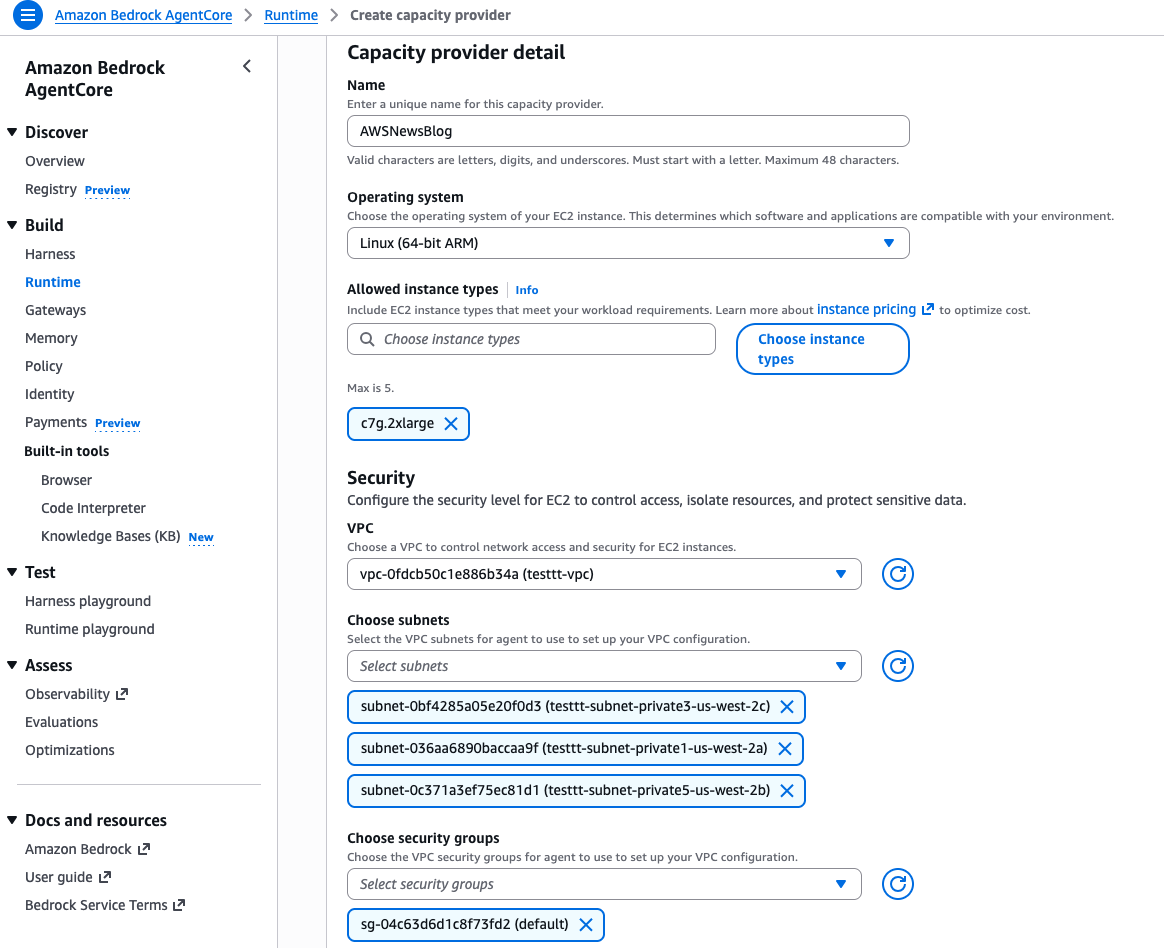
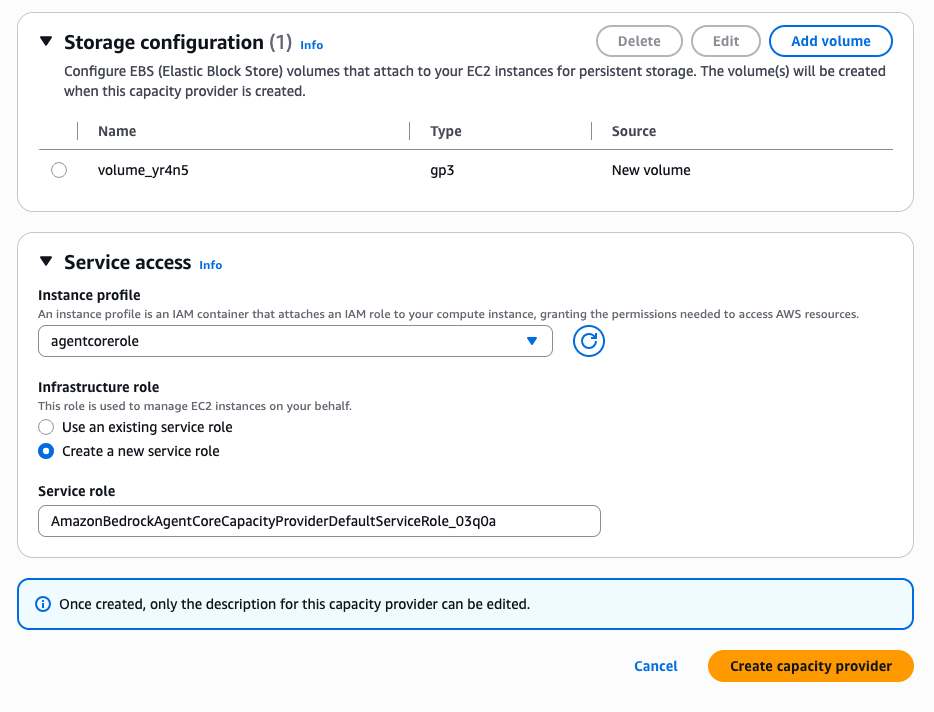
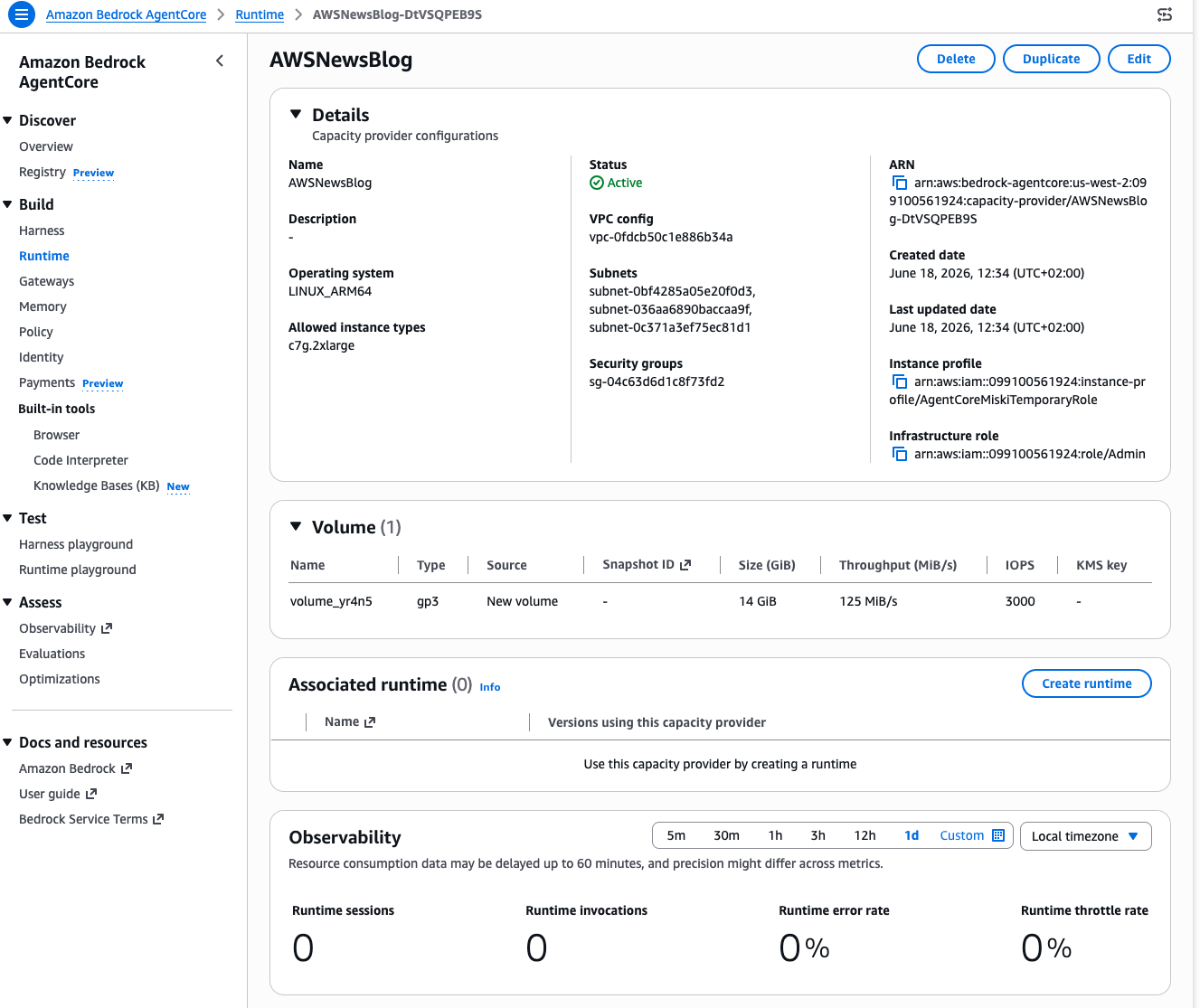
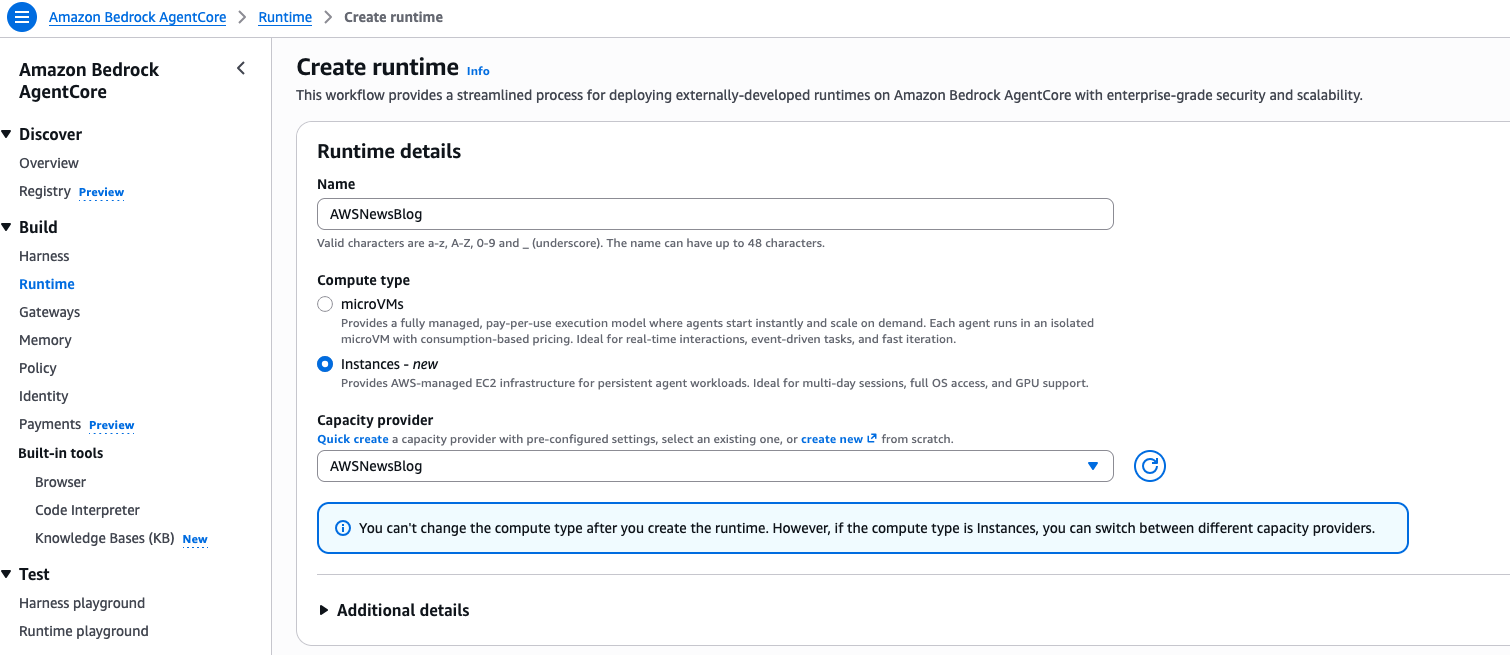
Administrators begin by creating a Capacity Provider via the AWS Management Console, AWS CLI, or Infrastructure as Code (IaC). The provider defines the underlying hardware parameters:
- Operating System: Linux (64-bit ARM)
- Instance Type:
c7g.2xlarge(delivering 8 vCPUs and 16 GiB of memory—plenty of overhead for multiple concurrent Python environments). - Network & Storage: Configured within a custom Virtual Private Cloud (VPC), utilizing standard gp3 EBS volumes for persistent storage, alongside automatically provisioned service roles for IAM governance.
2. Deploying the Agents
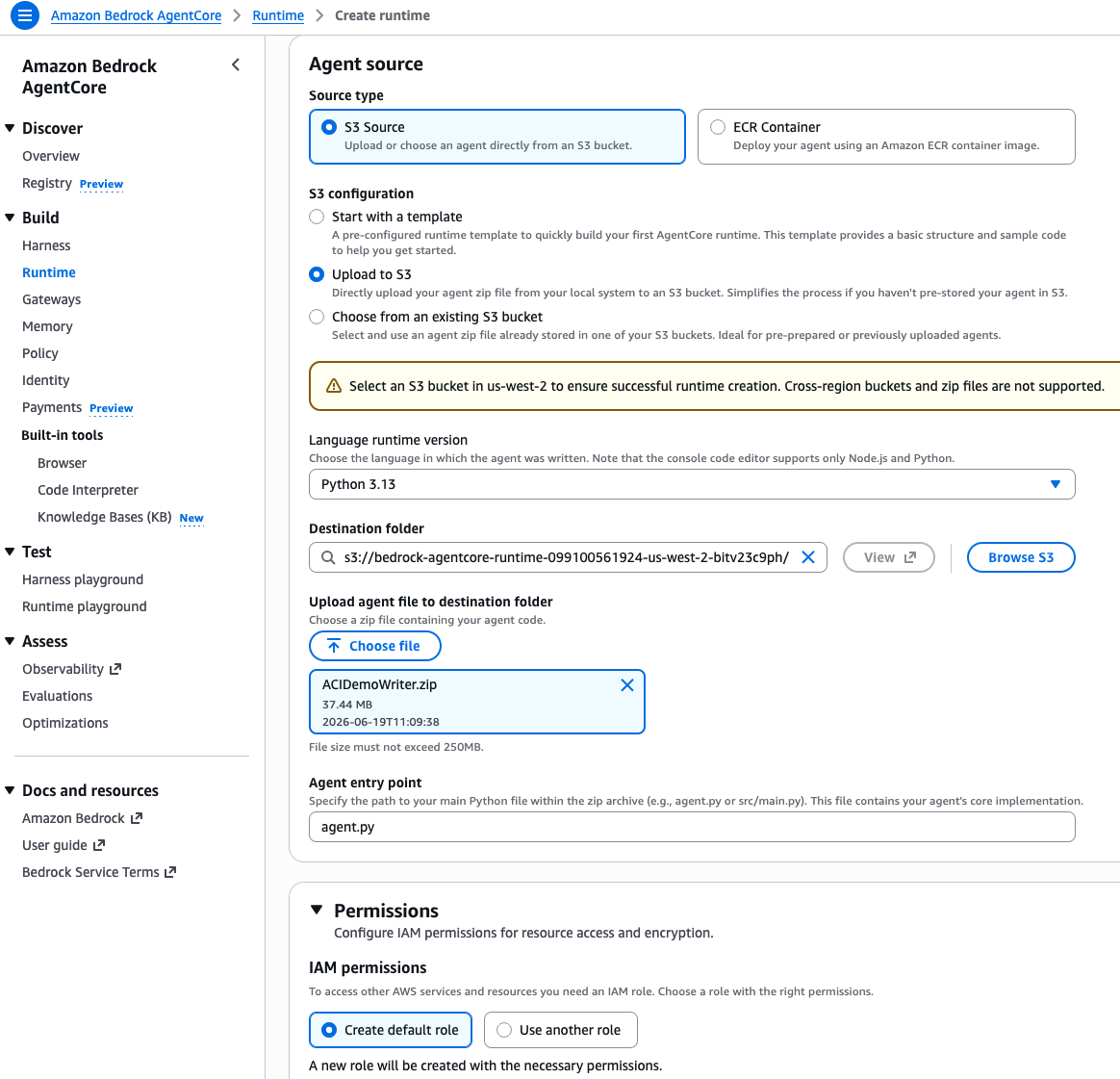
Developers package their respective Python applications (built using frameworks like Strands Agents) into minimal zip archives or container images containing an @app.entrypoint decorator.
- The Code Writer: Given a natural language prompt (e.g., "Write a Fibonacci suite"), the writer agent uses Anthropic’s Claude model to generate production-grade Python code. It then writes the resulting script directly to a shared session directory (
/tmp/agentcore-session/session_id/code.py). - The Code Reviewer: Operating within the exact same session ID, the reviewer agent reads
code.pystraight from the shared local file system—entirely bypassing network overhead or API serialization. It parses the file and outputs structured feedback detailing potential bugs, adherence to style guidelines, and performance optimization suggestions.
Because the infrastructure maintains state across sessions that can persist for up to 14 days, development teams can safely pause workflows on a Friday evening—hibernating the runtime instance—and seamlessly resume complex multi-step refactoring tasks on Monday morning with zero loss of state or context.
Official Responses and Industry Perspectives
AWS engineering leaders emphasize that runtime instances represent a fundamental maturation in how cloud infrastructure supports generative AI.
"When developers scale autonomous agents from simple chat interfaces to multi-step production pipelines, the infrastructure demands change completely," notes engineering documentation from the AWS Bedrock team. "By providing managed EC2 infrastructure paired with persistent session storage and GPU acceleration, we are removing the undifferentiated heavy lifting of infrastructure management, allowing developers to focus entirely on agent intelligence and logic."
Early enterprise feedback from AI software startups and digital transformation agencies highlights several key operational advantages:
- Drastic Reduction in Operational Overhead: Systems architects report saving dozens of engineering hours previously spent configuring auto-scaling groups, custom VPC peering, and bespoke session-state databases.
- Enhanced Collaboration Fidelity: Eliminating network serialization bottlenecks between collaborating agents by leveraging shared, high-speed ephemeral storage has significantly improved execution speed and reliability for complex code-generation pipelines.
Implications for the Enterprise AI Landscape
The launch of Amazon Bedrock AgentCore Runtime instances carries profound implications for the broader enterprise software and cloud computing ecosystems.
1. Mainstream Adoption of Autonomous Agent Swarms
By solving the persistent state and multi-agent coordination challenges at the infrastructure layer, AWS is paving the way for true autonomous agent swarms in production. Enterprises can now reliably deploy systems where dozens of specialized agents—writing code, running tests, scanning for security vulnerabilities, and generating documentation—collaborate continuously over days or weeks without human intervention.
2. Deepening the AWS Bedrock Moat
As cloud providers compete aggressively for enterprise generative AI workloads, infrastructure stickiness is increasingly determined by operational depth rather than model availability. By offering a tightly integrated, comprehensive runtime environment that spans from ephemeral microVMs to dedicated GPU-backed EC2 instances, AWS reinforces Amazon Bedrock as the premier end-to-end platform for building, deploying, and scaling enterprise-grade AI applications.
3. Redefining Developer Workflows
The capability to bring any model and any open-source framework (CrewAI, LangGraph, LlamaIndex, Strands) while retaining unified monitoring, identity management, and fine-grained security governance democratizes advanced AI engineering. Small development teams can now deploy enterprise-scale agent architectures that previously required dedicated platform engineering squads to design and maintain.
Getting Started
Developers and enterprise architects looking to harness the power of runtime instances can explore the official Amazon Bedrock AgentCore Documentation to review configuration guides, deployment templates, and CLI tutorials. By setting up their first capacity provider today, organizations can take their first definitive step toward building truly persistent, collaborative, and production-ready AI agent ecosystems.