Revolutionizing Recommender Systems: How Developers Can Harness Large Language Models and the PaLM API
By Wei Wei, Developer Advocate
The landscape of artificial intelligence is undergoing a seismic shift. Large Language Models (LLMs) have captured the global imagination, praised for their unprecedented capacity to generate human-like text, execute complex language translations, and answer multifaceted questions with remarkable coherence and contextual awareness.
Following the public preview release of the PaLM API at Google I/O 2023, developers around the world have been handed the keys to next-generation application development. While comprehensive documentation already guides developers through standard PaLM API use cases and implementation best practices, this article explores a specialized, highly practical application: augmenting machine learning recommendation systems with the power of LLMs.
Modern recommendation engines are the invisible architecture driving digital commerce, media streaming, and content consumption. By integrating generative AI, developers can bridge the gap between traditional mathematical models and human-like intuition, fundamentally transforming how users discover products, movies, and information.
The Anatomy of Modern Recommendation Systems: A Retrieval-Ranking Pipeline
To understand how LLMs integrate into recommendation frameworks, one must first examine the architecture of modern recommendation engines. Traditional systems generally rely on a multi-stage retrieval-ranking pipeline designed to efficiently filter through millions of catalog items to present the most relevant choices to a user in real time.

- Retrieval (Candidate Generation): The system narrows down an astronomical catalog of items into a manageable subset of hundreds of plausible candidates based on coarse signals.
- Ranking: The system scores and sorts these candidates using granular features, user histories, and machine learning models to maximize consumer utility.
- Post-Ranking: Final adjustments—such as diversity checks, business logic enforcement, and deduplication—are applied before display.
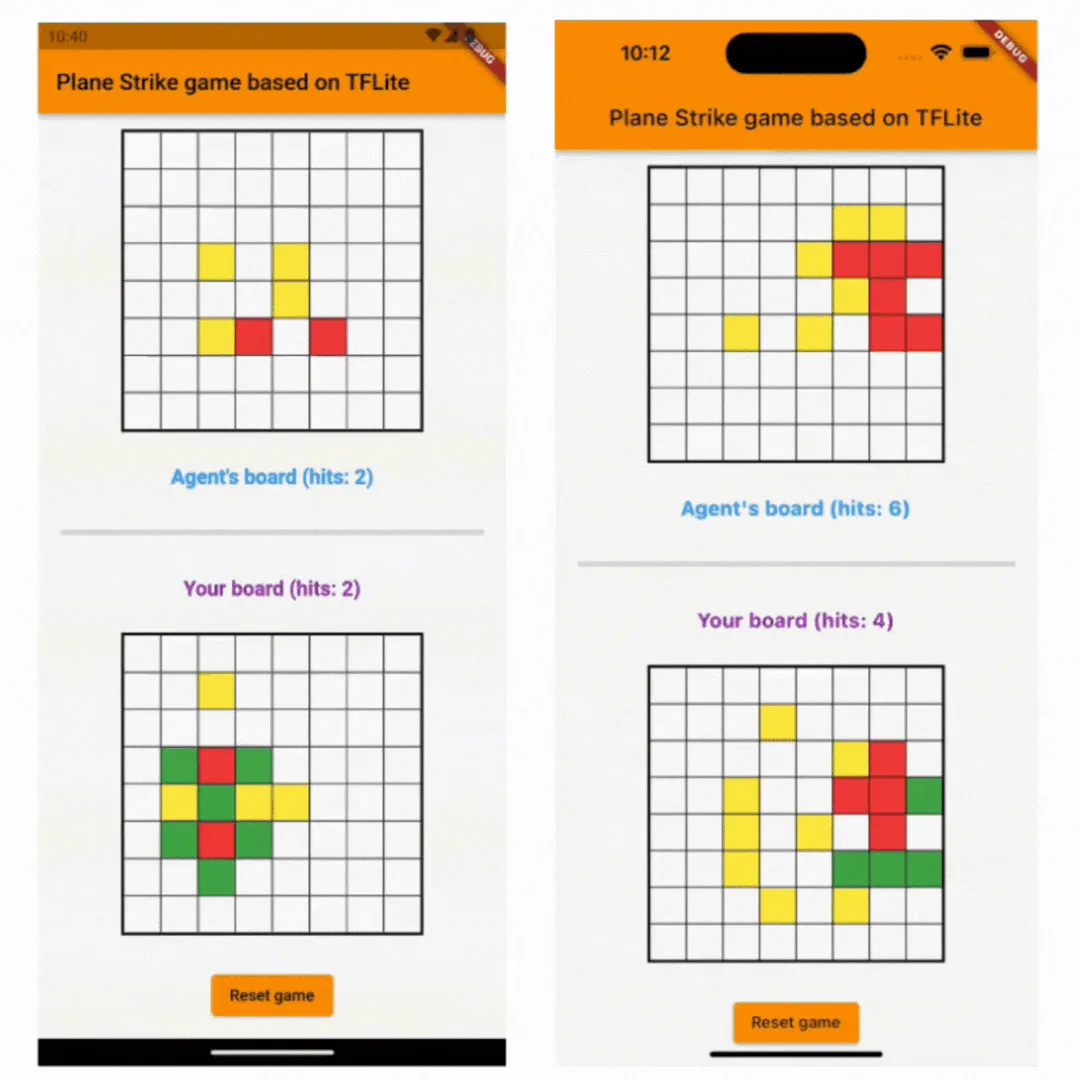
For developers seeking a comprehensive implementation guide, full-stack movie recommendation systems can be constructed using frameworks like TensorFlow and Flutter. However, the introduction of LLMs allows engineers to inject generative intelligence into virtually every phase of this pipeline.
Chronology of Generative AI Integration in Machine Learning
The convergence of LLMs and recommendation engines represents a rapid evolution in software engineering paradigms:
- Early Era (Rule-Based and Collaborative Filtering): Recommendation systems relied heavily on matrix factorization, collaborative filtering, and explicit user-item rating histories. These systems struggled with cold-start problems and semantic understanding.
- Deep Learning Era: The introduction of neural networks allowed systems to capture complex, non-linear relationships between users and items, often modeled through frameworks like TensorFlow Recommenders and TensorFlow Ranking.
- The Generative AI Breakthrough (2023): With the rollout of powerful transformer-based architectures and the Google PaLM API at Google I/O 2023, developers gained access to models capable of zero-shot reasoning, semantic vector embedding, and zero-shot rating prediction. This bridged the gap between rigid numerical recommendation vectors and fluid, conversational user interfaces.
Core Strategies for Leveraging LLMs in Recommender Engines
Integrating LLMs into recommendation pipelines is not an all-or-nothing proposition. Developers can deploy generative models across several distinct layers of their architecture.
1. Conversational Recommendations
Consumers increasingly expect digital platforms to act less like rigid search bars and more like knowledgeable, conversational shopping assistants. Platforms like Google Bard allow users to request interactive recommendations through natural dialogue.
prompt = """You are a movie recommender and your job is to recommend new movies based on user input.
So for user 42, he is in the mood for some drama movies with artistic elements tonight.
Could you recommend three? Output the titles only. Do not include other text."""
response = palm.chat(messages=prompt)
print(response.last)

# Sure, here are three drama movies with artistic elements that I recommend for user 42:
#
# 1. The Tree of Life (2011)
# 2. 20th Century Women (2016)
# 3. The Florida Project (2017)
By leveraging the PaLM API Chat service, developers can build similar dynamic interfaces into proprietary applications with minimal code. Users can seamlessly continue exploration, refining parameters on the fly—such as asking the system to swap out a specific movie title—creating a deeply personalized user journey.
2. Sequential Recommendations
Sequential recommendation systems analyze the chronological order of a user’s historical activities to extrapolate future preferences. Traditionally, this required complex configuration within specialized ML libraries like TensorFlow Recommenders.
Today, the PaLM API Text service can interpret sequential interactions natively:
prompt = """You are a movie recommender and your job is to recommend new movies based on the sequence of movies that a user has watched. You pay special attention to the order of movies because it matters.

User 42 has watched the following movies sequentially:

"Margin Call",
"The Big Short",
"Moneyball",
"The Martian",

Recommend three movies and rank them in terms of priority. Titles only. Do not include any other text.
"""

response = palm.generate_text(
   model="models/text-bison-001", prompt=prompt, temperature=0
)
print(response.result)

# 1. The Wolf of Wall Street
# 2. The Social Network
# 3. Inside Job
By supplying a precise sequence of past interactions, the model recognizes underlying thematic threads—such as a shift from financial realism to high-stakes problem-solving—and outputs prioritized recommendations.
3. Pointwise, Pairwise, and Listwise Rating Predictions
During the ranking phase, candidate items must be scored accurately. Traditionally driven by learning-to-rank tools like TensorFlow Ranking, developers can now prompt LLMs to simulate user evaluation:
prompt = """You are a movie recommender and your job is to predict a user's rating (ranging from 1 to 5, with 5 being the highest) on a movie, based on that user's previous ratings.

User 42 has rated the following movies:
"Moneyball" 4.5
"The Martian" 4
"Pitch Black" 3.5
"12 Angry Men" 5

Predict the user's rating on "The Matrix". Output the rating score only. Do not include other text.
"""
response = palm.generate_text(model="models/text-bison-001", prompt=prompt)
print(response.result)

# 4.5
By evaluating candidate items iteratively, developers can execute pointwise ranking. With prompt engineering adjustments, developers can also implement pairwise or listwise ranking paradigms. Google research papers on rating prediction with LLMs confirm the viability and high fidelity of this approach.

4. Text Embedding-Based Recommendations and the Cold-Start Problem
A common concern among developers is whether LLMs only work for famous items recognized during their pre-training phase. What about private inventories, niche products, or breaking news items unknown to the model?
This is where the PaLM API for Embeddings becomes essential. By converting textual metadata (product descriptions, movie plots, news articles) into high-dimensional vector representations, developers can perform nearest neighbor searches.
def recommend_news(query_text, df, topk=5):
  """
  Recommend news based on user query
  """
  query_embedding = palm.generate_embeddings(model='embedding-gecko-001', text=query_text)
  dot_products = np.dot(np.stack(df['embedding']), query_embedding['embedding'])
  result = tf.math.top_k(dot_products, k=topk)
  indices = result.indices.numpy()
  return df.loc[indices]['news_text']

recommend_news('news currently being read', dataframe, 5)
Using dot-product similarity calculations against pre-computed embeddings, systems can instantly surface related content. This methodology provides an elegant solution to the notorious item cold-start problem, ensuring newly published assets are immediately discoverable.
5. Text Embeddings as Side Features in Neural Networks
Beyond direct retrieval, text embeddings derived from LLMs can serve as rich side features within deep learning recommendation models. By capturing deep semantic nuances from item descriptions, these embeddings can be injected directly into TensorFlow Recommenders architectures:
class MovieModel(tf.keras.Model):

   # ......

   def call(self, inputs):
       return tf.concat(
           [
               self.title_embedding(inputs["movie_title"]),
               self.title_text_embedding(inputs["movie_title"]),
               inputs["movie_plot_embedding"], # inject movie plot embedding
           ],
           axis=1,
       )
Because default embedding services return extensive floating-point vectors (such as 768 dimensions), developers can project them down to manageable sizes using Keras embedding and fully connected layers, optimizing model performance and training speed.

Supporting Data and Technical Considerations
While the integration of LLMs introduces unprecedented semantic depth to recommendation systems, engineers must balance capability with system constraints:
- Dimensionality: Standard embedding models output vectors of 768 dimensions, requiring efficient vector databases (such as Google ScaNN or Chroma) for scalable approximate nearest neighbor (ANN) searches.
- Latency and Cost: Real-time generation calls to LLMs inherently introduce higher latency and computational costs compared to traditional matrix multiplication models. Production architectures typically hybridize systems, utilizing lightweight embedding retrievers for initial candidate generation and reserving generative text APIs for interactive chat surfaces or final reranking layers.
Official Industry Responses and Future Implications
Industry leaders and researchers agree that generative AI represents a paradigm shift for personalization engines. Rather than replacing existing machine learning frameworks, LLMs act as powerful force multipliers.
Google’s ongoing developer initiatives—including specialized technical documentation, codelabs, and developer summits—signal a clear commitment to equipping engineers with production-ready tools. The fusion of structured machine learning pipelines (TensorFlow Recommenders and Ranking) with unstructured semantic generators (PaLM API) points toward an ecosystem where digital platforms understand user intent with human-like empathy.
Conclusion and Next Steps
The strategies explored in this article—ranging from conversational dialogue and sequential inference to embedding-based retrieval and side-feature injection—represent only the tip of the iceberg. As latency optimizations and cost efficiencies improve, LLMs will become deeply embedded standards in production-grade recommendation engineering.
For developers eager to dive deeper into these technologies, Google hosted an online Developer Summit on Recommendation Systems, offering comprehensive technical insights into building next-generation discovery platforms. The future of personalization is conversational, semantic, and deeply intelligent.