Bringing Reinforcement Learning Cross-Platform: How Developers Can Use the TensorFlow Lite Plugin for Flutter to Build Intelligent Board Games
SAN FRANCISCO — In the rapidly evolving landscape of mobile application development, the integration of on-device machine learning has transitioned from a futuristic novelty to an expected standard. Developers are continually tasked with finding efficient ways to deliver sophisticated AI experiences without sacrificing performance or relying heavily on cloud-based infrastructure.
Addressing this demand, the TensorFlow team has officially concluded its educational mini-series on building intelligent gaming applications with machine learning. In its final installment, the development team has demonstrated how to port a reinforcement learning (RL) board game—affectionately named "Plane Strike"—from a native Android implementation to a fully cross-platform experience using Flutter and the recently released TensorFlow Lite plugin for Flutter.
This release marks a significant milestone for mobile developers, bridging the gap between advanced deep learning frameworks like TensorFlow and JAX, and the streamlined, multi-platform UI capabilities of Google’s UI toolkit, Flutter.
Main Facts: Bridging AI and Cross-Platform Development
The latest tutorial, authored by Developer Advocate Wei Wei, serves as the capstone to a three-part series exploring how reinforcement learning models can be trained, converted, and deployed directly onto mobile devices.
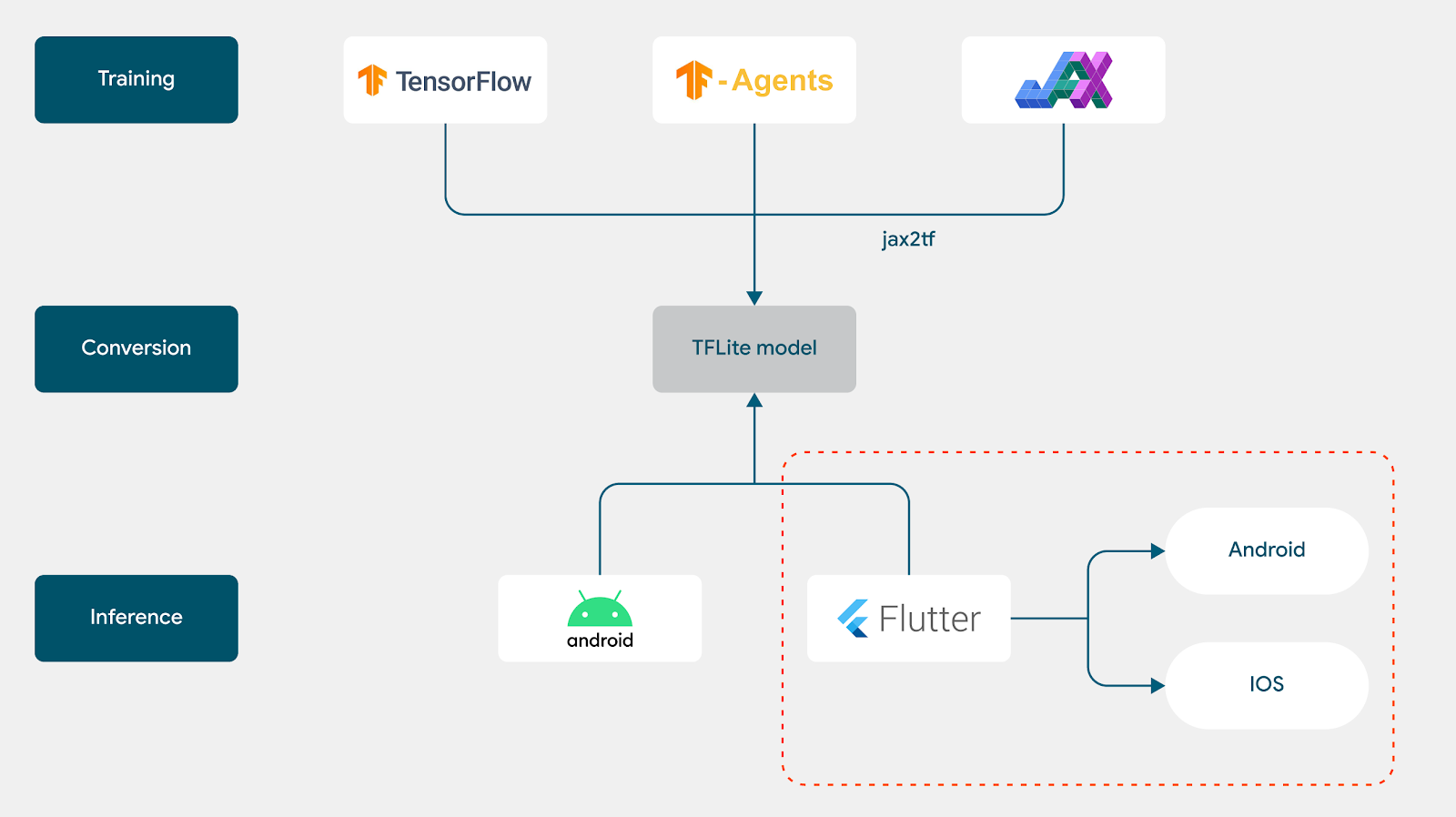
- The Core Technology: The application utilizes a reinforcement learning agent trained via TensorFlow, TensorFlow Agents, or JAX. The resulting model is compiled into a TensorFlow Lite (.tflite) format.
- The Cross-Platform Breakthrough: Leveraging the newly launched TensorFlow Lite plugin for Flutter, developers can now deploy the exact same machine learning model across both Android and iOS operating systems from a single codebase.
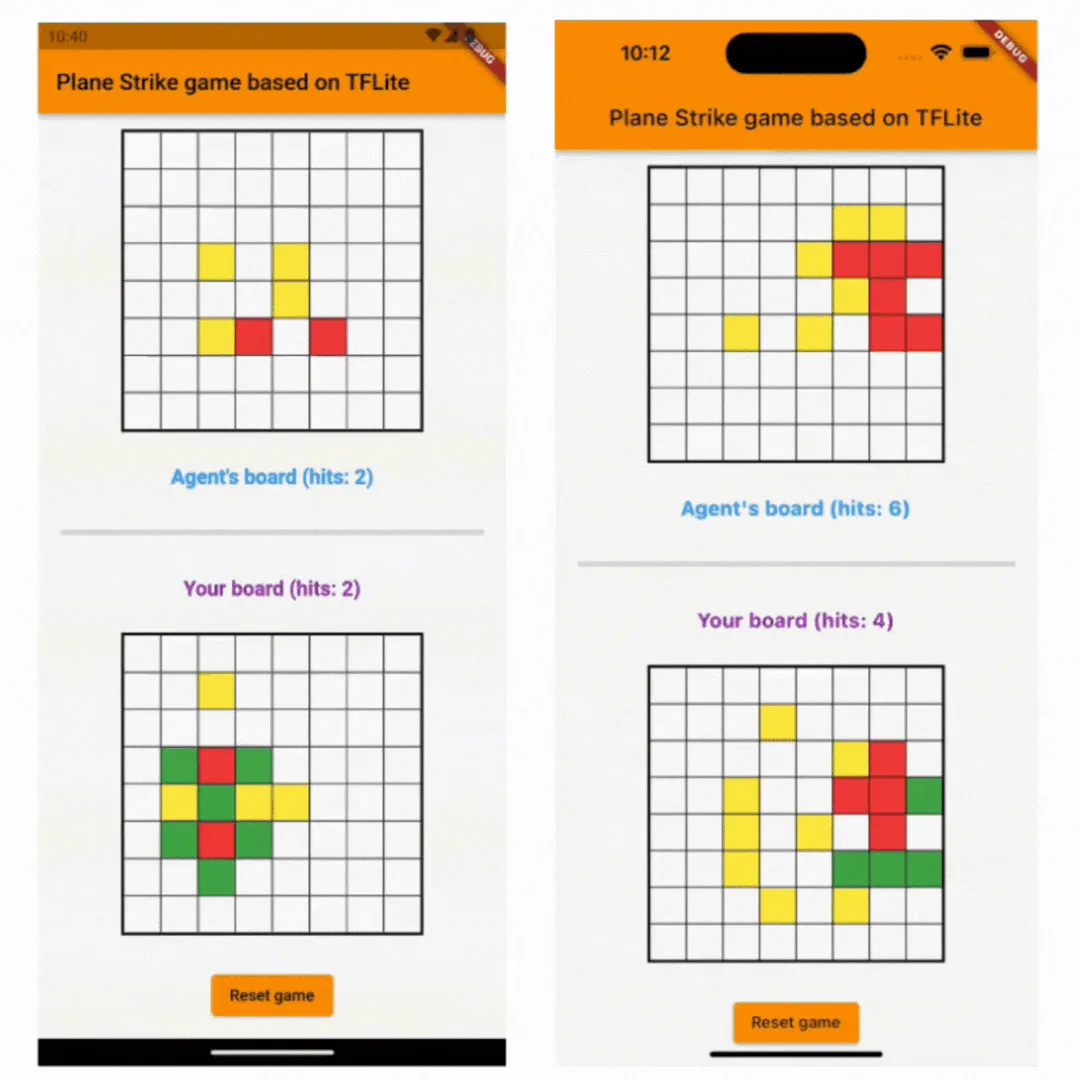
- The Game Concept: "Plane Strike" functions as a strategic guessing game where the player competes against an intelligent AI agent. The AI evaluates the current state of the board, runs real-time inference locally on the device, and determines the most statistically advantageous position to strike next.
- Open Source Availability: The complete, production-ready codebase, including frontend rendering logic and model integration scripts, has been made publicly available in the official TensorFlow GitHub repository.
Chronology: The Evolution of the "Plane Strike" Project
To understand the significance of this cross-platform release, it is essential to look back at the developmental timeline that made it possible. The journey of bringing machine learning to a lightweight mobile board game has unfolded across several distinct phases over the past few years.
Phase 1: Native Android Implementation (October 2021)
The journey began with the publication of “Building a board game app with TensorFlow: a new TensorFlow Lite reference app.” In this initial release, the TensorFlow team demonstrated how a basic reinforcement learning agent could be trained to play "Plane Strike." The primary goal was to provide Android developers with a concrete, end-to-end reference architecture showing how to embed a .tflite model inside a native Android application, handle user inputs, and process game loops entirely on-device.

Phase 2: Expanding the Training Stack with JAX (September 2022)
Building upon the success of the original app, the team published a follow-up blog post: “Building a reinforcement learning agent with JAX, and deploying it on Android with TensorFlow Lite.” This iteration pushed the boundaries of model creation by incorporating JAX—Google’s high-performance numerical computing library—into the training pipeline. It proved that developers were not restricted to traditional TensorFlow training loops; alternative frameworks could be seamlessly bridged to TensorFlow Lite for mobile deployment.
Phase 3: The Official Flutter TFLite Plugin (August 2023)
A major roadblock for multi-platform developers had long been the fragmentation of machine learning plugins for frameworks like Flutter. That landscape shifted dramatically when the TensorFlow team officially rolled out the TensorFlow Lite Plugin for Flutter, providing native bindings and optimized performance for running TFLite models in Dart-based applications.
Phase 4: The Cross-Platform Finale (Present)
Responding directly to feedback from the global Flutter community, the development team integrated the pieces. By utilizing the new plugin, they successfully ported the "Plane Strike" application logic to Flutter. This eliminated the need to maintain separate codebases for Android and iOS, proving that complex, AI-driven applications can be built efficiently for multiple platforms using shared code.
Supporting Data and Technical Implementation
Transitioning a machine learning model from a native environment to a Flutter application requires specific architectural patterns. Fortunately, because the underlying model had already been trained and converted to TensorFlow Lite, the adaptation process primarily involved Dart-based bindings rather than retraining or restructuring the neural network.
1. Loading the Model
In Flutter, initializing the TFLite interpreter is handled asynchronously through the plugin. Developers can load the pre-trained model directly from the application’s asset bundle using the following implementation pattern:
void _loadModel() async
  // Create the interpreter from the asset folder
  _interpreter = await Interpreter.fromAsset(_modelFile);
2. Running Inference via Dart
Once the board state is captured from the user interface, it is passed into the prediction function. The data is reshaped to match the input tensor dimensions expected by the model, allowing the interpreter to execute local inference and evaluate every possible grid coordinate:

int predict(List<List<double>> boardState)
  var input = [boardState];
  var output = List.filled(_boardSize * _boardSize, 0)
      .reshape([1, _boardSize * _boardSize]);

  // Run inference locally on-device
  _interpreter.run(input, output);

  // Apply Argmax to find the highest probability move
  double max = output[0][0];
  int maxIdx = 0;
  for (int i = 1; i < _boardSize * _boardSize; i++)
    if (max < output[0][i])
      maxIdx = i;
      max = output[0][i];


  return maxIdx;
Through this lightweight mechanism, the application achieves real-time predictions without network latency, ensuring a responsive user experience even when operating offline.
Official Responses and Community Impact
The release of the TensorFlow Lite plugin for Flutter and its accompanying reference applications has generated considerable enthusiasm within the broader developer ecosystem.
Google’s developer advocacy teams have emphasized that edge AI—running machine learning models locally on smartphones, tablets, and IoT devices—is critical for modern application privacy and speed. By removing the dependency on cloud servers for inference, developers can drastically reduce operational costs, eliminate latency caused by network requests, and ensure that user data remains private on the device.
In community forums and social channels, Flutter developers have widely praised the initiative. For years, integrating custom machine learning models into cross-platform frameworks required third-party wrapper libraries of varying quality and maintenance standards. An officially supported, first-party plugin backed by the TensorFlow team provides the stability and longevity required for enterprise-grade production apps.
Implications for the Future of Mobile and Cross-Platform AI
The conclusion of this mini-series does not signify an end to machine learning innovation in mobile development; rather, it opens the door to a new paradigm of cross-platform intelligence.
1. Democratization of Advanced AI
By lowering the barrier to entry, tutorials like "Plane Strike" empower independent developers and small teams to build applications that incorporate reinforcement learning, computer vision, and natural language processing. Concepts that once required dedicated data science infrastructure can now be packaged neatly into client-side mobile applications.
2. The Dominance of Cross-Platform Frameworks
Flutter’s ability to interface directly with low-level native binaries and hardware-accelerated machine learning runtimes demonstrates that cross-platform frameworks no longer need to compromise on performance. As plugins for TensorFlow Lite continue to mature, developers can expect even tighter integration with device GPUs and NPUs (Neural Processing Units).
3. Next Steps for Developers
For those looking to build upon this foundation, the TensorFlow team encourages experimentation beyond the basic reference app. Suggested areas for exploration include:
- Modifying the reward functions in the JAX or TensorFlow training scripts to create more aggressive or defensive AI opponents.
- Expanding the board size and complexity of "Plane Strike" to test how scaling input tensors impacts on-device inference speeds.
- Integrating custom UI animations and themes within the Flutter frontend to elevate the application from a technical demo to a polished, marketable product.
Developers are encouraged to share their experimental projects, applications, and modifications across social media channels by tagging @googledevs, @TensorFlow, and connecting with their local developer communities. The complete source code and documentation remain publicly accessible via the official TensorFlow GitHub Repository.