Bridging the Stack: Deep Dives, Distributed Data Architectures, and Full-Stack Integration at the September 2026 PostgresEDI Meetup
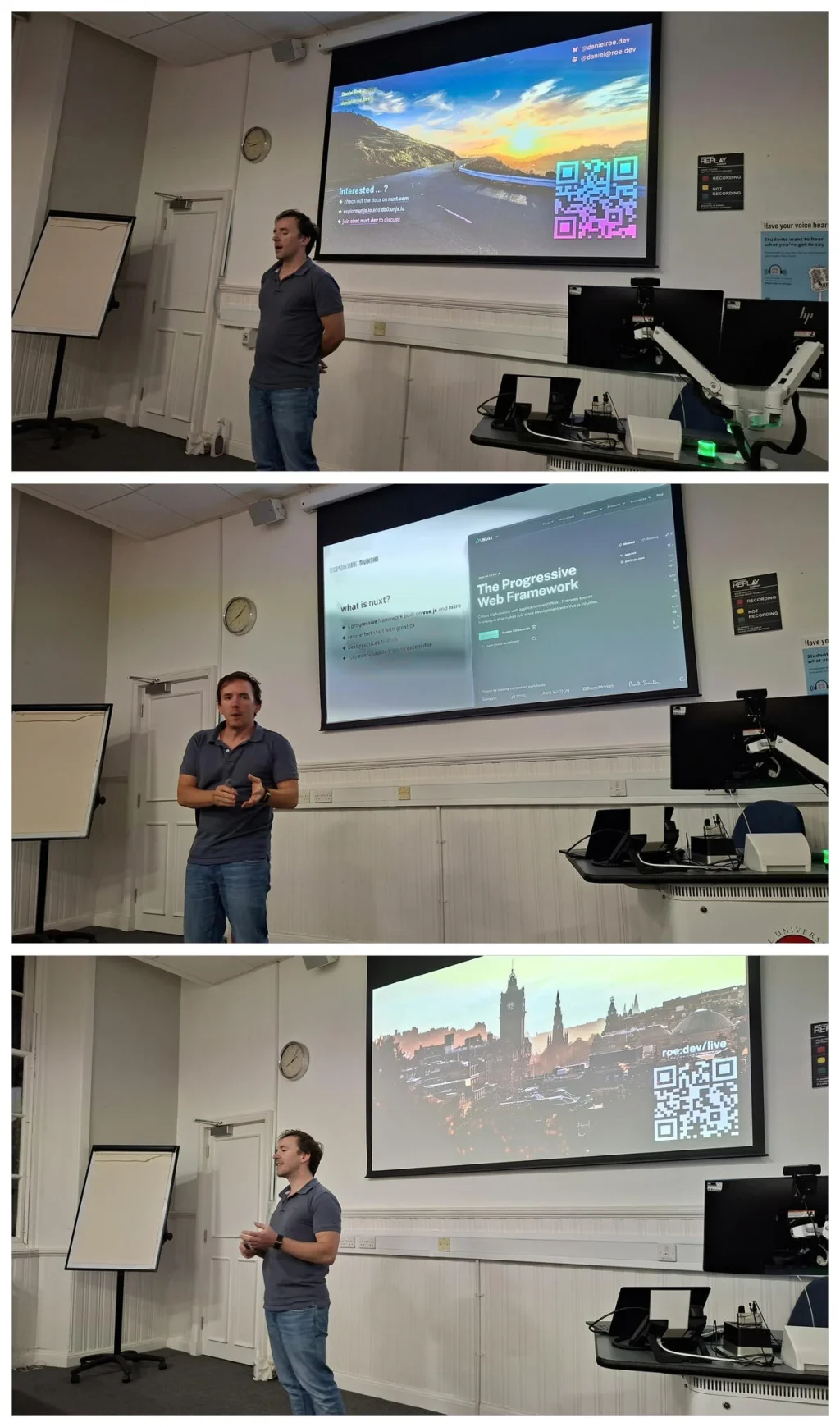
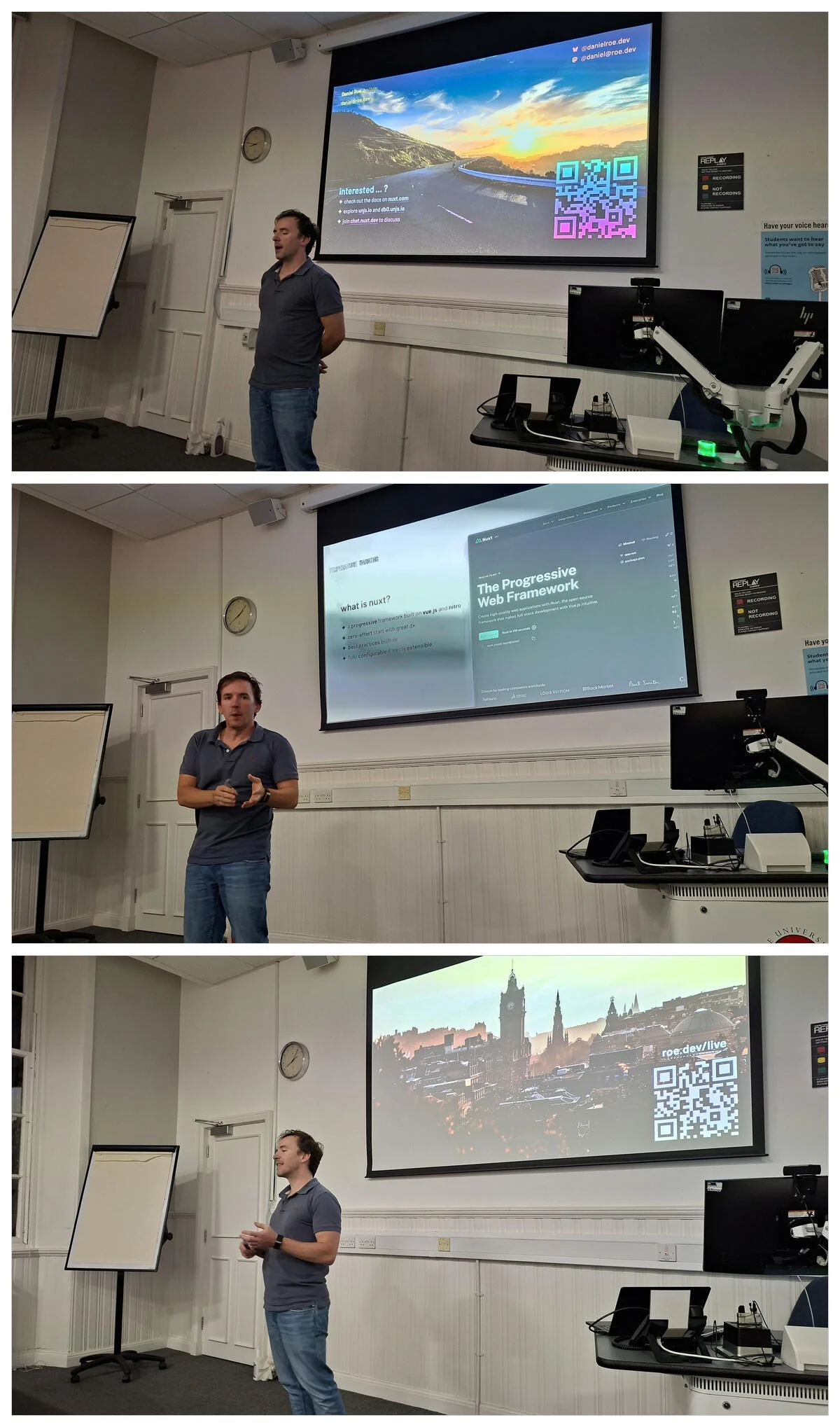
EDINBURGH, SCOTLAND — The burgeoning Scottish PostgreSQL community convened on Thursday, September 24, 2026, for a landmark gathering at the University of Edinburgh’s Paterson’s Land facility. Marking the first official meetup since the rollout of postgres.scot as the centralized digital home for PostgreSQL events across Scotland, the evening offered a masterclass in contrasting perspectives. From low-level database engine mechanics and distributed object-storage tiering to high-end frontend framework integration and open-source sustainability, attendees were treated to a diverse and intellectually stimulating technical program.
Hosted in room 1.27 of Paterson’s Land, the event drew a robust crowd of database administrators, systems architects, and full-stack developers. Dedicated community members traveled from far afield—including a notable commitment from an attendee who journeyed down from Aberdeen on a weeknight. Generous sponsorship from pgEdge ensured that participants were well-provisioned with pizza and refreshments, fostering an atmosphere conducive to networking and technical discourse.
Main Facts
- Event: PostgresEDI September 2026 Meetup
- Date: Thursday, September 24, 2026
- Venue: Paterson’s Land, Room 1.27, University of Edinburgh
- Primary Sponsors: pgEdge (food and refreshments)
- Featured Speakers:
- Jimmy Angelakos (pgEdge) on ColdFront: Transparent PostgreSQL Data Tiering to Apache Iceberg
- Daniel Roe (Nuxt Core Team / Vercel) on Working with Postgres in Nuxt
- Community Milestone: The first local meetup hosted under the newly established regional umbrella, postgres.scot.
- Upcoming Events:
- London PostgreSQL Meetup (October 7, 2026) and Apache Iceberg Europe (October 8, 2026) featuring ColdFront presentations.
- Next PostgresEDI meetup scheduled for Thursday, October 15, 2026, featuring Elizabeth Garrett Christensen of Snowflake.
Chronology of the Evening
The evening’s itinerary kicked off at 18:00 BST, welcoming participants into the heart of the University of Edinburgh campus. Following a brief community welcome highlighting the traction gained by the new postgres.scot domain, the technical agenda unfolded in two distinct halves, moving from the depths of database storage architecture up to the developer experience at the application layer.
Part I: Deep-Tier Storage Engineering
The first session of the evening was delivered by Jimmy Angelakos of pgEdge. Stepping up to present his work on ColdFront, Angelakos addressed one of the most persistent operational pain points for enterprise database fleets: managing ballooning table sizes without sacrificing query accessibility or inflating infrastructure budgets.
Part II: The Application Layer and Framework Design
Following a brief intermission for networking and pizza, the floor was handed to Daniel Roe, leader of the Nuxt core team and software engineer at Vercel. Roe’s presentation bridged the gap between modern reactive frontend development and backend data persistence, demonstrating how enterprise architecture looks from the opposite end of the software stack.
Supporting Data and Technical Architecture
1. ColdFront: Transparent PostgreSQL Data Tiering to Apache Iceberg
Angelakos’s presentation dissected the architecture of ColdFront, an open-source project designed to seamlessly offload cold database rows from PostgreSQL onto cost-effective object storage, formatting them as Apache Iceberg tables composed of columnar Parquet files.
Crucially, ColdFront maintains absolute transparency for the application layer. Tables and SQL queries executed against PostgreSQL remain entirely agnostic to the physical location of the data.
- The Architectural Stack:
- PostgreSQL: Retains the primary tables, schema definitions, and SQL execution engine.
pg_duckdb: Operates in-process to handle the high-performance reading and writing of Apache Iceberg files.- Lakekeeper: Acts as the centralized Iceberg catalog.
- Object Storage: Pluggable compatibility with any standard enterprise object store.
+-------------------------------------------------------+
|                      Application                      |
+-------------------------------------------------------+
                           |
                           v
+-------------------------------------------------------+
|                   PostgreSQL Node                     |
|  - Holds primary tables and executes SQL              |
|  - Utilizes in-process `pg_duckdb` for Iceberg I/O    |
+-------------------------------------------------------+
         |                                     |
    (Hot Data)                            (Cold Data)
         v                                     v
+------------------+                  +------------------+
|  Standard PG     |                  |  ColdFront       |
|  Storage Tier    |                  |  Ticket Protocol |
+------------------+                  +------------------+
                                               |
                                               v
                                      +------------------+
                                      | Lakekeeper       |
                                      | Catalog          |
                                      +------------------+
                                               |
                                               v
                                      +------------------+
                                      | Object Storage   |
                                      | (Parquet/Iceberg)|
                                      +------------------+
Solving the Distributed Write Problem
The primary engineering hurdle in multi-node data tiering is write contention. When a cold tier is fully writable across multiple distributed PostgreSQL nodes sharing a single Iceberg catalog and object storage bucket, race conditions and data corruption become significant risks.
To mitigate this, ColdFront implements a strict ticket-based concurrency protocol prior to executing any cold write operation. This mechanism ensures that concurrent writers never collide. To guarantee the mathematical soundness of this protocol, Angelakos and his team modeled the concurrency logic using TLA+, relying on formal verification rather than intuition.
The talk concluded with an exploration of vector search capabilities executed directly over cold data, demonstrating how analytic queries can leverage specialized WHERE clauses without requiring resource-intensive, up-front index creation.
- Reference Materials: Attendees can access the full technical presentation via the ColdFront Slides (PDF) or explore the source code on the pgEdge GitHub Repository.
2. Full-Stack Integration: Nuxt, UnJS, and db0
Shifting perspectives entirely, Daniel Roe walked the audience through the modern web development ecosystem, illustrating how frameworks like Nuxt interact with relational databases.
Roe began by defining Nuxt—a progressive, high-performance framework built on top of Vue.js and the Nitro server engine. Moving down the architectural stack, Roe explored the underlying modular primitives provided by UnJS and Nitro, eventually introducing db0.
db0 is a lightweight, unified SQL connector designed to abstract away the fragmentation of database drivers. By providing a single, consistent API interface across multiple SQL drivers while automatically parameterizing queries, db0 simplifies secure database interactions in modern serverless and edge environments. PostgreSQL serves as one of the primary supported drivers within this ecosystem.
To ground the concepts in reality, Roe concluded his technical segment with a live-coding demonstration, spinning up a live endpoint communicating directly with a PostgreSQL instance in real-time.
+-----------------------------------------------------------------+
|                          Nuxt Framework                         |
|                    (Built on Vue.js & Nitro)                    |
+-----------------------------------------------------------------+
                                  |
                                  v
+-----------------------------------------------------------------+
|                       UnJS / Nitro Engine                       |
+-----------------------------------------------------------------+
                                  |
                                  v
+-----------------------------------------------------------------+
|                             `db0`                               |
|       (Unified SQL Connector & Query Parameterization API)      |
+-----------------------------------------------------------------+
                                  |
                                  v
+-----------------------------------------------------------------+
|                        PostgreSQL Driver                        |
+-----------------------------------------------------------------+
Philosophy of Open Source and Engineering Culture
The second half of Roe’s presentation broadened into a meta-analysis of open-source software sustainability and team dynamics:
-
Progressive Adoption: Frameworks must be designed to be discoverable, incrementally adoptable, and strictly backwards-compatible to lower barriers to entry.
-
Avoiding Bottlenecks: Core maintainers must consciously distribute responsibilities to prevent themselves from becoming operational bottlenecks.
-
The "10x Team" Thesis: True productivity multipliers do not stem from isolated individual brilliance, but rather from cohesive teams aligned around shared problems, iterating rapidly, and elevating one another’s technical standards.
-
Reference Materials: The complete slide deck for this presentation is available via roe.dev Slides (PDF).
Official Responses and Community Perspectives
Organizers and attendees alike expressed immense satisfaction with the cross-pollination of ideas achieved by inviting a speaker from outside the traditional database engineering silo.
In a post-event statement, organizers emphasized the value of external viewpoints:
"Having a speaker from outside the Postgres community was very refreshing, providing distinct perspectives and deeper insight into how our database technology is consumed at the application layer than we typically encounter within our own echo chambers. This is a dynamic we very much welcome and intend to cultivate further in future meetups."
The enthusiasm was mirrored by the attendees, particularly regarding the logistical commitment demonstrated by community members traveling significant distances to participate in regional knowledge-sharing.
Implications and Future Outlook
The September 2026 meetup marks a turning point for the Scottish PostgreSQL scene. With the institutional stability provided by the postgres.scot domain and a growing appetite for advanced architectural topics—spanning cloud-native data lakes, formal verification of concurrency protocols, and modern full-stack web integration—the local community is positioning itself as a vital node in the global PostgreSQL ecosystem.
Immediate Roadmap
- London & European Circuit: Jimmy Angelakos will take ColdFront on the road next week, presenting at the London PostgreSQL Meetup Group on Wednesday, October 7, 2026, followed by an appearance at the Apache Iceberg Europe meetup on Thursday, October 8, 2026.
- Next Edinburgh Meetup: The PostgresEDI series will resume on Thursday, October 15, 2026, returning to Paterson’s Land (Room 1.21). The featured speaker will be Elizabeth Garrett Christensen of Snowflake, who will deliver a comprehensive breakdown of new features arriving in PostgreSQL 19, alongside an exploration of overlooked capabilities introduced in PostgreSQL 18. Doors open at 18:00 BST.
- Call for Speakers: The organizing committee has confirmed that speaking slots for the late-October session remain open. First-time speakers presenting any Postgres-related topic, regardless of length or polish level, are strongly encouraged to submit proposals via email to
[email protected].
As the community looks ahead to its October gathering, the success of the September event underscores the vibrant, collaborative, and forward-thinking nature of database engineering in Scotland.