The Dawn of Generative IoT: How the Seeed Studio reTerminal E1004 Turns OpenAI and ePaper into Daily Art
By Tech & Innovation Desk
Published: September 2026
Main Facts
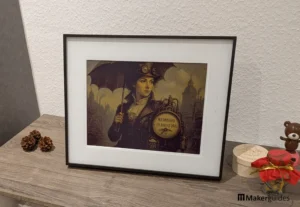
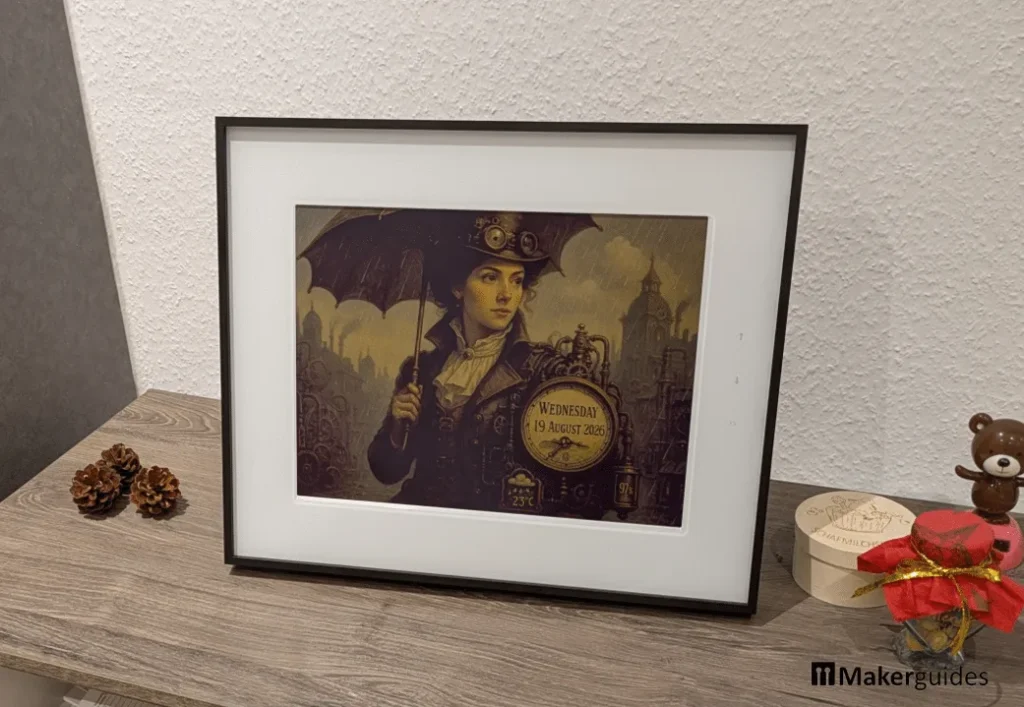
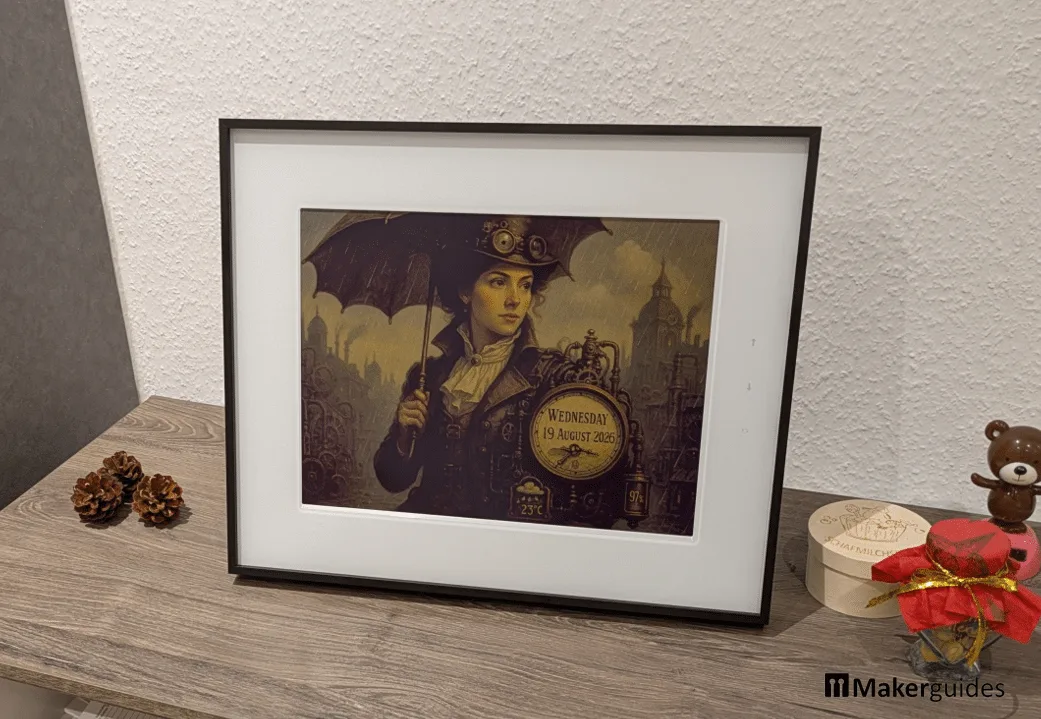
In an era where smart home devices are often characterized by glowing screens, constant power demands, and intrusive notifications, a new open-source project demonstrates that ambient technology can be both intelligent and remarkably discreet. The Seeed Studio reTerminal E1004 has been transformed into a dynamic, autonomous gallery frame that displays a completely unique, AI-generated work of art every single day.
By marrying the creative capabilities of OpenAI’s image generation models with the zero-power permanence of a six-color E Ink Spectra 6 display, the project bridges the gap between generative artificial intelligence and ultra-low-power embedded systems.
At the heart of this self-sustaining art piece is an ESP32-S3 microcontroller, which orchestrates a daily automated routine: waking up from deep sleep, fetching local weather data from OpenWeather, communicating with OpenAI to craft a contextual prompt based on current environmental conditions and date, rendering the image, and outputting it to a massive 13.3-inch ePaper panel. Boasting a resolution of 1200 × 1600 pixels at 4 bits per pixel, the display requires zero electricity to maintain the image once it is drawn. The result is a living canvas that updates once every 24 hours, running entirely independently on battery power for months on end.
Chronology: The Anatomy of a Daily Automated Cycle
Understanding how a device can operate autonomously for months while performing heavy computational and networking tasks—such as querying cloud-based AI endpoints—requires examining its daily routine. Developed by maker and software engineer maet3608, the system relies on a meticulously timed state machine governed by a deep sleep timer.
Phase 1: Awakening and Synchronization (01:00 AM)
By default, the system remains in a near-comatose deep sleep state to conserve every possible microampere of battery life. At precisely 01:00 AM, the internal deep sleep timer triggers an interrupt, waking the ESP32-S3 microcontroller.
Once awake, the system immediately communicates with a PCF8563 Real-Time Clock (RTC) to synchronize the system clock. Because hardware clocks are prone to minute drifts over extended periods, the device connects to a local Wi-Fi network and utilizes the Network Time Protocol (NTP) to correct any timing discrepancies.
Phase 2: System Diagnostics and Environment Check
With accurate time established, the device initializes the ePaper display controller and performs a diagnostic battery check. The internal power management system reads the battery voltage, which typically operates within a 3.7V to 4.2V envelope.
Should the battery level dip below a safe operating threshold, the system bypasses the generation sequence and displays a designated low-power error screen to protect the lithium-ion cell. If power is sufficient, the system mounts the onboard microSD card, which acts as local storage for configuration files and generated assets.
Phase 3: Data Ingestion and Prompt Engineering
With diagnostics cleared, the device reaches out to the OpenWeather API to download the meteorological forecast for the upcoming midday (12:00 PM). This data—encompassing temperature, humidity (measured locally by an onboard SHT40 sensor), weather conditions, and the current date—is dynamically compiled into a sophisticated textual prompt.

Instead of static imagery, the prompt instructs OpenAI’s advanced image generation endpoint to create a composition that reflects the real-world atmospheric conditions of the day. For instance, a rainy Tuesday in autumn will yield a drastically different artistic interpretation than a blazing, clear-sky summer afternoon.
Phase 4: AI Generation and Local Staging
Once the prompt is assembled, the ESP32-S3 initiates an HTTPS request to OpenAI’s gpt-image-1 model. The cloud-based AI processes the contextual variables and renders a fresh, bespoke graphic. The generated file—averaging around 937 kB in size—is downloaded and immediately cached on the microSD card. Throughout this intensive burst of Wi-Fi communication and data processing, the entire operation takes a remarkably brief 40 seconds.
Phase 5: Image Processing, Dithering, and Rendering
Standard RGB images cannot be natively mapped onto advanced E Ink panels without visual degradation, particularly when working with a restricted color palette. The reTerminal E1004 firmware handles this through sophisticated local processing:
- The downloaded image is resized to match the native 1200 × 1600 resolution of the panel.
- The image data is converted into an RGB565 color format.
- A Floyd-Steinberg dithering algorithm is applied. This computational technique simulates color mixing and gradients by distributing quantization error across neighboring pixels, expertly adapting the rich color space of the AI output into the six distinct pigments supported by the E Ink Spectra 6 technology.
Finally, the processed buffer is transferred to the ePaper controller, refreshing the 13.3-inch screen. Once the visual refresh cycle is complete, the ESP32-S3 tears down the Wi-Fi connection, unmounts the SD card, and re-enters deep sleep until the following morning.
Supporting Data & Hardware Specifications
The engineering marvel of the reTerminal E1004 project lies in its component selection, balancing high-resolution display tech with extreme energy efficiency. Below is a breakdown of the core hardware specifications driving the system:
| Component Category | Part / Specification | Function within the System |
|---|---|---|
| Microcontroller | ESP32-S3 (Tensilica Dual-Core Xtensa LX7) | Manages Wi-Fi connectivity, system logic, image processing, and API communications. |
| Display Panel | 13.3-inch E Ink Spectra 6 | Six-color ePaper display boasting a 1200 × 1600 resolution at 4 bits per pixel. Zero power consumption when static. |
| Real-Time Clock | PCF8563 RTC | Maintains accurate timekeeping during deep sleep phases, waking the system on schedule. |
| Environmental Sensor | Sensirion SHT40 | Measures ambient room temperature and relative humidity to feed into local analytics or prompts. |
| Storage | MicroSD Card Interface | Caches downloaded 937 kB AI-generated image files and configuration assets. |
| Power Supply | 3.7V – 4.2V Lithium-ion Battery | Provides autonomous operation over extended periods, supplemented by serial communication at 115200 baud. |
| Software Ecosystem | PlatformIO (Espressif32 framework) | Development environment utilizing C++ firmware integrated with OpenAI and OpenWeather REST APIs. |
The entire codebase and step-by-step documentation have been made open-source by developer maet3608, hosted publicly via GitHub for the global maker and developer community.
Official Responses and Developer Insights
The open-source community has responded to the release of the project with widespread enthusiasm, viewing it as a blueprint for the next generation of ambient computing devices.
In documentation released alongside the GitHub repository, the creator emphasized the philosophical motivation behind the design:
"We are surrounded by screens demanding our attention, scrolling endlessly, and burning through electricity. The goal of the reTerminal E1004 AI frame was to invert that paradigm. Technology should whisper, not shout. By combining generative AI with ePaper, the device becomes a quiet window into a digital mind that updates once a day—giving you a moment of reflection tied to the actual weather outside your door, without tethering you to a charger."
Embedded systems engineers have similarly praised the clever use of Floyd-Steinberg dithering on a microcontroller-class chip. While the ESP32-S3 is powerful for an IoT board, processing a nearly 1MB image file, executing matrix conversions, and running dithering algorithms requires careful memory management. The successful execution of this pipeline proves that edge computing capabilities are rapidly expanding into realms previously thought exclusive to desktop-class hardware.

Hardware analysts note that Seeed Studio’s reTerminal ecosystem—traditionally deployed in industrial automation, edge AI vision, and commercial dashboards—is finding an unexpected second life in high-end consumer and artistic DIY applications. By opening up the hardware specs, Seeed continues to foster an environment where developers can repurpose industrial-grade hardware for creative expression.
Implications: The Future of Generative Ambient Devices
The intersection of generative artificial intelligence, low-power microcontrollers, and reflective displays carries profound implications for multiple industries, ranging from consumer electronics to interior design and sustainable computing.
1. Redefining Smart Home Displays
Traditional smart home hubs and digital photo frames suffer from a major design flaw: they look like computers mounted to a wall. They require continuous AC power, emit distracting blue light in dark rooms, and demand constant software updates.
E Ink devices like the reTerminal E1004 point toward a future where smart home interfaces mimic physical materials like paper, canvas, or wood. Because ePaper reflects ambient light rather than emitting it, these displays blend seamlessly into home and office decor. When paired with generative AI, the display is never "outdated"—it continuously curates new content tailored to the homeowner’s mood, season, or local weather patterns.
2. Sustainable IoT and Energy Autonomy
As global concerns regarding energy consumption mount, the tech industry is under increasing pressure to reduce the carbon footprint of connected devices. The "always-on" nature of modern IoT devices accumulates significant grid draw over millions of units.
Projects utilizing deep-sleep duty cycling combined with zero-power display technology demonstrate that functional smart devices can operate for months on a single battery charge. By waking for only 40 seconds a day—representing an active duty cycle of roughly 0.046%—the device minimizes its energy footprint while still providing fresh, cloud-connected utility.
3. Democratization of Edge Art and Customization
Generative AI tools have largely remained trapped behind browser windows and smartphone apps. Projects like this democratize how AI manifests in the physical world. By abstracting API calls, image conversion, and hardware rendering into an accessible open-source repository, everyday enthusiasts can build personalized, context-aware art installations that react dynamically to their physical environment.
Whether adapted for smaller ESP32 TFT touch displays or scaled up to massive industrial ePaper panels, the underlying architecture pioneered by maet3608 establishes a repeatable framework for ambient generative hardware. As AI models become faster and ePaper panels gain broader color gamuts, the boundary between physical decoration and living, breathing digital art will continue to dissolve.