Building a Pocket-Sized AI Companion: How Maker Jayesh Nawani Brought Conversational Intelligence to the Standard ESP32
Main Facts
In the rapidly evolving landscape of edge computing and the Internet of Things (Things), the democratization of artificial intelligence has largely been dominated by single-board computers like the Raspberry Pi or specialized, high-cost microcontrollers. However, a groundbreaking DIY project developed by maker Jayesh Nawani challenges this paradigm. Nawani has successfully engineered a fully functional, responsive, and expressive AI voice assistant powered entirely by a standard, low-cost ESP32 development board.
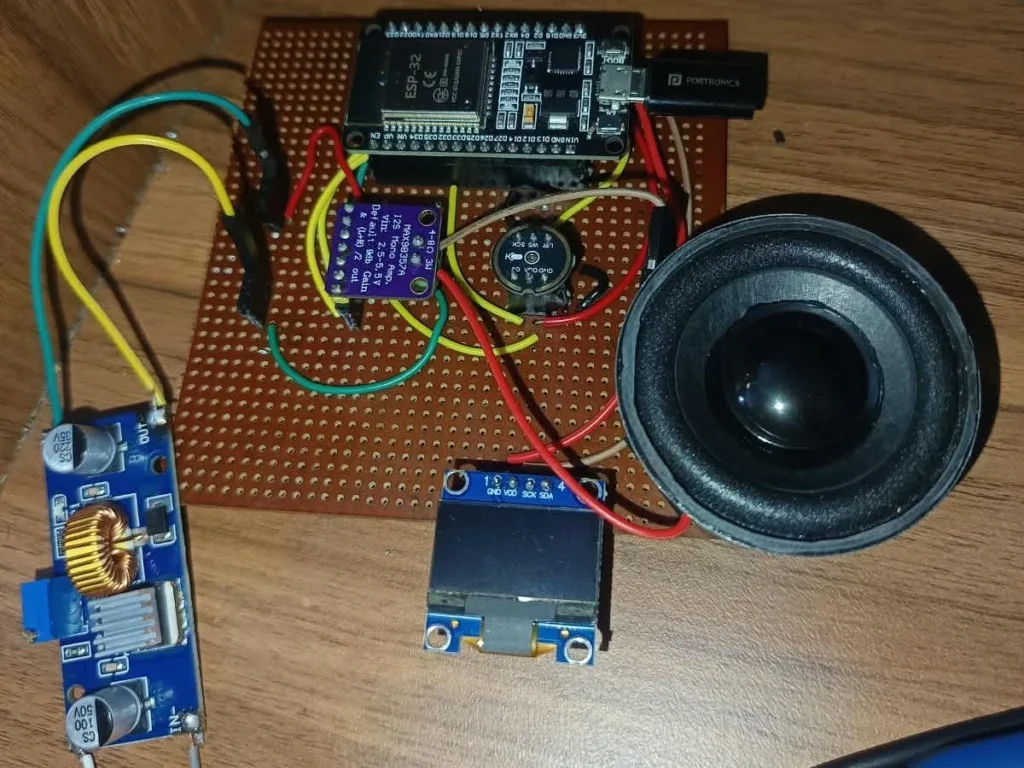
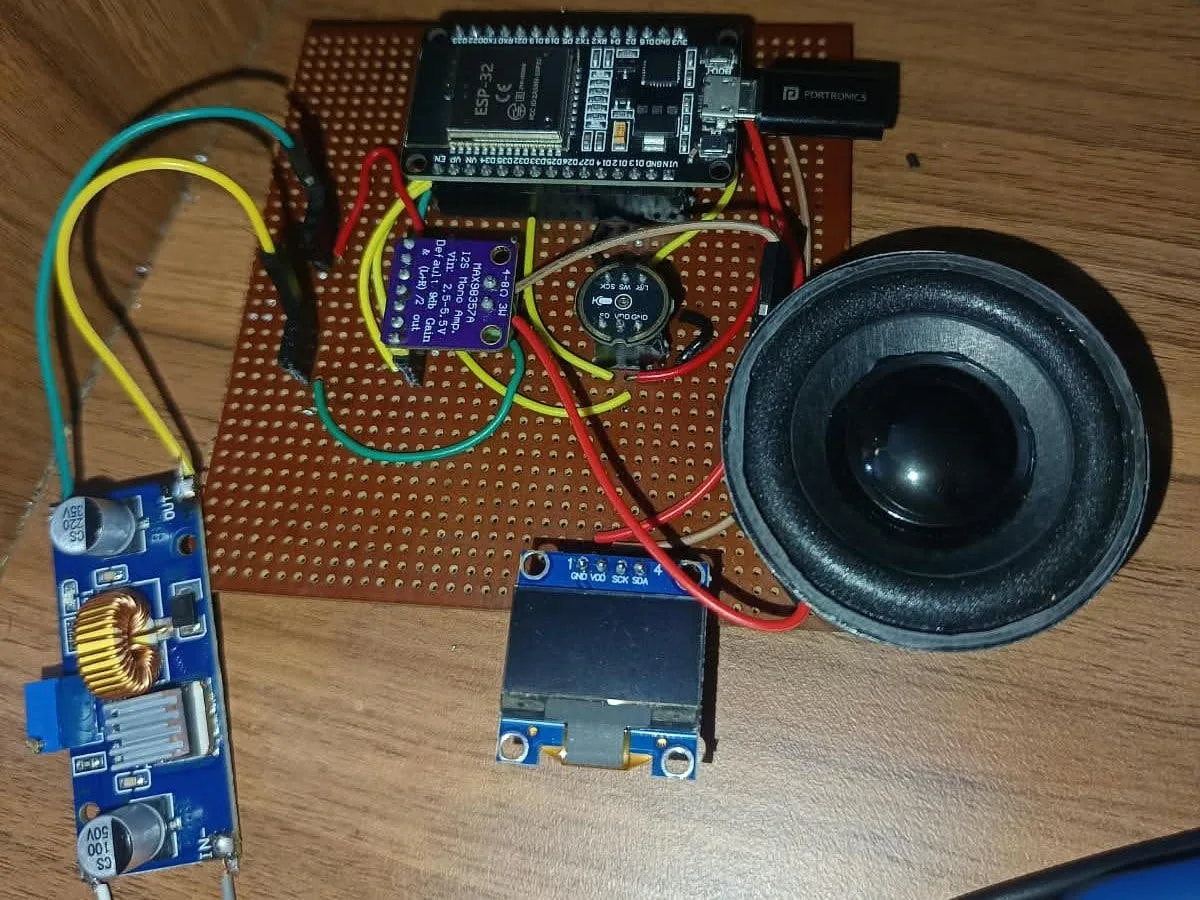
Without relying on auxiliary computing power or heavy single-board systems, this compact desktop companion listens to user queries via an I2S digital microphone, records speech dynamically, transcribes audio utilizing OpenAI’s advanced Whisper API, generates contextual intelligence through GPT Chat Completions, and vocalizes responses in real-time via a text-to-speech (TTS) engine streamed directly to a MAX98357A amplifier and a 3W speaker.
Beyond its robust audio pipeline, the device features a charming visual personality: a 0.96-inch I2C OLED display running dynamic, expressive animated eyes that react fluidly to the system’s conversational state. Leveraging the dual-core architecture of the ESP32 through FreeRTOS task segregation, the device overcomes traditional embedded programming bottlenecks—such as memory fragmentation and blocking network requests—to deliver a smooth, human-like interaction model. All documentation, schematics, and source code are available via Nawani’s Hackster.io page, opening new horizons for accessible, open-source ambient computing.
Chronology of Development: From Concept to Conversational Hardware
The realization of an edge-based AI voice assistant on a resource-constrained microcontroller did not happen overnight. It required a methodical, step-by-step engineering chronology to bridge the gap between heavy cloud-based AI services and low-power hardware.
Phase 1: Hardware Selection and Benchmarking
The project’s genesis lay in component selection. Nawani evaluated various microcontrollers before settling on the classic ESP32 development board due to its integrated Wi-Fi, dual-core processing capabilities, and widespread community support—though modern alternatives like the ESP32-C6-Zero remain viable. To capture audio clearly, an I2S digital microphone was selected for its superior noise immunity compared to analog alternatives. For audio output, the MAX98357A class-D amplifier paired with a 3W speaker was chosen for its straightforward I2S interface and efficient power delivery. Finally, a standard 0.96-inch 128×64 I2C OLED display was designated as the visual canvas for the assistant’s emotive eyes.
Phase 2: Systematic Hardware Verification
Before writing a single line of integrated software, Nawani adopted a rigorous debugging methodology. Each hardware subsystem was tested in isolation. The I2S microphone, for instance, underwent oscilloscope verification to ensure stable clock and data lines before being interfaced with the broader audio pipeline. Breadboard prototyping served as the foundational testing environment, mapping the microphone to GPIOs 14, 15, and 32; the amplifier to GPIOs 26, 25, and 22; and the OLED display to GPIOs 21 and 19.

Phase 3: Software Architecture and Audio Pipeline Tuning
Writing the firmware within the Arduino IDE involved integrating robust libraries including ArduinoJson, Adafruit_GFX, and Adafruit_SSD1306. The primary software loop was programmed to continuously poll the I2S microphone. A trigger threshold of 1000 volume units was established to differentiate ambient noise from intentional speech. Once triggered, the system records audio until a silence duration of at least 200 milliseconds per 1000 milliseconds of hold is detected, capped at a maximum recording window of two seconds.
Phase 4: Overcoming Edge Computing Bottlenecks
As cloud API integration began, the developer encountered severe embedded systems hurdles, most notably heap fragmentation caused by frequent dynamic memory allocation required by JSON payloads and HTTP libraries. To solve this, a proactive memory-management routine was written to carve out and free a 32KB contiguous memory block prior to every OpenAI API call. Furthermore, to prevent network latency from freezing the visual interface, Nawani implemented a FreeRTOS multitasking architecture, isolating the animation loop to Core 0 while reserving Core 1 exclusively for network operations and audio processing.
Supporting Data and Technical Specifications
Understanding the technical envelope of Nawani’s ESP32 AI assistant requires an examination of its operational parameters, hardware schematics, and processing data flows.
Hardware Bill of Materials (BOM)
- Microcontroller: Classic ESP32 Development Board (ESP32-WROOM-32) / Alternative: ESP32-C6-Zero.
- Audio Input: I2S Digital Microphone (e.g., ICS-43434 or similar compatible breakout).
- Audio Output: MAX98357A I2S Class-D Amplifier paired with a 3W, 4-ohm speaker. (Optional alternatives include open-source modular amplifiers like ANGELO or stereo boards like the TDA7297 for expanded channel configurations).
- Visual Output: 0.96-inch I2C OLED Display (128×64 resolution, SSD1306 driver).
- Prototyping Infrastructure: Breadboard, jumper wires, and standard USB power supply.
Software Configuration and Audio Sampling Metrics
- Development Environment: Arduino IDE.
- Core Libraries:
ArduinoJson,Adafruit_GFX,Adafruit_SSD1306. - Audio Input Sampling Rate: 16,000 Hz (optimized for OpenAI Whisper API speech recognition models).
- Text-to-Speech (TTS) Sampling Rate: 24,000 Hz.
- Audio Streaming Chunk Size: 512 bytes, ensuring a steady buffer flow to the I2S amplifier without causing buffer underruns.
- Speech Synthesis Rate: Set to 0.85 for natural pacing.
- Voice Activity Detection (VAD) Parameters:
- Trigger Volume Threshold: 1000 units.
- Silence Duration Threshold: 200 ms per 1000 ms hold window.
- Minimum Sample Validation: Three consecutive chunks required (approx. 0.6 seconds minimum speech duration).
Memory Management and FreeRTOS Core Allocation
- Core 0 Allocation: Dedicated entirely to the FreeRTOS task controlling the 0.96-inch OLED display, rendering real-time eye animations, blinking states, and conversational feedback loops without interruption.
- Core 1 Allocation: Handles the primary execution pipeline, including microphone polling, WAV file packaging, HTTPS POST requests to OpenAI’s Whisper, GPT, and TTS endpoints, and I2S audio streaming.
- Heap Optimization Strategy: Pre-allocation and manual purging of a 32KB RAM buffer prior to API handshakes to mitigate heap fragmentation-induced crashes.
Official Responses and Maker Community Impact
The release of the ESP32 AI voice assistant project on Hackster.io has generated widespread enthusiasm across the global maker community, engineering forums, and open-source hardware circles.
Jayesh Nawani, reflecting on the philosophy behind the build, emphasized the importance of resourcefulness in modern electronics design: "The goal was to strip away the unnecessary complexity that has come to define modern smart home devices. Consumers are accustomed to thinking that interacting with advanced artificial intelligence requires an expensive smart speaker, a dedicated microcomputer, or a perpetual cloud subscription tethered to a bulky hub. By proving that a two-dollar microcontroller can successfully converse, process natural language via Whisper and GPT, and express emotion through animated visuals, we open the door for developers to rethink edge intelligence."
Embedded systems engineers and community reviewers have widely praised the project’s clever handling of FreeRTOS. Historically, hobbyists attempting network-heavy tasks on single-core or poorly managed microcontrollers face frustrating watchdog timer resets and frozen user interfaces. By clearly demarcating tasks between Core 0 and Core 1, Nawani’s codebase serves as an educational masterclass in real-time operating system utilization for the ESP32 platform.

Open-source advocates have similarly lauded the project’s modularity. Because the core firmware cleanly separates audio capture, cloud communication, local amplification, and visual feedback, community members have already begun experimenting with forks of the repository. Discussions on maker forums highlight plans to port the logic to ESP32-S3 boards with native USB capabilities, integrate larger TFT displays, and couple the voice assistant with local Home Assistant instances via MQTT, shifting from purely cloud-reliant endpoints to hybrid local-cloud architectures.
Implications for the Future of Edge AI and IoT
The successful deployment of a conversational AI assistant on a standard ESP32 carries profound implications for the future of Internet of Things (IoT) product design, consumer electronics, and DIY engineering.
Democratizing Conversational Interfaces
For years, integrating voice control into custom hardware projects meant dealing with clunky, inaccurate offline keyword spotters or expensive proprietary modules. By bridging low-cost microcontrollers directly with frontier cloud AI models (Whisper and GPT), makers can now imbue everyday objects—from household appliances to interactive toys—with human-grade conversational capabilities. The barrier to entry for building smart, voice-interactive products has plummeted, requiring nothing more than standard Wi-Fi connectivity and basic API key management.
Redefining Hardware Efficiency
The project serves as a compelling counter-narrative to the "bloatware" trend in modern computing, where increasingly powerful silicon is deployed to solve relatively simple software problems. Nawani’s work demonstrates that with diligent memory management (such as combating heap fragmentation through strategic buffer clearing) and intelligent task scheduling via FreeRTOS, legacy microcontrollers like the ESP32 can punch well above their weight class. This efficiency reduces thermal output, lowers power consumption, and slashes manufacturing and prototyping costs.
The Rise of "Emotive" Ambient Hardware
Perhaps the most subtle yet impactful takeaway from the project is the inclusion of the animated OLED eyes. Functional utility in technology is no longer enough; users increasingly demand personality and emotional feedback from their devices. By transforming a static block of plastic and silicon into an expressive companion using a low-cost monochrome display, the project highlights how minimal visual cues can radically enhance human-computer interaction (HCI).
Future Horizons and Scalability
As edge AI models continue to shrink and microcontrollers gain more sophisticated neural processing capabilities, projects like Nawani’s are merely stepping stones toward fully localized edge intelligence. While this current iteration relies on cloud APIs for transcription and text generation, the architectural framework established—handling audio streaming, multi-core task segregation, and real-time peripherals—lays a rock-solid foundation. Whether expanded into a dual-channel stereo smart speaker using a TDA7297 amplifier, enhanced with environmental sensor suites, or eventually transitioned to local large language models (LLMs) running on advanced edge silicon, this open-source ESP32 assistant proves that the future of ambient computing is small, accessible, and remarkably clever.