The Next Frontier: Google Accelerates Android XR Ecosystem with Major SDK and Engine Updates
Date: 15 June 2026
By: Editorial Staff
The landscape of extended reality (XR) is undergoing a seismic shift. As the boundaries between the physical and digital worlds continue to blur, Google is aggressively positioning Android as the foundational operating system for the next generation of spatial computing. Following a series of high-profile announcements at Google I/O and the Augmented World Expo (AWE), the tech giant has unveiled a robust suite of tools, engine integrations, and support programs designed to catalyze a new wave of immersive application development.
With the Samsung Galaxy XR already available on the market, the infrastructure for mainstream XR adoption is no longer a futuristic concept—it is a present-day reality.
Main Facts: The New Android XR Toolkit
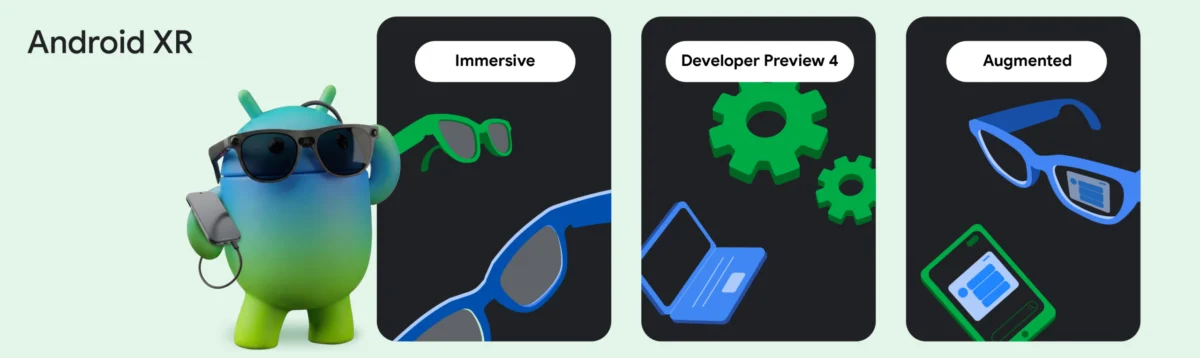
The core of Google’s latest push is the release of Developer Preview 4 of the Android XR SDK. This update represents a significant leap forward in accessibility, allowing developers to move from ideation to deployment with greater efficiency.
Key technical advancements include:
- Integrated Emulation: Developers can now prototype, test, and iterate on XR interactions directly within Android Studio, removing the barrier to entry for those without immediate access to physical hardware.
- Jetpack Projected Library: A powerful toolset that allows developers to extend existing mobile applications into augmented "projected" experiences for smart eyewear.
- Engine Expansion: In a major move for the gaming and enterprise sectors, Google has confirmed official support for Unreal Engine and Godot, supplementing its established partnership with Unity.
- Geospatial API for XR: An early-preview feature that enables developers to anchor digital content to real-world coordinates with high-precision accuracy using Google’s Visual Positioning System (VPS).
Chronology of the Android XR Rollout
The current state of the ecosystem is the culmination of a deliberate, multi-year strategy.
- Initial Conception: Recognizing that mobile-first developers needed a bridge to spatial computing, Google began modularizing its ARCore and Jetpack libraries to accommodate wearable displays.
- Early 2026: The launch of the Samsung Galaxy XR provided the first commercial hardware testbed for the Android XR platform, validating the system’s performance in real-world conditions.
- Google I/O 2026: The company showcased the potential for "intelligent eyewear," demonstrating how mobile apps can seamlessly transition to heads-up displays without requiring a total code rewrite.
- June 2026 (AWE Week): Coinciding with the Augmented World Expo, Google deployed the Developer Preview 4, marking the shift toward a more developer-friendly, engine-agnostic workflow.
Supporting Data: Why Engine Support Matters
The inclusion of Unreal Engine and Godot is not merely a feature; it is a strategic necessity. Industry data suggests that the XR market is fragmented by engine preference. By bringing these engines into the Android XR fold, Google is ensuring that developers do not have to abandon their existing technical debt or learned workflows.
The newly introduced Android XR Engine Hub—a desktop tool for Windows—serves as the connective tissue. By enabling real-time testing within the engine’s viewport, developers can see their assets rendered in a simulated XR space instantaneously. This reduces iteration time, a critical metric for studios operating under tight deadlines.
Furthermore, the Device Availability API is a game-changer for user experience (UX). By tapping into standard Android Lifecycle states, applications can now detect when a user puts on or removes their glasses. This allows for intelligent battery management and context-aware UI shifts, ensuring that digital overlays appear only when needed.
Official Responses: Insights from the Product Leads
Stevan Silva, Group Product Manager for Android XR, and Vinny DaSilva, Developer Relations Engineer, emphasized that the goal is to lower the barrier for mobile developers.
"Building for XR should not mean reinventing the wheel," Silva noted. "Our focus with the Jetpack Projected library is to empower millions of existing Android developers to bring their mobile-first logic into a spatial context. Whether it’s a translation tool like NAVER Papago or a complex 3D simulation, the transition should feel native."

The developers at NAVER Papago have already showcased the potential of this integration, effectively "projecting" their mobile translation interface onto optical see-through displays. This reduces the need for users to constantly glance down at their phones, providing a more fluid, "eyes-up" experience.
Implications: The Future of Spatial Computing
The trajectory of Android XR suggests several long-term implications for the tech industry and the broader consumer market:
1. The Death of the "Walled Garden"
By supporting multiple engines and providing comprehensive SDKs that work across different types of hardware—from wired glasses to standalone headsets—Google is challenging the proprietary nature of existing XR platforms. This openness is intended to attract a larger developer base, which is crucial for building a library of "must-have" apps.
2. The Shift to "Context-Aware" AI
The integration of the display glasses skill, powered by Android CLI, indicates that Google is baking AI-readiness into the platform. With the ability to process spatial data and user intent, Android XR is positioned to become the operating system for the next generation of AI-driven, context-aware assistants.
3. The Democratization of Development
The Android XR Developer Catalyst Program is perhaps the most significant implication for individual developers and small studios. By providing access to pre-release hardware and specialized support forums, Google is actively funding the innovation it needs to dominate the space. This is a direct play to ensure that the "killer app" for XR is built on Android, not a competitor’s platform.
4. Enterprise and Location-Based Services
The introduction of the Geospatial API, which leverages Google’s existing maps and VPS infrastructure, has massive implications for retail, tourism, and industrial navigation. By allowing digital objects to "stick" to specific physical locations, developers can create shared, persistent AR experiences that could redefine how we interact with public spaces.
Moving Forward: How to Participate
For those looking to enter the ecosystem, the path forward is clearly defined by the resources now available.
- For the Hobbyist: The XR Emulator in Android Studio is the primary starting point. It requires no physical hardware and provides a safe environment to learn the nuances of 3D UI design and spatial interaction.
- For the Professional Studio: The focus should be on the Android XR Engine Hub and the integration of the Jetpack Projected library. Transitioning mobile apps to support glasses-based projection is currently the most efficient way to capture the early-adopter market.
- For the Innovator: The Catalyst Program offers the most direct support. With applications currently open, developers are encouraged to submit project proposals that leverage the unique capabilities of the Android XR SDK.
As the platform matures, the role of the developer becomes paramount. The technology is no longer the bottleneck; the creativity of the development community will dictate the success of this new medium. With the ecosystem growing at an unprecedented rate, the next year promises to be a defining period for spatial computing.
For a comprehensive dive into the technical sessions and to access the latest documentation, developers are encouraged to visit the Android XR YouTube playlist and the official developer portal.
The screen is no longer a rectangle in your hand; it is the world around you. And with these tools, Google is giving you the brush to paint it.