The Dawn of the Intelligence OS: How Android is Redefining Mobile Computing at Google I/O 2026
By [Your Name/Journalist Desk]
At Google I/O 2026, the tech giant signaled a definitive pivot in its mobile strategy. Android is no longer merely an operating system designed to manage apps and system resources; it is evolving into a comprehensive "intelligence system." This shift represents a fundamental change in the relationship between hardware, software, and artificial intelligence, placing generative capabilities at the very core of the user experience.
For developers, this evolution brings both a challenge and a massive opportunity: the transition from building standalone applications to crafting "agentic" experiences that operate fluidly within a broader, AI-driven ecosystem.
Main Facts: A New Paradigm for Mobile
The core announcement at this year’s I/O centers on the deep integration of AI into the Android stack. Google has officially moved past the "AI-powered features" phase and into the "Intelligence OS" phase. This means the system is designed to understand intent, manage context across multiple applications, and execute complex tasks on behalf of the user.
Key pillars of this transformation include:
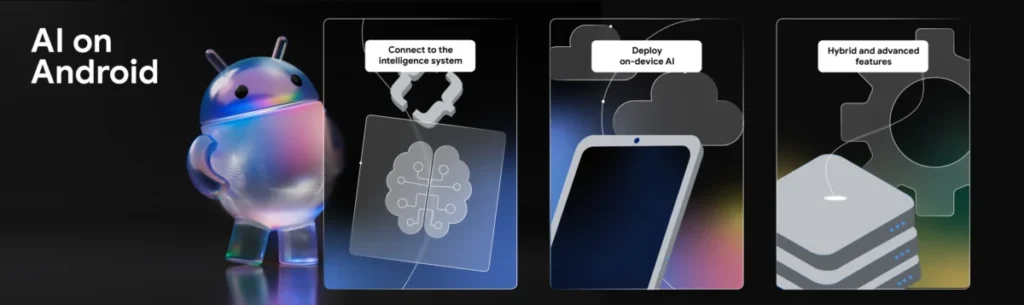
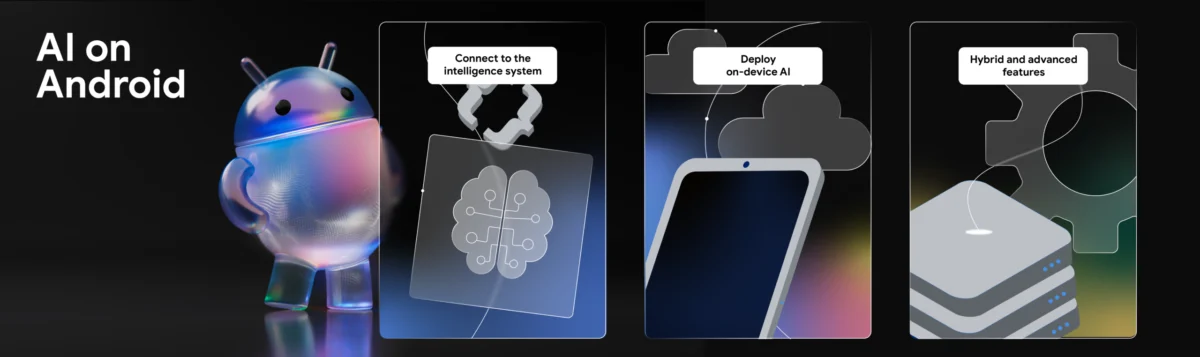
- AppFunctions (Android MCP): A new platform API and Jetpack library that allows apps to expose their internal capabilities to the Android system, enabling agents like Gemini to navigate and execute tasks within third-party applications.
- Gemini Nano 4: The next generation of Google’s on-device language model, currently available in developer preview, designed to offer high-performance, private, and low-latency AI processing.
- Hybrid Inference: A sophisticated architecture that intelligently balances tasks between on-device processing and cloud-based resources, ensuring that apps remain responsive and power-efficient while leveraging massive compute power when necessary.
Chronology: The Road to an Intelligent OS
The trajectory toward this moment has been carefully curated over the past eighteen months.
- Early 2025: Google began laying the groundwork with enhanced Neural Processing Unit (NPU) support in Android 15/16 updates, focusing on basic on-device ML capabilities.
- April 2026: The release of Gemma 4 marked a turning point in open-model capabilities, signaling that Google was ready to provide developers with state-of-the-art tools for local agentic intelligence.
- May 2026 (Google I/O): The official unveiling of the Android Intelligence System. Google demonstrated how AppFunctions act as the "connective tissue" between a user’s goal and an app’s capability, effectively turning the entire Android ecosystem into a single, cohesive agentic environment.
Following this launch, Google has opened an Early Access Program for developers, inviting them to integrate AppFunctions into their production code to prepare for the wider rollout later this year.
Supporting Data: Why Local Intelligence Matters
The push for on-device intelligence is not just a marketing trend; it is a technical necessity driven by three critical factors: Latency, Privacy, and Cost.
- Latency: By processing tasks on-device via Gemini Nano 4, apps can achieve near-instantaneous responses. In tests shown at I/O, on-device agent interactions demonstrated a 40% reduction in "time-to-action" compared to cloud-reliant models.
- Privacy: With data never leaving the device, users gain higher trust in AI-driven workflows. This is particularly crucial for apps handling sensitive health, financial, or communication data.
- Efficiency: The new ML Kit GenAI APIs provide standardized interfaces for developers, reducing the boilerplate code required to run complex models. This democratization of high-end AI tools allows smaller development teams to achieve performance levels that were previously reserved for industry giants.
Furthermore, the introduction of LiteRT-LM enables developers to bring their own fine-tuned small language models to Android. This flexibility is key to supporting niche use cases—such as specialized medical diagnostics or offline industrial automation—where a "one-size-fits-all" model might fall short.
Official Responses: The Developer Perspective
Jingyu Shi, Staff Developer Relations Engineer at Google, emphasized that the goal of these updates is to reduce the "friction of intelligence."
"We are moving toward a future where the OS is the agent, and the apps are the tools," Shi noted during his keynote. "By building on the new AppFunctions platform, developers aren’t just adding a chatbot to their app—they are allowing their app to become a functional component of the user’s intent. When a user asks their phone to ‘book a flight to Tokyo with my preferred airline,’ the intelligence system doesn’t just open the app; it navigates the app’s internal logic to complete the booking."

The developer response has been largely optimistic, though cautious. Many in the Android community recognize that this shift requires a "re-architecting" of how apps handle intent-based triggers. To assist in this, Google has released a comprehensive suite of developer guides, code samples, and a dedicated AI hub to facilitate the migration of existing apps to this new paradigm.
Implications: A New Era for the App Economy
The shift to an Intelligence OS has profound implications for the future of mobile software:
1. The Decline of "Menu-Diving"
We are moving toward a "zero-UI" or "minimal-UI" future. As agents become better at navigating apps via AppFunctions, the necessity for users to tap through dozens of menus to complete a simple task will diminish. Developers who prioritize clean, functional, and well-labeled internal APIs for their apps will be the primary winners in this new economy.
2. A New Standard for Quality
Performance metrics will no longer be limited to "frames per second" or "battery drain." Instead, "agentic efficiency"—how well an app responds to and executes requests from the OS—will become a critical performance benchmark. Apps that are "agent-friendly" will likely see higher user engagement, as they will be the ones chosen by the system to fulfill user requests.
3. Hybridization of Compute
The future is not purely on-device, nor is it entirely in the cloud. The "Hybrid Inference" model represents a pragmatic middle ground. Developers will need to become adept at deciding which tasks require the raw power of the cloud and which are best handled by the local NPU. Google’s new guidance on this architecture suggests that this balance will become the "secret sauce" for high-quality, professional-grade mobile experiences.
4. The Rise of "Bring Your Own Model" (BYOM)
By providing tools like LiteRT-LM, Google is acknowledging that general-purpose models are not always enough. Developers now have the license to specialize. An app focused on, for example, architectural blueprints or legal document analysis can now run a fine-tuned, specialized model locally, providing a value proposition that generic AI apps cannot match.
Conclusion: The Path Forward
As we look toward the remainder of 2026, the message from Google is clear: the era of the static application is ending. The intelligence system is here, and it is hungry for functional, well-structured apps that can plug into its agentic framework.
For developers, the time to experiment is now. Whether you are diving into the AppFunctions early access program, testing the boundaries of Gemini Nano 4, or exploring how hybrid inference can optimize your app’s performance, the infrastructure for the future is ready.
Google has provided the roadmap; the next chapter of the Android story will be written by the developers who decide to turn their applications into intelligent, proactive agents. The transition may be complex, but the potential to redefine how humanity interacts with their devices is immense.
Resources for Developers:
- Android AI Hub: developer.android.com/ai
- AI on Android at Google I/O 2026 Playlist: YouTube Playlist
- AppFunctions Early Access Program: Join here
The intelligence revolution has arrived on mobile. The question is no longer "what can your app do?" but "how can your app serve the user’s intent?" The answer, as demonstrated at I/O, lies in the deep, seamless integration of intelligence into the very fabric of the Android OS.