Pocket-Sized Powerhouse: Maker Salim Benbouziyane Packs a Full Cyberdeck—and Doom—Into an Altoids Tin
By Tech & Maker Culture Desk
Published: September 2026
Main Facts
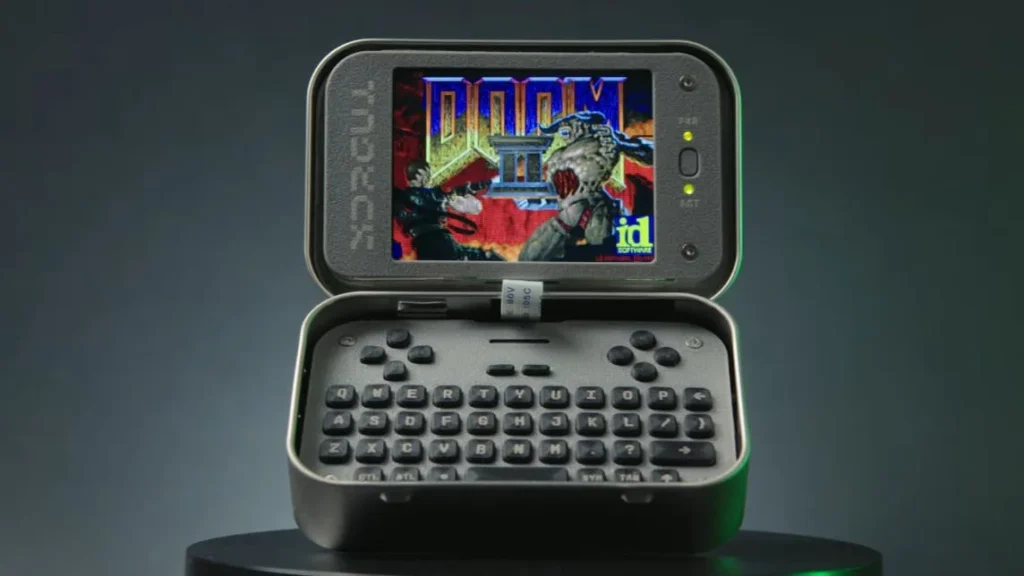
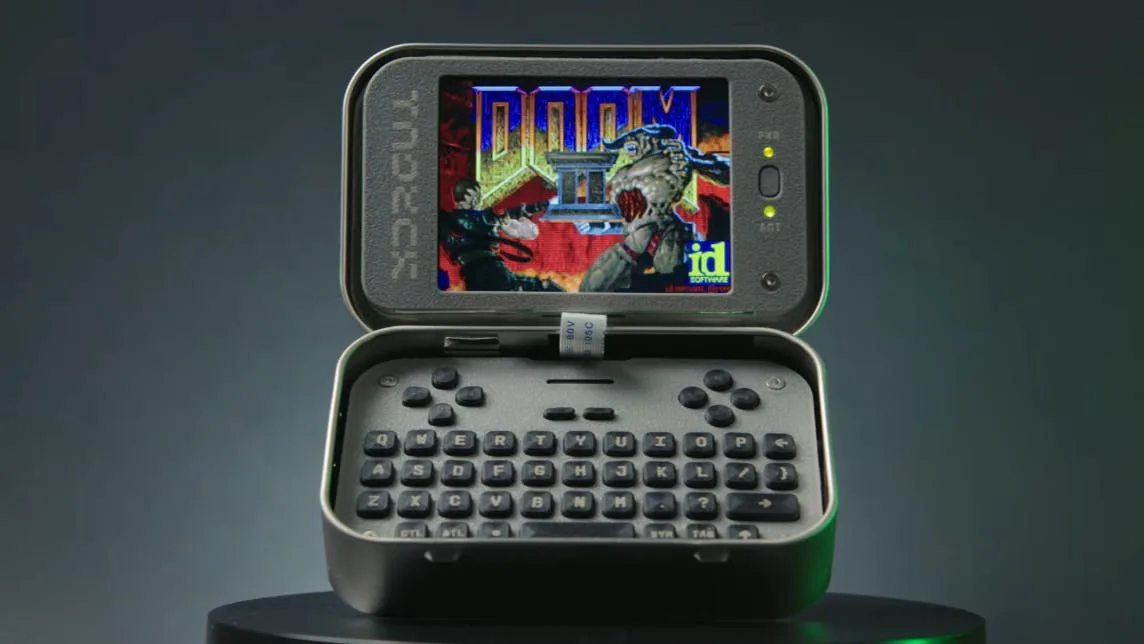
In an astonishing feat of micro-engineering and hardware miniaturization, maker Salim Benbouziyane has successfully designed and built a fully functional, pocket-sized cyberdeck housed entirely inside a standard Altoids mint tin. Despite measuring mere inches across, this remarkable micro-computer features a custom-engineered multi-layer printed circuit board (PCB) architecture, an integrated high-resolution LCD display, a tactile physical keyboard built from dome switches, and enough processing muscle to boot up and run the legendary PC gaming classic, Doom.
At the heart of Benbouziyane’s pocket workstation is the Raspberry Pi Compute Module Zero. By choosing this ultra-compact compute board over a traditional single-board computer (SBC), Benbouziyane bypassed the bulky layout constraints usually associated with DIY cyberdecks. The result is a masterclass in modern maker engineering that marries the nostalgic aesthetic of retro metal tins with cutting-edge micro-electronics.
Rather than relying on messy hand-wired connections or off-the-shelf components that fail to fit inside the tightly constrained chassis, the project utilizes a sophisticated four-layer internal assembly. This includes a custom two-layer carrier board, a specialized hinge-mounted ribbon cable system for the display, a structural spacer PCB, and a dedicated tactile keyboard array. Protected by precision-engineered 3D-printed bezels, keys, and structural housings, the Altoids-tin cyberdeck proves that even the smallest industrial canvases can yield heavy-duty computing power.
Chronology of the Build: From Concept to Doom
The realization of the Altoids-tin cyberdeck did not happen overnight; it represents the culmination of meticulous planning, iterative CAD design, and advanced electronics prototyping.
Phase One: Conceptualization and Component Selection
The project began with a classic maker conundrum: how to pack a complete Linux-capable computing stack into a container measuring roughly 9.5 by 6 centimeters. Traditional Raspberry Pi boards were instantly ruled out due to their layout, input/output (I/O) port overhangs, and thickness. Benbouziyane turned instead to the Raspberry Pi Compute Module Zero, which delivers core processing capabilities on a remarkably slim form factor.
Phase Two: PCB Architecture and Multi-Layer Engineering
With the core processing unit selected, the next phase required custom hardware development using PCB design software like KiCad. Benbouziyane engineered four distinct circuit layers to maximize every cubic millimeter of the mint tin:
- The Custom Carrier Board: A tailored two-layer motherboard serving as the central nervous system, routing power and data paths between the compute module, screen, and input controls.
- The Display Interface Board: Integrated with a flexible ribbon cable, this layer establishes a pivoting hinge connection, allowing the Altoids lid to open and close smoothly without straining or pinching internal wiring.
- The Structural Spacer: A third, intentionally unpopulated PCB acting as a physical divider and mechanical stabilizer to keep components isolated and prevent electrical shorts.
- The Input Array: A specialized PCB populated with micro-dome switches designed to offer crisp, mechanical tactile feedback when typing.
Phase Three: 3D Printing and Mechanical Integration
Once the electronics were mapped out, housing them securely required custom structural elements. Benbouziyane utilized 3D-printing techniques—pointing to accessible consumer hardware like the Creality Ender-3 V3 SE as an ideal platform for replication—to fabricate custom bezels, a protective front panel, and individual keycaps. These elements were painstakingly fitted around the internal PCBs, transforming loose electronic components into a cohesive, rugged, pocket-portable clamshell device.
Phase Four: Software Deployment and Final Assembly
With the hardware securely mounted inside the metal tin, the final hurdle involved software configuration. By flashing a lightweight operating system directly onto the Raspberry Pi Compute Module Zero and configuring the display drivers, Benbouziyane brought the system to life. The crowning achievement of the assembly process was getting the system to boot straight into Doom, validating both the computational throughput of the compact architecture and the practical usability of the physical micro-keyboard.
Supporting Data and Hardware Specifications
To truly appreciate the scope of Salim Benbouziyane’s creation, it is helpful to examine the underlying hardware stack, physical dimensions, and fabrication parameters required to build such a device.
| Component / Parameter | Specification Details |
|---|---|
| Enclosure | Standard Altoids metal mint tin (approx. 95mm x 60mm x 20mm) |
| Core Processing Unit | Raspberry Pi Compute Module Zero |
| Internal Architecture | 4-layer PCB layout (Carrier board, Ribbon-cable display interface, Spacer PCB, Dome-switch keyboard PCB) |
| Input Interface | Custom 3D-printed keycaps resting on tactile SMD dome switches |
| Display Unit | Miniature LCD compatible with the Compute Module interface (alternative options include SPI 256×64 OLED displays for lower power consumption) |
| Enclosure Fabrication | 3D-printed bezels and structural mounts (compatible with printers like the Creality Ender-3 V3 SE, featuring a 22x22x25 cm build volume) |
| Software Platform | Customized lightweight Linux distribution capable of running retro applications and Doom |
| Required Maker Skills | Surface-Mount Device (SMD) soldering, advanced KiCad PCB design, CAD modeling, and micro-assembly patience |
The choice of display hardware highlights the project’s adaptability. While the primary build incorporates a crisp LCD screen tailored to the Compute Module’s constraints, documentation notes that builders seeking alternative visual aesthetics can experiment with SPI-driven OLED panels (such as 256×64 pixel variants) to achieve higher contrast ratios and reduced power draws, tailoring the battery life and visual performance to their specific preferences.
Official Responses and Maker Community Reactions
The release of Benbouziyane’s demonstration video on YouTube (referenced via community documentation channels) immediately sent ripples through the global maker, retro-computing, and cyberdeck communities.
Prominent hardware modders and open-source electronics advocates have praised the project for pushing the boundaries of spatial optimization. In online maker forums, community feedback has highlighted the elegance of the hinge-routing solution. In many amateur attempts to build pocket electronics, ribbon cables and wiring harnesses fail rapidly due to fatigue at pivot points. By engineering a dedicated ribbon-cable interface that routes seamlessly through the natural hinge axis of the Altoids tin, Benbouziyane solved a chronic mechanical failure point that plagues many micro-modding projects.
Furthermore, educators and open-source hardware advocates have pointed to the project as a prime example of the democratization of advanced engineering. Because Benbouziyane utilized accessible design suites (KiCad) and consumer-grade additive manufacturing (3D printing), the barrier to entry—while still demanding advanced soldering proficiency—remains within reach of dedicated hobbyists willing to refine their surface-mount technology (SMD) skills.
While official corporate statements from entities like the Raspberry Pi Foundation or corporate mint manufacturers are absent (as this is an independent grassroots maker project), the groundswell of digital engagement underscores a universal affection for creative upcycling. The project has effectively transformed a ubiquitous piece of disposable consumer packaging into a high-performance, conversation-starting piece of computing history.
Implications: The Future of Miniaturization and Retro-Modding
Salim Benbouziyane’s Altoids-tin cyberdeck is far more than a clever novelty designed to play a 1990s first-person shooter inside a candy box; it carries significant implications for the future of hobbyist electronics, wearable computing, and industrial design principles.
1. Pushing the Limits of Everyday Carry (EDC) Tech
The "cyberdeck" subculture—inspired by William Gibson’s seminal cyberpunk literature—has traditionally leaned toward rugged, industrial, oversized portable workstations reminiscent of 1980s military terminals. Benbouziyane’s project subverts this trend entirely. By demonstrating that a fully capable Linux computing environment can be scaled down to the size of a pocket mint tin, the project opens up new design philosophies for Everyday Carry (EDC) technology. It proves that utility does not require bulk, challenging builders to rethink how efficiently internal volume can be utilized.
2. The Resurgence of Modular, Open-Source Hardware
As silicon manufacturers continue to shrink processing architectures, modular boards like the Raspberry Pi Compute Module Zero are enabling unprecedented levels of custom hardware design. The success of this cyberdeck relies heavily on the ability to design bespoke carrier boards tailored to exact physical dimensions rather than forcing components to fit standardized motherboards. This trend empowers independent makers to act as micro-manufacturers, creating custom PCBs that integrate seamlessly into unique, non-traditional enclosures.
3. Sustainability Through Upcycling and Repurposing
In an era dominated by electronic waste and planned obsolescence, the maker community continues to champion the art of repurposing. Taking discarded or everyday items—such as vintage lunchboxes, radio housings, and, in this case, mint tins—and infusing them with modern computing capability represents a sustainable counter-culture to fast technology. It encourages consumers to view everyday objects not as single-use items, but as potential chassis for bespoke, personalized technology.
4. Educational Value in Advanced Prototyping
Finally, projects of this caliber serve as invaluable educational milestones. Building an Altoids-tin cyberdeck requires mastering a multidisciplinary toolkit: electrical engineering (PCB layout and SMD soldering), mechanical engineering (3D modeling, spatial clearance, and hinge mechanics), and software engineering (OS configuration and binary execution). For students and aspiring engineers, replicating or studying such projects bridges the gap between theoretical classroom knowledge and hands-on hardware innovation.
Conclusion
Salim Benbouziyane has crafted a miniature masterpiece that captures the imagination of retro-gamers and hardware engineers alike. By squeezing a fully functional cyberdeck—complete with physical inputs, a vibrant display, and the processing prowess to run Doom—into the confines of an Altoids tin, the project bridges the gap between whimsical nostalgia and serious micro-engineering. As documentation and design files circulate through the maker community, this pocket-sized powerhouse stands as an enduring testament to what can be achieved when human creativity meets uncompromising engineering persistence.