
TensorFlow Lite Boosts CPU Inference: XNNPack Introduces Dynamic Range Quantization and Mixed-Precision Support
By Alan Kelly, Software Engineer
Enriched Technical Report & Journalistic Overview
Main Facts
In a significant leap forward for on-device machine learning, the TensorFlow team has announced that XNNPack—the core CPU inference backend for TensorFlow Lite (TFLite)—now natively supports dynamic range quantization for its Fully Connected and Convolution 2D operators. Because central processing units (CPUs) offer the widest reach for machine learning inference and remain the default target for the vast majority of mobile and edge hardware, optimizing CPU performance is a mission-critical objective for the ecosystem.
By implementing dynamic range quantization, the development team achieved a monumental fourfold increase in inference performance within the TFLite XNNPack backend compared to single-precision floating-point (fp32) baselines. This performance multiplier democratizes advanced AI capabilities, making it feasible to deploy complex, resource-intensive features onto older, lower-tier, and resource-constrained consumer devices.

Furthermore, this breakthrough introduces powerful mixed-precision capabilities. Developers can now seamlessly combine dynamic range quantization with half-precision (fp16) floating-point inference on hardware equipped with native fp16 support. This integration unlocks unprecedented execution speeds while preserving model accuracy, a feat demonstrated vividly through heavy workloads like Stable Diffusion running locally on consumer hardware.
Chronology
The evolution of on-device model optimization has moved rapidly over recent years, driven by the explosive demand for real-time artificial intelligence on mobile and edge devices:
- The FP32 Baseline Era: Historically, machine learning models executed inference using single-precision (fp32) floating-point formats. While accurate, this approach placed heavy burdens on memory bandwidth and computational units, limiting advanced AI deployment to high-end hardware.
- The Introduction of Full Integer Quantization: To combat resource bottlenecks, TensorFlow Lite introduced full integer quantization, storing both weights and activations as signed 8-bit integers. While efficient, this method required meticulous calibration using a representative dataset, and unsupported operations frequently caused conversion failures, presenting steep hurdles for non-expert developers.
- November 2023: TensorFlow released optimization paradigms focusing heavily on half-precision inference, demonstrating that fp16 execution could double on-device inference speeds on compatible hardware without sacrificing fidelity.
- The XNNPack Optimization Milestone: XNNPack was progressively optimized across major CPU architectures (ARM, ARM64, x86 SSE/AVX/AVX512, and WebAssembly). This ensured ultra-fast execution paths on modern processors such as the Pixel 8’s Tensor G3 and the OnePlus 11’s Snapdragon 8 Gen 2.
- Present Day (TensorFlow 2.17 and Beyond): Dynamically quantized XNNPack inference is enabled by default in prebuilt binaries starting with TensorFlow 2.17. The technology has already been integrated into flagship Google ecosystems—powering Gemini, Google Meet, and Chrome OS audio denoising—and is now fully available to the broader open-source community.
Supporting Data & Technical Deep Dive
Understanding Dynamic Range Quantization
To appreciate the engineering breakthrough, one must examine how dynamic range quantization differs from traditional paradigms. In a dynamically quantized model:

- Model Conversion: Weights for Fully Connected and Convolution operators are compressed into 8-bit integers during model conversion.
- Runtime Flexibility: Unlike fully quantized models where activation ranges are permanently fixed during conversion using a representative dataset, dynamic range quantization calculates activation parameters (zero point and scale) dynamically at runtime based on the observed range of activations for each row.
- High Fidelity: Because activation tensors fully utilize all 8 quantized bits dynamically, accuracy degradation is heavily mitigated. Additionally, the outputs of the affected operators return to a 32-bit floating-point format rather than an integer format.
This architecture grants developers approximately 90% of the performance gains associated with full integer quantization, but with vastly superior out-of-the-box accuracy and zero requirement for a representative calibration dataset.
Performance Benchmarks and Real-World Comparisons
When benchmarked across standard computer vision and generative models on modern hardware like the Pixel 8, the speed-ups are transformative.
- Stable Diffusion Performance: The diffusion model component of Stable Diffusion was unable to be converted using full integer quantization due to unsupported operator limitations. However, utilizing dynamic range quantization enabled it to run up to 6.2 times faster than the original float32 baseline.
- Overcoming Full-Integer Bottlenecks: Surprisingly, profiling data revealed that dynamic range quantization occasionally outperforms full integer quantization. While theory suggests full integer arithmetic should always outpace dynamic quantization (which incurs a minor runtime conversion overhead), quantization artifacts can derail fully quantized models. If the ratio of input and output scales falls outside optimal ranges during static conversion, the model is forced onto sub-optimal execution paths. Dynamic range quantization bypasses this pitfall entirely by computing parameters on the fly.
Mixed Precision Integration
By combining dynamic range quantization with half-precision (fp16) inference, developers can harness hardware-level vectorization. Processors capable of native fp16 execution can process twice as much data per instruction because fp16 values occupy half the storage bits of fp32.

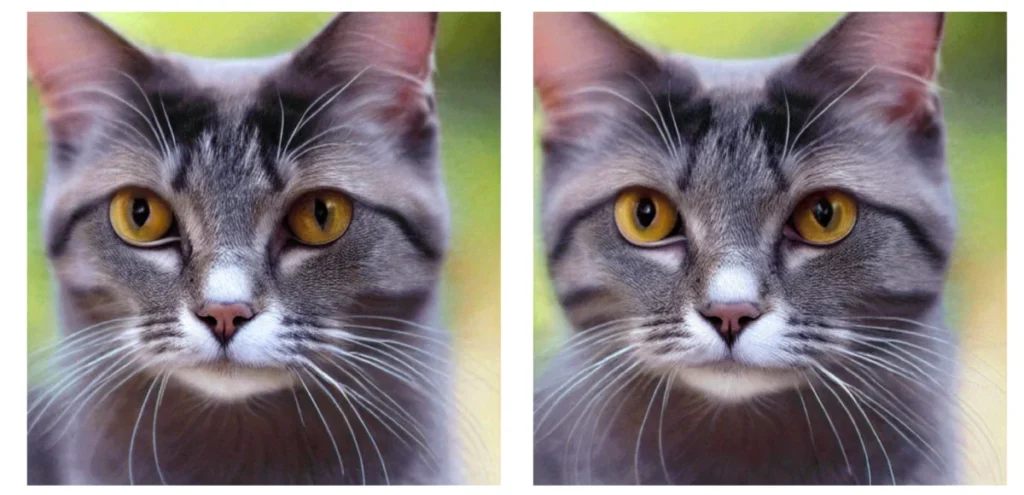
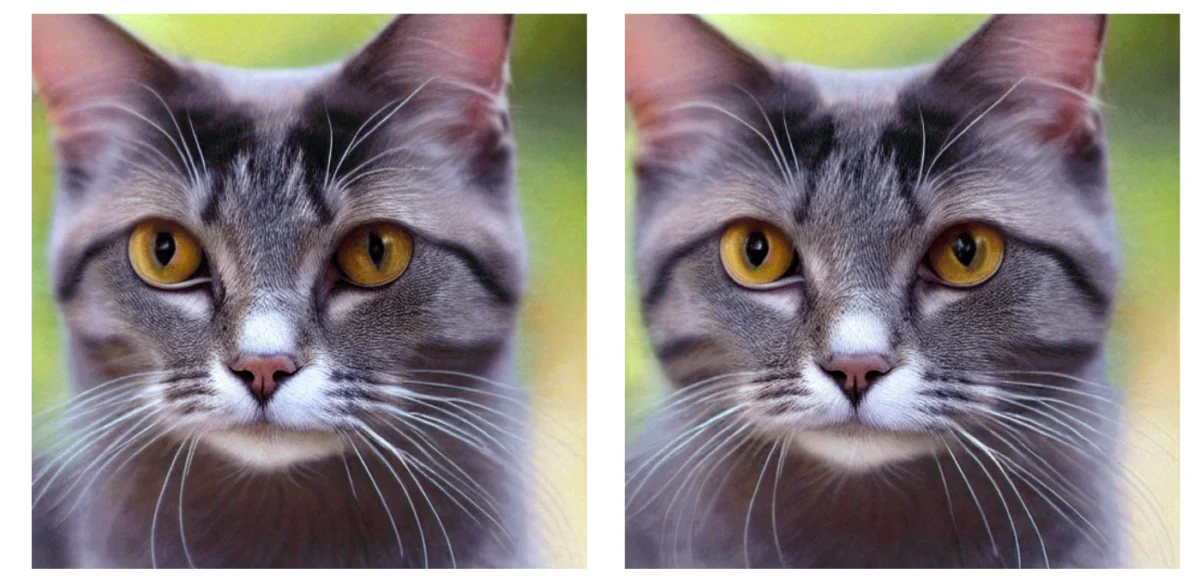
Visual fidelity checks—such as comparing images generated by Stable Diffusion using fp32 activations versus fp16 activations with identical random seeds—revealed zero perceptible difference in output quality ("indistinguishable lovely cats"). This confirms that compute-intensive floating-point layers (like Batch Matrix Multiply and Softmax) can safely utilize mixed precision without quality degradation.
Official Responses & Developer Implementation
How to Implement Dynamic Range Quantization
Adopting the new feature requires minimal friction. Developers do not need to retrain existing models; they simply apply the configuration flag during TensorFlow Lite conversion:
import tensorflow as tf

converter = tf.lite.TFLiteConverter.from_saved_model(saved_model_dir)
converter.optimizations = [tf.lite.Optimize.DEFAULT]
tflite_model = converter.convert()
Unlike full integer quantization, no representative dataset is required, and unsupported operators do not block successful conversion. This dramatically lowers the barrier to entry for developers who are not optimization specialists.

Acknowledgments
The TensorFlow engineering team specifically acknowledged the critical contributions of Frank Barchard and Quentin Khan, whose architectural work made high-performance dynamic range quantization inference a reality in both TensorFlow Lite and XNNPack.
Implications
The commercial and technical implications of bringing XNNPack’s dynamic range quantization to the open-source community are far-reaching:
- Democratization of Edge AI: Complex machine learning models that previously required high-end enterprise smartphones can now run fluidly on mid-range and legacy hardware. This expands the Total Addressable Market (TAM) for AI-driven mobile applications globally.
- Reduced Cloud Dependency: By shifting heavier workloads—such as audio denoising, local large language models, and image generation—directly onto local device CPUs, companies can dramatically reduce cloud computing costs, lower server bandwidth requirements, and protect user privacy through local data processing.
- Developer Velocity: By eliminating the tedious, error-prone process of curating representative datasets for full integer quantization, TensorFlow Lite has streamlined the model deployment pipeline. Developers can optimize models securely in seconds rather than days.
- Production Validation: Having already been stress-tested and deployed in mission-critical Google ecosystems like Gemini, Google Meet, and Chrome OS, the underlying technology arrives in the hands of open-source developers with battle-tested reliability.
As edge devices continue to evolve, the integration of dynamic range quantization and mixed-precision execution within XNNPack marks a definitive milestone in making high-performance artificial intelligence ubiquitous, efficient, and accessible to all developers.







