
Bridging the Hardware Gap: How Strata Democratizes Large-Scale LLMs
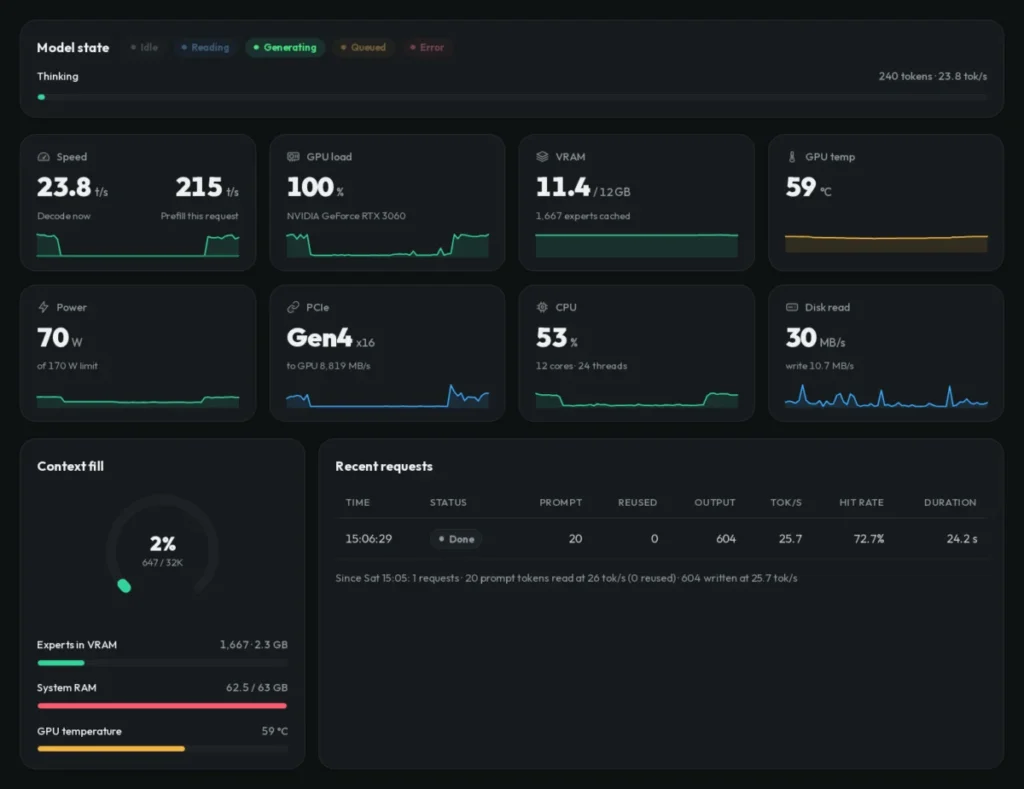
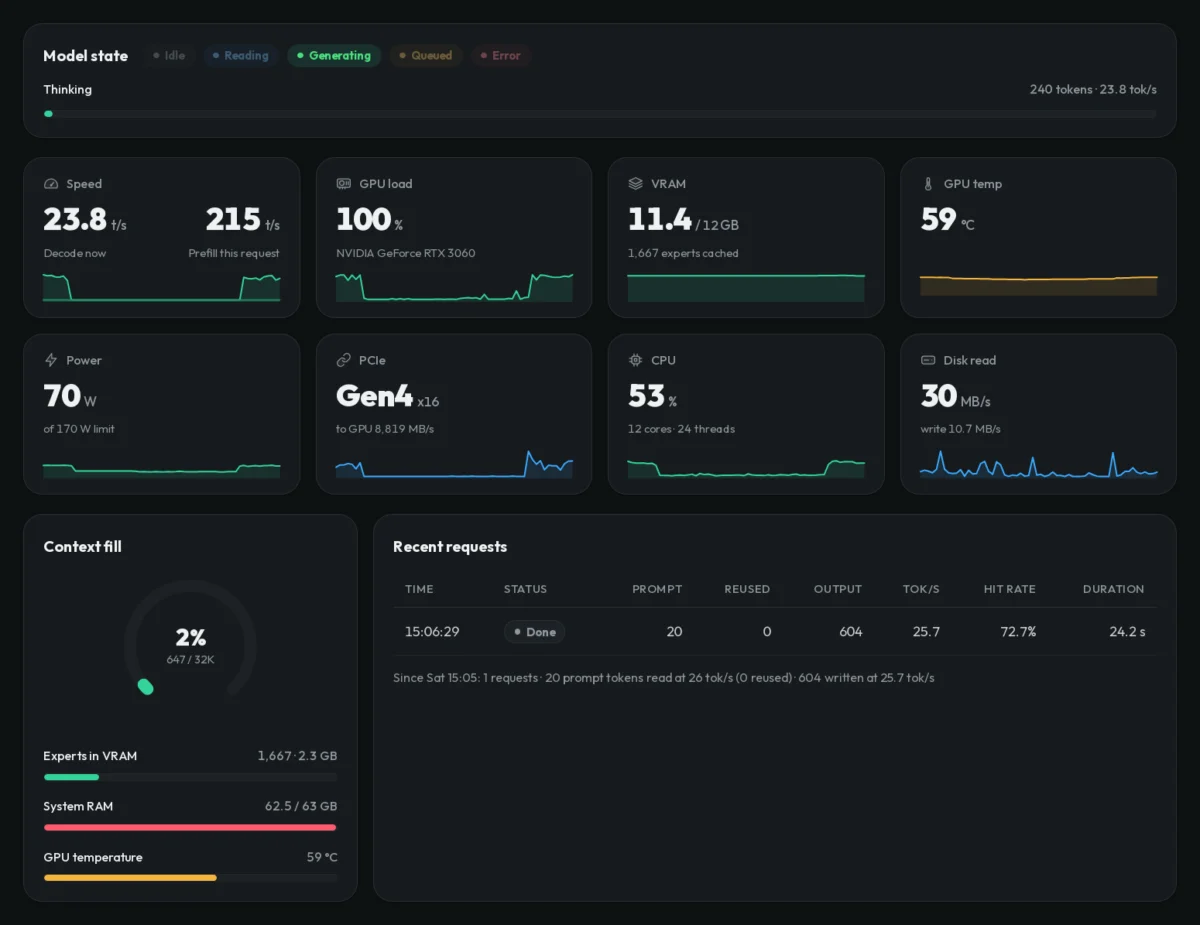
For the better part of two years, the artificial intelligence landscape has been bifurcated into two distinct classes: those with access to massive, cloud-based API endpoints and those who own the high-end industrial-grade hardware required to run sophisticated models locally. For the average enthusiast, the barrier to entry for running a state-of-the-art Large Language Model (LLM) was effectively insurmountable. However, a groundbreaking project known as Strata, developed by researcher [Niko1221], is shifting that paradigm, allowing users to run a 125-billion-parameter model on hardware that, while robust, fits comfortably within the chassis of a high-end gaming PC.
Main Facts: The Architecture of Efficiency
At the heart of the Strata project lies a fundamental shift in how we approach memory management for neural networks. Traditionally, loading a 125-billion-parameter model would require a small cluster of enterprise-grade A100 or H100 GPUs, each costing tens of thousands of dollars. Strata circumvents this by utilizing Qwen3.8-Flash-Next, a sophisticated "Mixture-of-Experts" (MoE) model.
In an MoE architecture, the model consists of thousands of specialized sub-networks, or "experts." Critically, the system does not need to activate every parameter for every query. Instead, for any given token, only a small subset—in this case, ten experts—is triggered. Strata leverages this sparsity by treating the system’s limited VRAM as a high-speed cache. The most frequently accessed experts reside on the GPU, while the remainder of the model sits in the system’s primary RAM. Furthermore, the project utilizes a massive 29 GB lookup table stored on the user’s SSD, which is paged into memory dynamically as required.
By employing multi-token prediction machinery for speculative decoding, Strata allows the hardware to verify multiple candidate tokens in a single computational pass. The result is a system that can achieve 50 to 90 tokens per second on an NVIDIA RTX 5070—a performance metric that makes local, high-parameter AI interaction not just possible, but genuinely practical.
Chronology: The Evolution of Localized AI
The development of Strata represents the latest milestone in a rapidly evolving timeline of "democratized AI."
- Early 2023: The "Local LLM" movement gains traction following the leak of Meta’s LLaMA weights. Users begin experimenting with 7B parameter models, though performance is sluggish and quantization methods are primitive.
- Late 2024: The emergence of specialized quantization techniques (like GGUF and EXL2) allows models to be compressed without significant loss of intelligence, moving 30B+ models onto consumer GPUs.
- Mid-2025: The rise of Mixture-of-Experts (MoE) architectures, such as Mixtral, proves that models don’t need to be "dense" to be effective. This provides the theoretical framework for projects like Strata.
- Present Day: Strata pushes the boundaries by proving that 125B parameter models—previously the domain of enterprise data centers—can operate on consumer hardware through intelligent tiered memory management (GPU VRAM + System RAM + SSD lookup tables).
Supporting Data: The Hardware Requirements
While Strata is "modest" compared to a server farm, it remains a demanding application for the typical home user. The project specifies a "baseline" that requires a non-trivial commitment to system resources:
- System RAM: A minimum of 32 GB is required to house the bulk of the model parameters.
- VRAM: 12 GB is the recommended threshold to ensure that the active "experts" remain on the GPU, preventing the latency bottlenecks that occur when fetching data from the CPU.
- Storage: 80 GB of free space is necessary, primarily to accommodate the large lookup tables required for the MoE routing logic.
When benchmarked against the RTX 5070, the software demonstrates that token generation speeds are heavily dependent on quantization levels. At higher compression, the system reaches the upper end of the 90 tokens-per-second range, providing a fluid, near-instantaneous conversational experience that rivals many cloud-based services.
Official Responses and Technical Hurdles
The transition to local, large-scale LLMs is not without its "growing pains." As with many open-source projects operating on the bleeding edge of C++ and CUDA, the setup process can be daunting. Early testers have reported significant friction regarding environment configuration, specifically involving conflicts between the NVIDIA C compiler, system GCC versions, and outdated header files.
The developer, [Niko1221], has streamlined the experience with a setup.sh script, which automates the retrieval and configuration of dependencies. Once the initial hurdle of the environment setup is cleared, the software provides a web-based interface that mirrors the user experience of ChatGPT. Furthermore, Strata exposes OpenAI- and Anthropic-compatible APIs on localhost, meaning that existing productivity tools, IDE extensions, and chat front-ends can interface with the local model seamlessly.
Implications: The Future of Private AI
The implications of the Strata project are profound. By moving the "thinking" from the cloud to the local machine, users gain three critical advantages: privacy, cost-efficiency, and resilience.
Privacy and Data Sovereignty
When utilizing cloud-based APIs, user data is subject to the privacy policies and data-scraping practices of the model provider. With Strata, all data remains on the local machine. For researchers, legal professionals, and developers working with proprietary code, this local execution model is not just a preference—it is a necessity for security compliance.
The Accuracy/Hallucination Trade-off
It is important to note that size does not always equate to perfect accuracy. During testing, the 125B model exhibited the classic "hallucination" patterns common to large language models. When queried about the history of sites like Hackaday, the model provided largely accurate architectural information but faltered on specific biographical data regarding founders and authors. Interestingly, adjusting the "thinking level" or temperature did not eliminate these errors; it merely shifted the nature of the misinformation. However, the model showed remarkable proficiency in technical tasks, such as identifying logic errors in code snippets or outlining the complexities of porting a C compiler to a new architecture.
The Long-term Trajectory
Strata serves as a proof-of-concept for a future where high-parameter AI is a commodity utility rather than a subscription-based service. The project demonstrates that the limitations we face today—memory throughput, VRAM capacity, and storage speeds—are being bypassed by clever software engineering rather than just waiting for better hardware.
As memory bandwidths increase and storage latency on NVMe drives continues to plummet, the "lookup table" approach used by Strata may become the standard architecture for running models that exceed the capacity of even the most expensive consumer GPUs. We are entering an era where the most powerful AI in the world will be restricted only by the amount of RAM you can fit into your motherboard’s DIMM slots.
While the current requirements for Strata remain high, they are remarkably low compared to the capability of the 125-billion-parameter model being deployed. For the enthusiast, the "modest" hardware of today is the supercomputer of yesterday. Projects like Strata are the bridge between the two, ensuring that as AI scales, it does so in a way that remains accessible to those who value local control and the freedom to experiment without the oversight of a corporate API provider. The path forward is clear: the future of AI is not just in the cloud—it is on our desks.







