Beyond the Horizon: Lunar Discoveries, Orbital Distillation, and the Crisis of AI Authenticity
The intersection of space exploration, scientific integrity, and digital creativity has reached a pivotal juncture. From the lunar surface, where NASA’s Artemis II crew provided humanity with a rare, close-up perspective of our celestial neighbor, to the sophisticated laboratories of Earth where researchers are grappling with the infiltration of generative AI in scientific documentation, the boundaries of human knowledge are shifting. This report explores the latest findings from the Artemis II mission, the future of orbital manufacturing, and the fallout from a major scientific photography scandal.
I. The Artemis II Preliminary Lunar Science Report: A New Perspective
It is a rare privilege to witness the Moon not through the haze of Earth’s atmosphere or the cold lens of a robotic probe, but through the eyes of human explorers. The Artemis II mission, which successfully returned to Earth after a landmark journey, has yielded a wealth of data now encapsulated in the Artemis II: Sights & Sounds of Science report.
While the mission is primarily remembered for its historic trajectory, the scientific output—formally titled the Artemis II Preliminary Lunar Science Report—provides significant insights into the lunar environment. Among the most riveting observations are the documented impact flashes on the lunar surface.
The Dynamics of Lunar Impacts
On the sixth day of the mission, the Orion spacecraft positioned its crew to experience a unique solar eclipse. This orbital configuration offered the crew a prolonged, unprecedented view of the darkened lunar landscape. It was during this period of obscuration that the crew observed flashes of light with the naked eye. NASA has since confirmed that these flashes were the result of small rocky fragments—some measuring only a few inches—colliding with the lunar surface at high velocities. These observations are not merely anecdotal; they provide vital data regarding the density and behavior of micrometeoroid flux, helping researchers better understand the ongoing bombardment that shapes the lunar regolith.
II. Chronology: The Evolution of Orbital Ambition
The timeline of human activity in space is accelerating. What began as a Cold War race to reach the Moon has transitioned into an era of sustained, routine orbital operations.
- 2025–2026 (The Artemis Era): NASA’s Artemis II mission successfully executes its flyby, collecting high-fidelity data and setting the stage for future lunar habitation.
- 2027 (The Preparatory Phase): International academic institutions finalize logistics for unconventional payload testing.
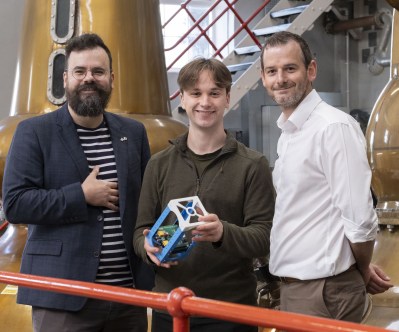
- 2028 (Scheduled Launch): A collaborative CubeSat mission between the University of Glasgow and the Kyushu Institute of Technology is slated to launch, marking a transition from purely exploratory space flight to specialized industrial experimentation.
This shift signifies a maturation of the aerospace sector. As launch costs decrease, organizations are moving beyond basic survival and communication technologies to investigate how terrestrial processes—such as the maturation of distilled spirits—behave in microgravity.

III. Supporting Data: Distilling the Future in Orbit
The upcoming 2028 CubeSat mission represents a fascinating case study in orbital manufacturing. While the concept of distilling whisky in orbit may strike some as a novelty, the scientific implications are profound.
The Chemistry of Microgravity Maturation
The mission will transport 10 ml of fluid into orbit for a five-year study. Researchers intend to monitor how the chemical composition of the fluid evolves over time. The primary objective is to determine how the frequent thermal and kinetic fluctuations experienced by an orbiting spacecraft influence the molecular aging process.
In terrestrial distilling, temperature variations and atmospheric pressure are known to affect the interaction between the spirit and the wood of the casks. By removing gravity from the equation, scientists hope to isolate the variables of fluid dynamics and chemical bonding. This experiment provides a controlled environment to study orbital manufacturing, offering a blueprint for future pharmaceutical and chemical synthesis missions where gravity-independent processes could prove transformative.
IV. The Crisis of Integrity: AI and the Scientific Image
In contrast to the rigorous, data-driven successes of the Artemis mission, the scientific community is currently weathering a crisis of authenticity regarding digital evidence.
The Nikon Small World in Motion Controversy
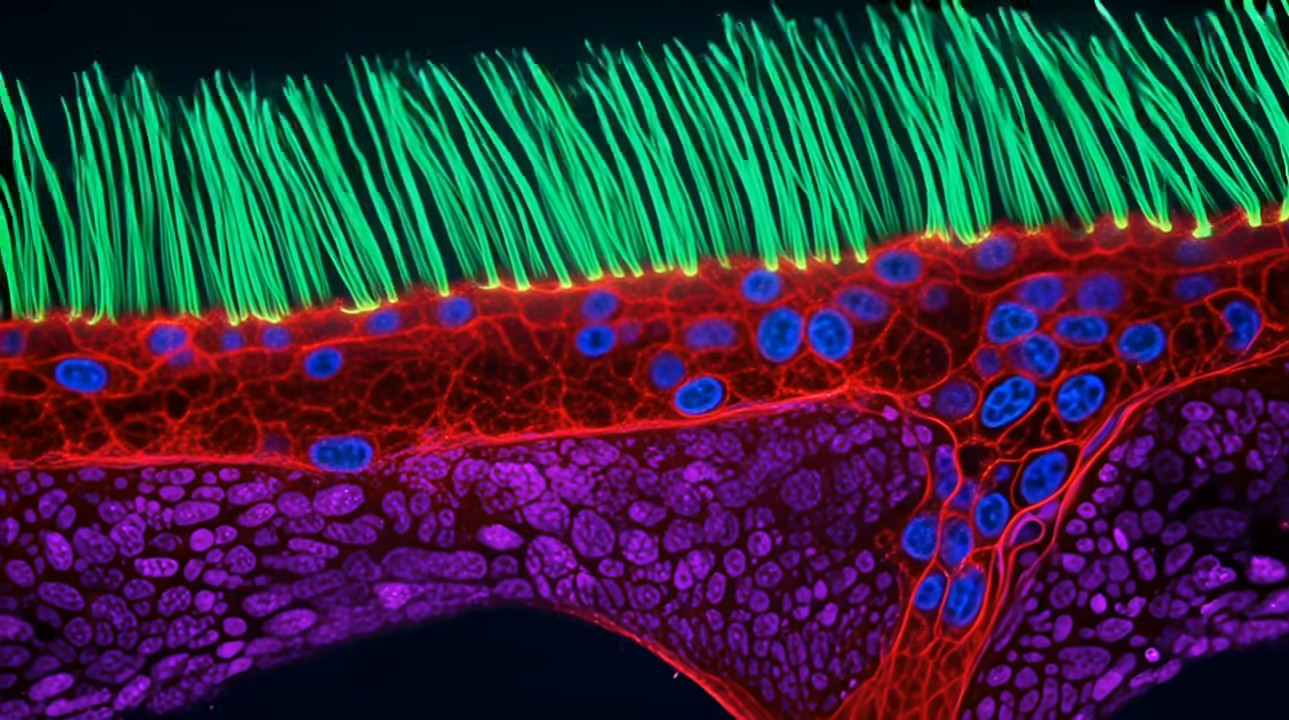
The Nikon Small World in Motion competition, a prestigious platform for scientific videography, recently became the epicenter of a heated debate regarding the role of generative AI in scientific documentation. The winning entry, submitted by Dr. Ning Xu, purported to show cilia in airway tissue samples taken from a patient with primary ciliary dyskinesia (PCD).
However, the win was short-lived. Following alarms raised by specialists in the field, it was revealed that the video was not a true capture of biological movement, but rather a creation of generative AI.
Official Response and Re-Ranking
Nikon’s response was decisive: the entry was disqualified. In an official statement, the competition organizers confirmed that the submission violated the core tenets of the contest, which require that entries be grounded in genuine scientific observation. As a result, the competition leaderboard was adjusted, with Nguyen Nam Nhat of Vietnam elevated to the top spot for his genuine, microscopic footage of a roundworm and a Dileptus protist.
Implications for Research
The controversy underscores a growing anxiety in the scientific community. When asked about the process, Dr. Xu had initially claimed that AI was used only for "post-processing." However, experts noted that the biological structures displayed in the video were anatomically impossible—"hallucinations" of the AI model that bore no resemblance to actual human airway tissue.
This incident serves as a cautionary tale for all scientific disciplines. As generative tools become more accessible, the distinction between enhancement and fabrication is blurring. The incident has prompted calls for more stringent metadata requirements in scientific competitions and publications to ensure that the images presented as "data" remain rooted in reality.
V. The Digital Frontier: Minimalist Art and Web Standards
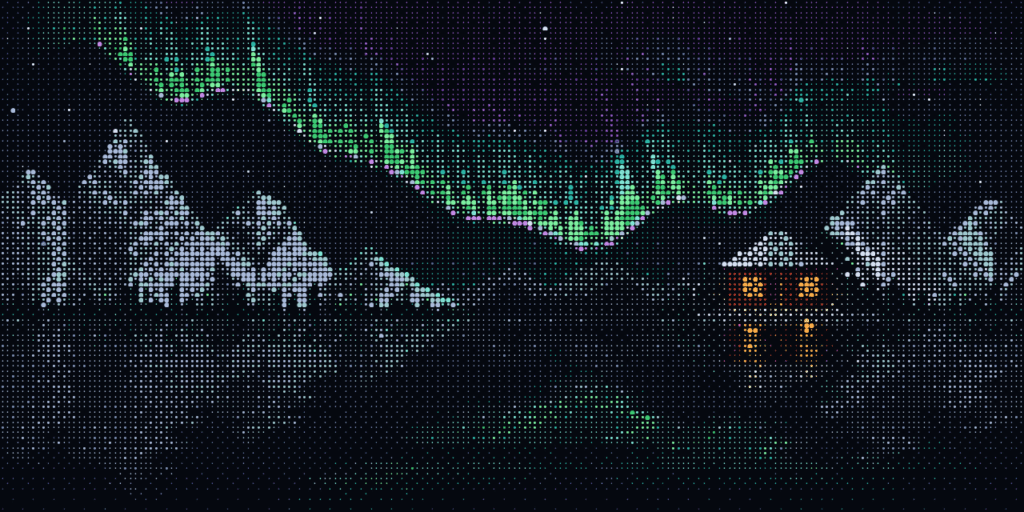
While the scientific community struggles with the ethics of AI imagery, other corners of the internet are celebrating a return to foundational digital aesthetics. The rise of sites like ascii.rest highlights a growing appreciation for minimalist, non-AI-reliant digital art.
The Aesthetic of Simplicity
ASCII art—the practice of creating images using only characters from the standard computer text set—has seen a resurgence. These animations offer a stark contrast to the computationally heavy, potentially deceptive outputs of generative models.
By leveraging standard HTML and simple character arrays, these animations are not only aesthetically pleasing but also technically transparent. Developers can inspect, manipulate, and embed this code into their own projects without the "black box" mystery that surrounds modern neural networks. The ability to export these works as GIFs or integrate them directly into web source code offers a tactile, programmable experience that resonates with a generation tired of algorithmically generated sludge.
Conclusion: The Path Forward
The events of the past few weeks offer a complex portrait of our current technological trajectory. We are living in an era where we can peer at the lunar surface with unprecedented clarity, distill the complexities of chemistry in the vacuum of space, and yet, we remain vulnerable to the pitfalls of digital misrepresentation.
The lessons are clear: whether we are observing the Moon or the microscopic world, the value of our discoveries rests entirely on the integrity of our observations. As we look toward the 2028 orbital missions and beyond, the scientific community must remain vigilant in its commitment to truth, ensuring that the technology we build—from the rocket engines powering our way to the Moon to the algorithms we use to process our data—serves to illuminate reality rather than obscure it.
For those interested in contributing to the ongoing conversation or suggesting topics for future exploration, the door remains open. Science is a collaborative effort, and the pursuit of truth requires the vigilance of all who observe the world around them.