The IKEA Kortlinje: A $20 Canvas for the Next Generation of Hardware Hackers
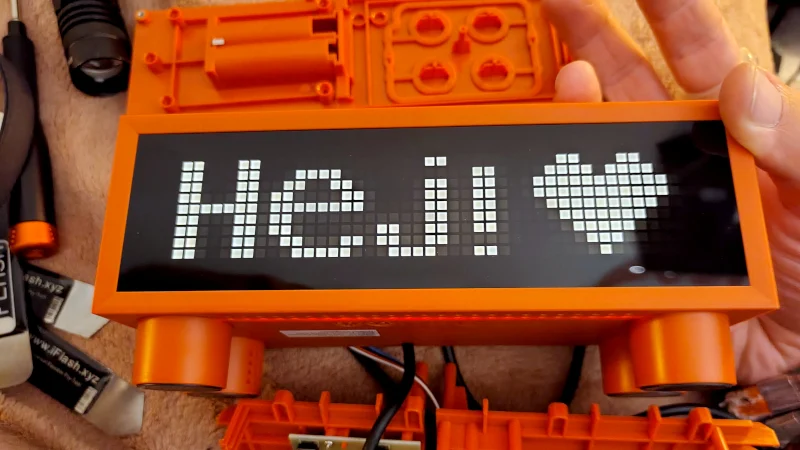
In the world of consumer electronics, IKEA has carved out a peculiar niche. While the Swedish giant is primarily known for flat-pack furniture and minimalist home decor, its lighting and small appliance divisions have inadvertently become a goldmine for the global maker community. The latest device to capture the imagination of engineers, hobbyists, and tinkerers is the IKEA Kortlinje—a deceptively simple digital clock that, beneath its unassuming white plastic exterior, hides a sophisticated LED matrix ripe for modification.
Priced at approximately $20, the Kortlinje is marketed as a functional household utility, offering timekeeping alongside integrated hygrometer and thermometer readings. However, for the hardware hacking community, these features are merely secondary to the device’s underlying architecture. With three VK1640 LED controllers at its heart, the Kortlinje represents one of the most accessible and affordable entry points into custom firmware development and display manipulation seen in recent years.
Main Facts: Beneath the Plastic Shell
At first glance, the Kortlinje appears to be a standard budget-friendly desk accessory. Its aesthetic is quintessentially IKEA: clean lines, a neutral palette, and an understated presence. But once the casing is removed, the device reveals a robust hardware layout that has enthusiasts excited.
The internal architecture is anchored by three VK1640 LED driver ICs. These chips are capable of driving a significant number of LEDs, providing a high-density matrix that is far more versatile than standard seven-segment displays. Alongside these drivers, the motherboard features an unidentified microcontroller paired with a 32.768 kHz watch crystal—a standard component for high-precision timekeeping.
Perhaps most intriguing to the reverse-engineering community is the presence of an additional "mystery chip." This component, which currently lacks any identifiable markings, sits on the circuit board and is suspected by experts to be either an I2C multiplexer or a specialized interface for the device’s onboard temperature and humidity sensors. The lack of documentation on this chip has turned the Kortlinje into a digital treasure hunt, as hackers work to map its pinouts and determine its role in the device’s data flow.
Chronology of the Kortlinje Movement
The "hacking" of the Kortlinje is still in its infancy, yet the momentum is building rapidly. The discovery of the device’s potential can be traced back to the collaborative efforts of the RevSpace hackerspace in the Netherlands. Their initial investigation into the clock’s internals provided the first technical blueprint for the community, highlighting the feasibility of bypassing the stock firmware.
Following the RevSpace post, independent developers began to take notice. GitHub user [VIPnytt] emerged as a pioneer in the space, publishing the first iteration of custom firmware specifically designed for the Kortlinje hardware. This initial release, while experimental, serves as a "Hello World" for the device, proving that the stock microcontroller can be successfully replaced or augmented.
As of this writing, the community is in a phase of aggressive discovery. Hobbyists are currently documenting the I2C bus communications, attempting to isolate the sensor data from the LED control signals. The chronology of this project is moving at a breakneck pace, with new findings appearing on enthusiast forums and Discord servers almost daily.
Supporting Data: Technical Specifications and Hardware Potential
To understand why the Kortlinje is attracting so much attention, one must look at the hardware specifications. The VK1640 is a popular choice for LED driving because it reduces the number of pins required on the host microcontroller, allowing for complex display patterns without the need for an expensive or bulky processor.
Key Hardware Components:
- LED Drivers: 3x VK1640 chips. These are the workhorses of the display, allowing for individual control of the LED matrix.
- Timekeeping: 32.768 kHz crystal oscillator, ensuring the clock remains accurate even when detached from a network sync.
- Sensors: Integrated hygrometer and thermometer, providing environmental data that can be re-purposed for home automation dashboards.
- Interface: I2C bus connectivity, which is the "golden key" for hackers. By tapping into this bus, a custom controller (such as an ESP32 or an Arduino Nano) can send commands directly to the displays.
The primary hurdle for those looking to modify the device is the desoldering process. The original microcontroller is soldered directly to the PCB; however, it is not permanently bonded, making it a viable candidate for removal. Once the original chip is lifted, the pads provide a gateway to the I2C lines and the LED driver input pins. This physical accessibility is what makes the Kortlinje a superior "hackable" device compared to many modern electronics that use surface-mount components or epoxy-covered "blobs" that are impossible to rework.
Official Responses and Corporate Stance
As is typical with IKEA’s consumer electronics, the company has offered no official comment on the "hackability" of the Kortlinje. IKEA’s design philosophy generally centers on accessibility, affordability, and simplicity. While the company does not explicitly market its products as "open source" or "developer-friendly," they have long benefited from a symbiotic relationship with the maker community.
From a corporate perspective, the Kortlinje is a finished product designed for mass consumption. The company provides no SDKs, no schematics, and no support for third-party firmware. However, there is no evidence to suggest that IKEA actively discourages these modifications. In the past, the company has embraced the DIY community, often featuring "hacks" on their own blog or social media channels when they involve furniture. Whether this tolerance extends to the internal circuitry of their digital devices remains an open question, but for now, the silence from IKEA is being interpreted by the community as a "green light" to continue their exploration.
Implications: The Future of Consumer Hardware Hacking
The Kortlinje represents a growing trend in consumer electronics: the "unintentional development kit." By utilizing cheap, readily available, and well-documented components like the VK1640, IKEA has inadvertently created a hardware platform that is more attractive to engineers than many purpose-built development boards.
The Broader Impact
- Democratization of Hardware: At $20, the Kortlinje is cheaper than most dedicated LED matrix kits. By repurposing a mass-produced consumer device, hackers are saving money while reducing electronic waste.
- Innovation Through Reuse: This project is part of a "rich tradition" of IKEA hacking. From using bowls for telescope mounts to repurposing lamps for smart-home lighting, the community has proven that IKEA products are often over-engineered for their price point, making them perfect candidates for second lives.
- Educational Value: The Kortlinje is an ideal tool for teaching embedded systems. It offers a tangible project—a digital clock—that allows students to learn about I2C, LED multiplexing, and firmware flashing in a controlled, low-risk environment.
As we look to the future, the Kortlinje is likely to become a staple of the "Desk-Tech" community. We can anticipate the development of specialized libraries that will allow the clock to act as a peripheral for larger smart-home systems—displaying stock prices, weather updates, or server statuses instead of just the time and temperature.
Ultimately, the IKEA Kortlinje serves as a reminder that the value of a device is not always dictated by its factory settings. In the hands of a curious engineer, a $20 digital clock is not just a way to track the time; it is a blank slate, a programmable matrix, and a testament to the enduring human desire to peek under the hood and make the world work a little differently. As the community continues to crack the mystery of the unidentified chips and refine the firmware, the Kortlinje will undoubtedly be remembered as one of the most significant "accidental" hardware platforms of the decade.