Acer and Google Redefine Hybrid Computing: The Global Debut of the Acer Googlebook 14 Breaks New Ground in the 2-in-1 Market
By Global Tech Desk
Published: October 2026
Main Facts: The Arrival of the Acer Googlebook 14
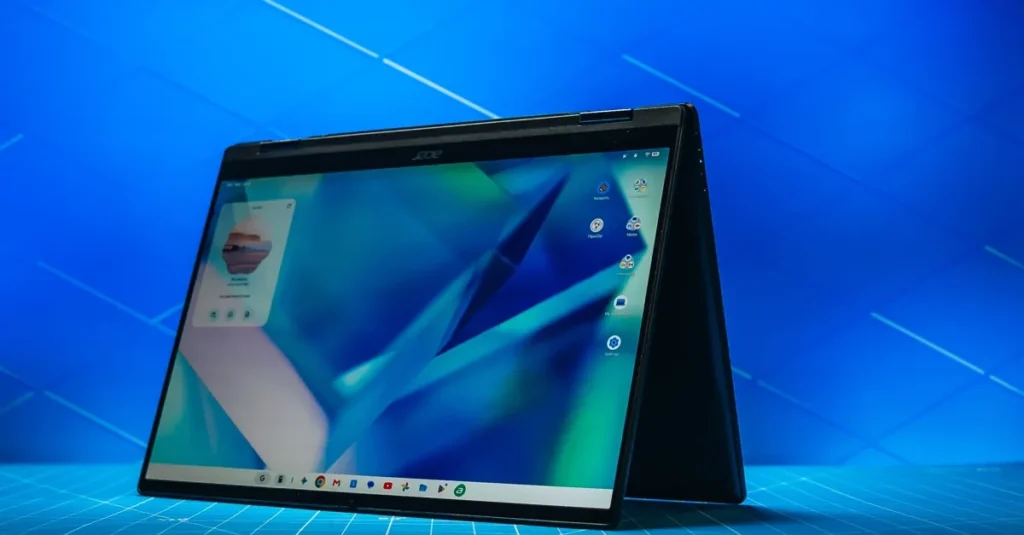
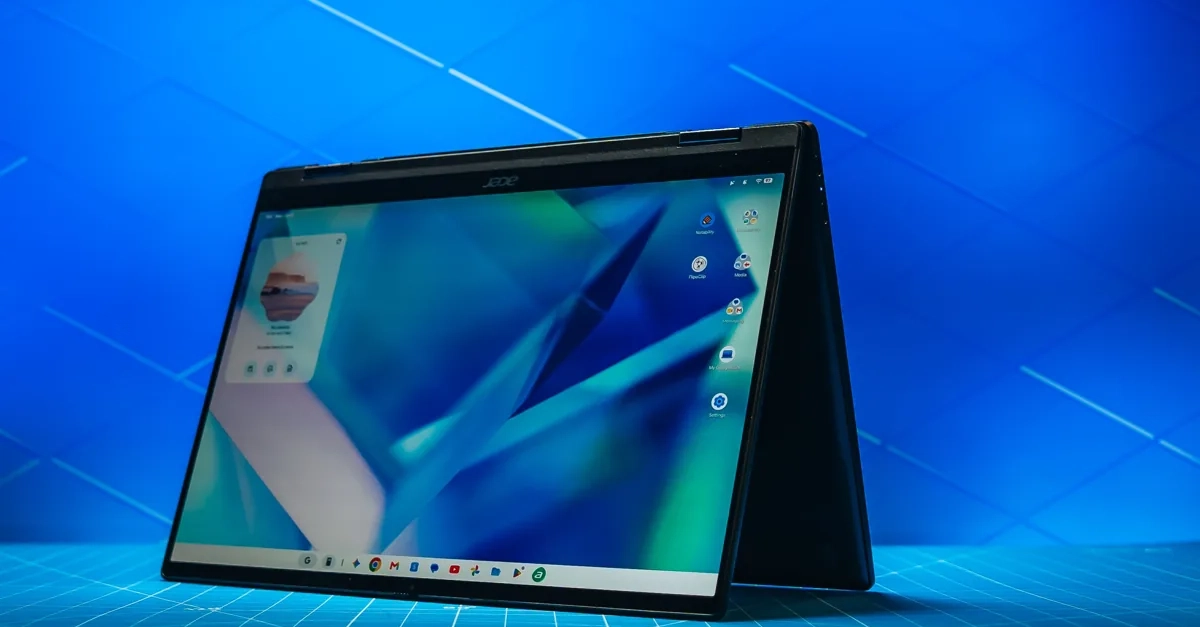
In a strategic hardware rollout that bridges the gap between traditional productivity ecosystems and high-end ultraportable design, Acer has officially unveiled the Acer Googlebook 14. Marking a historic milestone in the personal computing sector, this machine stands as the very first 2-in-1 convertible laptop to launch under the newly minted "Googlebook" device category. Priced at an aggressive $899.99, the device targets professionals, students, and digital creators seeking premium OLED visual fidelity, next-generation connectivity, and all-day endurance without entering the traditional four-figure luxury pricing tier.
Underneath its sleek Elemental Blue magnesium-aluminum chassis, the Acer Googlebook 14 packs serious hardware. Driven by an octa-core Intel Core Ultra 5 325 processor, the machine is configured with 16GB of high-speed LPDDR5X RAM and 512GB of snappy NVMe solid-state storage. The physical footprint is exceptionally lean, measuring a mere 0.55 inches in thickness and tipping the scales at just 1.14 kg (2.51 lbs).
Visuals are anchored by a stunning 14-inch OLED touchscreen display boasting a crisp 2,880 by 1,800-pixel resolution, offering deep blacks, vibrant contrast, and fluid touch interactions suitable for both laptop and tablet modes. Furthermore, the device future-proofs its user base by adopting cutting-edge connectivity standards, including Wi-Fi 7, Bluetooth 6, Thunderbolt 4, and high-speed 10Gbps USB Type-C ports. Backed by an estimated 16-hour battery autonomy and a 1080p webcam featuring a physical privacy shutter, the Googlebook 14 is engineered to meet the demands of mobile-first workflows.
Chronology: How the Googlebook Category Was Born
To fully understand the significance of the Acer Googlebook 14, one must trace the technological trajectory that led to its creation over the past several years.
Phase 1: The Convergence of Mobile and Desktop (2022–2024)
For years, the personal computing market was cleanly divided into rigid categories: Windows and macOS powerhouses for heavy-duty computing, and Chromebooks for lightweight, education-focused web browsing. However, as web-based applications evolved into complex software suites—and as Android applications achieved seamless desktop integration—consumers increasingly demanded hardware that could blur these lines. Industry insiders began noting a distinct gap between low-cost educational Chromebooks and premium enterprise-grade ultrabooks.
Phase 2: The Conceptualization of the "Googlebook" Standard (2025)
Recognizing the need for a unified hardware standard that could leverage the best of Google’s software ecosystem while harnessing advanced silicon architectures, Google spearheaded the development of the "Googlebook" tier. Unlike legacy Chromebooks, devices in this new category are designed to handle demanding local tasks, advanced multitasking, and professional creative applications while retaining the security, speed, and cloud-first philosophy of Google’s operating systems. Acer was tapped as a primary hardware partner to pioneer the form factor.

Phase 3: Global Unveiling and Market Launch (October 2026)
Following months of industry speculation, Acer officially pulled back the curtain on the Googlebook 14. By positioning the launch price at $899.99, Acer and Google made a definitive statement about affordability-to-performance ratios. Pre-orders immediately went live across major global tech markets, establishing October 2026 as a landmark turning point for hybrid computing architectures.
Supporting Data: Specifications Breakdown
A granular examination of the Acer Googlebook 14 reveals a meticulously balanced spec sheet designed to maximize performance-per-watt and user versatility.
| Component / Feature | Specification Details |
|---|---|
| Device Category | Googlebook (First-Generation 2-in-1 Convertible) |
| Launch Price | $899.99 USD |
| Processor (CPU) | Intel Core Ultra 5 325 (8 Cores / Octa-core architecture) |
| Memory (RAM) | 16GB LPDDR5X |
| Storage | 512GB NVMe PCIe SSD |
| Display | 14-inch OLED Touchscreen |
| Screen Resolution | 2,880 x 1,800 pixels |
| Chassis Material | Magnesium-Aluminum Alloy |
| Colorway | Elemental Blue |
| Dimensions & Weight | 0.55 inches thick / 1.14 kg (2.51 lbs) |
| Wireless Connectivity | Wi-Fi 7, Bluetooth 6 |
| I/O Ports | Thunderbolt 4, 10Gbps USB Type-C ports |
| Webcam | 1080p Full HD with Physical Privacy Shutter |
| Battery Life (Estimated) | Up to 16 hours of continuous autonomy |
The inclusion of an OLED panel at this price point is particularly noteworthy. Historically, OLED displays have been restricted to flagship laptops costing well over $1,200. By bringing high-resolution, color-accurate OLED touchscreens to the sub-$900 tier, Acer is raising consumer expectations across the entire mid-to-high-end laptop market.
Official Responses and Industry Reactions
The announcement of the Acer Googlebook 14 has generated substantial commentary from hardware analysts, retail partners, and corporate executives alike.
In an official press statement accompanying the launch, Acer’s product development division emphasized the collaborative nature of the release:
"The modern user does not want to compromise. They demand the responsiveness of desktop-class silicon, the visual brilliance of cinema-grade displays, and the featherlight portability of a tablet. With the Acer Googlebook 14, we have not only met these demands but redefined what users should expect from a mid-tier hybrid investment. Partnering with Google to launch this new category allows us to deliver a streamlined, secure, and incredibly powerful computing experience."
Google representatives echoed these sentiments, highlighting how the new category optimizes modern software architectures:

"The Googlebook classification represents the next evolutionary step in our hardware ecosystem. It marries advanced local processing power—such as Intel’s Core Ultra platform—with the fluid, cloud-enhanced capabilities that users rely on every day. Acer’s execution with the Googlebook 14 sets a gold standard for what this category can achieve."
Independent tech analysts have also weighed in. Market research firms point out that the $899.99 price point places immense competitive pressure on traditional Windows ultraportables and entry-level MacBooks. By offering Wi-Fi 7, Thunderbolt 4, and an OLED touchscreen in a 1.14 kg chassis, Acer has effectively cornered a sweet spot in the market that appeals to mobile professionals who are hesitant to pay upwards of $1,500 for comparable productivity rigs.
Implications: What the Googlebook 14 Means for the Future of Computing
The debut of the Acer Googlebook 14 is far more than a routine product refresh; it carries profound implications for the broader technology landscape.
1. Intensified Competition in the Mid-Range Tier
For years, manufacturers relied on compromises to keep laptops under the $900 mark—sacrificing either display quality, build materials, or battery life. The Googlebook 14 shatters this paradigm. Competitors in the Windows and Chromebook ecosystems will now be forced to upgrade their sub-$1,000 offerings, accelerating the democratization of premium features like OLED screens, Wi-Fi 7, and magnesium-aluminum chassis designs.
2. The Maturation of Hybrid Form Factors
The 2-in-1 convertible design has experienced varying degrees of consumer adoption over the last decade, often hindered by software sluggishness or excessive weight in tablet mode. At 1.14 kg and 0.55 inches thick, the Googlebook 14 achieves true tablet-like portability without sacrificing keyboard ergonomics or processing brio. This success is likely to encourage other manufacturers to develop specialized hardware for the Googlebook category, expanding consumer choices in the near future.
3. Shift Toward Advanced Mobile Productivity
As remote and hybrid work models solidify into permanent fixtures of the global economy, devices that prioritize all-day battery life (estimated here at 16 hours), robust privacy features (such as the physical webcam shutter), and lightning-fast connectivity (Wi-Fi 7 and Thunderbolt 4) will dictate market trends. The Acer Googlebook 14 is tailor-made for this shift, offering road warriors an uncompromised mobile office solution.
Conclusion
As the Acer Googlebook 14 rolls out to global retailers, it stands as a testament to what can be achieved when hardware innovation aligns with forward-thinking software ecosystems. By delivering exceptional build quality, top-tier specifications, and forward-looking connectivity at a competitive price of $899.99, Acer and Google have successfully launched a new era of hybrid computing—one where performance, portability, and value finally coexist without compromise.