
Google Unveils TensorFlow GNN 1.0: Bridging the Gap Between Discrete Networks and Deep Learning
SAN FRANCISCO — In a major development for the artificial intelligence and machine learning communities, Google has officially announced the release of TensorFlow GNN 1.0 (TF-GNN). Developed through a sweeping collaboration between Google Research, Google Core ML, and Google DeepMind, the production-tested library is engineered to construct and train Graph Neural Networks (GNNs) at massive, industrial scales.
By seamlessly integrating discrete graph structures—such as transportation grids, knowledge graphs, financial transaction webs, and social networks—into the continuous architecture of deep learning systems, TF-GNN aims to fundamentally reshape how machine learning models interpret complex, interconnected data.
Main Facts: What is TensorFlow GNN 1.0?
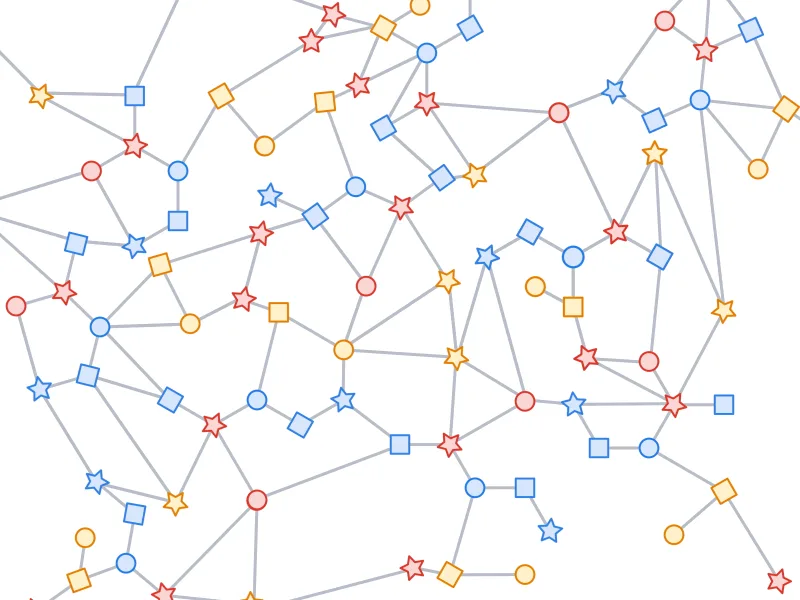
At its core, TF-GNN is designed to solve a foundational limitation in traditional machine learning. Most standard ML algorithms are optimized for regular, uniform data inputs: pixels arranged in a grid for computer vision, or sequences of words for natural language processing. However, the real world is largely defined by irregular, relational data—networks where objects (nodes) interact via connections (edges) in non-uniform ways.
While discrete mathematics has long used graph theory to model these systems, combining them with deep learning has historically been challenging. Graph Neural Networks bridge this gap by leveraging both a graph’s underlying connectivity and the specific feature data attached to its nodes and edges.
TF-GNN 1.0 introduces a robust framework built from the ground up to handle heterogeneous graphs—graphs where multiple types of nodes and edges exist. Within TensorFlow, these structures are represented as tfgnn.GraphTensor objects. Functioning as first-class citizens inside TensorFlow pipelines like tf.data.Dataset and tf.function, these composite tensors store both the complex structural layout of a network and its associated feature sets. Developers can then define trainable transformations either directly through primitives or via high-level Keras API layers.

Chronology: The Evolution Toward Enterprise-Scale GNNs
The release of TF-GNN 1.0 is the culmination of years of theoretical advancement and practical engineering within Google’s premier research divisions:
- Early Graph Embeddings (Pre-2018): Early attempts to apply machine learning to networks relied on legacy algorithms like DeepWalk and Node2Vec. These methods focused primarily on graph connectivity rather than rich feature attributes, limiting their predictive utility.
- The Rise of Message-Passing Architectures: Research into Message-Passing Neural Networks (MPNNs) and GraphNets began to establish how information could propagate across neighboring nodes, allowing neural networks to absorb contextual neighborhood data.
- Internal Incubation: Recognizing the need for a unified framework to manage massive internal datasets—ranging from computer science citation networks (like arXiv databases) to large-scale production lines—engineers across Google Research, Core ML, and DeepMind began prototyping a scalable graph tensor library.
- The Path to Production: Teams refined the architecture to support dynamic subgraph sampling, ensuring that trillion-edge databases could be processed without exceeding hardware memory limits.
- February 2024 (TF-GNN 1.0 Release): Google formally launches TensorFlow GNN 1.0 to the open-source community, complete with advanced Keras integration, flexible sampling runners, and support for distributed training.
Supporting Data & Technical Architecture
Scaling GNNs to real-world datasets—often comprising hundreds of millions of nodes and billions of edges—presents severe computational hurdles. While a GNN model is typically trained on millions of labeled examples, individual training steps can only process small batches (hundreds of examples) due to memory constraints.
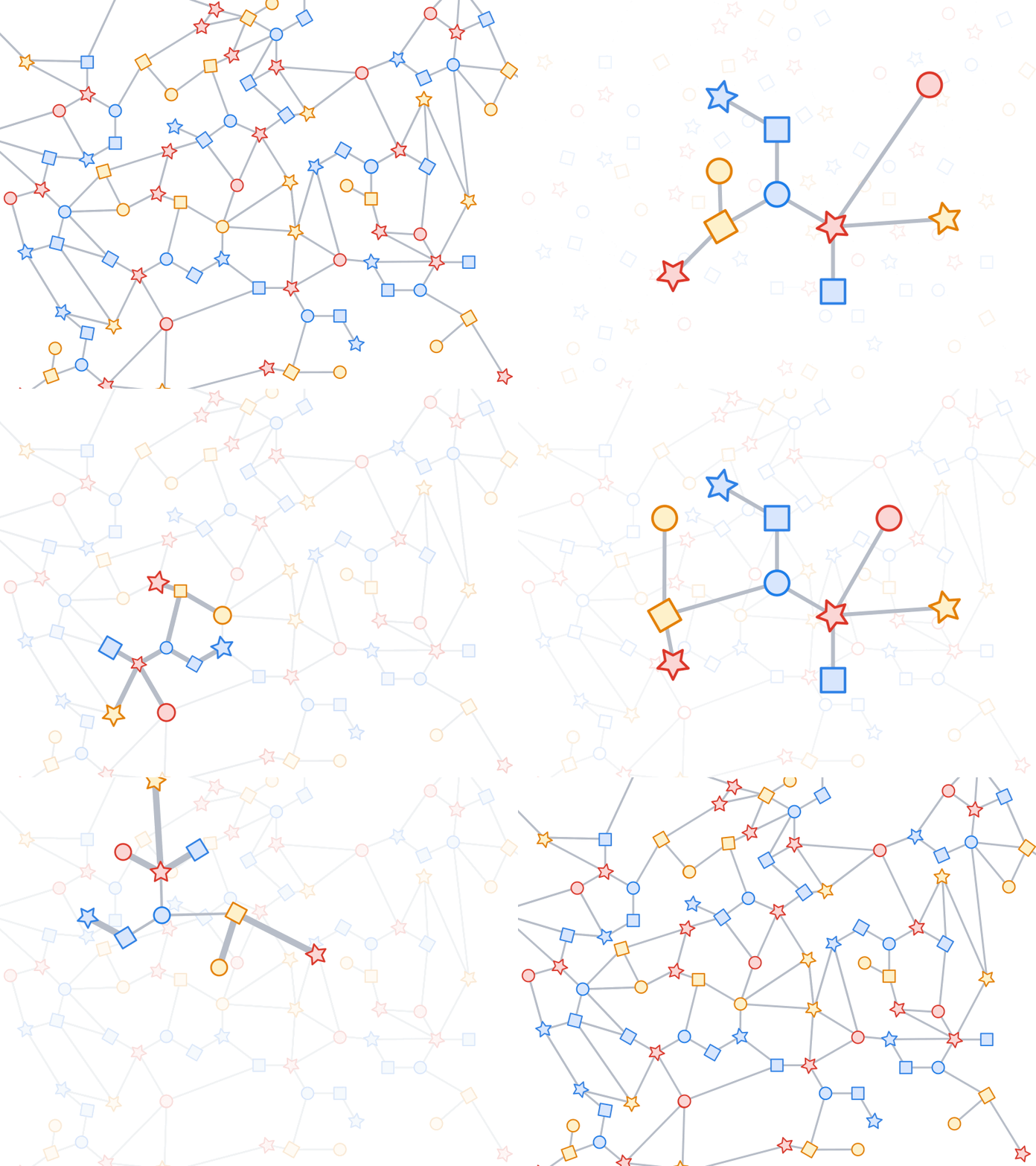
To solve this, TF-GNN relies on subgraph sampling, extracting localized neighborhoods from a massive graph to compute predictions for target nodes. TF-GNN 1.0 provides a flexible Python API capable of handling this sampling across three distinct operational scales:
- Interactive Exploration: Designed for rapid prototyping inside Google Colaboratory notebooks.
- In-Memory Sampling: Optimized for smaller datasets that fit entirely within the main memory of a single training host.
- Distributed Apache Beam Pipelines: Built for massive, network-filesystem-hosted datasets containing hundreds of millions of entities.
Flexible Modeling Levels
TF-GNN caters to developers with varying engineering needs through a tiered abstraction model:
- High-Level Keras Integration: Users can leverage pre-packaged model templates—such as the curated MtAlbis architecture—which provide strong baseline configurations for standard relational problems. Initializing these models requires only basic Keras layer configurations.
- Low-Level Primitives: Advanced practitioners can write custom GNN architectures from scratch using foundational data-passing primitives, such as broadcasting data to outgoing edges or pooling incoming messages into nodes.
Training Orchestration via the TF-GNN Runner
Managing distributed training loops and padding tensor shapes for Cloud TPUs has historically been an uphill battle for ML engineers. The included TF-GNN Runner streamlines this process, allowing developers to execute complex training pipelines with minimal boilerplate code.
Furthermore, the Runner supports joint multi-task training. Engineers can seamlessly combine supervised tasks (such as node classification) with unsupervised objectives (such as contrastive losses like DeepGraphInfomax). This allows models to learn rich, continuous embeddings informed by both specific application labels and overarching structural topologies.
Official Responses and Expert Insights
The release reflects a massive cross-functional effort across Alphabet’s leading artificial intelligence hubs. According to the development team, the framework’s primary objective is to democratize graph-based machine learning while providing production-ready tools that can handle industrial workloads out of the box.
Software Engineers Dustin Zelle (Google Research) and Arno Eigenwillig (Core ML), who spearheaded the public announcement, emphasized that real-world entities are inherently relational. By designing TF-GNN with native support for heterogeneous graphs, the team wanted to ensure that developers could map complex, multi-typed real-world interactions into neural networks without awkward data workarounds.
The open-source release features contributions from a distinguished roster of researchers and engineers, including Sami Abu-El-Haija, Neslihan Bulut, Bahar Fatemi, Johannes Gasteiger, Pedro Gonnet, Jonathan Halcrow, Liangze Jiang, Silvio Lattanzi, Brandon Mayer, Vahab Mirrokni, Bryan Perozzi, Anton Tsitsulin, Oleksandr Ferludin, Parth Kothari, Mihir Paradkar, Jan Pfeifer, Rachael Tamakloe, Alvaro Sanchez-Gonzalez, and Lisa Wang.
Implications: What TF-GNN 1.0 Means for the Future of AI
The deployment of TensorFlow GNN 1.0 carries profound implications for multiple industries where relational data dictates business logic:
1. Drug Discovery and Materials Science
In computational chemistry and molecular biology, molecules are naturally represented as graphs where atoms act as nodes and chemical bonds act as edges. By providing robust support for message-passing and spatial property prediction, TF-GNN can accelerate the identification of promising pharmaceutical compounds and reactions.
2. Fraud Detection and Cybersecurity
Financial institutions rely heavily on transaction webs to spot anomalous behaviors. Heterogeneous GNNs excel at mapping accounts, devices, and transactions together, making it easier to spot coordinated fraud rings and money laundering schemes hidden deep within vast payment networks.
3. Recommendation Systems and Knowledge Graphs
E-commerce giants and search engines depend on connecting products, users, and search queries. Unsupervised graph embeddings generated via TF-GNN can enrich standard deep learning recommendation models with deep relational context, drastically improving personalized suggestions.
4. Interpretability and Model Trust
A notable feature included in the TF-GNN Runner is its native implementation of integrated gradients for model attribution. By outputting a GraphTensor where feature values are replaced by gradient scores, engineers can visually inspect which specific structural relationships and node features drove a model’s prediction. This transparency is critical for deploying high-stakes AI systems in sensitive domains.
Getting Started
Google has made TF-GNN 1.0 immediately accessible to the global developer community. Engineers interested in exploring the library can dive into the hands-on OGBN-MAG benchmark Colab demo directly within their browser, examine the official user guides on GitHub, or reference the foundational research papers outlining the library’s design principles.







