The Return of the Pop-Culture Icon: Why Hannah Montana Linux is Trending in 2026
In the vast, often serious landscape of open-source software, few projects have achieved the legendary, meme-fueled status of Hannah Montana Linux (HML). Born from the early days of the Disney Channel’s cultural hegemony and the experimental spirit of the 2009 Linux community, it was initially dismissed as an absurd novelty. Yet, as we navigate 2026, the impossible has happened: HML has returned.
Thanks to a dedicated remastering effort by developer and YouTuber Noah Cagle, the “best of both worlds” has been brought into the modern era, running on the robust foundation of Debian 13. What was once a niche relic of a bygone internet era is now a functional, surprisingly coherent operating system, sparking a renewed conversation about the intersection of pop culture and open-source software.
Main Facts: The Modern Remaster
The 2026 iteration of Hannah Montana Linux is far more than a mere “reskin.” While the original 2009 version relied on the now-archaic Kubuntu 9.04 and KDE 4.2, this new release is a contemporary beast.
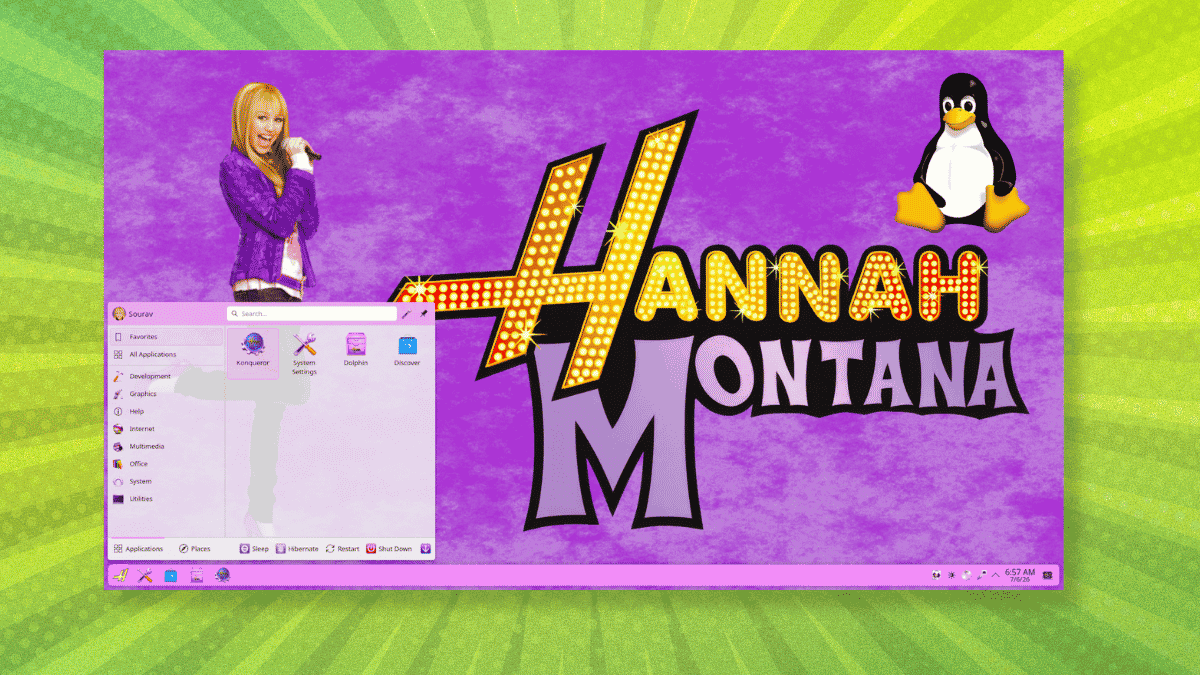
At its core, the system is built upon Debian 13 (Trixie), providing a rock-solid, stable base. Noah Cagle utilized Debian’s native live-build tooling to architect the distribution, ensuring that it remains compatible with modern hardware. A crucial addition is the inclusion of non-free repositories enabled by default, a practical necessity that allows for the immediate installation of proprietary drivers—a welcome convenience that the original version lacked.
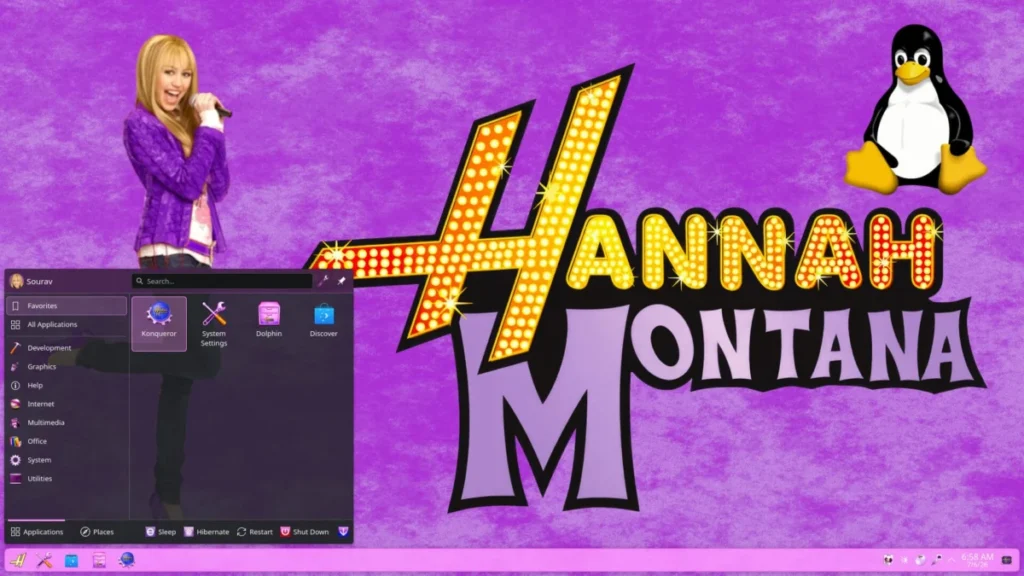
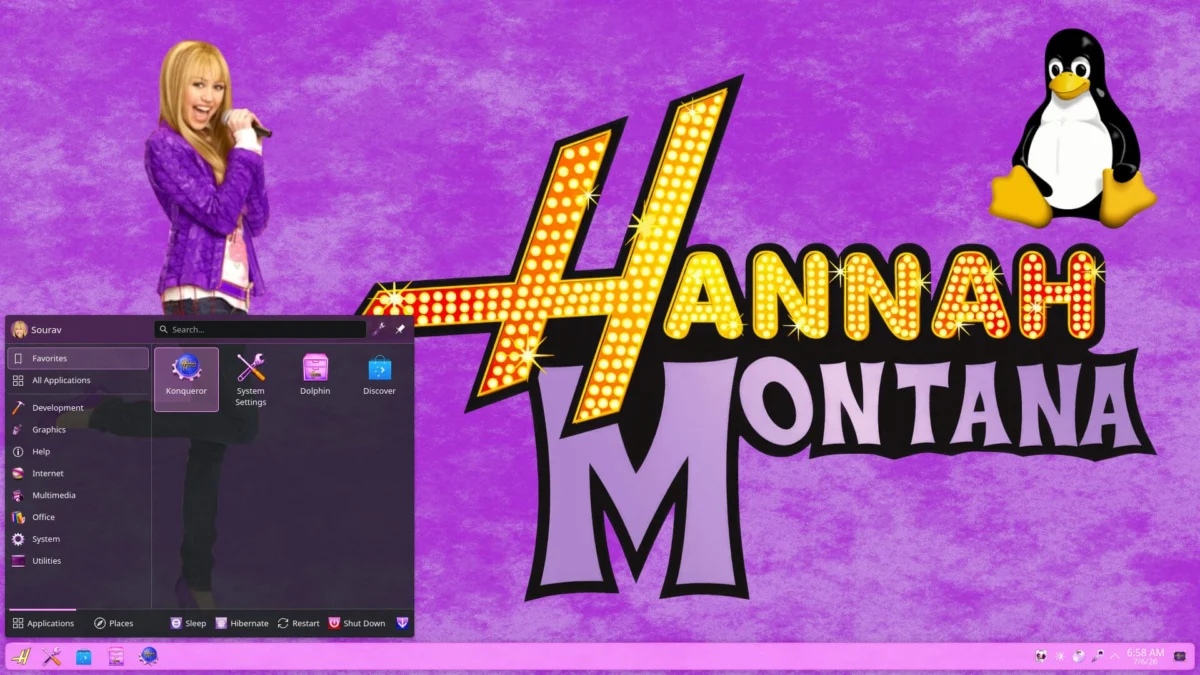
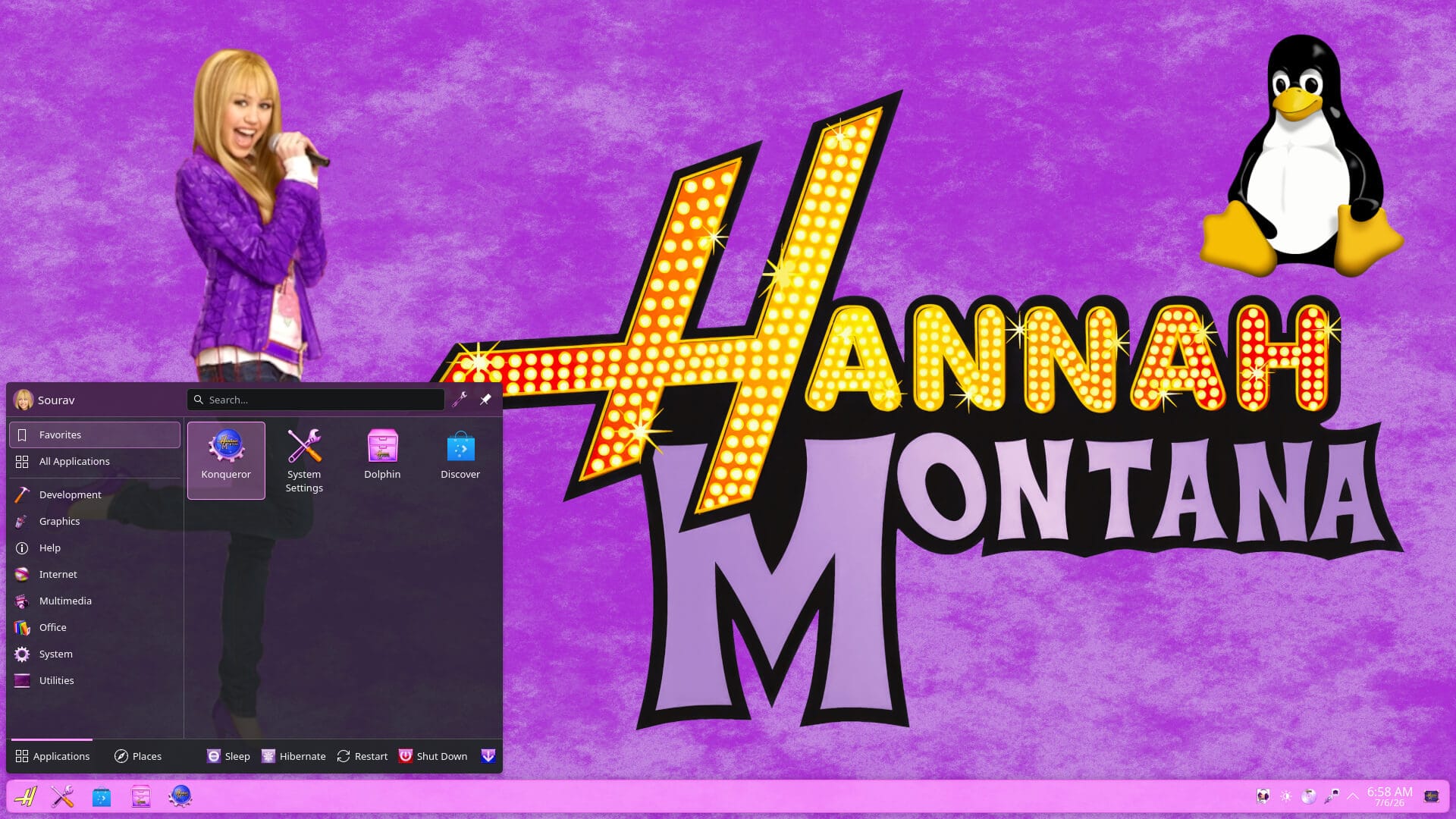
The visual experience is powered by the KDE Plasma desktop environment. Rather than relying on clunky third-party modifications, Cagle performed a surgical strike on the interface, cloning and editing Breeze assets to create a cohesive, albeit aggressively pink, aesthetic. The signature “glitter effect” of the original wallpaper has been painstakingly recreated for high-resolution, widescreen displays, proving that even nostalgic memes can benefit from high-definition restoration.
A Chronological Perspective: From 2009 to 2026
To understand why the return of HML is significant, one must look back at the original timeline of the project.

The 2009 Genesis
In the late 2000s, Linux was undergoing a phase of extreme diversification. The ease of creating custom spins of Ubuntu (via Remastersys) led to a glut of niche distributions. Hannah Montana Linux emerged as the pinnacle of this "absurdist distro" era. It was, in essence, a stock Kubuntu installation that had been completely overhauled with Disney branding, pink color schemes, and a custom icon set. It became a rite of passage for Linux enthusiasts of the era—an ironic installation that eventually became a permanent fixture in the collective memory of the FOSS community.
The Long Silence
As the years passed, the original HML faded into obscurity. KDE 4 was superseded by Plasma 5, and eventually the current generation, making the original ISOs nearly impossible to run on modern architecture without significant virtual machine finagling. For over a decade, it remained a footnote—a "never-forget" meme discussed in forums and subreddits as a symbol of the "Wild West" days of early Linux distribution development.
The 2026 Resurrection
The project’s return in 2026 was largely unexpected. Noah Cagle’s announcement, shared via his YouTube channel and GitLab, was initially met with skepticism. However, once the community realized that the project was not merely a joke but a well-engineered, modern-compliant OS, interest spiked. The release of v26.1 marks the most technically proficient version of the distribution to date.
Technical Infrastructure and Supporting Data
The technical implementation of HML 26 is a masterclass in how to build a distribution without reinventing the wheel. By leveraging established tools, Cagle ensured that the OS is not just a skin, but a functioning workstation.
The Installer: Calamares
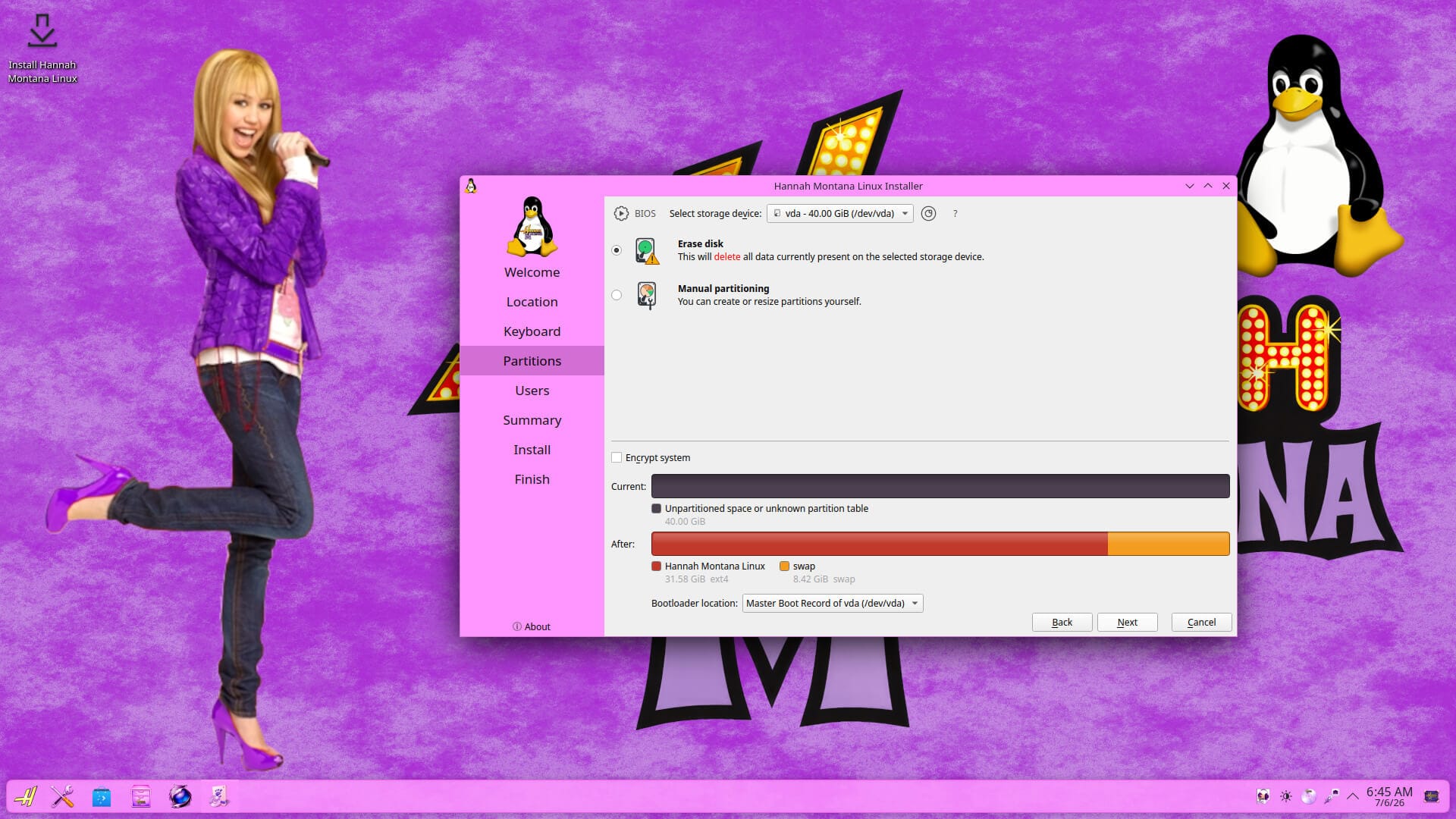
Perhaps the most significant technical departure from the original is the abandonment of the standard Debian installer. Instead, Cagle integrated Calamares, the universal installer framework used by distributions like Manjaro and EndeavourOS. The team redesigned the installer’s assets to match the pink, glitter-heavy branding of the distribution, providing a professional installation experience that feels consistent with the user’s first encounter with the OS.
Customization and Theming
The visual design, which is the primary draw for the project, was handled with surprising technical rigor:
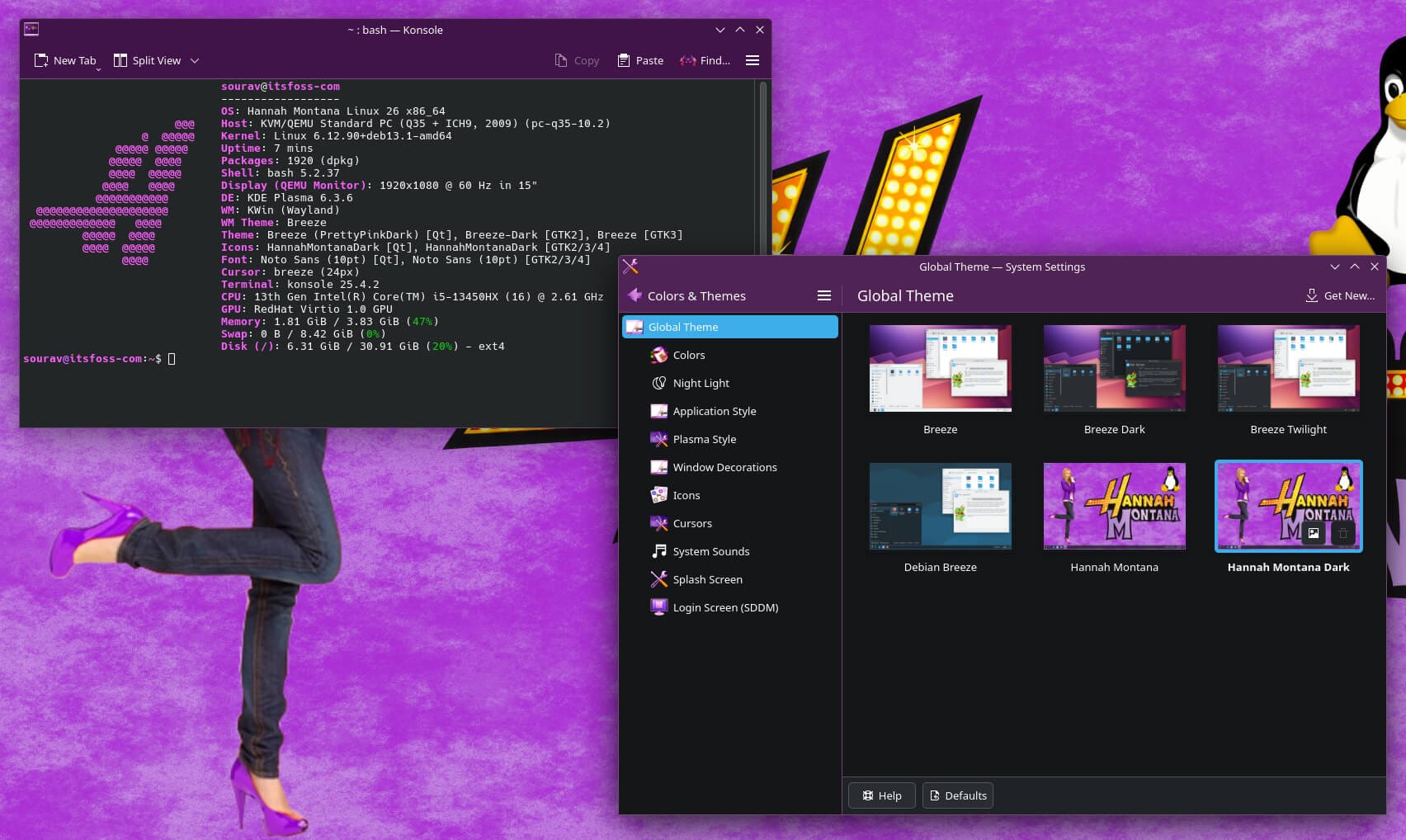
- Panel Backgrounds: The panel styling was derived from the Breeze-Noir-Dark theme, which was then exported to Inkscape to undergo a custom color transformation to match the iconic “Hannah Pink.”
- Iconography: The project features a minimalist approach to icon replacement, focusing on the “Kickoff” menu button, which now features the custom Hannah Montana logo, ensuring the theme remains clean rather than overwhelming.
- Global Themes: All visual modifications have been bundled into a single Global Theme. This allows users to apply the look instantly, or, for those who prefer to keep their existing Debian installation, to download the theme as a standalone package via GitLab.
The "Lite" Alternative
Recognizing that not all hardware is capable of running the latest KDE Plasma environment, the team also released HML26 Lite. This variant replaces the heavy-duty Plasma/SDDM stack with LXQt and LightDM. This demonstrates a forward-thinking approach to accessibility, ensuring that the project remains usable on older laptops or RAM-constrained virtual machines.
Official Responses and Community Reception
The reception within the FOSS community has been a mixture of genuine admiration and nostalgic irony. While some purists argue that the project serves no functional purpose, the consensus among developers has been largely positive, citing the quality of the live-build implementation.
Noah Cagle has described the project primarily as a “passion project.” In his documentation, he is careful to manage expectations: he does not claim that HML will replace enterprise-grade distributions like Debian or RHEL. Instead, he positions it as a bridge between the “memetic” history of Linux and the technical capabilities of modern packaging tools.
Implications for the Future of FOSS
The return of Hannah Montana Linux serves as a compelling case study for several emerging trends in the Linux ecosystem:
1. The Revival of "Distro Art"
There has been a growing movement to reclaim the personality of Linux. As major distributions gravitate toward a more uniform, corporate, and minimalist aesthetic, projects like HML provide a necessary outlet for personalization. It highlights the power of the Linux ecosystem: if you want your operating system to look like a 2009 Disney Channel fever dream, the underlying architecture provides you with the freedom to do so.
2. The Power of "Passion Projects"
The success of HML 26 underscores that the Linux community thrives on passion projects. By modularizing the theme and the distribution (offering both a full ISO and a standalone theme), Cagle has ensured that the project has a shelf life beyond the initial hype. This modularity allows for the "Hannah Montana" look to live on as a skin for KDE, even if the primary distribution ceases maintenance.

3. A Barrier to Entry?
Is HML a "daily driver"? For most, the answer is no. However, it serves as an excellent, non-threatening entry point for users who are intimidated by the stark, sterile look of standard Linux distributions. By offering a familiar—if kitschy—aesthetic, it may help bridge the gap for users looking to transition from other OS environments, provided they are prepared for the quirks of a niche, community-maintained project.
Conclusion: A Legacy Reimagined
Hannah Montana Linux in 2026 is a triumph of spirit over utility. While it may never be the primary choice for data scientists or software engineers, it serves as a testament to the fact that Linux is, and always will be, about the freedom to create.
Whether you view it as a brilliant piece of performance art, a nostalgic trip down memory lane, or a genuinely fun way to customize your desktop, the 2026 remaster of HML is undeniably well-crafted. It bridges the gap between the chaotic, experimental spirit of the 2000s and the stable, powerful foundation of the modern Debian project. As we continue to see the rise of highly curated and sterile operating systems, there will always be a place for the bold, the pink, and the unapologetically fun.
For those interested in exploring the project, the source code and installation images are available on the official GitLab repository. Just remember: your mileage may vary, but the experience is guaranteed to be one-of-a-kind.