
Bridging the Maternal Healthcare Gap: How Google Research Uses TensorFlow Lite to Bring AI-Powered Ultrasound to Underserved Communities
By the Global Health Technology Desk
Published in partnership with Health AI Insights
Main Facts: Revolutionizing Maternal Care Through On-Device AI
Every year, an estimated 287,000 women lose their lives due to complications during pregnancy and childbirth, alongside 2.4 million neonatal deaths worldwide, according to World Health Organization (WHO) figures. More than 95% of these tragic losses occur in under-resourced regions, where life-saving prenatal interventions are frequently delayed or entirely unavailable due to structural and logistical barriers.
To combat this disparity, a dedicated interdisciplinary team at Google Research has developed an advanced, mobile-optimized artificial intelligence system designed to democratize access to obstetric ultrasound diagnostics. Utilizing TensorFlow Lite—an open-source framework for deploying machine learning models on edge devices—the new technology empowers frontline healthcare workers with minimal training to perform critical fetal assessments.

Published in Nature Communications Medicine under the title "A mobile-optimized artificial intelligence system for gestational age and fetal malpresentation assessment," the research proves that non-experts using simplified scanning procedures can achieve diagnostic performance comparable to clinical standards set by expert sonographers. By converting complex ultrasound evaluations into real-time, on-device operations, this innovation aims to dismantle geographic and economic barriers to prenatal care, ensuring that expectant mothers in low-resource environments receive timely, potentially life-saving insights.
Chronology: From Global Health Crisis to Mobile Innovation
1. Recognizing the Global Diagnostic Chasm
The genesis of this research lies in a stark global reality: up to two-thirds of pregnant individuals in rural and low-resource settings never receive an ultrasound screening. While modern technological advancements have made ultrasound hardware increasingly portable and affordable—often linking directly to smartphones—the human capital barrier remains exceptionally high. Traditional ultrasonography demands years of rigorous training and clinical experience, creating a severe shortage of specialists in developing nations and isolated communities.
2. Formulating the "Blind Sweep" Protocol
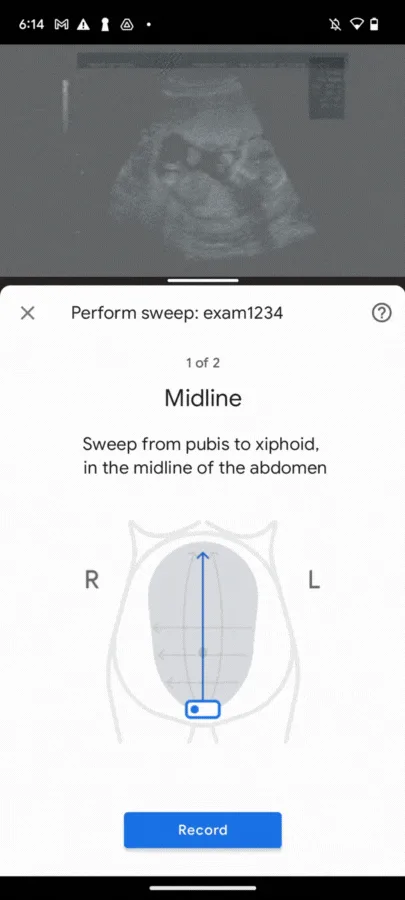
To bridge this expertise gap, Google Research, in collaboration with prominent academic and medical institutions, shifted the paradigm of image acquisition. Rather than requiring clinicians to locate precise anatomical landmarks—a skill that takes years to master—the team engineered AI models trained on a simpler methodology known as the blind sweep protocol. In this procedure, a healthcare worker with only hours of training sweeps the ultrasound probe blindly across the patient’s abdomen. The underlying AI models ingest the resulting video stream and automatically extract clinically relevant diagnostics, such as gestational age and fetal presentation (detecting whether the fetus is in a breech or other atypical position).

3. Model Architecture and Optimization with TensorFlow Lite
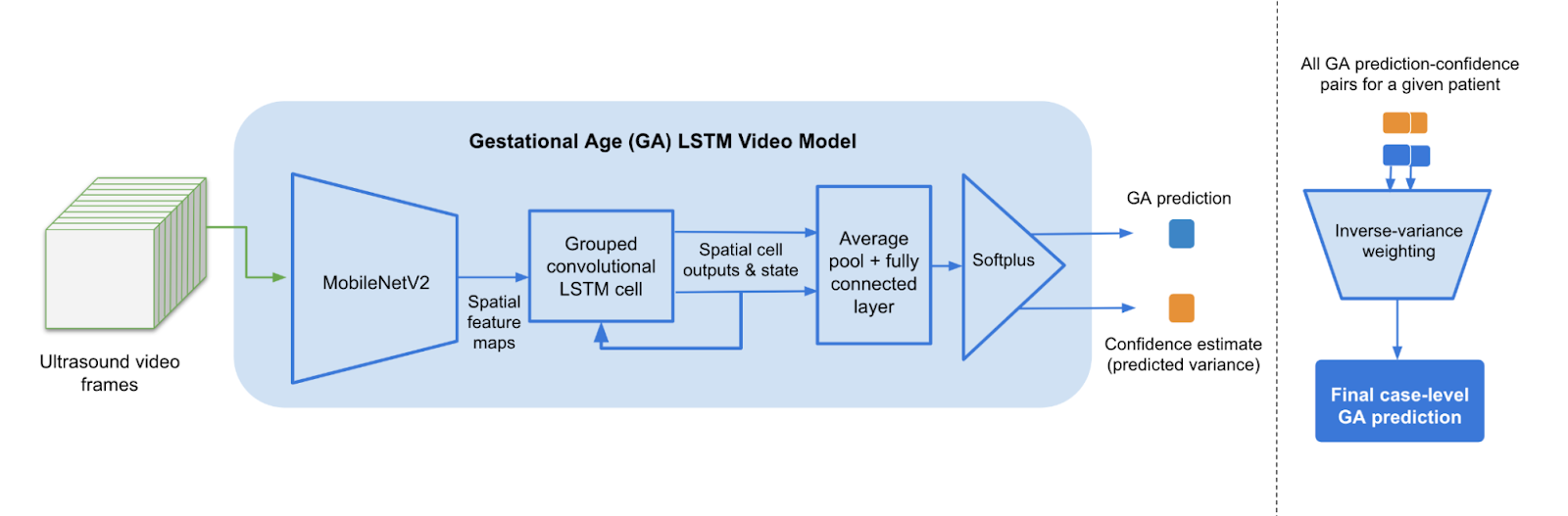
Designing models for regions with intermittent or non-existent internet connectivity and unreliable power grids required a meticulous focus on edge computing. The research team constructed a grouped convolutional Long Short-Term Memory (LSTM) architecture. This system employs MobileNetV2 for feature extraction on individual video frames as they arrive. Because recurrent connections operate only on lightweight image embeddings rather than raw pixel data, the model runs efficiently on standard mobile hardware.
To maximize performance, the team turned to TensorFlow Lite. By leveraging post-training quantization and integrating a GPU delegate optimized for sustained inference speeds, the researchers achieved a twofold boost in execution velocity without sacrificing model accuracy. This optimization enabled real-time inference exceeding 30 frames per second on standard Pixel devices running multiple parallel models.
Supporting Data: Clinical Performance and Technical Metrics
The efficacy of the Google Research AI system is underpinned by rigorous clinical studies involving hundreds of participants across diverse geographical settings.

- Gestational Age Precision: In studies evaluating gestational age regression models against standard clinical biometry measurements performed by expert sonographers, the AI-driven blind sweep method demonstrated remarkably low absolute errors. Across cohorts (such as a baseline study of $n=407$ participants), the distribution of absolute errors in days closely mirrored traditional, highly trained methodologies across the 25th, 50th, and 75th percentiles.
- Fetal Malpresentation Classification: Using Receiver Operating Characteristic (ROC) curve analysis on cohorts of $n=623$ participants, the malpresentation classification model proved highly reliable. Crucially, comparative curves demonstrated that sweeps performed by absolute novices yielded diagnostic classification metrics nearly indistinguishable from those captured by expert sonographers using the same AI guidance framework.
- Real-Time Quality Feedback Loop: Because TensorFlow Lite enables instantaneous on-device inference, the mobile application can evaluate the quality of a sweep the moment it is captured. If the model detects a low-confidence score—often caused by insufficient pressure or a lack of adequate ultrasound gel—the application immediately prompts the operator with corrective guidance and asks them to repeat the sweep.
Official Responses and Collaborative Partnerships
Addressing the systemic challenges of maternal mortality requires deep, cross-sector collaboration. Google Research has forged vital alliances with leading clinical and global health organizations to evaluate and refine these tools in real-world environments.
"Our vision is to enable safer pregnancy journeys using AI-driven ultrasound that could broaden access globally," notes the Health AI Team in their foundational research documentation. "We want to be thoughtful and responsible in how we develop our AI to maximize positive benefits and address challenges, guided by our core AI Principles."
Key institutional partners contributing to the validation and deployment strategy include:

- Northwestern Medicine (United States)
- Jacaranda Health (Kenya)
- University of Zambia School of Medicine, Department of Obstetrics and Gynaecology (Lusaka, Zambia)
- University of North Carolina School of Medicine, Department of Obstetrics and Gynecology (Chapel Hill, NC, USA)
- UNC Global Projects—Zambia, LLC (Lusaka, Zambia)
These partnerships ensure that the technology is rigorously tested against the clinical realities of diverse patient populations, laying the groundwork for scalable implementation that respects local healthcare ecosystems.
Implications: The Future of Global Maternal Health and On-Device AI
The deployment of TensorFlow Lite in this domain highlights a broader paradigm shift in medical technology: the migration of sophisticated diagnostic capabilities from centralized, resource-heavy facilities to the edges of the healthcare network.
Enhanced Privacy and Offline Resiliency
By executing machine learning models entirely on-device, the system offers robust data privacy safeguards. Sensitive medical data, including video feeds of pregnant patients, never need to leave the local device or traverse a cloud network. Furthermore, offline functionality ensures that clinics in remote rural areas—where cloud connectivity is non-existent—can continue to deliver uninterrupted prenatal assessments.
Democratizing Specialized Care
If successfully scaled, this technology promises to transform primary care clinics and community health centers into hubs of advanced obstetric diagnostics. Midwives, nurses, and general practitioners equipped with a smartphone, a portable ultrasound probe, and the AI-powered app can identify high-risk pregnancies—such as undetected breech presentations or severe growth restrictions—weeks or months before delivery becomes perilous. This early detection window allows for timely referrals to regional hospitals, directly addressing the delays in decision-making that contribute heavily to preventable maternal and neonatal mortality.
Important Regulatory and Clinical Disclaimer
While the technological advancements demonstrated by Google Research and TensorFlow Lite are profound, industry stakeholders emphasize that TensorFlow Lite itself is not currently certified or validated for clinical, medical, or diagnostic purposes. Developers, healthcare institutions, and deployers utilizing the framework remain solely responsible for ensuring regulatory compliance, conducting independent clinical validation, and securing appropriate clearance from health authorities before deploying AI-driven tools in patient-facing environments.
As research progresses, the integration of edge-optimized machine learning into maternal healthcare stands as a powerful testament to technology’s potential to save lives, proving that sophisticated tools, when designed with empathy and precision, can bridge the deepest divides in global health.







