
The FREE-WILi 2: Redefining Portable Embedded Hacking, RF Prototyping, and AI-Driven Hardware Development
Main Facts
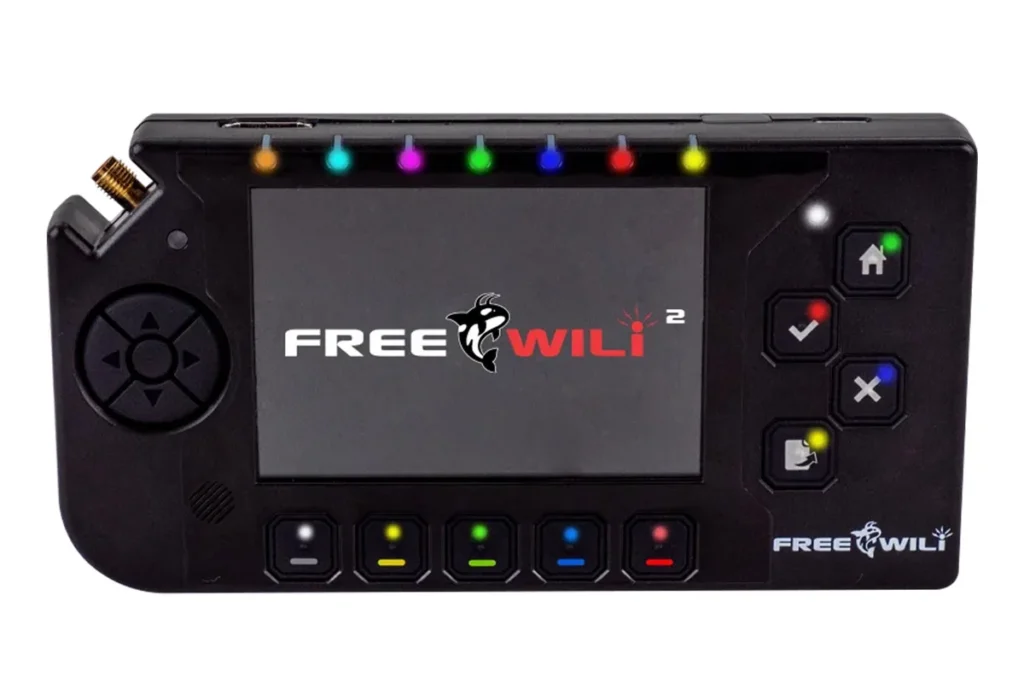
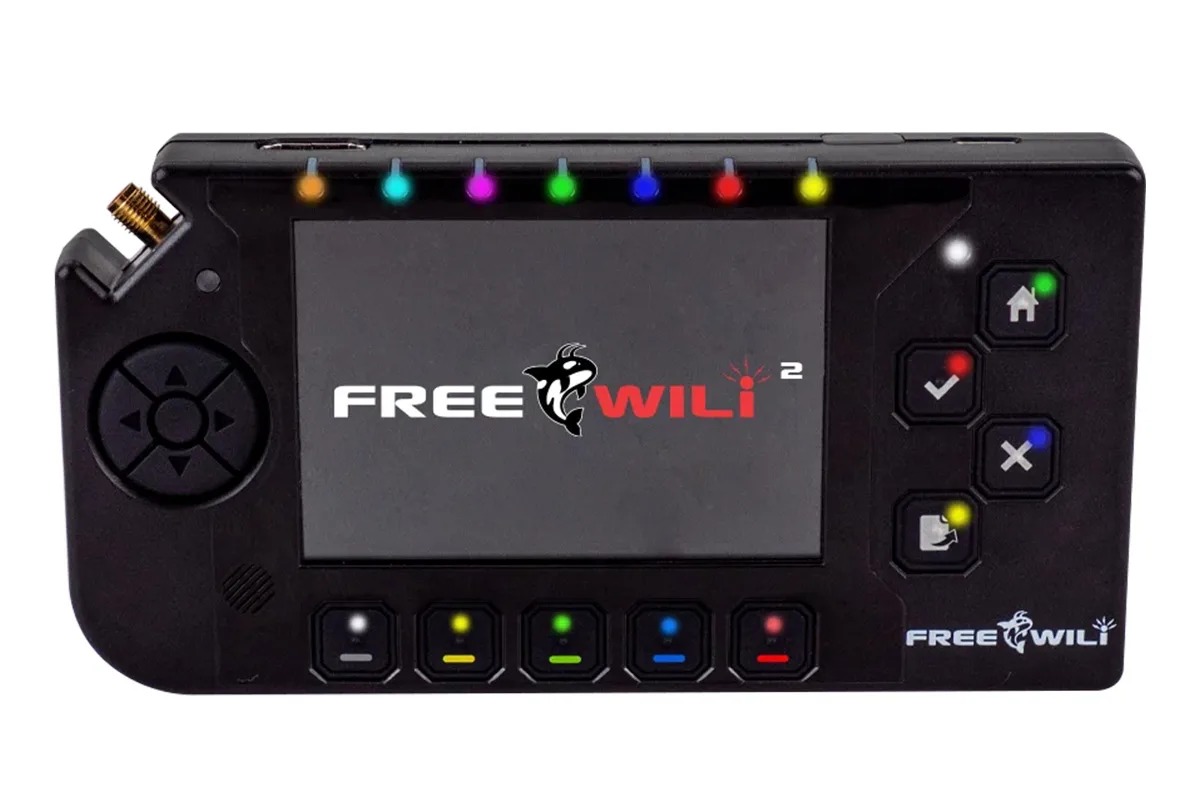
The portable embedded systems landscape has experienced a paradigm shift with the official announcement of the FREE-WILi 2, an open-hardware multitool that packs an entire laboratory’s worth of specialized equipment into a rugged, handheld enclosure. Designed specifically for hardware hackers, penetration testers, red-team operators, and advanced embedded systems developers, the FREE-WILi 2 eliminates the need to carry a cluttered desk full of discrete development boards, logic analyzers, software-defined radios, and power supplies.
At its core, the device features a formidable heterogeneous computing architecture. It integrates two Raspberry Pi RP2350B microcontrollers, an Espressif ESP32-C5, a Lattice iCE40UP5K FPGA, and a dedicated Raspberry Pi Compute Module 0 (CM0) running a full Linux operating system. This heavy-duty internal hardware stack allows engineers and security professionals to conduct wireless protocol analysis, real-time hardware debugging, high-speed electronic signal generation, custom logic prototyping, and voltage glitching attacks from a single, highly portable unit measuring just 152.4 x 78.9 x 22.3 mm and weighing approximately 290 grams.
Priced at $400 for the Founder Edition and slated for commercial fulfillment in the fourth quarter of 2026, the open-hardware device bridges the gap between field-deployable penetration testing gear and high-end laboratory instrumentation. Powered by a robust 3000 mAh battery with intelligent USB-aware charging and an ultra-low sleep current consumption of just 60 µA, the FREE-WILi 2 is engineered to accompany developers anywhere, completely redefining mobile workflows in the electronics and cybersecurity sectors.
Chronology of Development: From Concept to Field-Ready Multitool
The evolution of the FREE-WILi ecosystem represents a steady march toward ultimate field portability for embedded engineers.
Phase 1: The Quest for Field Consolidation
For decades, hardware security researchers and field engineers have struggled with the logistics of portable testing. Diagnosing a faulty I2C bus, capturing a sub-GHz keyfob transmission, sniffing a Wi-Fi handshake, and injecting a firmware patch typically required an operator to haul a backpack filled with a laptop, a Saleae logic analyzer, a HackRF or Flipper Zero, a benchtop power supply, and a tangle of USB adapters. The original iteration of the FREE-WILi was conceived to address this hardware fragmentation by consolidating multi-protocol communication layers onto a single integrated board.
Phase 2: Integration of Next-Generation Silicon
As silicon manufacturers released more powerful, energy-efficient chips, the engineering team behind the project began designing the second-generation architecture. The adoption of the dual Raspberry Pi RP2350B microcontrollers provided an immediate upgrade in processing headroom. Simultaneously, the inclusion of the ESP32-C5 brought cutting-edge Wi-Fi 6 capabilities into the fold. By building the device around open-hardware principles, the creators ensured that community feedback could directly influence pinout allocations, power rail tolerances, and FPGA integration strategies.
Phase 3: The Integration of Edge AI and LLM Workflows
Recognizing the rapid acceleration of artificial intelligence in engineering workflows, the project development cycle incorporated native support for Large Language Model (LLM) code execution directly on the device. By linking the rich user interface directly to the Claude API and providing robust software interfaces via the OneWili API, the developers shifted the FREE-WILi 2 from a passive testing tool into an active, intelligent development assistant capable of rapid prototyping in the field.

Phase 4: Commercialization and the Founder Edition Launch
With the hardware architecture finalized, firmware layers stabilized, and initial prototyping complete, the project officially opened pre-orders for its Founder Edition at a target price point of $400. Delivery to early adopters is formally scheduled for Q4 2026, marking the transition of the FREE-WILi 2 from an ambitious open-hardware blueprint into a commercially viable, production-grade engineering instrument.
Supporting Data: Deep Dive into Hardware Specifications
The true technical marvel of the FREE-WILi 2 lies in its uncompromising component selection. Rather than relying on stripped-down, low-power alternatives, the device integrates enterprise-grade communication modules and measurement systems.
Comprehensive Computing Core
- Primary Microcontroller (RP2350B): Manages core operational controls, low-level peripheral management, and general device housekeeping.
- Display Controller (RP2350B): Dedicated entirely to driving the vibrant 3.5-inch touchscreen display at a crisp 480×320 resolution, ensuring that UI rendering never bottlenecks or introduces latency to background debugging tasks.
- Linux Co-Processor (Raspberry Pi CM0):
- SoC: Broadcom BCM2710A1
- CPU: Quad-core ARM Cortex-A53 running at 1.0 GHz
- RAM: 512 MB LPDDR2
- Storage: 8 GB or 16 GB eMMC storage
- Capability: Boots a full 64-bit Linux distribution, enabling users to compile code, run complex automation scripts, and execute substantial Python programs natively on the device.
Extensive Radio and Wireless Ecosystem
- Wi-Fi and Bluetooth (ESP32-C5): Offers dual-band Wi-Fi 6 (supporting both 2.4 GHz and 5 GHz bands), Bluetooth Low Energy (BLE), and IEEE 802.15.4 networking protocols.
- LoRa Communication (STM32WLE5JC module): Incorporates an integrated SX126x LoRa radio for long-range, low-power IoT protocol testing and evaluation.
- Sub-GHz Communications (CC1101): Provides versatile sub-GHz transceiver capabilities for intercepting, analyzing, and replaying industrial, scientific, and medical (ISM) band signals.
- NFC and RFID (ST25R3916B): Empowers users to read, write, clone, and emulate a wide array of high-frequency and low-frequency proximity cards and smart tags.
Programmable Logic and Hardware Prototyping
- FPGA (Lattice iCE40UP5K): Features 100% of its I/O pins fully exposed to the user, backed by 8 MB of dedicated SRAM. This makes the FREE-WILi 2 an exceptional platform for custom digital logic design, hardware emulation, and real-time protocol bridging experiments.
Instrumentation, Analog/Digital I/O, and Power Systems
- General Purpose I/O: 13 flexible GPIO pins supporting SPI, I2C, and UART protocols, featuring software-selectable I/O voltage levels to match varying target architectures safely.
- Analog Inputs: 4 dedicated analog input channels spanning 0 to 5 V, equipped with operational amplifier buffering, programmable gain amplification (PGA), and built-in window comparators.
- Analog Outputs: 2 analog output channels ranging from 0 to approximately 4.84 V with a 25 kHz update rate.
- Automotive Networking: Native CAN FD support capable of data rates up to 8 Mbit/s, driven by an integrated CAN SIC transceiver.
- Connectivity and USB: 3 USB host ports total—two running at 12 Mbps linked directly to the display RP2350, and one high-speed 480 Mbps port connected to the Raspberry Pi CM0.
- Programmable Power Supply & Glitching: A dedicated 5.5 V / 1.5 A programmable power supply featuring a MOSFET crowbar circuit. This circuitry is tailor-made for executing precise voltage glitching attacks—a critical fault-injection methodology used to bypass secure boot routines and test the resilience of embedded microcontrollers.
- Power Management: 3000 mAh internal lithium battery with USB-aware intelligent charging circuitry, resulting in a microscopic sleep current of just 60 µA.
Official Responses and Software Ecosystem
The development team behind the FREE-WILi 2 has emphasized that the utility of an open-hardware tool is only as powerful as its software stack. Consequently, the device ships with a versatile and highly accessible multi-tier firmware ecosystem.
Software Interfaces and Control Frameworks
Out of the box, the FREE-WILi 2 exposes a comprehensive USB Command Line Interface (CLI) for fast, scriptable interaction. For field operators who prefer visual feedback, the on-device Graphical User Interface (GUI) provides real-time monitoring of I2C device registers, sensor states, and bus traffic.
Furthermore, the project introduces the OneWili API, an abstraction layer that allows developers to programmatically control and query the hardware using industry-standard programming languages, including Python, Rust, and C/C++.
AI Integration: Bridging Hardware with the Claude API
One of the most forward-looking statements from the project maintainers highlights the integration of artificial intelligence directly into the hardware workflow. By configuring the FREE-WILi 2’s GUI to interface with the Claude API, operators can leverage cloud-based large language models directly from the device interface. Engineers can query the AI for register maps, ask for real-time code generation to parse custom serial streams, or use natural language prompts to troubleshoot stubborn hardware bugs in the field.
The complete software suite, hardware schematics, and community libraries are hosted publicly via the project’s official code repository at github.com/freewili/onewili.

Implications for Embedded Systems Developers and Security Professionals
The introduction of the FREE-WILi 2 carries profound implications for multiple technical industries, fundamentally streamlining how hardware security assessments and embedded development tasks are conducted.
Revolutionizing the Field Engineer’s Workflow
Historically, field-testing industrial machinery, IoT deployments, or automotive networks required hauling heavy Pelican cases filled with discrete testing gear. An engineer troubleshooting a rogue sensor packet on an I2C bus while simultaneously checking for sub-GHz radio interference would need multiple distinct tools, power adapters, and a host laptop.
By condensing this entire test bench into a 290-gram handheld device equipped with 14 tactile gamer buttons and a crisp touchscreen, the FREE-WILi 2 reduces deployment friction. Technicians can now walk a factory floor or a telecommunications site with a single self-powered tool capable of sniffing packets, glitching microcontrollers, reading RFID badges, and running native Python scripts.
Advancing Hardware Security and Penetration Testing
As embedded systems become more ubiquitous in critical infrastructure, automotive systems, and consumer smart devices, the demand for rigorous hardware-level penetration testing has skyrocketed. Techniques such as voltage glitching—deliberately inducing power supply fluctuations to force microcontrollers to skip instruction cycles—were once restricted to well-funded university labs or enterprise-grade fault-injection setups.
By integrating a programmable power supply with a MOSFET crowbar directly into a portable multitool, the FREE-WILi 2 democratizes advanced hardware security auditing. Security researchers can test device resilience against side-channel attacks and fault injection in real-world environments.
The Open-Hardware Advantage
By maintaining an open-hardware philosophy, the creators of the FREE-WILi 2 invite the global engineering community to audit, modify, and expand upon the base design. Whether an enterprise needs to adapt the board layout for a specialized proprietary bus, or an independent developer wants to write a custom FPGA bitstream for high-speed protocol decoding, the open nature of the project ensures long-term viability and freedom from vendor lock-in.
At a pre-order price of $400 for the Founder Edition, the FREE-WILi 2 represents a minor capital investment for engineering firms and security consultancies, promising massive returns in operational agility, diagnostic speed, and multi-domain engineering capability when it arrives in Q4 2026.








