
The State of the Global Software Testing Services Market: Growth, Trends, and the Future of Quality Assurance
GLOBAL — For years, software engineers and aspiring IT professionals have asked a recurring, existential question: "What is the future of the software testing business?" and "Should I consider software testing as a viable career option?"
According to the latest industry forecasts, market analyses, and enterprise surveys, those questions have finally been answered with a resounding affirmation. Far from being an afterthought in the software development lifecycle, software testers and quality assurance (QA) analysts have cemented their status as indispensable pillars of modern product development teams. Driven by rapid technological evolution, a surge in mobile application adoption, and the integration of advanced automation, the global software testing services market is experiencing an unprecedented boom.
Main Facts: A Billion-Dollar Growth Trajectory
The economic outlook for the software testing industry is exceptionally robust, backed by figures from several premier research institutions.
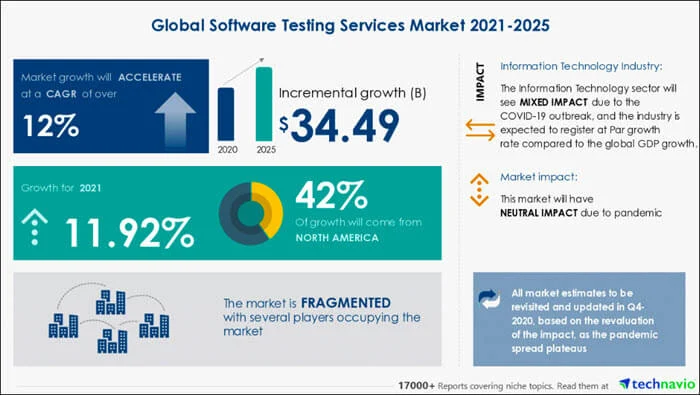
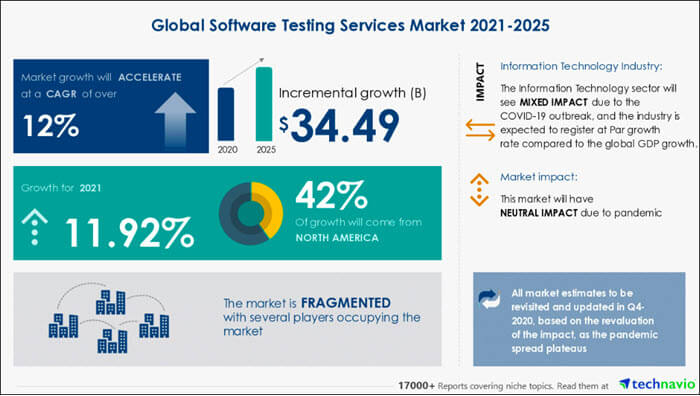
Data compiled by PR Newswire indicates that the global software testing services market is poised for massive expansion, projected to grow by $90 billion between 2021 and 2030. This growth is propelled by an impressive Compound Annual Growth Rate (CAGR) of 12.39%. Complementing this outlook, research from Global Market Insights highlights that the market valuation surpassed the $40 billion threshold in 2020, with a projected steady CAGR of 7% through the decade.

This financial momentum is mirrored on the ground level. A comprehensive survey conducted by Tricentis investigating "Who performs functional test automation within the organization?" revealed that in over 80% of organizations, dedicated testers or QA professionals are directly responsible for executing functional test automation.
Furthermore, according to the World Quality Report published by Micro Focus, 69% of surveyed businesses are successfully meeting their quality goals, and 90% are witnessing direct organizational growth through the implementation of Artificial Intelligence (AI). Consequently, quality assurance and continuous testing budgets are no longer treated as discretionary expenditures; they are now embedded as an indivisible component of core software engineering budgets.
Chronology and Industry Evolution: From Manual Checks to Intelligent Automation
To understand where the software testing industry stands today, it is essential to trace its evolution over the past decade.
- The Early 2010s: Software testing was largely characterized by manual, script-heavy execution. QA was frequently siloed at the very end of the development cycle, often acting as a bottleneck before a product’s release.
- The Mid-2010s (The Agile Shift): With the widespread adoption of Agile and DevOps methodologies, testing shifted left. Continuous integration and continuous delivery (CI/CD) forced QA to become faster and more integrated, laying the groundwork for basic test automation frameworks.
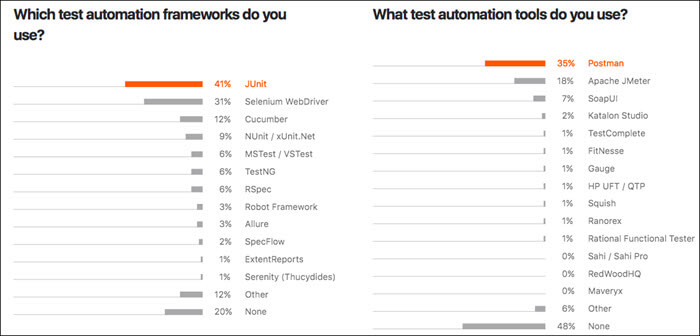
- The Late 2010s to 2020 (The Rise of Frameworks): JetBrains ecosystem research from this period identified Java as the dominant programming language for test automation, while tools like Selenium WebDriver and JUnit emerged as industry standards for frameworks, alongside Postman and Apache JMeter for API and performance testing.
- 2021 and Beyond (The AI and Intelligent Automation Era): Today, testing is heavily automated and intelligent. According to Forte Group research, test automation is experiencing exponential growth, with 12% of QA practitioners reporting fully automated pipelines and 35% stating they are halfway toward full automation.
Supporting Data: Tools, Technologies, and Market Demands
Industry metrics offer a clear window into the technical landscape that defines modern software quality assurance.
Frameworks and Programming Languages
Research into developer ecosystems underscores the dominance of specific tools in the QA toolkit. Java remains the most common programming language leveraged for test automation. For framework implementation, Selenium WebDriver and JUnit lead the pack, while Apache JMeter and Postman dominate performance and API testing sectors.
The Rise of AI and Machine Learning in QA
Artificial Intelligence and Machine Learning (AI/ML) are fundamentally transforming how testing strategies are optimized. According to research from Katalon, AI is projected to reach a staggering $200 billion market impact by 2030 across innovative technologies. Within QA, intelligent automation allows teams to operate more smartly and effectively. By leveraging AI and Robotic Process Automation (RPA), enterprises are not only streamlining functional testing but also bolstering cybersecurity testing to safeguard sensitive infrastructure against escalating threats.
Amzur research underscores the urgency behind this technological shift, noting that 68% of large companies report increasing cybersecurity threats, pushing global cybersecurity spending expectations to $133.7 billion.
Official Responses and Industry Perspectives
Enterprise leadership and global research firms are increasingly vocal about the irreplaceable value of rigorous quality assurance.
Industry reports emphasize that applications are multiplying rapidly across organizations, and corporate spending on safety, security, and performance consistency is at an all-time high. Because modern consumers demand seamless, bug-free digital experiences across diverse platforms and mobile devices, businesses can no longer afford the financial and reputational fallout of software failures.
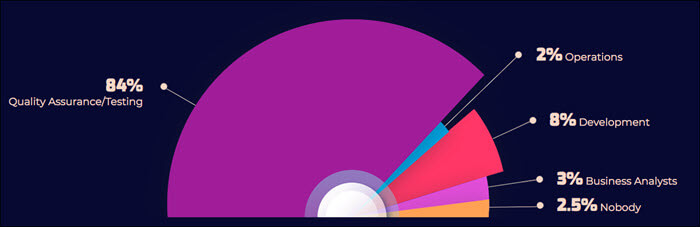
According to a study by QA Lead, the global per capita density of software testers averages roughly 5.2 per 100,000 people, highlighting a persistent talent gap. To bridge this gap, professionals are heavily investing in their education: 56% of testers rely on self-directed learning through books, while 44% have completed formal training classes and professional certifications.
When asked about the most critical competencies required in the modern QA workforce, 75% of surveyed industry respondents pointed to strong communication skills, while 63% emphasized proficiency in scripting and automation skills.
Implications: What This Means for Businesses and Professionals
The dramatic expansion of the software testing market carries profound implications for both corporate strategy and individual career planning.
For Enterprises
- Budget Integration: Quality assurance can no longer be an afterthought. To remain competitive in an AI-driven, DevOps-centric landscape, companies must integrate testing budgets directly into their core software engineering allocations.
- Adoption of Next-Gen Paradigms: The future belongs to organizations that embrace advanced paradigms such as codeless test automation, IoT-driven testing, AI/ML-powered analytics, blockchain testing, and performance engineering.
- Mitigating Risk: Proactive software testing drastically reduces the risk of catastrophic system failures, safeguards brand reputation, and ensures compliance with evolving global security standards.
For Career Seekers and Professionals
- High Demand for Specialized Talent: With open QA roles surging globally, trained IT and testing specialists are in high demand. The narrative that software testing is a declining field has been thoroughly dismantled by market data.
- The Need for Upskilling: Professionals entering the field must move beyond basic manual testing. Mastery of automation frameworks (such as Selenium), programming languages (like Java), and an understanding of AI-driven testing tools are now essential prerequisites for career advancement.
- Holistic Skill Sets: Beyond technical prowess, modern testers must cultivate strong interpersonal and communication skills to collaborate effectively within cross-functional Agile product teams.
Conclusion
The global software testing services market has entered a golden era of expansion, innovation, and strategic importance. Driven by a projected $90 billion market surge through 2030, the ubiquity of mobile applications, and the revolutionary integration of Artificial Intelligence and Machine Learning, software testing is more vital than ever before.
For businesses, investing in robust quality assurance is no longer optional—it is a fundamental requirement for delivering reliable, secure, and high-performance digital solutions. For professionals, the industry offers a dynamic, lucrative, and intellectually stimulating career path defined by continuous technological advancement.







