
Breathing New Life into 1990s Infrastructure: The Retro-Modern TrueTime XL-AK GPS Time Server Restomod
Main Facts
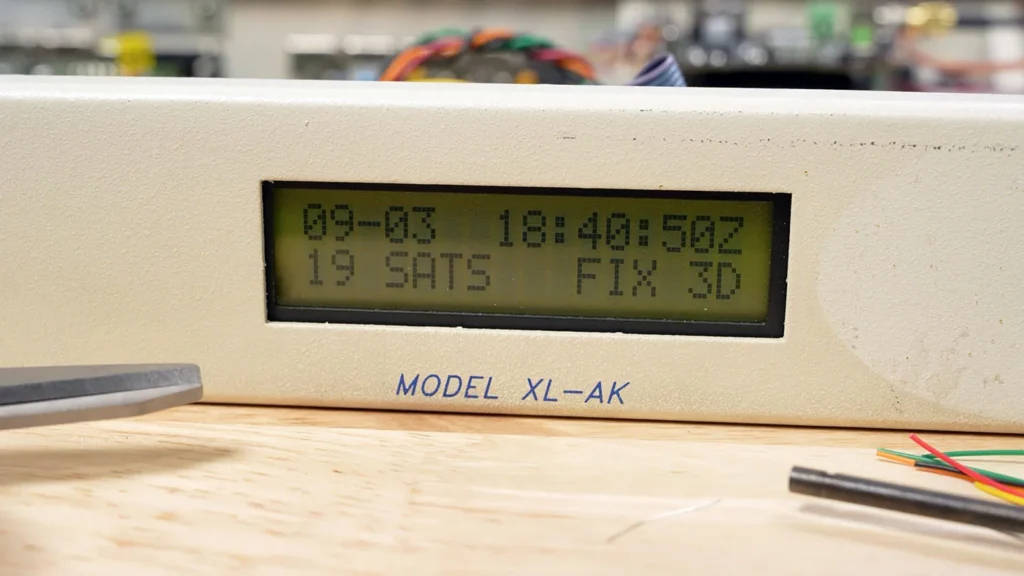
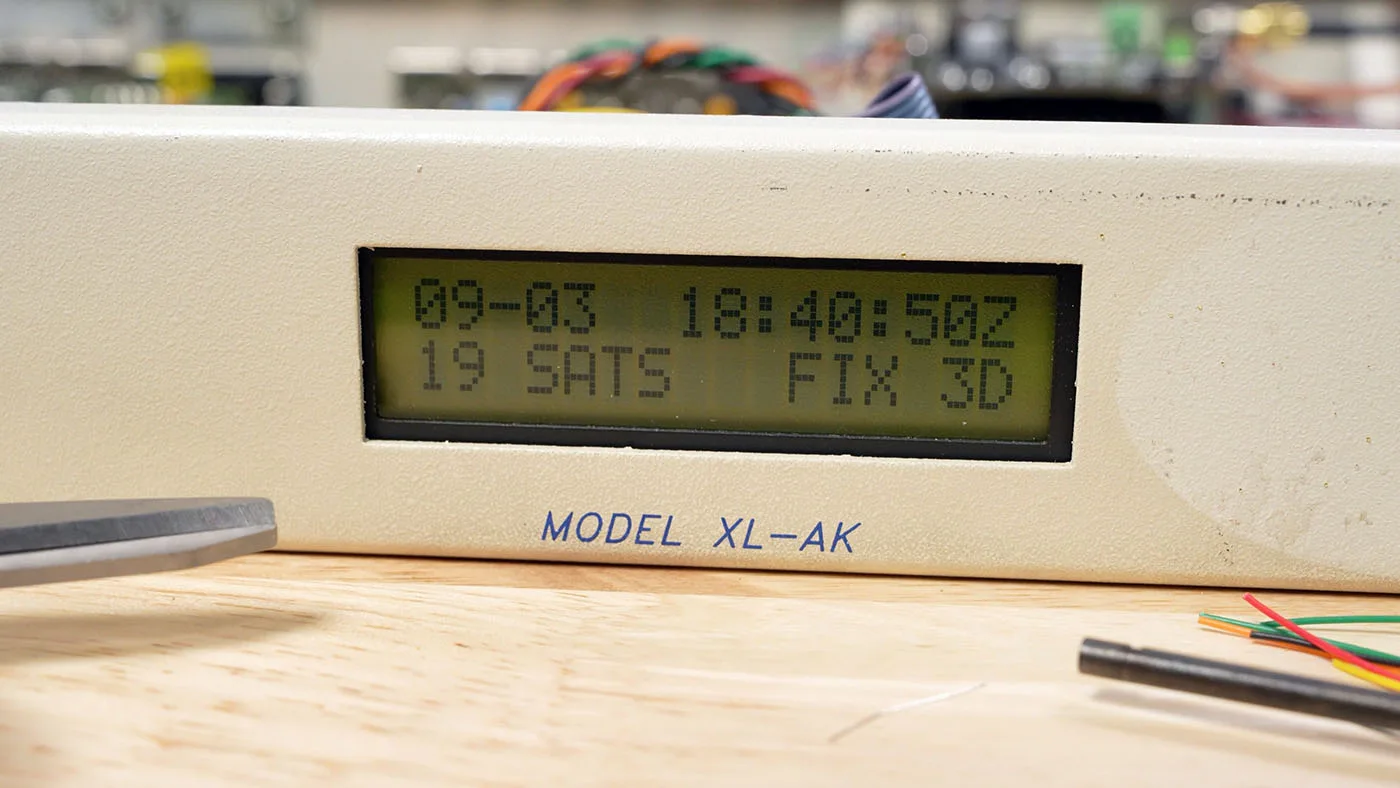
In an impressive intersection of retrocomputing preservation and modern engineering, a vintage TrueTime XL-AK GPS time server originally manufactured in 1995 has been given a new lease on life. Instead of being relegated to electronic waste or gathering dust on a shelf, this heavy-duty piece of telecommunications history has been completely rebuilt from the inside out. Its rugged, industrial-grade enclosure, classic 1990s 16×2 character LCD display, and distinctive bicolour status LED have all been retained, but its obsolete internal electronics have been entirely replaced.
At the heart of this modern restoration is a powerful Raspberry Pi 5 paired with a specialized GNSS HAT utilizing a u-blox NEO-M9N positioning module. This hybrid creation functions as a high-precision Stratum 1 Network Time Protocol (NTP) server for local networks. By bridging cutting-edge single-board computer architecture with industrial vintage hardware, the project demonstrates how classic enclosures can house modern capabilities without sacrificing their historical aesthetic.
The timing of this project’s spotlight aligns with a broader public appreciation for critical infrastructure timekeeping. Just days after the core components for this build were acquired, a failure in a legacy GPS time server caused a massive, 12-hour cellular network outage in Australia. This incident served as a stark reminder of how deeply modern society relies on precise time synchronization—and how vulnerable aging infrastructure can be when it finally gives out.
The restored TrueTime unit was explicitly prepared for showcase at VCF Midwest (Vintage Computer Festival Midwest), an annual celebration of computing history. By marrying 1995 rackmount industrial design with a 2024-era quad-core processor, the builder has created a fully functional conversation piece that bridges three decades of technological evolution.
Chronology: From 1995 Hardware to 2024 Modernization
To understand the magnitude of this project, it is essential to trace the timeline of the hardware, its restoration, and the broader context of time-server technology.
- 1995: The TrueTime XL-AK is manufactured and deployed. During this era, TrueTime (later acquired by Symmetricom and eventually Microchip) was a titan in precision time and frequency instrumentation, supplying robust GPS receivers to utilities, telecommunications companies, and scientific laboratories.
- Decades of Service: For many years, the unit fulfills its duties, receiving analog-style radio and satellite timing signals to discipline internal oscillators, ensuring sub-millisecond network synchronization. Eventually, component degradation, obsolete communication protocols, or satellite navigation shifts render the internal board obsolete.
- June 2024 (Early June): The vintage TrueTime XL-AK enclosure and chassis are acquired by the project creator as a base for a retro-modern restoration project.
- June 22, 2024: The core components arrive, including the Raspberry Pi 5 and the associated GNSS expansion hardware.
- Early July 2024: A striking real-world parallel occurs in Australia, where a legacy GPS time server failure knocks out cellular service for half a day. This event underscores the critical role that precise timekeeping hardware plays in modern digital infrastructure.
- Mid-2024: Software configuration begins. The Raspberry Pi 5 is coupled with Pi OS Lite,
gpsd, andchrony. Rigorous tuning of clock parameters, thermal management profiles, and custom scripts to drive the vintage 16×2 LCD and bicolour LED are implemented. - VCF Midwest Exhibition: The completed unit makes its public debut, demonstrating that classic hardware can be successfully retrofitted to serve practical, modern networking roles.
Supporting Data and Technical Architecture
Rebuilding a precision Stratum 1 time server inside a 1995 chassis is not merely a matter of hot-swapping parts. It requires careful consideration of hardware specifications, operating system configuration, precise time-daemon tuning, and thermal dynamics.
Hardware Specifications
The project relies on specific components chosen for their processing reliability, precision timing capabilities, and physical form factor:
- SBC (Single-Board Computer): Raspberry Pi 5. While a 1GB RAM variant is available for roughly $44, the builder utilized the 4GB RAM version. Crucially, the choice of the Pi 5 was driven not by memory capacity, but by its advanced clock stability, raw processing headroom, and robust thermal management features.
- GNSS Module: u-blox NEO-M9N receiver mounted on a dedicated GNSS HAT. This module supports multiple satellite constellations (GPS, GLONASS, Galileo, BeiDou) simultaneously, ensuring a robust lock even under sub-optimal antenna placement conditions.
- Timing Interface: The HAT establishes a hardware-level bridge to transfer NMEA data sentences (containing date and time stamps) to the operating system, while critically providing a direct PPS (Pulse Per Second) signal. The PPS signal is the gold standard for high-precision timekeeping, providing an electrical pulse accurate to within nanoseconds of the exact second transition.
Software Stack and Chrony Configuration
Operating system duties are handled by a stripped-down, headless installation of Raspberry Pi OS Lite, which minimizes background processes and potential jitter. Time synchronization is managed by Chrony, an alternative to the standard NTP daemon that is vastly superior at handling variable network delays and hardware clock drift.
The chrony configuration is meticulously tuned to prioritize the hardware PPS signal over network-derived time or even raw NMEA strings:
- PPS Refclock: Configured as the preferred primary source. It uses aggressive polling parameters (
poll 3) and filtering (filter 16) to lock onto the incoming pulse from the u-blox module, virtually eliminating jitter. - SHM (Shared Memory) Refclock: Provided by
gpsdto feed NMEA date and time strings into chrony. This is configured with an offset of0.0and a delay of0.05to account for processing overhead.
Thermal Management and Clock Stability
In timekeeping applications, thermal fluctuations are the enemy of quartz and system clocks. Changes in temperature cause micro-expansion and contraction in oscillator crystals, leading to clock drift. To combat this:
- Forced Turbo Mode: The Raspberry Pi 5 is configured with
force_turboenabled. While this draws approximately 1 watt of power continuously, it locks the CPU frequency, preventing the thermal throttling and clock-scaling jitter that would otherwise destabilize timekeeping loops. - Active Cooling & Insulation: A cooling fan is set to a constant duty cycle (optimized at 50% for quiet operation, though 75% yields maximum thermal headroom). Additionally, strategic thermal insulation was added to the interior of the vintage enclosure to buffer the electronics against external ambient temperature swings.
- Legacy I/O Integration: Custom scripts tie the Raspberry Pi’s General Purpose Input/Output (GPIO) pins to the original 1995 hardware. The legacy 16×2 LCD screen and the front-panel bicolour LED now display live system status, lock status, and daemon health directly driven by the modern Linux kernel.
All custom software—including the GNSS HAT communication scripts and fan control utilities—has been made publicly available in the dedicated Time Pi repository for enthusiasts looking to replicate the build.
Official Responses and Industry Perspectives
While hobbyist retro-modding projects like the TrueTime XL-AK rebuild are typically driven by passion, education, and community exhibition, they touch upon a very serious conversation happening at enterprise and governmental levels regarding critical infrastructure resilience.
Telecommunications engineers, network administrators, and cybersecurity professionals have long warned about the fragility of global positioning dependencies. Because GPS signals are remarkably weak by the time they reach the Earth’s surface, they are susceptible to atmospheric interference, accidental jamming, and hardware aging.
When infrastructure components like 1990s-era time servers fail—as witnessed in the recent Australian cellular outage—the ripple effects across banking, telecommunications, and emergency services can be catastrophic. Modern network architects increasingly advocate for a defense-in-depth approach to time synchronization:
"Relying on a single GPS source without local holdover capabilities or modern monitoring is an architectural vulnerability," notes a senior network infrastructure analyst. "Projects that take legacy hardware and upgrade them with modern, highly stable NTP daemons and multi-constellation GNSS chips demonstrate a deep understanding of timing integrity. They prove that you don’t always need to throw away robust industrial enclosures to achieve state-of-the-art reliability."
Furthermore, open-source advocates and the retrocomputing community view these projects as a masterclass in sustainability. By keeping heavy metal enclosures, power supplies, and front-panel displays out of landfills, builders are actively practicing hardware preservation while solving modern engineering problems.
Implications for the Future of Local Network Timing
The successful resurrection of the TrueTime XL-AK carries several important implications for both hobbyists and professional IT administrators:
1. The Rise of "Franken-Infrastructure" in Edge Computing
The project highlights a growing trend where vintage industrial hardware is mated with modern single-board computers. Industrial enclosures built in the 1980s and 1990s were vastly over-engineered, often utilizing thick-gauge aluminum, heavy-duty shielding, and high-quality power distribution boards. By gutting the obsolete digital logic and replacing it with a $45 Raspberry Pi, builders gain the benefit of modern computing power wrapped in indestructible, professional-grade armor.
2. Democratization of Stratum 1 Time Servers
Historically, maintaining a Stratum 1 NTP server—a time server synchronized directly to an atomic clock or satellite navigation system—required expensive, proprietary enterprise rackmount appliances costing thousands of dollars. Thanks to accessible hardware like the Raspberry Pi 5, u-blox GNSS HATs, and open-source software like chrony, small businesses, advanced home-lab enthusiasts, and educational institutions can now build military-grade time synchronization nodes for a fraction of the cost.
3. Heightened Awareness of Timing Vulnerabilities
Incidents like the Australian cellular outage have forced network operators to audit their timing distribution trees. As organizations move toward 5G, high-frequency financial trading, and synchronized distributed databases, microsecond-level accuracy is no longer a luxury—it is a strict requirement. Restomod projects bring visibility to these underlying systems, educating the public on how the invisible infrastructure of time actually operates beneath the digital surface.
Conclusion
The transformation of a 1995 TrueTime XL-AK GPS server into a modern Stratum 1 NTP node powered by a Raspberry Pi 5 is far more than a clever weekend hack. It is a brilliant fusion of historical preservation and cutting-edge engineering. By keeping its iconic LCD display, bicolour LED, and rugged chassis operational, the project honors the legacy of 1990s industrial design while quietly performing vital, high-precision network duties in the background. For anyone looking to secure their local network time while celebrating the golden age of hardware engineering, the Time Pi stands as a shining example of what is possible when the past and the present synchronize.








