
Defying Gravity: The Rise of Embedded 3D Printing and the Quest for Liquid Structures
Additive manufacturing has long been defined by the paradigm of layers: a material is deposited onto a solid base, cools or cures, and provides a platform for the next layer. From the humble beginnings of desktop Fused Deposition Modeling (FDM) to industrial-grade metal sintering, this "air-based" support method has been the industry standard. However, a revolutionary technique known as Embedded 3D Printing (E3DP) is turning this logic on its head, using supportive, viscous media to allow for the creation of shapes that would otherwise collapse under their own weight.
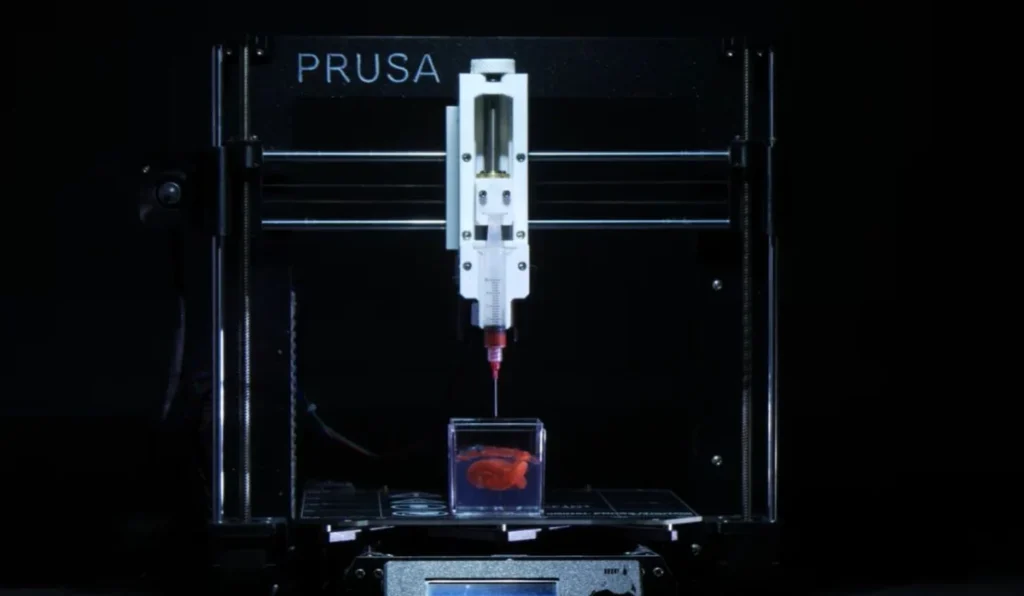
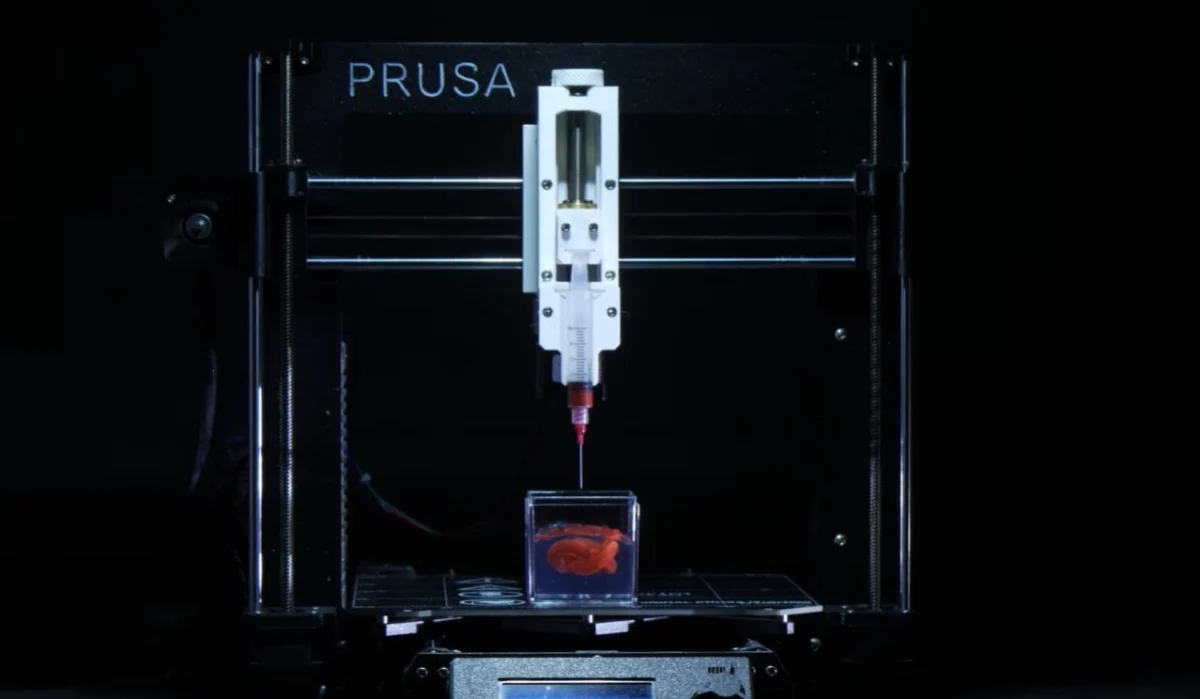
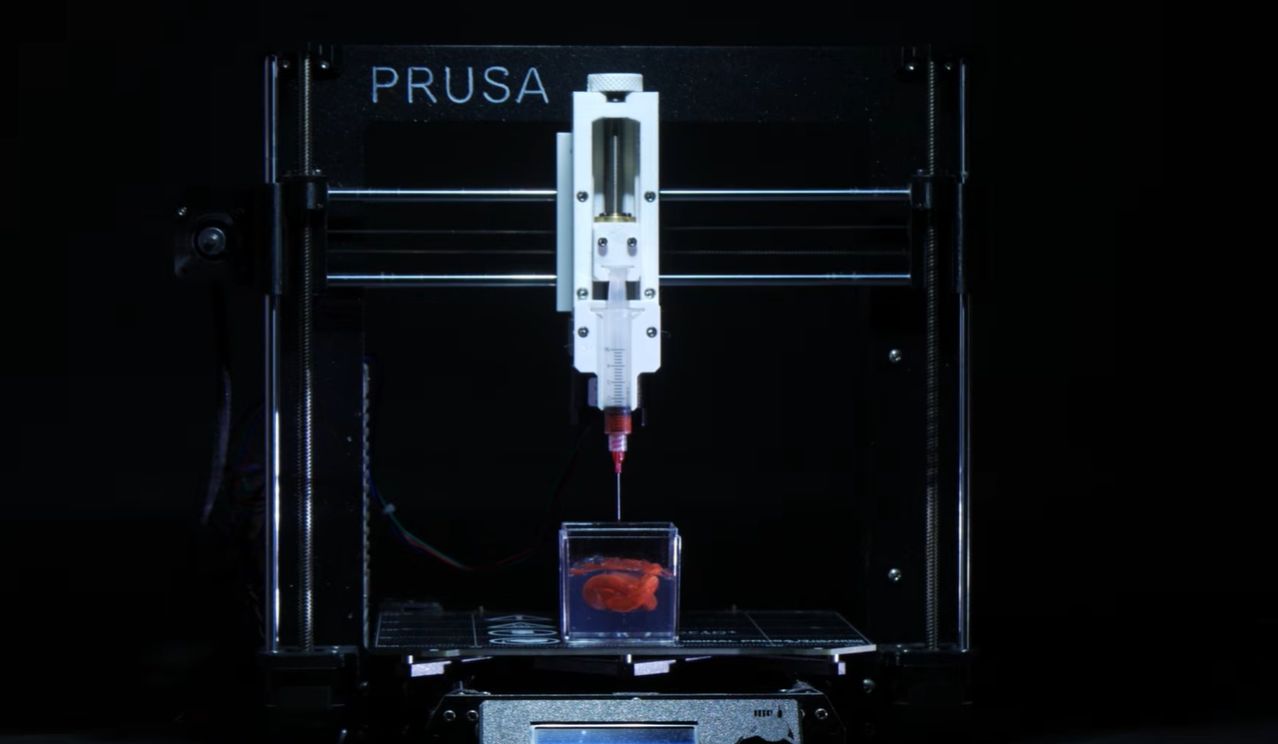
Recently, maker and researcher [Riley] provided a masterclass in this burgeoning field by repurposing a "bricked" Prusa i3 FDM printer. By replacing a damaged hot-end with a precision syringe pump system, he transformed a discarded desktop machine into a laboratory-grade tool capable of printing liquids—and in the process, highlighted both the immense potential and the stubborn chemical challenges of the medium.
The Core Concept: Printing in a Fluid Matrix
In traditional FDM, the print environment is largely passive; the surrounding air is merely a vacuum that provides no structural assistance. E3DP, conversely, treats the build environment as an active participant. By extruding material directly into a supportive, semi-solid matrix—such as hair gel or specialized carbomer gels—the printer can "suspend" liquid materials in three-dimensional space.
This methodology allows for the deposition of materials at precise depths and volumes, enabling the fabrication of geometries that defy conventional slicing limitations. Whether it is a delicate vascular network, a soft robotic actuator, or a microfluidic circuit, the supportive medium provides the buoyancy and structural integrity necessary to prevent the liquid from sagging, spreading, or pooling.
A Chronology of the Transformation: From Prusa to Syringe Pump
The journey began with an abandoned Prusa i3, a machine that had clearly survived a catastrophic hot-end failure. For a typical user, the printer was "bricked," but for an experimenter, it was the perfect chassis.
The Hardware Overhaul
The transformation was systematic and rigorous. Riley replaced the standard thermal extruder with a syringe pump system, opting for the open-source Allstruder design. This allows for the high-torque, precise control required to push viscous fluids like silicone or epoxy through a needle. To handle the complex G-code interpretation and precise motor control, he swapped the original controller for a Caribou Duet 3 motherboard. This upgrade provided the necessary throughput to handle the non-linear fluid dynamics of the new extrusion system.
The Initial Proof of Concept
Before moving to complex polymers, the team utilized a surprisingly common household item: cream cheese. As a non-Newtonian, high-viscosity substance, it served as a perfect proxy for the rheology of more technical materials. The success of the cream cheese print confirmed that the kinematic chain—the frame, the motors, and the pump—was functioning in harmony with the fluid matrix.
The Scaling Hurdles: Epoxy and Silicone
Following the cream cheese success, the focus shifted to structural materials. The first attempt involved a two-part epoxy. Here, the project hit its first major constraint: the "pot life." Because the epoxy begins its exothermic curing process immediately upon mixing, the team had a strict 40-minute window to complete the print before the material solidified within the needle.
While the epoxy proved difficult to work with due to its chemical incompatibility with the chosen hair-gel matrix, the transition to Sylgard 184 silicone marked the most significant phase of the experiment. The team successfully printed a "trifold torus," a complex geometry that would be impossible to manufacture with traditional 3D printing methods.
Supporting Data and Research Trends
The experimental efforts of hobbyists like Riley align with a significant surge in academic interest regarding E3DP. A 2026 review article by [Rongji Tang] et al., published in Frontiers in Materials, synthesized the current state-of-the-art in the field. The research identifies three primary pillars of ongoing study:
- Print Quality and Resolution: How to maintain consistent extrusion volume when dealing with materials of varying viscosity.
- Support Media Lifecycle: The difficulty in developing media that are supportive enough to hold a shape, yet easy enough to remove without damaging the final part.
- Extrusion Control: The need for active feedback loops to compensate for back-pressure in the syringe.
Navigating Newtonian Challenges
Not all fluids behave the same. Research by [Hejoon Jun] et al. (2025, Applied Materials & Interfaces) highlights the specific issues associated with Newtonian fluids—such as silicone oil—which tend to lose their shape quickly when extruded into traditional gels.
Furthermore, the medical sector is pushing the boundaries with the EPICS (Embedded Printing In Collagenous Support) method. A 2026 paper by [Min Ye] et al. in the International Journal of Extreme Manufacturing details how living tissues can be printed using self-healing supporting media. This represents the holy grail of E3DP: the ability to print biological scaffolding that eventually mimics the structural properties of human organ tissue.
The Chemical "Gotcha": Inhibition and Curing
Despite the successful shaping of the silicone trifold torus, the experiment hit a wall that has plagued many researchers in the field: chemical inhibition.
The hair gel used as the support matrix contained additives—likely surfactants or preservatives—that acted as "cure inhibitors" for the Sylgard 184 silicone. In the world of silicone chemistry, even trace amounts of contaminants can prevent the cross-linking process, leaving the printed object in a perpetually "goopy," liquid state.
Riley’s report that the print remained unhardened after several days serves as a cautionary tale. It underscores that E3DP is not merely a mechanical challenge; it is a materials science puzzle. The interaction between the support medium and the printed material must be chemically inert, or the final object will fail to reach its intended structural state.
Implications: The Future of Soft Robotics and Microfluidics
The implications of perfecting this process are profound. By moving away from rigid, thermoplastic-only printing, manufacturers can begin to produce:
- Soft Robotics: Creating complex, flexible grippers and actuators that mimic the movement of biological organisms.
- Microfluidics: Printing intricate, 3D channels for "lab-on-a-chip" devices that allow for rapid blood testing or chemical synthesis.
- Biological Tissue Engineering: Developing scaffolds that can be colonized by cells to grow functional tissue grafts.
The work being done in home laboratories and high-end research facilities alike demonstrates that we are in the early stages of a transition. The "bricked" Prusa used by Riley is a symbol of a broader trend: the democratization of high-end manufacturing techniques.
Conclusion: Looking Ahead
As the field moves forward, the search for the "universal support medium" continues. Researchers are looking into aqueous-based gels that are transparent, easily removable via temperature changes or pH adjustments, and—crucially—chemically inert toward the materials being printed.
While Riley’s silicone print may have remained a "goopy" work-in-progress, the project stands as a successful validation of the machine architecture. The ability to print a complex, 3D geometry in a fluid bath, using nothing more than a repurposed FDM frame and an open-source pump, is a testament to the ingenuity of the open-source hardware community. As the synergy between mechanical control and chemical compatibility improves, the limitations of "printing in the air" will soon feel like a relic of the past. The future, it seems, is fluid.







