In the hyper-competitive landscape of digital audio streaming, user retention hinges on personalization. Delivering the right song at precisely the right moment is no longer just a luxury; it is the core product. Behind Spotify’s seamless transition from one track to the next lies a complex matrix of data science, machine learning, and sequential decision-making.
In a significant technological leap, a team of Spotify researchers and engineers—Surya Kanoria, Joseph Cauteruccio, Federico Tomasi, Kamil Ciosek, Matteo Rinaldi, and Zhenwen Dai—has unveiled an advanced framework that utilizes Reinforcement Learning (RL) to craft dynamic, highly responsive listening experiences. By combining the robust capabilities of TensorFlow and TF-Agents with a bespoke offline simulation environment, Spotify has unlocked new pathways for automated playlist generation and large-scale recommendation tuning.
Main Facts: The Intersection of Reinforcement Learning and Music Streaming
At its core, music recommendation is an ongoing, sequential decision-making problem. Unlike static recommendation tasks that suggest a single item based on isolated user traits, music platforms must curate ordered sets of items—playlists or queues—that adapt to a user’s evolving intent and mood over the course of a listening session.
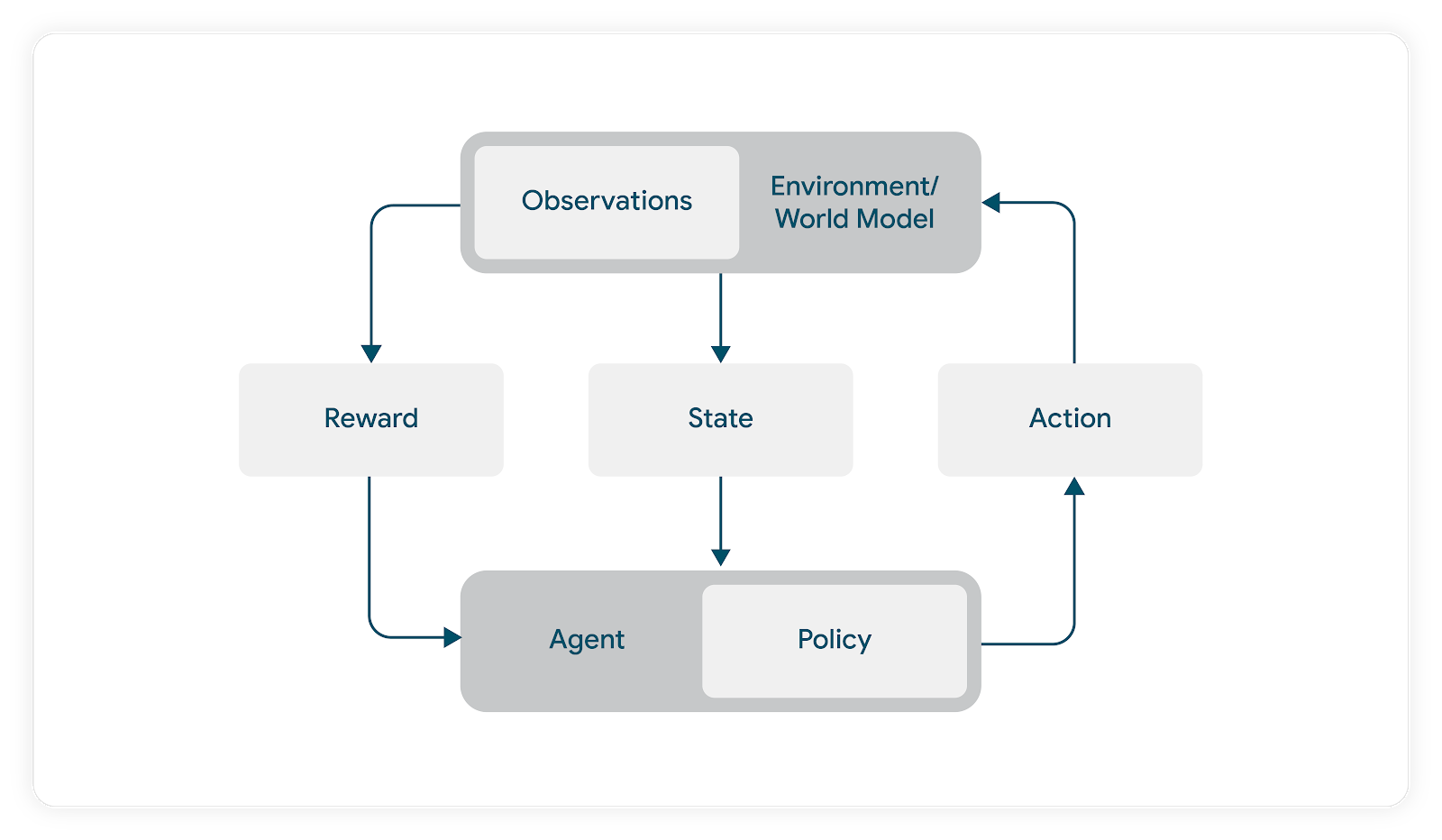
To tackle this, Spotify integrated Reinforcement Learning into its machine learning architecture. RL algorithms, or "agents," learn by interacting with an environment, taking actions (recommending tracks), observing feedback (user skips, likes, or listening duration), and receiving rewards.
However, deploying an untrained RL agent directly onto a live platform hosting hundreds of millions of users carries an unacceptable risk: poor initial recommendations could degrade the user experience. To circumvent this, the Spotify team engineered a sophisticated offline simulation environment using TensorFlow Agents (TF-Agents).
Key Elements of the Spotify RL Architecture:
Model-Based RL: Rather than training agents on live users, Spotify utilized a Keras-trained user model that predicts human responses to recommended tracks.
TF-Agents Integration: The simulator is built directly upon TF-Agents environment primitives, ensuring seamless integration with Spotify’s existing production machine learning stack (which includes TFX and TensorFlow Serving).
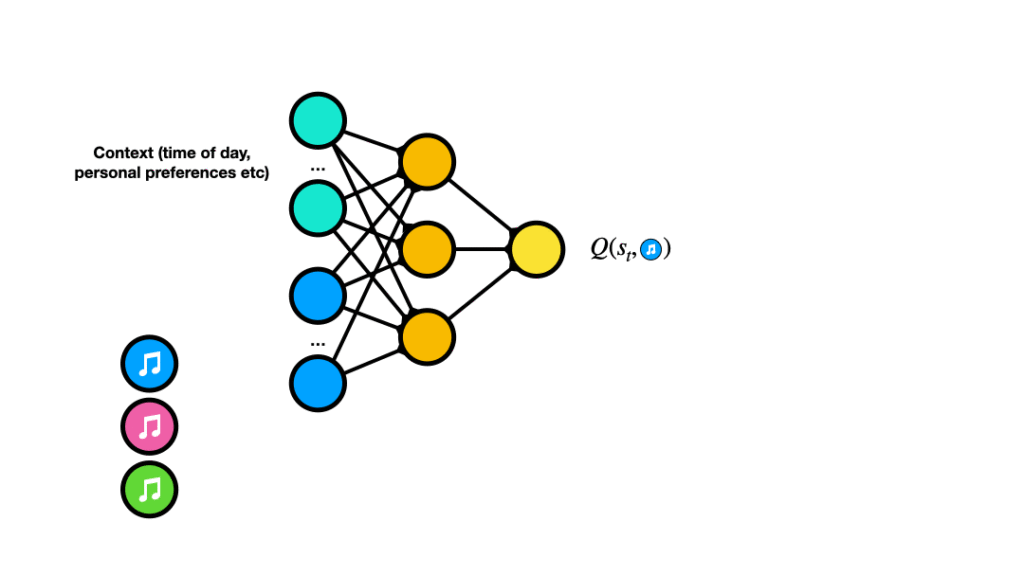
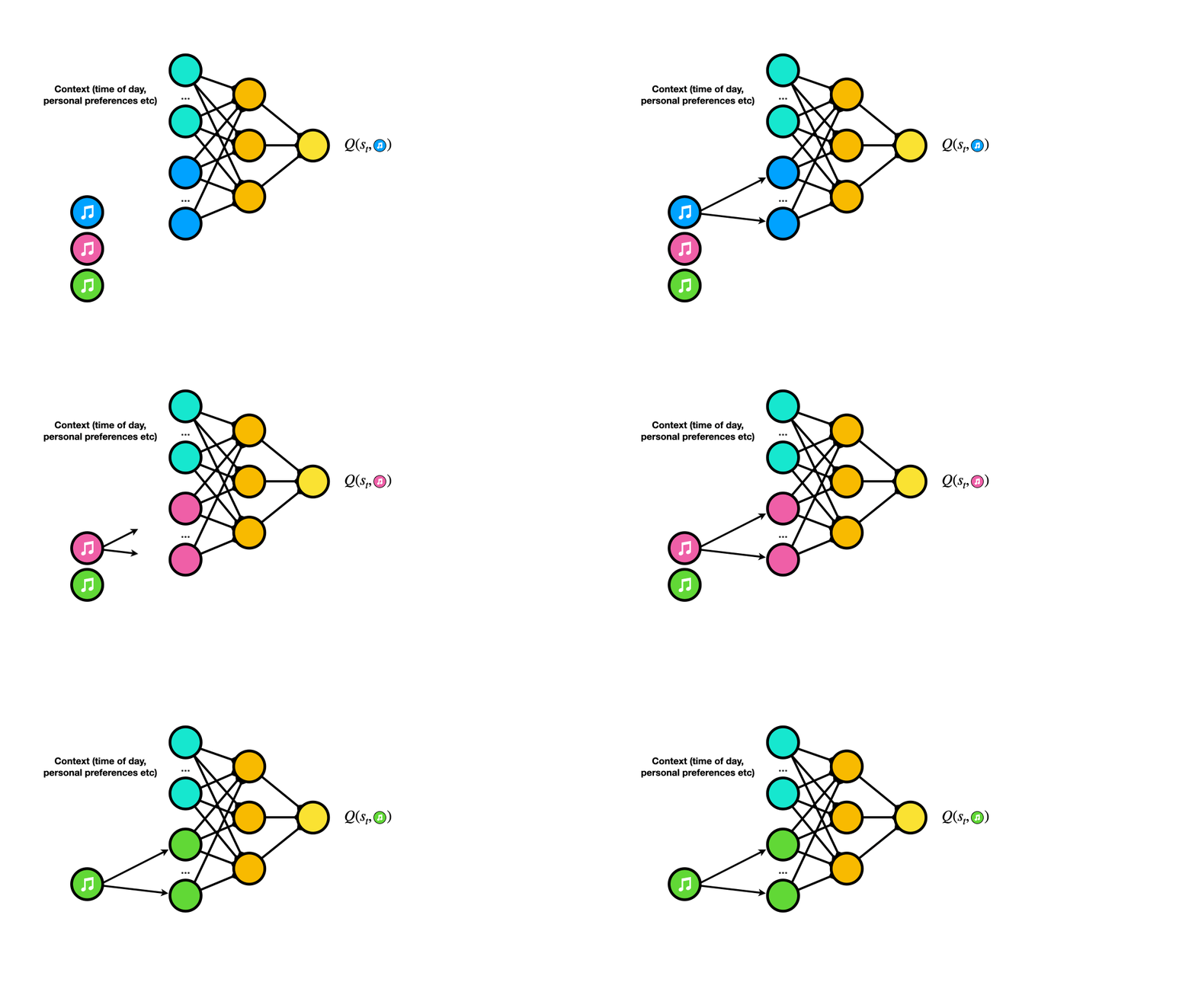
Action-Head DQN (AH-DQN): To manage massive state and action spaces inherent in music catalogs, the team developed a custom Deep Q-Network variant capable of sequentially building multi-item recommendations.
Chronology: From Concept to Production-Scale Implementation
The journey toward simulated RL listening experiences followed a meticulous developmental timeline, moving from theoretical modeling to offline prototyping, and finally to online validation.
Phase 1: Identifying the Limitations of Traditional Approaches
Historically, slate-based recommendation systems focused heavily on single-choice predictions or static ranking models. However, music consumption is fluid. Users react to multiple tracks in a sequence, and the available pool of music is constantly changing. Standard algorithms struggled to capture these long-term dependencies. Spotify’s data science teams recognized that Reinforcement Learning was the natural theoretical fit, but they lacked an isolated, safe sandbox for agent training.
Phase 2: Selecting the Tech Stack and Designing the Simulator
Knowing that TensorFlow and its extended ecosystem (TFX, TensorFlow Serving) already formed the backbone of Spotify’s production machine learning infrastructure, the team selected TF-Agents as their primary RL library. This choice guaranteed that experimental models could eventually transition into production systems with minimal friction.
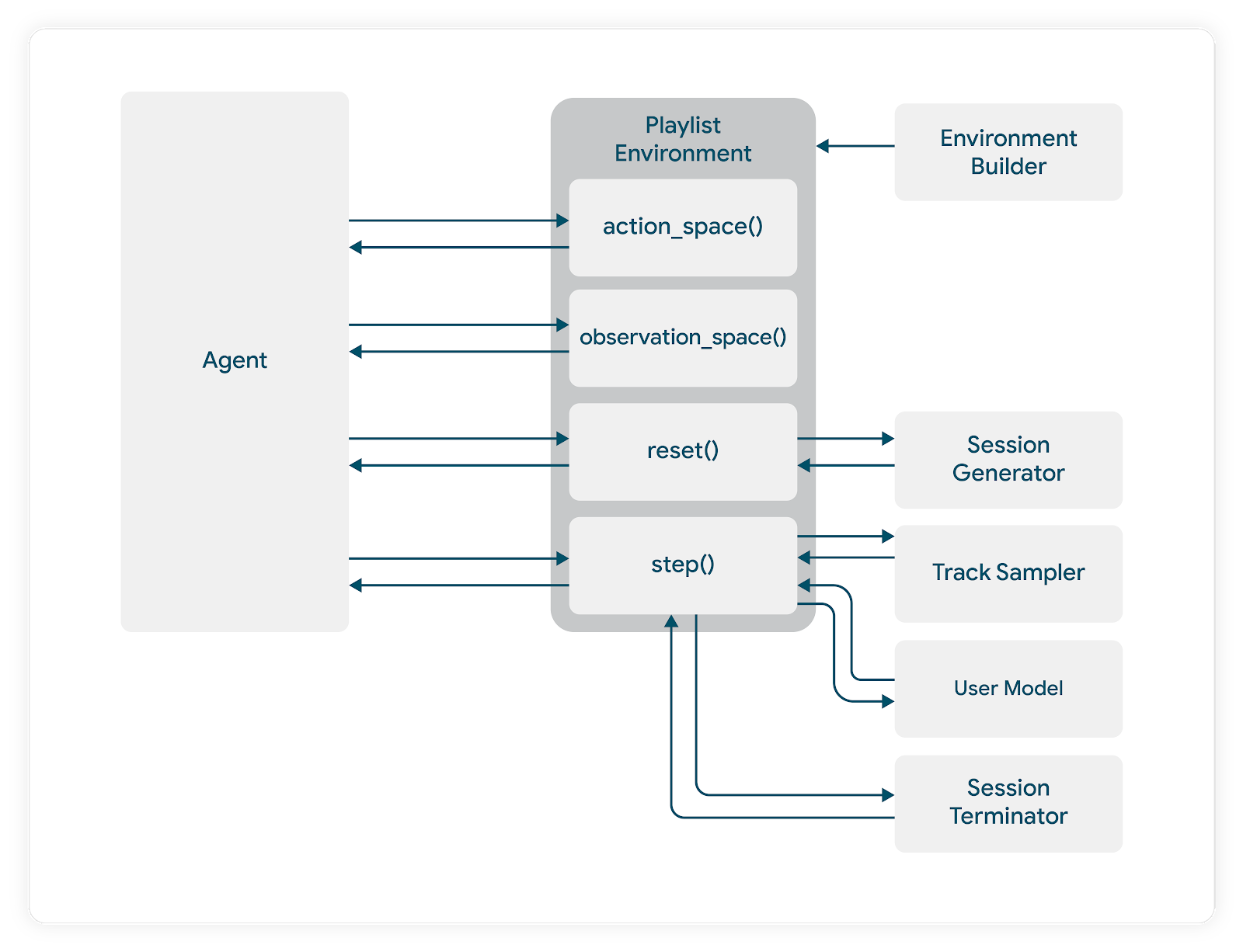
Using TF-Agents’ Environment primitives, the team designed an offline Spotify simulator. This required decoupling the environment into modular components:
Episode Sampler (_episode_sampler): Sets up hypothetical user listening sessions and content pairs based on real-world data distributions.
User Model (_user_model): A Keras-based predictive model that acts as the simulated user, reacting to the agent’s track recommendations.
Track Sampler (_track_sampler): Translates abstract agent actions into concrete, playable song recommendations while preventing duplicate track suggestions.
Episode Tracker (_episode_tracker): An expanded logging system designed to capture granular user model predictions and session metrics for deep debugging.
Phase 3: Developing the Action-Head DQN (AH-DQN)
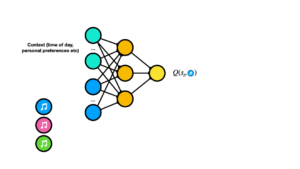
Standard RL algorithms struggled with the combinatorial complexity of generating ordered multi-item playlists from millions of available tracks. To solve this, Spotify introduced the Action-Head DQN. Instead of selecting an entire playlist at once, the AH-DQN evaluates the current state and potential actions iteratively, calculating a Q-value for individual items, selecting the highest-scoring track, appending it to the slate, and repeating the process until the playlist is filled.
Phase 4: Validation and KDD 2023 Presentation
Before scaling the agents globally, Spotify conducted rigorous offline-to-online correlation tests. The results, later presented at KDD 2023, proved that offline performance estimates generated by their TF-Agents simulator strongly correlated with live, online user metrics. This validated the simulator as an accurate proxy for human behavior, opening the floodgates for large-scale RL experimentation across the platform.
Supporting Data & Technical Mechanics
The elegance of Spotify’s architecture lies in its modularity. By adhering to the standard abstract design patterns of reinforcement learning, the system can spin up diverse environments with varying configurations effortlessly.
The RL Loop in Action
In a standard TF-Agents setup, the loop operates through continuous exchanges:
$$textObservation (S_t) rightarrow textAgent Action (A_t) rightarrow textEnvironment Reward (Rt) text & Next Observation (St+1)$$
In Spotify’s simulator:
The Observation: Summarizes the current state of the listening session, including recent user interactions and context.
The Action: The agent proposes a mathematical representation that the track sampler converts into music tracks.
The Reward: The Keras user model evaluates the recommendations and outputs a satisfaction score (e.g., whether the user listened through or skipped).
Code Architecture
The system relies on clean abstract base classes (ABC) to enforce structure across different simulation modules. For instance, the core environment structure is defined as:
Through an ingenious three-step conversion pipeline—moving from concrete environment definitions like PlaylistEnvironment to an Environment Builder Class, and finally wrapping it into a TensorFlow-compatible TFAgtPyEnvironment (py_environment.PyEnvironment)—the team bridged custom Python logic with high-performance TensorFlow training pipelines.
Official Responses and Industry Implications
The implications of Spotify’s successful deployment of TF-Agents extend far beyond playlist curation. Industry analysts note that model-based reinforcement learning combined with robust simulation environments represents the next frontier for recommendation systems in video streaming, e-commerce, and digital advertising.
"Through live experiments, we were able to show that our offline performance estimates were strongly correlated with online results," noted the Spotify research team in their official technical release. "This then opened the door for large scale experimentation and application of Reinforcement Learning across Spotify, enabled by the technological foundations unlocked by TensorFlow and TF-Agents."
By proving that offline simulators can reliably predict online user satisfaction, Spotify has dramatically lowered the R&D cost of deploying advanced AI models. Engineers can iterate rapidly, test unconventional agent policies (such as PPG, DQN, and AH-DQN variants), and debug edge cases without ever exposing a live listener to a sub-optimal experience.
Furthermore, the project highlights the immense value of ecosystem continuity. By committing early to TensorFlow, TFX, and TF-Agents, Spotify avoided the friction of interoperability bottlenecks, allowing research prototypes to graduate seamlessly into enterprise-grade production services.
Conclusion
Spotify’s integration of simulated reinforcement learning listening experiences marks a watershed moment for algorithmic music curation. By addressing the unique complexities of sequential multi-item recommendations through custom architectures like the Action-Head DQN and harnessing the flexibility of TF-Agents, the streaming giant has built a scalable blueprint for the future of personalization.
As the platform continues to roll out these capabilities globally, listeners can expect music discovery that feels increasingly intuitive, adaptive, and uncannily attuned to the rhythm of their daily lives.
Acknowledgments: The authors—Surya Kanoria, Joseph Cauteruccio, Federico Tomasi, Kamil Ciosek, Matteo Rinaldi, and Zhenwen Dai—extended special thanks to past and present Spotify teammates, notably Mehdi Ben Ayed for early foundational work on the RL codebase, as well as the TensorFlow Agents team for their ongoing support and open-source contributions.