The Architecture of Tomorrow: How Meta and Google Re-engineered Instagram Direct for the AI Era


In the rapidly evolving landscape of mobile development, the intersection of Artificial Intelligence and UI architecture has become the new frontier for large-scale engineering teams. Recently, a landmark collaboration between Meta and Google resulted in a complete overhaul of one of the world’s most heavily trafficked mobile surfaces: Instagram Direct. By migrating from a legacy Android View system to Jetpack Compose, the team did more than just modernize the UI; they created an "AI-native" codebase that serves as a blueprint for how complex applications will be built, maintained, and optimized in the coming decade.
The Core Facts: A Monumental Shift
Instagram Direct handles billions of messages daily, serving as a critical pillar of the Instagram ecosystem. For years, the team squeezed every possible micro-optimization out of the traditional Android View system. However, as the codebase grew to accommodate hundreds of message types and thousands of state permutations, the "technical debt" of the legacy system became an impediment to innovation.
The decision to adopt Jetpack Compose was not merely a cosmetic change or a standard framework migration. It was a strategic decision to embrace a declarative UI paradigm that is inherently more readable and predictable for AI coding assistants. The results were staggering: the new codebase is 50% smaller than its predecessor. More impressively, the team achieved a 35% reduction in AI agent execution time, a 32% decrease in the number of exchanges required between engineers and their AI coding assistants, and a 33% reduction in token costs.
Chronology of the Transformation
The migration was not an overnight endeavor. Given the scale of Instagram, the team could not afford any disruption to the user experience. The process followed a highly structured, multi-phase roadmap designed to ensure stability while facilitating a radical architectural shift.
Phase 1: Preparation and Abstraction
Before writing a single line of Compose code, the team focused on creating an "AI-native" architecture. They recognized that if they simply mixed legacy imperative code (Views) with modern declarative code (Compose), AI tools would struggle to differentiate between the two, leading to "path-of-least-resistance" errors. They established strict boundaries, ensuring that UI components were decoupled from the legacy lifecycle hooks that often caused bugs in the old system.
Phase 2: Incremental Migration and Parallel Development
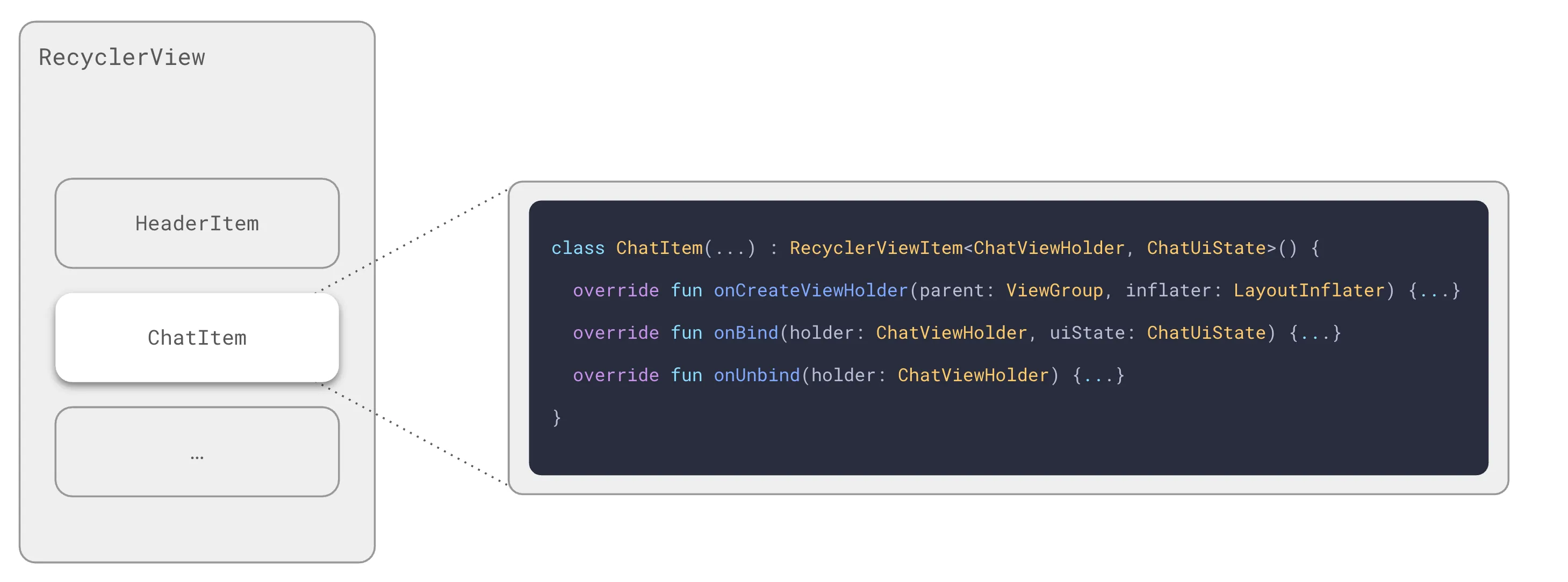
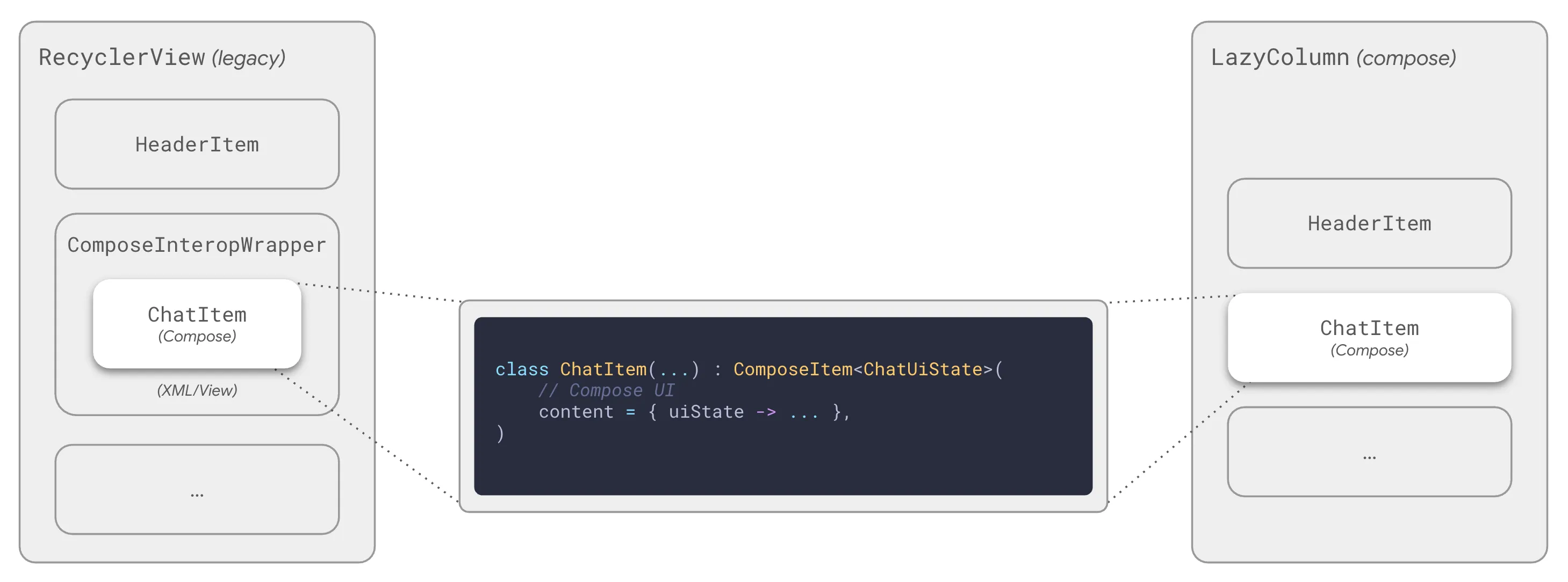
The team utilized a "side-by-side" approach. Hundreds of UI components were migrated to Compose while still living within the existing RecyclerView architecture. This allowed the team to A/B test individual components in production, ensuring performance parity with the legacy system before moving to the next stage.
Phase 3: Transitioning to the Compose-Native Core
Once the individual components were validated, the team replaced the legacy RecyclerView core with LazyColumn, the native Compose alternative. This transition was facilitated by an interop layer that allowed for runtime switching via feature flags, enabling the team to gather performance data without impacting the end-user experience.
Phase 4: Performance Fine-Tuning
The final phase involved deep-level optimizations in partnership with Google. This included the implementation of LazyLayoutCacheWindows to prevent scroll-related jank and the adoption of new visibility tracking APIs to ensure that impression logging—a critical metric for a massive platform—remained accurate.

Supporting Data: Why Declarative Wins
The success of this migration is best illustrated by the data Meta collected during the transition. By comparing AI agent performance on View-based code versus Compose-based code, the team uncovered a fundamental truth: code structure dictates AI efficiency.
As a codebase matures, it inevitably accumulates a "risk score"—a metric tracking the likelihood of a change introducing a production incident. The data showed that as a file’s risk score doubled, the resource efficiency of AI agents working on Android Views plummeted by 30%. In contrast, the same increase in risk for Jetpack Compose files resulted in only a 9% dip in efficiency.
This suggests that the declarative nature of Compose—where the UI is a direct reflection of the state—creates a more "stable" environment for AI. Because there are fewer side effects and more explicit boundaries, the AI is less likely to hallucinate incorrect state management or introduce subtle memory leaks when editing complex code.
Official Perspectives: The Meta-Google Partnership
The partnership between Google and Meta was characterized by a "hands-on" approach. Rather than Google simply providing a library, engineers from both companies worked in tandem to analyze production metrics and identify bottlenecks.
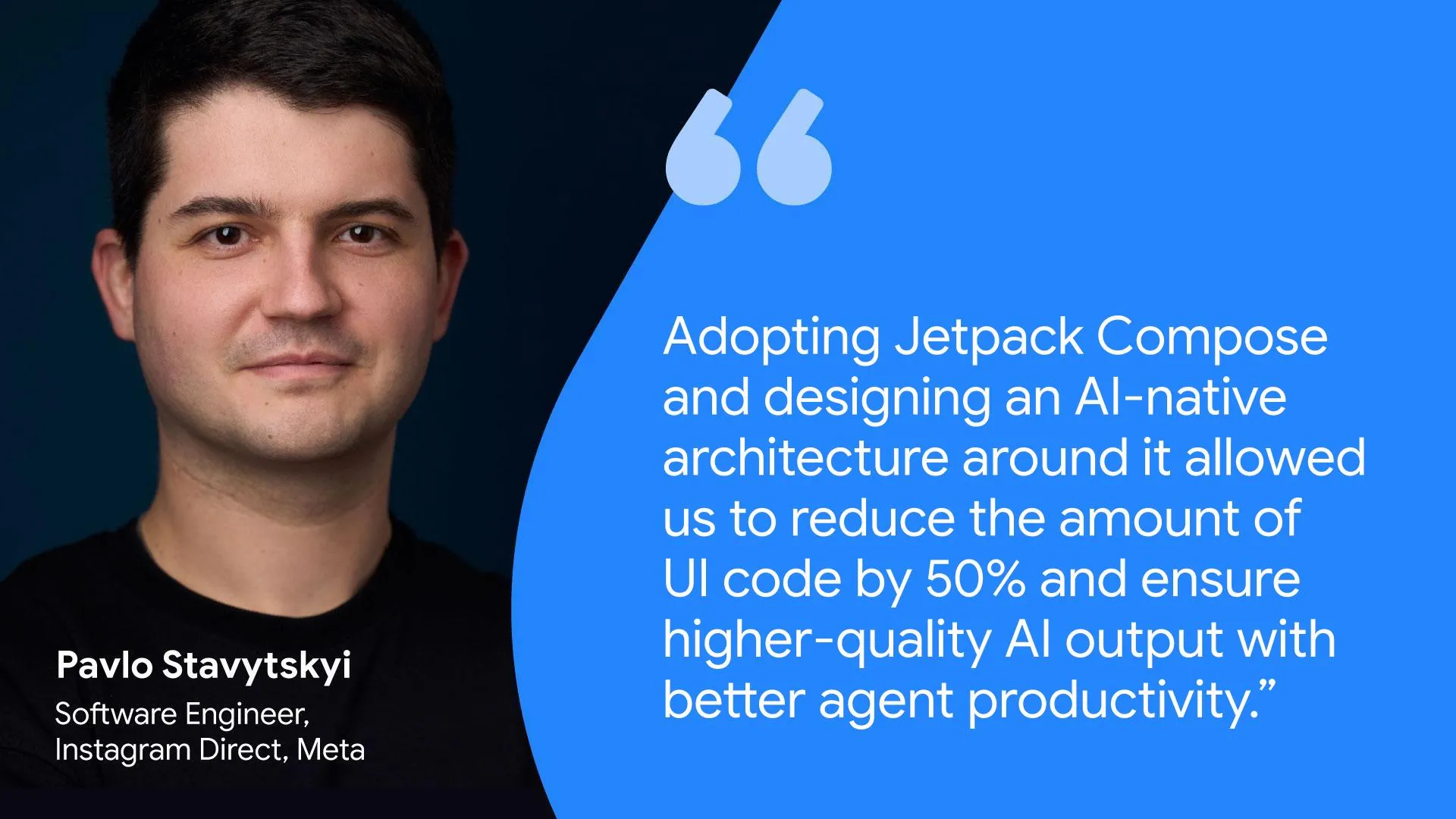
"We approached this through the lens of the codebase’s AI-readiness," a lead engineer noted. This collaboration resulted in tangible additions to the Android ecosystem. Features like LazyLayoutCacheWindows and the onVisibilityChanged modifier were not just beneficial for Instagram; they were upstreamed into Jetpack Compose to empower the broader Android developer community.
These additions provide developers with the ability to perform "pausable composition," where expensive operations are spread across multiple frames. This prevents "jank" (dropped frames), ensuring that even when a screen contains complex, dynamic content, the scrolling experience remains fluid.
Implications: The New Standard for Mobile Development
The migration of Instagram Direct carries profound implications for the future of software development.
1. AI-First Architecture
The primary takeaway is that the architecture of an application should be designed with the limitations and capabilities of AI in mind. By limiting the scope of class members and ensuring that UI components are pure functions of their inputs, developers can create a predictable, "AI-friendly" codebase. This reduces the cognitive load on both the human developer and the AI, leading to higher-quality code with fewer bugs.
2. The Death of Boilerplate
The 50% reduction in code size is not just a victory for performance; it is a victory for maintainability. Smaller codebases are easier to audit, easier to test, and significantly easier for AI to comprehend. By moving away from the verbose, imperative patterns of the legacy View system, Meta has set a new standard for how large-scale applications should minimize technical debt.
3. The Power of "Uninterrupted" Composition
The team discovered that small, fragmented migrations—while safer—often provide misleading performance data. The most significant gains were realized only when entire surfaces were migrated to be "Compose-native" without bridging interruptions. This indicates that for teams looking to adopt modern UI frameworks, a "rip-and-replace" or at least a "full-surface-replacement" strategy is often superior to a slow, piecemeal approach.
4. Performance is a Competitive Advantage
In an era where users have little patience for stuttering interfaces, the performance metrics achieved by the Instagram team—specifically the reduction in Large Frame Drops (LFDs/m)—prove that modern frameworks like Compose are capable of meeting, and often exceeding, the performance of older, more "mature" systems. The use of Baseline Profiles further ensures that users experience this speed from the very first launch, a critical metric for user retention.
Conclusion: A Blueprint for the Future
The story of Instagram Direct’s migration to Jetpack Compose is more than a technical case study; it is a preview of the future of engineering. By viewing the codebase as an asset that must interact seamlessly with AI, and by fostering deep partnerships between platform providers and application developers, Meta has demonstrated how to navigate the transition to modern development frameworks at an unprecedented scale.
As the industry continues to integrate AI into the daily workflow of developers, the lessons learned here—prioritizing declarative code, enforcing strict architectural boundaries, and optimizing for the AI-human feedback loop—will likely become the standard operating procedure for every major technology company. The bar has been raised, and the tools for building the next generation of mobile experiences are now more robust, more efficient, and more "AI-native" than ever before.