Advancing the Ecosystem: A Comprehensive Review of the crates.io Mid-2026 Development Cycle
The Rust programming language has long been defined not just by its memory safety guarantees, but by its robust and reliable dependency management system. At the heart of this ecosystem lies crates.io, the official package registry for the Rust community. Over the past six months, the crates.io team has engaged in a period of intense architectural refinement and user-experience enhancement.
Following the January 2026 development update, the team has successfully completed a full-scale migration of the frontend framework, unveiled a powerful new source code inspection tool, and initiated a long-term project to decouple the platform’s identity infrastructure from third-party providers. This report provides a detailed examination of these developments, their technical underpinnings, and their broader implications for the Rust community.
I. Main Facts: A New Era for Dependency Transparency
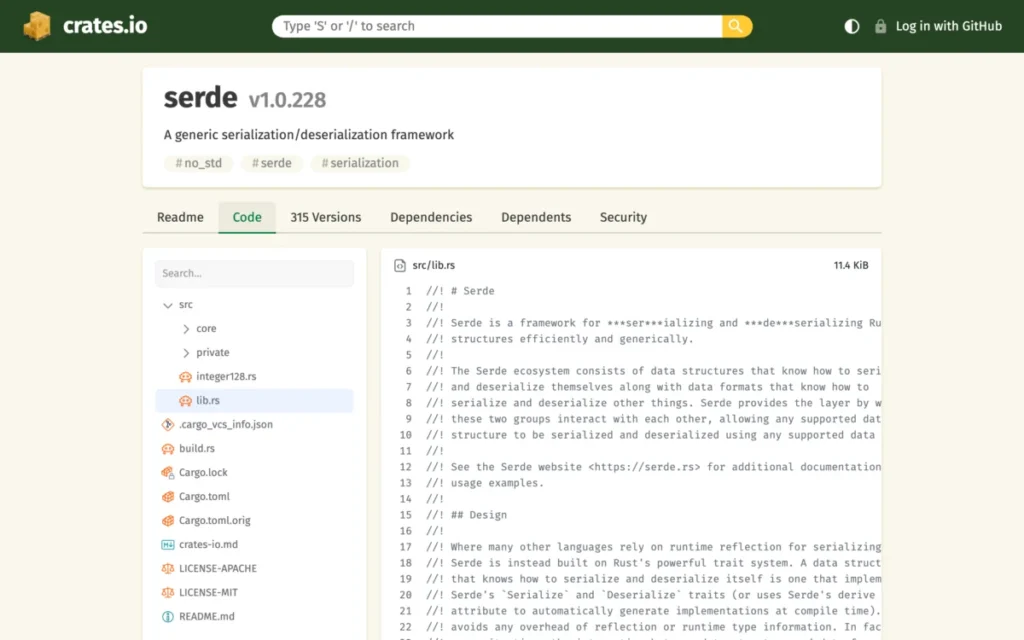
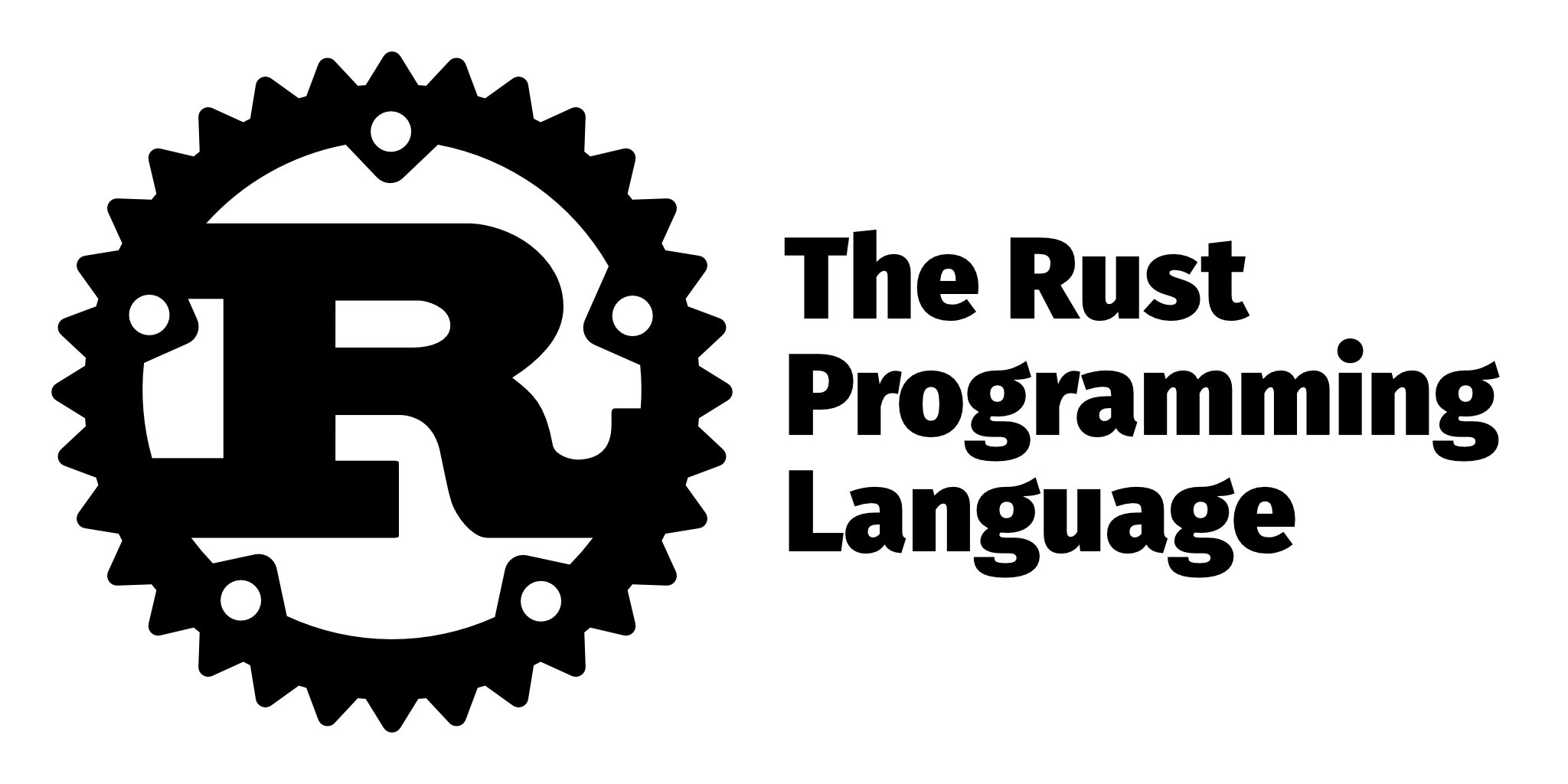
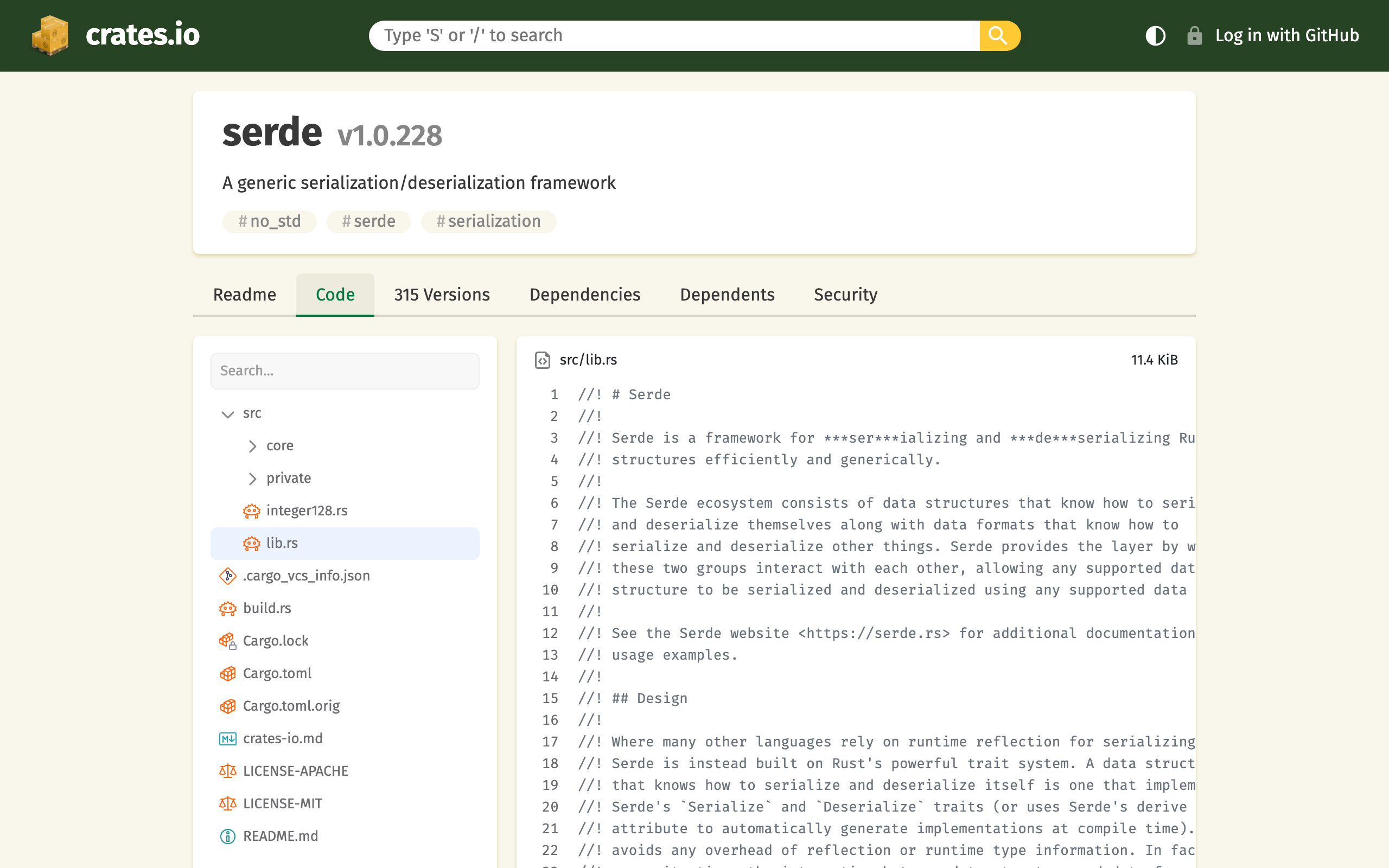
The most significant user-facing addition in this cycle is the Source Code Viewer. Traditionally, developers relied on links to external repositories—typically GitHub—to inspect the source code of a dependency. However, these repositories often contained build scripts, documentation, or CI configurations that were not part of the actual package distributed by cargo.
The new "Code" tab on crate pages offers a direct, high-fidelity view of exactly what is being downloaded and compiled by cargo. By providing a file tree interface, syntax highlighting, and persistent line-linkage (e.g., #L10-L20), crates.io has effectively lowered the barrier to security auditing. Users can now verify the integrity of the code they import without ever leaving the registry environment.
Architectural Innovation
The implementation of this feature is a masterclass in efficient engineering. To ensure that the primary crates.io API servers remain performant, the team implemented a background process that re-packs every published .crate file—which are standard gzipped tarballs lacking random access—into seekable ZIP archives. These archives, paired with a JSON manifest, are hosted on a static CDN. When a user navigates a file, the frontend performs an HTTP range request to fetch only the specific bytes required, ensuring that the feature operates with negligible server overhead.
II. Chronology of Developments: A Six-Month Roadmap
The progression of these updates reflects a methodical approach to infrastructure improvement.
- January 2026: Initial discussion of the "Security" tab and the integration of RustSec advisories.
- April 2026: Public testing phase for the new Svelte-based frontend, ensuring feature parity with the legacy Ember.js codebase.
- May 2026:
- Official migration to Svelte is completed; the Ember.js codebase is officially retired.
- RFC #3946 is formally accepted, setting the stage for the transition toward independent crates.io account management.
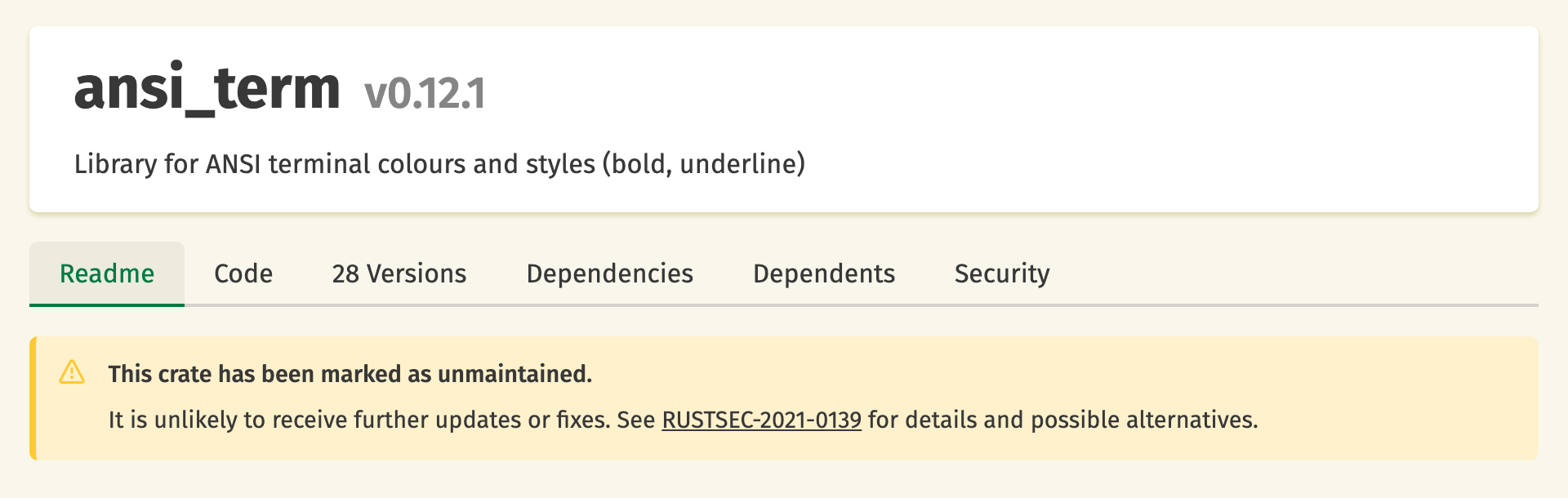
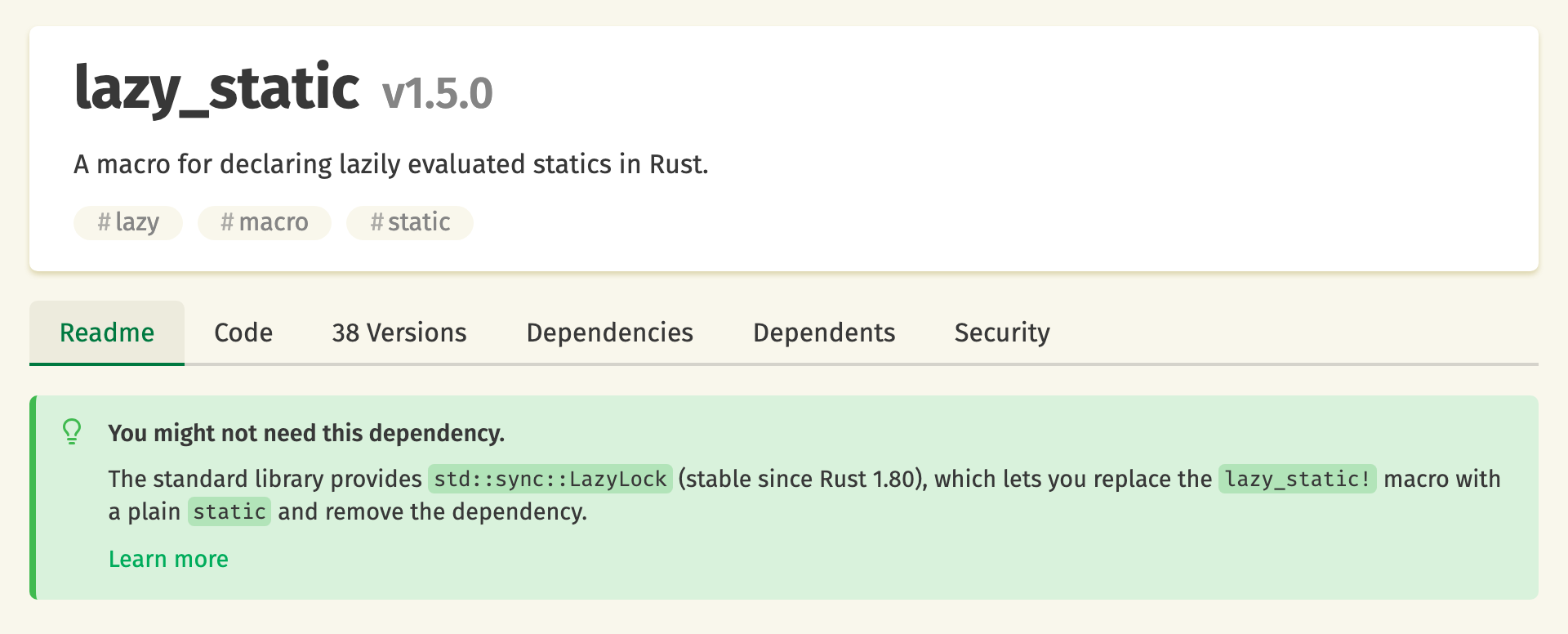
- June–July 2026: Rollout of the "unmaintained" warning banners and the "You might not need this dependency" suggestions, leveraging the new
std-replacement-datarepository. - July 2026: Final polish of the Source Code Viewer and deployment of the "Ferris" interaction easter egg on error pages.
III. Supporting Data: The Svelte Migration
The transition from Ember.js to Svelte was not merely a stylistic choice; it was a strategic decision to ensure the long-term maintainability of the registry. The Ember.js framework had served the platform faithfully for years, but as the complexity of crates.io grew, the overhead of the older framework began to hinder development velocity.
The new Svelte frontend, a 1:1 functional port, allows for faster build times and a significantly lower barrier to entry for prospective contributors. By modernizing the stack, the team has ensured that the "Code" tab and future features—such as the upcoming version-to-version diff viewer—can be implemented with greater agility.
IV. Official Responses and Strategic Shifts
Untangling from GitHub
Perhaps the most ambitious project currently underway is the effort to decouple crates.io accounts from GitHub. Since its inception, crates.io has relied on GitHub for authentication. While this facilitated rapid adoption, it created a single point of failure for identity management.
The adoption of RFC #3946 marks a paradigm shift. By introducing native crates.io usernames, the platform is preparing for a future that supports a diverse range of identity providers. The team has explicitly stated that they are taking a conservative approach to this rollout. Security is paramount, and the team is prioritizing stability and "small, carefully reviewed steps" to prevent account hijacking or authentication regressions.
The "You Might Not Need This" Initiative
The integration of warnings for deprecated or superseded crates addresses a long-standing issue in the Rust ecosystem: "dependency bloat." As the Rust standard library (std) matures, functionality once provided by community crates (such as lazy_static being replaced by std::sync::LazyLock) is increasingly absorbed into the core language.
The new rust-lang/std-replacement-data repository is a centralized effort to codify these replacements. By providing a transparent, community-vetted database of standard library equivalents, crates.io helps developers maintain leaner, more performant projects while acknowledging the contributions of the maintainers who provided the original functionality.
V. Implications for the Rust Ecosystem
Enhanced Security Posture
The combination of RustSec advisory warnings and the ability to inspect the exact files contained within a crate significantly elevates the security of the Rust supply chain. Developers are no longer forced to "trust blindly." They can now perform quick, integrated audits of their dependencies, identifying potentially malicious or outdated code without leaving the browser.
Developer Experience (DX)
While "Ferris the Crab" following the cursor on an error page may seem trivial, it underscores a cultural commitment to developer experience. The crates.io team is focused on making the registry not just a utility, but a welcoming space. The addition of helpful suggestions and a responsive, modern interface reduces the cognitive load on developers, allowing them to focus on writing code rather than wrestling with dependency management.
Future Outlook: Diffing and Beyond
The "Code" viewer infrastructure is intentionally designed as a precursor to a Version-to-Version Diff Viewer. This will be a game-changer for crate maintainers and consumers alike. By allowing developers to see exactly what changed between v1.2.0 and v1.3.0 directly on the site, the community will be able to perform safer upgrades, quickly spot breaking changes, and monitor upstream activity with unprecedented precision.
Conclusion: A Collaborative Future
The progress made over the last six months reflects the health of the Rust ecosystem. Through rigorous RFC processes, a commitment to modernizing the technology stack, and a focus on security and transparency, the crates.io team continues to provide a world-class experience for the language’s growing user base.
The team encourages all members of the Rust community to remain engaged. Whether by contributing to the std-replacement-data repository, participating in future RFC discussions regarding identity providers, or providing feedback via the official Zulip stream or GitHub discussions, user feedback remains the primary driver of the platform’s evolution.
As we look toward the end of 2026, the foundation laid by these updates ensures that crates.io remains not just a repository, but a robust, secure, and increasingly intelligent cornerstone of the Rust programming landscape. The transition toward a more independent, transparent, and user-friendly registry is well underway, and the benefits will be felt by every developer who runs cargo publish or cargo add.