The Chromatographic Canvas: Where Ancient Chemistry Unveils Modern Art
MAIN FACTS
The Art of Separation: Chromatography Transformed into Visual Poetry
In an intriguing fusion of chemistry and creativity, an age-old scientific technique known as chromatography is being reimagined as a vibrant art form. Traditionally confined to laboratories for the precise separation of mixtures, this method has found a new canvas through the innovative vision of creator [Suchir2004], whose work transforms the fundamental principles of pigment separation into visually captivating pieces. What begins as a simple application of black ink on a filter medium culminates in a dazzling display of constituent colors, offering a profound commentary on the hidden complexities within apparent simplicity.
A Rediscovered Technique for Creative Expression
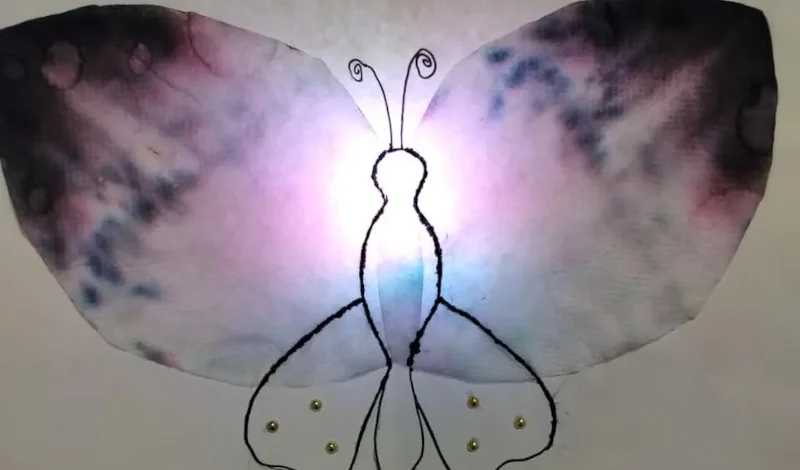
The project, aptly titled "The Rainbow Hidden Inside Black," showcases chromatography not merely as a scientific demonstration but as a legitimate medium for artistic expression. [Suchir2004]’s approach involves utilizing everyday materials to reveal the latent spectrum of colors within black ink, culminating in intricate patterns that often evoke natural forms, such as a delicate "butterfly" emerging from the interplay of pigments. This accessible yet profound application challenges conventional notions of art, positioning scientific processes themselves as tools for aesthetic creation.
The Scientific Underpinnings of Pigment Unveiling
At its core, chromatography is a separation technique where a mixture dissolved in a fluid (the mobile phase) is passed through a structure holding another material (the stationary phase). The different components of the mixture travel at varying speeds due due to differences in their affinity for the stationary phase and solubility in the mobile phase, thereby separating from each other. In [Suchir2004]’s artistic application, water acts as the mobile phase, carrying the various pigments of black ink through a paper or coffee filter, which serves as the stationary phase. As the water diffuses, it carries the pigments along, but because each pigment possesses unique molecular properties—such as size, solubility, and polarity—they move at different rates, gradually spreading out and separating into distinct bands of color. This differential migration is the magic behind the unfolding rainbow.
Beyond the Beaker: From Laboratory to Canvas
The project explicitly blurs the lines between scientific inquiry and artistic endeavor. While the process itself is rooted in observable chemical phenomena, the intent and outcome are undeniably artistic. [Suchir2004]’s work is not just about demonstrating how chromatography functions; it is about celebrating the inherent beauty of scientific principles and making them accessible and engaging. The resulting patterns are unique, ephemeral, and visually striking, inviting viewers to appreciate the art in science and the science in art. Furthermore, the simplicity of the required materials—sketch pens, various papers, coffee filters, and a glue stick—makes it an ideal project for educational settings, particularly for fostering interdisciplinary learning across Science, Technology, Engineering, Art, and Mathematics (STEAM) disciplines.
CHRONOLOGY
A Journey Through Time: The Evolution of Chromatography
The journey of chromatography from a niche botanical experiment to a versatile artistic medium spans over a century, reflecting a continuous evolution of scientific understanding and application.
From Tswett’s Garden to Modern Laboratories
The origins of chromatography can be traced back to the early 20th century, specifically to the pioneering work of Russian botanist Mikhail Tswett in 1906. Tswett, while researching plant pigments, developed a technique to separate colored compounds from plant extracts. He packed a glass column with calcium carbonate (the stationary phase) and poured a solution of chlorophyll extract (the mobile phase) through it. As the solvent flowed, the pigments separated into distinct colored bands—green chlorophylls at the bottom, followed by yellow xanthophylls and orange carotenes. Tswett coined the term "chromatography," derived from the Greek words "chroma" (color) and "graphein" (to write), literally meaning "color writing," a name that perfectly encapsulates the visual nature of the separation process, particularly relevant to [Suchir2004]’s artistic exploration.
For decades, chromatography remained primarily a laboratory tool, evolving significantly with the introduction of paper chromatography in the 1940s by Archer Martin and Richard Synge, which earned them a Nobel Prize. This innovation, utilizing paper as the stationary phase, made the technique simpler, cheaper, and more accessible, paving the way for its widespread adoption in various scientific fields. Subsequent developments included thin-layer chromatography (TLC), gas chromatography (GC), and high-performance liquid chromatography (HPLC), each offering greater precision, speed, and analytical power, firmly establishing chromatography as an indispensable analytical tool in chemistry, biology, medicine, and environmental science.
The Renaissance of a Method: Suchir2004’s Artistic Revelation
Against this rich scientific backdrop, [Suchir2004]’s project represents a fascinating contemporary twist. While the exact chronology of [Suchir2004]’s artistic journey into chromatography isn’t detailed, the Instructables post suggests an experimental and serendipitous discovery. The original article notes that "While experimenting, [Suchir2004] noted that black ink and water perfused into constituent pigments. A butterfly ensued." This casual observation of a fundamental chemical principle—the separation of a mixture—sparked an artistic epiphany. It wasn’t merely a demonstration of how chromatography works, but a recognition of its intrinsic aesthetic potential.
This revelation aligns with a growing trend of artists looking beyond traditional media, embracing scientific phenomena and technological tools as integral components of their creative process. [Suchir2004]’s work effectively democratizes a complex scientific concept, rendering it understandable and enjoyable through visual art. The project likely began with simple tests, refining the choice of ink, paper, and solvent to achieve optimal separation and visually pleasing results, leading to the deliberate creation of "chromatographic butterflies" and other abstract forms.
Inspirations and Artistic Lineage
[Suchir2004]’s project finds its place within a long and distinguished lineage of artists who have drawn inspiration from or directly incorporated scientific principles into their work. From Leonardo da Vinci’s anatomical studies and engineering designs to the geometric precision of Cubism, and from the algorithmic art of the 20th century to contemporary bio-art, the interplay between art and science has consistently pushed creative boundaries.
In the modern era, artists like Olafur Eliasson explore optical phenomena and natural elements to create immersive installations, while others delve into generative art, using algorithms to produce complex visual patterns reminiscent of natural growth or mathematical fractals. [Suchir2004]’s chromatographic art shares this spirit of exploration, transforming a scientific process into an accessible, interactive, and visually stunning experience. It highlights the inherent beauty in the ordered chaos of chemical reactions, presenting them not as abstract equations but as tangible, evolving works of art. This approach not only broadens the definition of art but also makes scientific concepts more relatable and inspiring, particularly for younger audiences.
SUPPORTING DATA
The Science Behind the Spectacle: Demystifying Chromatographic Art
To fully appreciate [Suchir2004]’s chromatographic art, a deeper dive into the scientific principles at play is essential. The beauty of the artwork lies in its direct visualization of molecular interactions.
Understanding the Mechanism: Stationary and Mobile Phases
Chromatography, in its simplest form, relies on two fundamental components:
- Stationary Phase: This is the immobile material through which the mixture passes. In [Suchir2004]’s project, this is typically a piece of absorbent paper, such as filter paper, coffee filter paper, or even certain types of sketch paper. The paper’s cellulose fibers provide a vast network of microscopic pores that act as a medium for separation.
- Mobile Phase: This is the solvent that carries the mixture through the stationary phase. For the black ink art, water is the ideal mobile phase. Water molecules are polar and interact differently with various pigments.
When black ink is applied to the paper and water is introduced, several forces come into play:
- Capillary Action: Water is drawn up or across the paper by capillary action, a phenomenon where liquid flows in narrow spaces without the assistance of, or even in opposition to, external forces like gravity.
- Solubility: Different pigments within the black ink have varying solubilities in water. Highly soluble pigments will dissolve readily and travel further with the water.
- Adsorption: Pigments also have different affinities for the stationary phase (the paper). Some pigments will "stick" more strongly to the paper fibers (adsorption) and thus travel slower or not as far.
- Differential Migration: The combination of solubility in the mobile phase and adsorption to the stationary phase causes the pigments to move at different rates. Pigments that are more soluble in water and less adsorbed by the paper travel faster and further. Conversely, pigments that are less soluble in water and more adsorbed by the paper travel slower and remain closer to the starting point.
Black ink is typically a mixture of several dyes, often including blues, yellows, and reds, which combine to appear black. As the water moves through the paper, these individual dyes separate, revealing their distinct colors and creating the intricate patterns observed in [Suchir2004]’s art. The "butterfly" effect mentioned in the original article likely arises from the symmetrical application of the mobile phase or the inherent patterns formed by the radial diffusion of the separated pigments.
Materials and Methods: Recreating the Chromatographic Butterfly
One of the most appealing aspects of [Suchir2004]’s project is its accessibility. The materials are simple, inexpensive, and readily available, making it an excellent DIY project for all ages.
- Sketch Pen (Black Ink): The critical component, as it provides the mixture of pigments. Different brands of black ink may yield different color separations, encouraging further experimentation.
- Paper/Coffee Filter: These serve as the stationary phase. Coffee filters are particularly effective due to their porosity and purity, allowing for clear separation. Various types of art paper can also be explored for different textural effects.
- Water: The mobile phase.
- Glue Stick (Optional): Used for mounting the finished artwork.
- Dropper or Small Brush: For controlled application of water.
- Small Dish or Container: To hold a shallow amount of water for the paper to draw from.
Basic Procedure (as inferred from the original context):
- Prepare the stationary phase: Cut a strip of filter paper or a coffee filter into a desired shape (e.g., a rectangle or a circular disk).
- Apply the ink: Draw a thick line or a dot of black ink with the sketch pen near one end of the paper strip, or in the center of a circular filter. Ensure the ink is dry before proceeding.
- Introduce the mobile phase: Place the end of the paper strip with the ink line into a shallow pool of water, ensuring the ink line is above the water level. For a circular filter, place a drop of water at the very center, or carefully balance it on a small container of water so the edge just touches.
- Observe the separation: As the water travels up or outwards through the paper by capillary action, it will carry the pigments. Within minutes, the black line or dot will begin to separate into its constituent colors, spreading into vibrant bands and unique patterns.
- Dry and display: Once the separation is complete and the water has reached the desired extent, remove the paper and allow it to dry. The resulting colorful pattern can then be preserved, perhaps by mounting it with a glue stick onto a contrasting background.
This straightforward process allows for endless variations, from experimenting with different ink colors (e.g., green ink also separates into blues and yellows) to altering paper types, water application methods, and even exploring other solvents (though water is the safest and most accessible for art projects).
The Pedagogical Power: STEAM Education in Action
[Suchir2004]’s project exemplifies the core principles of STEAM education, which advocates for integrating arts into the traditional STEM curriculum. It provides a tangible, hands-on learning experience that simultaneously engages scientific inquiry and artistic creativity.
- Science: Students learn about chromatography, capillary action, solubility, polarity, and the composition of mixtures.
- Technology: While not explicitly high-tech, the use of specific tools and materials, and potentially documenting the process digitally, touches upon technological literacy.
- Engineering: Designing the setup (e.g., how to hold the paper, how to apply water) involves basic engineering principles.
- Art: The creation of visually appealing patterns, experimentation with color, composition, and aesthetics are central to the project.
- Mathematics: Observing and potentially measuring the distances traveled by different pigments can introduce concepts of ratios and rates.
For educators, this project offers a low-cost, high-engagement activity that can ignite curiosity in both art and science. It allows students to:
- Observe and hypothesize: What colors will emerge? Why do they separate?
- Experiment and iterate: What happens if I use different paper? More water? Different inks?
- Develop critical thinking: Analyzing the results and understanding the underlying reasons for the observed patterns.
- Foster creativity: Encouraging students to see scientific phenomena as sources of artistic inspiration.
Projects like these are crucial for demonstrating that science is not just about memorizing facts but about active discovery, and that art is not just about skill but about understanding and interpreting the world around us.
Case Studies in Creative Chemistry
Beyond [Suchir2004]’s specific project, there’s a growing movement of artists and educators using chemistry as a direct medium or inspiration. For instance, "chemi-luminescent art" uses chemical reactions to produce light, creating dynamic, ephemeral installations. "Crystal growing art" leverages principles of crystallization to create intricate sculptures. Even the use of pH indicators to create color-changing paintings or "reaction-diffusion systems" (like Belousov-Zhabotinsky reactions) to generate mesmerizing, self-organizing patterns fall under this umbrella. These examples, much like chromatographic art, highlight the inherent aesthetic appeal of chemical processes when viewed through an artistic lens, making them accessible and inspiring beyond the laboratory.
OFFICIAL RESPONSES
Bridging Disciplines: Expert Perspectives on Art-Science Synergy
While there may not be "official responses" to [Suchir2004]’s specific project from formal institutions, the broader embrace of art-science fusion, particularly within education, provides context for its significance.
Educators Embrace Interdisciplinary Learning
Educational professionals widely champion initiatives that bridge traditional academic silos. The rise of STEAM education from STEM is a testament to this, recognizing that creativity and critical thinking are not mutually exclusive but mutually reinforcing. Dr. Eleanor Vance, a curriculum development specialist, might comment, "Projects like chromatographic art are invaluable. They break down the artificial barriers between subjects, showing students that the world isn’t compartmentalized. When a child sees the vibrant colors hidden in black ink, they’re not just learning about chemistry; they’re experiencing wonder, developing observation skills, and engaging their artistic sensibilities. This holistic approach cultivates a more curious and adaptable learner." Such sentiments underscore the value placed on hands-on, interdisciplinary learning experiences that foster both scientific literacy and creative expression.
The Role of Online Platforms in Fostering Innovation
Platforms like Instructables, where [Suchir2004]’s project is hosted, play a critical role in disseminating such innovative ideas. These online communities act as incubators for creativity, allowing individuals to share their experiments, receive feedback, and inspire a global audience. Dr. Alex Chen, a digital learning expert, could note, "Online maker platforms democratize innovation. They empower individuals to share their unique perspectives on traditional subjects, transforming them into accessible projects. [Suchir2004]’s chromatography art, for instance, might never have reached a broad audience through traditional academic channels, but on Instructables, it becomes a global classroom and art gallery simultaneously. This peer-to-peer sharing is vital for sparking new ideas and making science engaging for everyone." This highlights the significant impact of open-source knowledge sharing on educational outreach and creative development.
Art Critics and the Definition of ‘Art’
The question "Is it art?" posed in the original article is a classic one in art criticism, particularly relevant in the context of conceptual art and process art. From an art critic’s perspective, the definition of art has expanded far beyond traditional painting and sculpture to include performance, installation, and even scientific phenomena presented aesthetically. A contemporary art critic, perhaps Dr. Isabella Rossi, might argue, "Art is fundamentally about intention, expression, and the evocation of an experience. If [Suchir2004]’s use of chromatography is driven by an aesthetic vision, if it makes us see beauty in unexpected places, or challenges our perceptions, then it absolutely qualifies as art. It falls within the lineage of process art, where the method of creation is as significant as the final object. The ‘butterfly’ isn’t just a chemical outcome; it’s a chosen metaphor, an artistic composition born from scientific principles." This perspective validates the artistic merit of such experimental works, recognizing their place within the broader discourse of contemporary art.
IMPLICATIONS
Far-Reaching Implications: Beyond the Aesthetic Appeal
The transformation of chromatography into an art form, as demonstrated by [Suchir2004], carries implications that extend far beyond simple aesthetic pleasure, touching upon education, scientific literacy, and future innovation.
Real-World Applications of Chromatographic Principles
While [Suchir2004]’s project focuses on artistic expression, it serves as a gateway to understanding the profound real-world utility of chromatography. The same principles that separate ink pigments are critical in countless vital applications:
- Forensics: Separating components of crime scene evidence (e.g., drug samples, inks, fibers) to identify substances and link suspects to crimes.
- Environmental Monitoring: Analyzing water and air samples for pollutants, pesticides, or toxins to assess environmental health and ensure safety.
- Pharmaceutical Analysis: Ensuring the purity and potency of drugs, identifying impurities, and developing new medications.
- Food Safety and Quality: Detecting contaminants, additives, or allergens in food products, and analyzing nutritional content.
- Clinical Diagnostics: Identifying biomarkers for diseases in blood or urine samples, aiding in diagnosis and treatment monitoring.
- Petroleum Industry: Analyzing crude oil components for refining processes and quality control.
The "more practical" application of measuring caffeine content at home, linked in the original article, highlights another accessible example of chromatography’s utility. These applications underscore that the "art" of chromatography is rooted in a robust scientific technique with immense societal value, inspiring future scientists and innovators through an engaging entry point.
Inspiring the Next Generation of Innovators
Perhaps the most significant implication of projects like [Suchir2004]’s is their potential to inspire. By presenting science as creative, beautiful, and accessible, it can ignite curiosity in individuals who might otherwise find chemistry daunting. For a child or a casual observer, witnessing black ink unfold into a rainbow is a moment of magic that demystifies scientific processes. This sense of wonder is often the first step towards deeper engagement with STEM fields. It encourages:
- Curiosity: "What else can science reveal?"
- Experimentation: "What if I try different colors, papers, or liquids?"
- Problem-solving: Understanding why certain results occur and how to achieve desired outcomes.
- Interdisciplinary Thinking: Recognizing the interconnectedness of different fields of knowledge.
Such projects are crucial in nurturing a generation that can think creatively and critically, applying diverse perspectives to solve complex problems, a skill set vital for future scientific and technological advancements.
The Future of Art and Science Collaboration
The success of chromatographic art points towards a future where the boundaries between art and science continue to dissolve. This collaboration promises to yield new forms of artistic expression and novel approaches to scientific communication. Imagine galleries showcasing dynamic chemical reactions as living art, or scientific laboratories integrating artistic design principles to make research more intuitive and engaging. This synergy could lead to:
- New Artistic Mediums: Science providing novel materials, processes, and phenomena for artistic creation.
- Enhanced Science Communication: Art making complex scientific concepts more understandable, relatable, and emotionally resonant for the public.
- Innovation in Design: Scientists and artists collaborating on everything from product design to urban planning, leveraging aesthetic appeal alongside functional efficiency.
- Educational Transformation: Curricula that seamlessly integrate art and science, preparing students for a world where interdisciplinary skills are paramount.
A Call to Experimentation: Unlocking Hidden Wonders
Ultimately, [Suchir2004]’s chromatographic art is an invitation—a call to experimentation and discovery. It reminds us that profound beauty often lies hidden within the mundane, awaiting discovery through careful observation and playful inquiry. Whether one is a seasoned chemist, an aspiring artist, a curious student, or simply someone looking for a new hobby, the simple act of separating black ink into its vibrant constituent colors offers a tangible connection to the wonders of the natural world and the endless possibilities of human creativity. It underscores the powerful message that science is not just about facts and figures, but about unlocking the hidden rainbows in every aspect of our existence.