Android XR Evolution: Google Accelerates the Future of Immersive Computing
Date: 15 June 2026
Authors: Stevan Silva, Group Product Manager; Vinny DaSilva, Developer Relations Engineer
The landscape of extended reality (XR) is undergoing a seismic shift. As the boundaries between digital information and physical environments continue to dissolve, Google is doubling down on its commitment to the Android XR ecosystem. Following significant announcements at Google I/O and a commanding presence at this week’s Augmented World Expo (AWE), the company has unveiled a robust suite of developer tools, expanded engine support, and a dedicated catalyst program aimed at solidifying Android’s dominance in the wearable computing space.
Main Facts: The New Frontier of Android XR
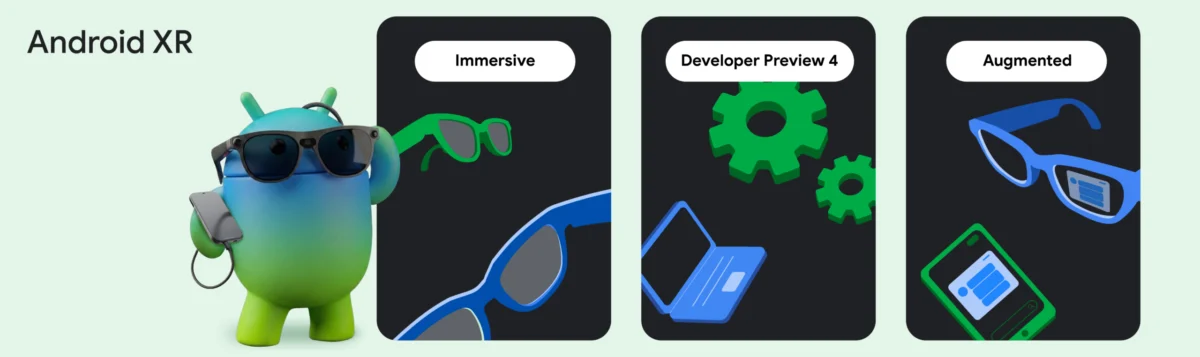
The core of this week’s announcement centers on the release of Developer Preview 4 (DP4) of the Android XR SDK. This release is not merely an incremental update; it represents a foundational shift in how developers can conceptualize, build, and deploy immersive and augmented reality experiences.
Key pillars of the update include:
- Full Emulator Support: Developers can now prototype and iterate on their code entirely within Android Studio, removing the barrier to entry caused by hardware scarcity.
- Jetpack Projected Library: A bridge that allows existing mobile applications to extend their functionality into the realm of intelligent eyewear.
- Multi-Engine Ecosystem: Beyond existing Unity support, Google has officially integrated support for Unreal Engine and Godot, providing developers with the creative freedom to use their preferred industry-standard tools.
- Android XR Engine Hub: A new Windows-based desktop tool designed to synchronize real-time testing between the developer’s viewport and the target hardware.
Chronology: A Rapid Trajectory
The advancement of the Android XR ecosystem has been swift, moving from conceptual frameworks to a consumer-ready reality in a remarkably short window.
- Early 2026: The official launch of the Samsung Galaxy XR set the stage, providing the first mass-market hardware anchor for the Android XR platform.
- May 2026 (Google I/O): Google signaled the intent to unify the XR developer experience, emphasizing the "mobile-first" approach to wearable computing.
- June 2026 (AWE): The current week marks the most significant push for developer adoption. With the release of DP4 and the announcement of the Developer Catalyst Program, Google is moving from "platform building" to "ecosystem cultivation."
Supporting Data and Technical Architecture
The technical maturity of the Android XR SDK is evidenced by its focus on "intelligent eyewear" and "location-based immersion."
The Jetpack Compose Glimmer Advantage
A standout feature for mobile developers is the updated Jetpack Compose Glimmer. Recognizing the unique physical constraints of optical see-through displays, this update optimizes text legibility and provides navigation components specifically tuned for touchpad-based interaction. The integration of the Device Availability API allows apps to intelligently detect when glasses are being worn, automatically adapting the UI—a critical feature for battery life management and user experience continuity.
Geospatial Intelligence
For developers targeting location-based experiences, the early preview of the Geospatial API for wired XR glasses is a game changer. By leveraging Google’s Visual Positioning System (VPS) alongside ARCore, developers can now anchor digital assets to specific, real-world geographical coordinates with high precision. This paves the way for sophisticated AR navigation, interactive tourism, and localized gamification that were previously technically out of reach for independent developers.
Official Responses and Strategic Vision
Stevan Silva and Vinny DaSilva emphasize that the strategy is one of "frictionless expansion."
"Building for audio and display glasses should not feel like starting from scratch," Silva noted in the official briefing. "Our goal is to ensure that the mobile expertise developers have cultivated over the last decade is directly portable to the XR medium."

The introduction of the Android XR Developer Catalyst Program serves as the official corporate commitment to this vision. By providing accepted developers with pre-release hardware—including both display glasses and wired XR units—Google is effectively lowering the risk for startups and independent studios. The program provides not just the hardware, but a scaffold of support forums and launch guidance designed to ensure that the influx of new apps on the Google Play Store meets a high threshold of quality and performance.
Implications: The Shift Toward Ubiquitous XR
The ramifications of these updates are far-reaching, affecting both the consumer market and the professional development industry.
1. Standardization of the Development Lifecycle
By enabling full simulation within Android Studio, Google is effectively commoditizing XR development. Previously, the "hardware wall"—where developers needed expensive, niche hardware to test even the simplest interactions—acted as a gatekeeper. By removing this, the platform invites a surge of "long-tail" applications, ranging from productivity tools to niche educational experiences.
2. The Battle for the "Third Screen"
With the Samsung Galaxy XR already in the market, the competition for the space between the smartphone and the laptop is heating up. Android XR is positioning itself as the primary operating system for the "third screen." By supporting Unreal Engine and Godot, Google is explicitly challenging competing ecosystems that rely on proprietary or closed-loop development environments.
3. Cross-Industry Adoption
The success of early adopters like NAVER Papago, who are bringing real-time translation experiences to display glasses, illustrates the immediate utility of this platform. As developers integrate these SDKs, we expect to see a rapid migration of utility apps—translation, navigation, real-time metrics, and remote assistance—into the visual field of the user.
Looking Ahead: Building the Future
As the ecosystem matures, the focus will likely shift from building foundational tools to refining the "Human-Computer Interaction" (HCI) standards of XR. The Android XR Playlist on YouTube currently acts as a roadmap for these emerging standards, covering everything from UI/UX best practices for glasses to the intricacies of spatial audio.
For those looking to enter the space, the path is now clearly defined. The combination of the Android XR SDK, the Engine Hub, and the Developer Catalyst Program offers a comprehensive toolkit for anyone aiming to shape the next generation of computing.
"The ecosystem is growing rapidly," said DaSilva. "The tools are no longer promises—they are available for you to explore today. Whether you are an indie developer or part of a large studio, the infrastructure is ready for your vision."
For developers ready to make their mark, the application process for the Catalyst Program is currently open, and the latest SDK is available for immediate download. As we look toward the remainder of 2026, the question is no longer if XR will become a mainstream platform, but who will build the defining applications of this new era.
Resources for Developers:
- Developer Preview 4: Access via the official Android Developer portal.
- Tooling Deep Dive: Visit the Android Studio Preview documentation.
- Community Support: Join the Android XR discussion forums to connect with peers and Google engineers.
- Engine Support: Explore the Android XR Engine Hub for Windows to begin integrating your existing Unity, Unreal, or Godot projects.