Beyond the Atmosphere: Lego Launches New Hubble Space Telescope Icons Set
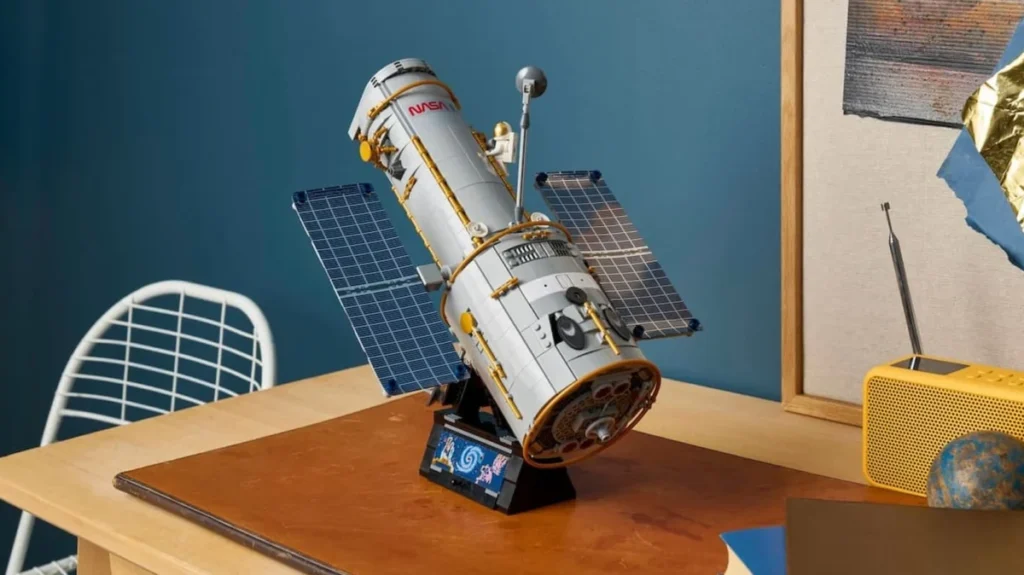
In the world of space exploration, few instruments have captured the human imagination quite like the Hubble Space Telescope. Since its deployment in 1990, the observatory has peered into the deepest corners of our universe, fundamentally altering our understanding of cosmic history. Now, Lego is inviting enthusiasts to bring a piece of that history into their homes with the announcement of the new 1,252-piece Lego Icons Hubble Space Telescope set.
Priced at $140, this intricate model is designed to be more than just a shelf ornament; it is a technical tribute to one of humanity’s greatest scientific achievements. Set to hit store shelves on August 1, the kit offers a detailed, tactile look at the engineering marvel that has redefined modern astronomy.
Main Facts: A Detailed Look at the Build
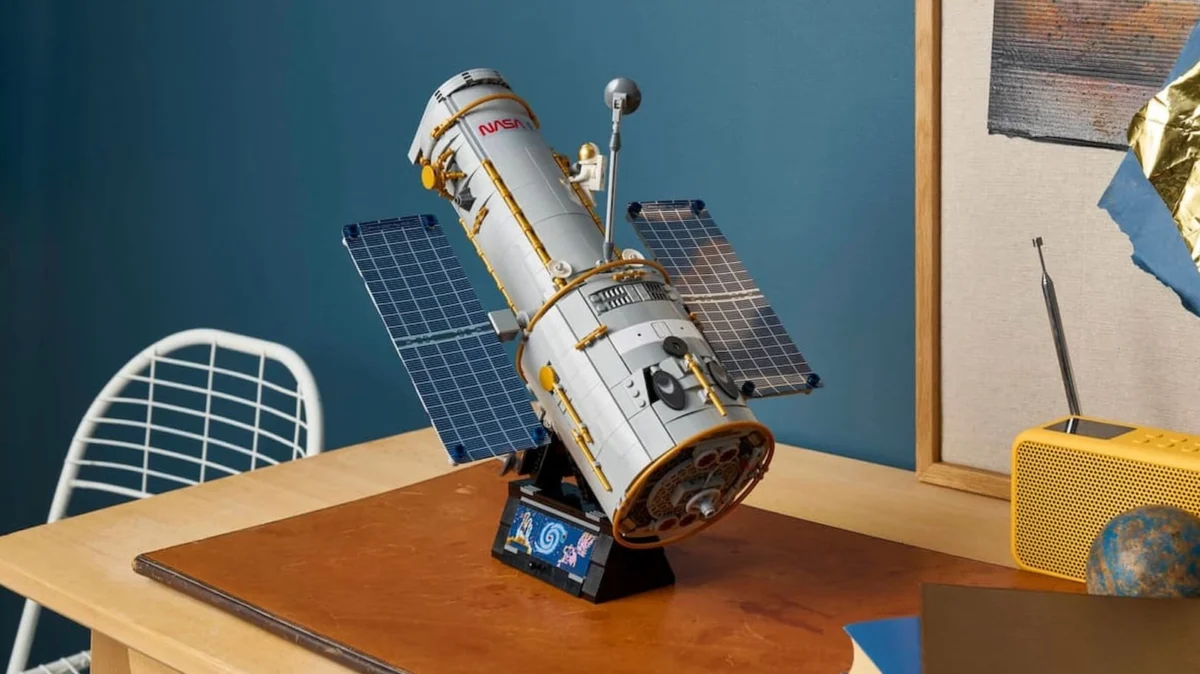
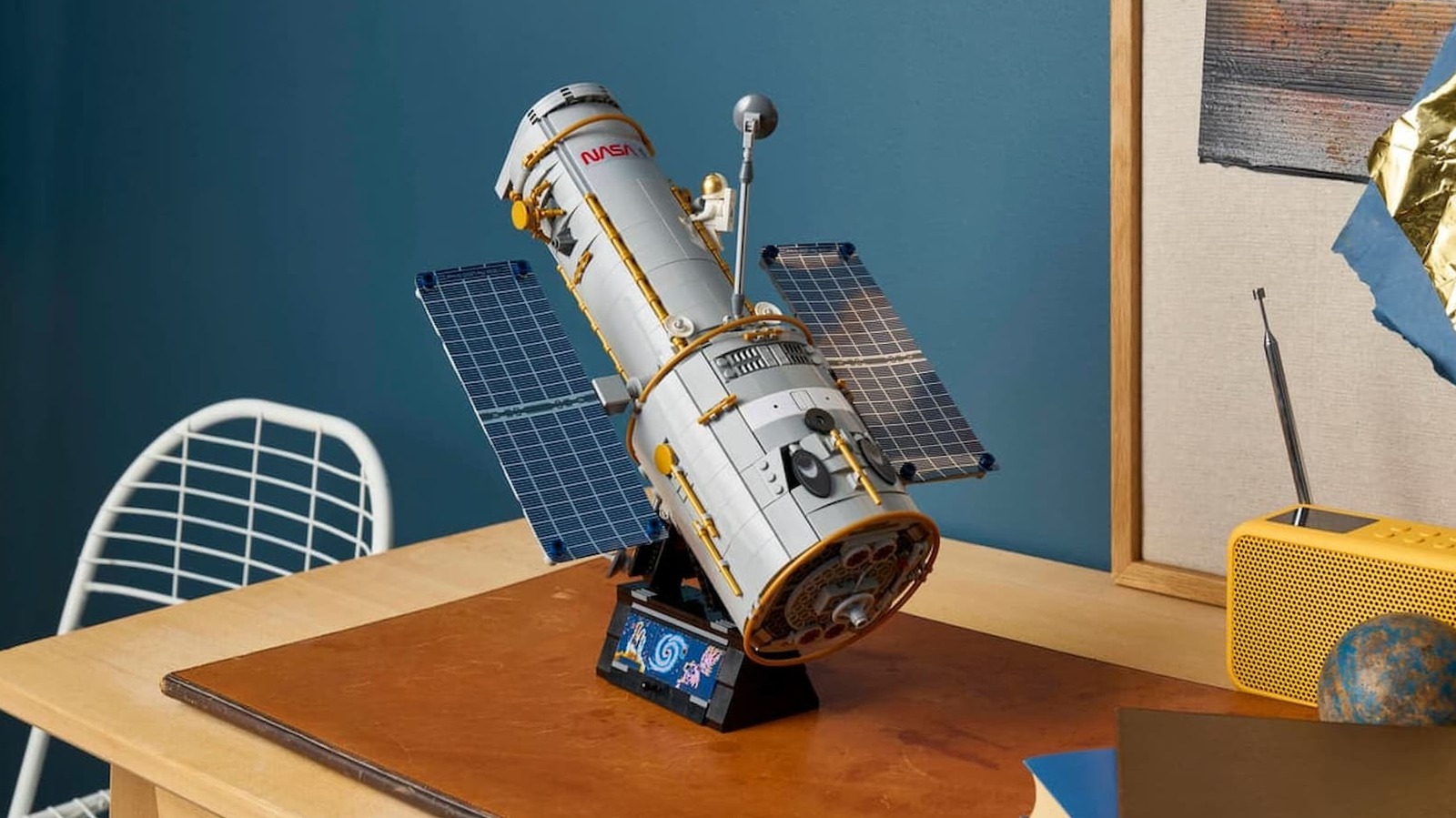
The Lego Icons Hubble Space Telescope (set number 11382) is a sophisticated addition to the company’s "Icons" line, which typically focuses on complex builds designed for adult collectors. With 1,252 pieces, the set strikes a balance between accessibility and technical depth.
Upon completion, the model measures over 12.5 inches in height, 15 inches in length, and 15 inches in width. These dimensions allow for a high level of detail that smaller sets often lack. Among the standout features are the removable panels, which allow builders to "open up" the telescope to inspect internal components. Lego has painstakingly recreated the telescope’s core instruments, including the intricate gyroscopes and the primary mirror assembly that remains the heart of the actual Hubble.
Furthermore, the model includes adjustable solar arrays and antennas, reflecting the functional flexibility of the real-world observatory. The set is completed by a specialized display stand that includes an information plaque, ensuring that the model serves as an educational centerpiece. Perhaps the most charming touch is the inclusion of a dedicated astronaut minifigure, which helps provide a sense of scale, reminding builders of the daring repair missions that kept Hubble operational for over three decades.
A Chronological Perspective: Hubble’s Journey
To understand the significance of this new Lego set, one must look back at the trajectory of the Hubble Space Telescope itself. Launched into low Earth orbit on April 24, 1990, via the Space Shuttle Discovery (STS-31), Hubble faced immediate adversity. Shortly after deployment, it was discovered that the primary mirror had a slight spherical aberration, resulting in blurry images.
This crisis led to the now-legendary Servicing Mission 1 in 1993, where astronauts installed the Corrective Optics Space Telescope Axial Replacement (COSTAR) to fix the mirror’s focus. That mission set a precedent: Hubble would not just be a satellite; it would be a modular instrument, serviced and upgraded by humans in the harsh vacuum of space.
Over the next thirty years, four subsequent servicing missions replaced batteries, cameras, and guidance sensors, effectively keeping the telescope at the cutting edge of science.
Historical Lego-Space Intersections
This is not the first time Lego has turned its attention toward the Hubble. In 2021, the company released a highly acclaimed Space Shuttle Discovery set, which included a scaled version of the Hubble as a "payload." While that set was a masterpiece of set design—focusing on the launch and deployment phase—the new 2024 release is a dedicated, standalone homage. By shifting the focus solely to the telescope, Lego allows for greater structural detail, catering to those who want a dedicated space-themed display.
Supporting Data and Technical Specifications
The Lego Icons Hubble set is more than just a creative endeavor; it reflects the physical realities of the source material. The original Hubble Space Telescope is a Cassegrain reflector, roughly 43 feet long with a primary mirror 2.4 meters in diameter.
The Lego model’s inclusion of movable aperture doors is a nod to the protective mechanisms used to shield the telescope’s sensitive optics from the sun’s intense glare and potential micrometeoroid damage. The inclusion of the solar panels in the build highlights the telescope’s dependence on photovoltaic power, a critical design feature that has allowed it to remain powered long after its projected mission life.
For those interested in the longevity of the materials, the set utilizes standard ABS (Acrylonitrile Butadiene Styrene) plastic. This material is renowned for its durability and resistance to degradation. While the real Hubble is currently in a slow, inevitable descent toward atmospheric reentry—a process it will complete by the mid-2030s—the Lego version is effectively permanent. In a poetic twist of irony, while the real telescope will eventually burn up upon returning to the atmosphere, the plastic bricks of this set will remain in our households for generations.
Official Responses and Market Anticipation
Industry analysts and the Lego fan community have reacted with significant enthusiasm. The Brick Fan, a leading source for Lego news, noted that the release timing aligns perfectly with a growing trend of "space-adjacent" consumer interest.
Lego’s strategy with the Icons line has been to capture the "AFOL" (Adult Fan of Lego) demographic. By focusing on scientific instruments, the company bridges the gap between toy collectors and science enthusiasts. The $140 price point is considered competitive for a set of this complexity, positioning it as an ideal gift for educators, astronomers, and hobbyists alike.
"We wanted to create a model that honors the legacy of Hubble," a representative for the design team hinted in promotional materials. "By allowing builders to peek inside the chassis, we aren’t just showing them what the outside of a satellite looks like; we are showing them the complexity of the instruments that allowed us to see the birth of stars."
The Implications: Why Hubble Still Matters
The release of this set serves as a timely reminder of the fragility and importance of our space-based infrastructure. As we move into the era of the James Webb Space Telescope (JWST), it is easy to view Hubble as a relic of the past. However, Hubble remains a vital part of the scientific community, often working in tandem with newer telescopes to provide multi-wavelength data.
The Educational Value
Beyond the aesthetic appeal, this set serves an important pedagogical role. For many younger builders, the manual (and the accompanying historical notes) will be their first deep dive into the mechanics of space exploration. It demystifies how telescopes work, why we put them in space, and the sheer bravery required by the shuttle crews to maintain them.
Sustainability and Legacy
While the irony of a non-biodegradable plastic model of a satellite destined for destruction is not lost on observers, the set carries a deeper message about human legacy. We build these models to remember. In the same way that we preserve art and literature, the physical construction of a scientific icon reinforces our cultural commitment to exploration.
As we approach the final chapter of the real Hubble Space Telescope’s life—expected in the mid-2030s—this Lego set will likely transition from a simple consumer product to a collector’s item. It serves as a static monument to a machine that, for over three decades, has acted as humanity’s eye on the infinite.
Conclusion
The 1,252-piece Lego Icons Hubble Space Telescope is more than just a "set." It is a technical tribute to a legend. Whether you are a long-time space enthusiast or a casual builder looking for your next challenge, the set offers a unique opportunity to interact with the history of space flight.
On August 1, when the set becomes available, it will represent the culmination of years of engineering—both the original design by NASA and the miniaturized version crafted by the team at Billund. As the real Hubble continues to orbit, providing us with stunning vistas of distant galaxies, its Lego counterpart will occupy desks and bookshelves across the world, ensuring that the legacy of the "people’s telescope" remains firmly grounded on Earth.