Bridging the Distance: The Evolution of Industrial Remote Control with the TDG140_4G GSM/LTE Gateway
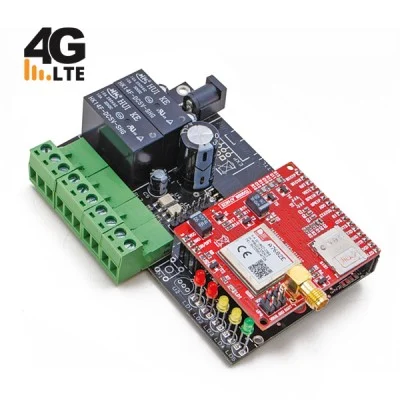
In the rapidly evolving landscape of Industrial Internet of Things (IIoT) and remote infrastructure management, the ability to maintain reliable, two-way communication with remote hardware is no longer a luxury—it is a functional necessity. The recent introduction of the TDG140_4G, a sophisticated remote control system powered by the SIMCom A7682E module, marks a significant step forward in how engineers and facility managers interact with off-site equipment. By leveraging the ubiquity of 4G LTE and legacy GSM networks, this device offers a robust solution for environments where traditional Wi-Fi or Ethernet connectivity is either impractical or entirely absent.
The Core Technology: Bridging GSM/4G Connectivity
At the heart of the TDG140_4G lies the SIMCom A7682E, a high-performance communication module designed for multi-band LTE Cat 1 connectivity. This module is the engine that drives the device’s capability to operate as a remote bridge. By integrating this specific hardware, the TDG140_4G ensures that users are not limited by the reach of local area networks.
The system operates as a two-way remote control interface, allowing for both the transmission of commands to remote relays and the receipt of diagnostic alerts from the field. Unlike standard consumer-grade IoT devices, the TDG140_4G is built with an industrial-grade focus on reliability, utilizing SMS-based command structures and optional local configuration via PC to ensure that critical operations remain secure and accessible even in the event of internet service provider (ISP) outages.
Chronology of Development: From Legacy GSM to LTE Maturity
The development of the TDG140_4G did not occur in a vacuum. To understand its importance, one must look at the progression of telecommunications in the industrial sector:
- The 2G/GSM Era (2000s–2015): Early remote control systems relied heavily on 2G networks. While sufficient for sending basic SMS alerts, these systems struggled with latency and limited data bandwidth. As carriers began to "sunset" 2G infrastructure, many industrial controllers became obsolete.
- The Transition Period (2016–2020): Manufacturers began experimenting with 3G and 4G integration. However, the cost of high-speed modules was often prohibitive for simple relay-control applications, leading to a market gap for cost-effective, high-reliability LTE controllers.
- The 4G/LTE Cat 1 Standard (2021–Present): The rise of LTE Cat 1 technology provided the perfect "Goldilocks" zone for industrial controllers—sufficient speed for modern requirements, low power consumption, and long-term network support. The TDG140_4G represents the maturation of this era, providing a future-proof solution that avoids the pitfalls of legacy network shutdowns.
Supporting Data: Technical Specifications and Operational Capabilities
The utility of the TDG140_4G is defined by its hardware versatility. Designed for integration into existing control panels, it provides a bridge between digital logic and physical actuators.
Relay Outputs and Operational Modes
The device features two high-capacity relay outputs. These are not merely binary switches; they are software-configurable to operate in two distinct modes:
- Monostable Operation: Ideal for momentary triggers, such as opening an electronic gate or sending a "pulse" signal to a secondary controller.
- Bistable Operation: Essential for latching circuits, such as turning on lighting systems, heating units, or pumps that require a sustained state until a manual or remote "off" command is received.
Opto-Isolated Alarm Inputs
Safety and monitoring are central to the device’s architecture. The inclusion of two opto-isolated alarm inputs allows the unit to monitor external sensors—such as motion detectors, water level sensors, or smoke alarms—without risking electrical interference or ground loops. Opto-isolation ensures that the internal circuitry of the TDG140_4G remains protected from high-voltage spikes or electrical noise often found in industrial environments.

Alert Management
The system is capable of managing up to 8 distinct telephone numbers. When an alarm input is triggered, the device executes a pre-programmed logic flow, alerting the relevant personnel via SMS. This multi-recipient capability ensures that critical alerts are never missed, even if one operator is unavailable.
Official Perspectives: The Philosophy Behind the Design
Open-Electronics, the platform behind the distribution of the TDG140_4G, has consistently advocated for modularity and user-controlled hardware. According to technical documentation provided by the manufacturer, the design philosophy focuses on "simplicity through SMS."
By utilizing SMS as the primary control protocol, the TDG140_4G eliminates the complexity of setting up static IPs, port forwarding, or VPN tunnels. While this may seem like a "low-tech" approach, it is, in fact, an intentional design choice for maximum uptime. SMS protocols are prioritized by cellular towers even during periods of heavy data congestion, ensuring that a "Stop" command for a runaway motor or an "Alarm" signal for a building breach will bypass the traffic jams that often plague IP-based IoT devices.
For power users, the optional FT782M interface allows for a direct PC connection. This facilitates granular configuration, firmware updates, and local debugging, bridging the gap between a plug-and-play user experience and an engineer’s need for deep system control.
Implications for Modern Industry
The deployment of the TDG140_4G has broad implications for several sectors, ranging from home automation to large-scale infrastructure management.
1. The Decentralization of Control
Traditional industrial control systems were centralized, requiring a physical presence or a complex SCADA (Supervisory Control and Data Acquisition) network. The TDG140_4G enables a decentralized model where control nodes can be distributed across vast geographic areas without the need for a unified network backbone. This is particularly transformative for irrigation systems in agriculture or remote telemetry for renewable energy installations.
2. Enhancing Disaster Resilience
In the event of a natural disaster or widespread utility failure, standard internet services are often the first to go offline. Because the TDG140_4G relies on the cellular network—which is typically fortified with battery backups and redundant power at the tower level—it provides a vital lifeline for monitoring critical infrastructure when other communication channels have failed.

3. Economic Efficiency
By utilizing a compact, modular unit rather than an expensive, customized PLC (Programmable Logic Controller) system, small-to-medium enterprises (SMEs) can implement remote control capabilities at a fraction of the cost. The reduction in downtime, combined with the low maintenance requirements of the SIMCom module, creates a high return on investment (ROI) for industrial retrofitting projects.
Security Considerations: Navigating the Cellular Landscape
While the simplicity of SMS control is an advantage, it also necessitates a disciplined approach to security. The TDG140_4G addresses this by requiring specific command syntax, effectively acting as a "password" for the device. Users are encouraged to maintain a strict whitelist of the 8 authorized numbers to prevent unauthorized access. As the device operates on a cellular frequency, it is immune to traditional Wi-Fi hacking techniques, providing a distinct security posture compared to cloud-connected IoT sensors.
Conclusion: A Versatile Tool for an Interconnected Future
The TDG140_4G is more than just a relay controller; it is a testament to the enduring relevance of cellular communication in the IoT era. By marrying the rugged reliability of SIMCom’s hardware with the flexibility of a dual-relay/dual-input architecture, it provides a comprehensive solution for those tasked with managing remote operations.
Whether it is used to manage industrial machinery, secure a remote storage facility, or monitor environmental conditions in a protected area, the TDG140_4G delivers a level of command and control that is both simple to execute and difficult to disrupt. As we move further into a future where "smart" infrastructure is expected, devices like the TDG140_4G ensure that we remain connected to the things that matter, no matter how far away they may be.
For those looking to integrate this technology into their existing operations, the combination of the TDG140_4G and the support resources at the Open-Electronics store provides a complete ecosystem for success. As cellular networks continue to evolve, the reliance on such versatile gateways will only increase, cementing the role of GSM/4G remote controls as the silent, reliable backbone of modern technical infrastructure.