Bridging the Gap: itch.io Integrates ‘Butler’ into Official App, Revolutionizing Game Distribution
In a move that signals a significant shift toward user-friendly game development workflows, itch.io has officially integrated its command-line distribution tool, butler, directly into the desktop application. For years, the butler utility has been the gold standard for power users and professional developers, facilitating efficient, patch-based updates for games hosted on the platform. By moving this powerful engine from the intimidating world of the terminal into an intuitive Graphical User Interface (GUI), itch.io is effectively lowering the barrier to entry for independent developers, while simultaneously streamlining the release pipeline for seasoned studios.
The Evolution of Game Distribution: A Chronology
To understand the gravity of this update, one must first look at how butler evolved within the itch.io ecosystem. Initially introduced as a robust command-line interface (CLI) tool, butler was designed to solve a perennial problem in software distribution: bandwidth consumption and update latency.
Unlike traditional web-based file uploads, which require developers to re-upload entire game directories—often spanning gigabytes—every time a minor bug fix is pushed, butler introduced the concept of incremental patching. When a developer pushes a build, the tool performs a cryptographic comparison between the local files and the previous version hosted on the server. Only the "delta" or the specific changes are transmitted.
For years, this process remained the exclusive domain of those comfortable with terminal commands. Developers had to navigate syntax, manage authentication tokens, and manually trigger pushes. While effective, the lack of a visual dashboard meant that errors were often difficult to debug, and the "black box" nature of the terminal left many developers feeling disconnected from the actual state of their remote builds.
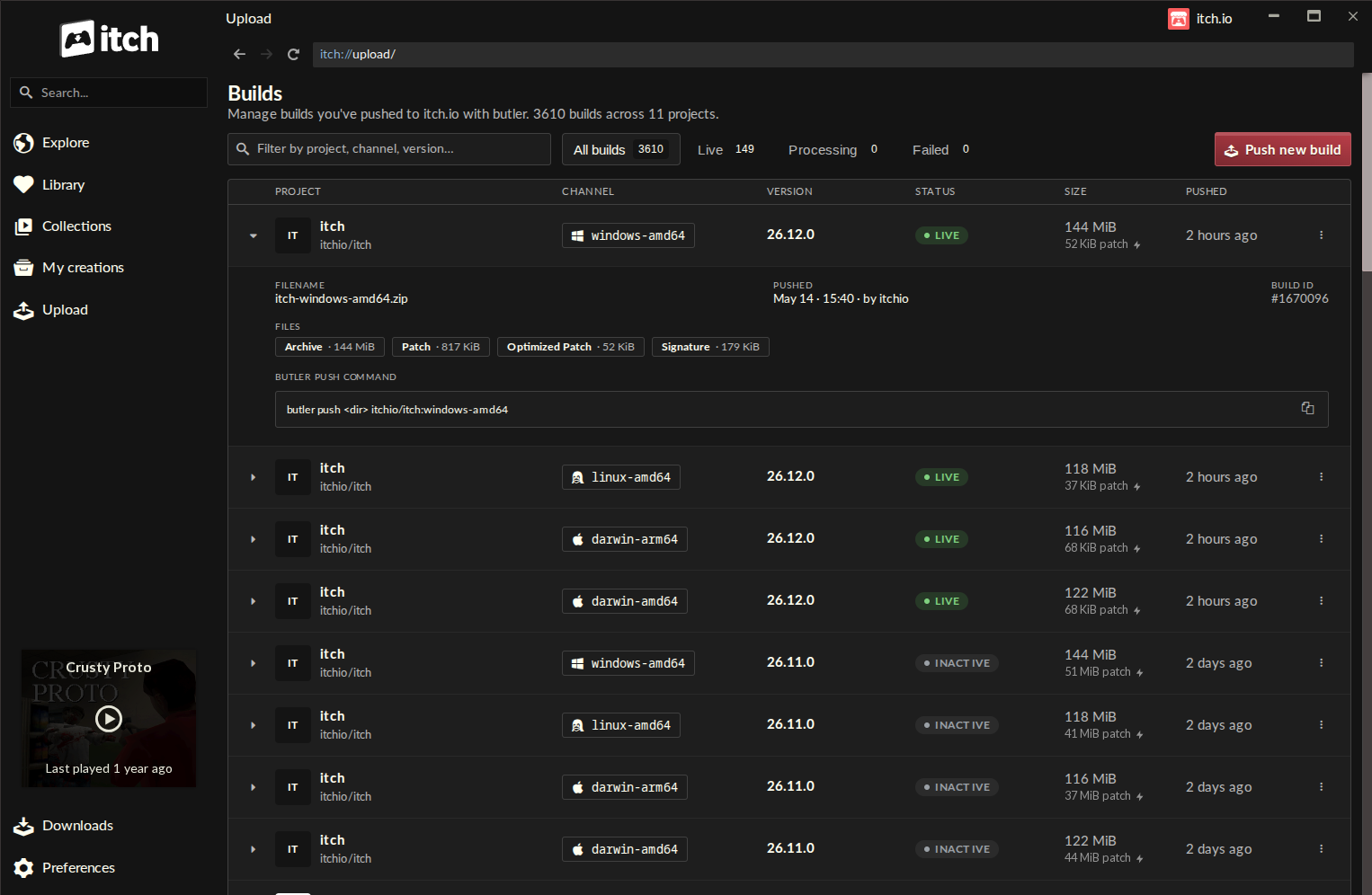
The release of version v26.12.0 of the itch.io app marks the end of this era. By centralizing the distribution process, itch.io has transitioned from a platform that requires technical "hoops" to a streamlined, all-in-one environment where managing a game’s lifecycle occurs within a single, unified interface.
Technical Foundations: How the GUI Enhances Efficiency
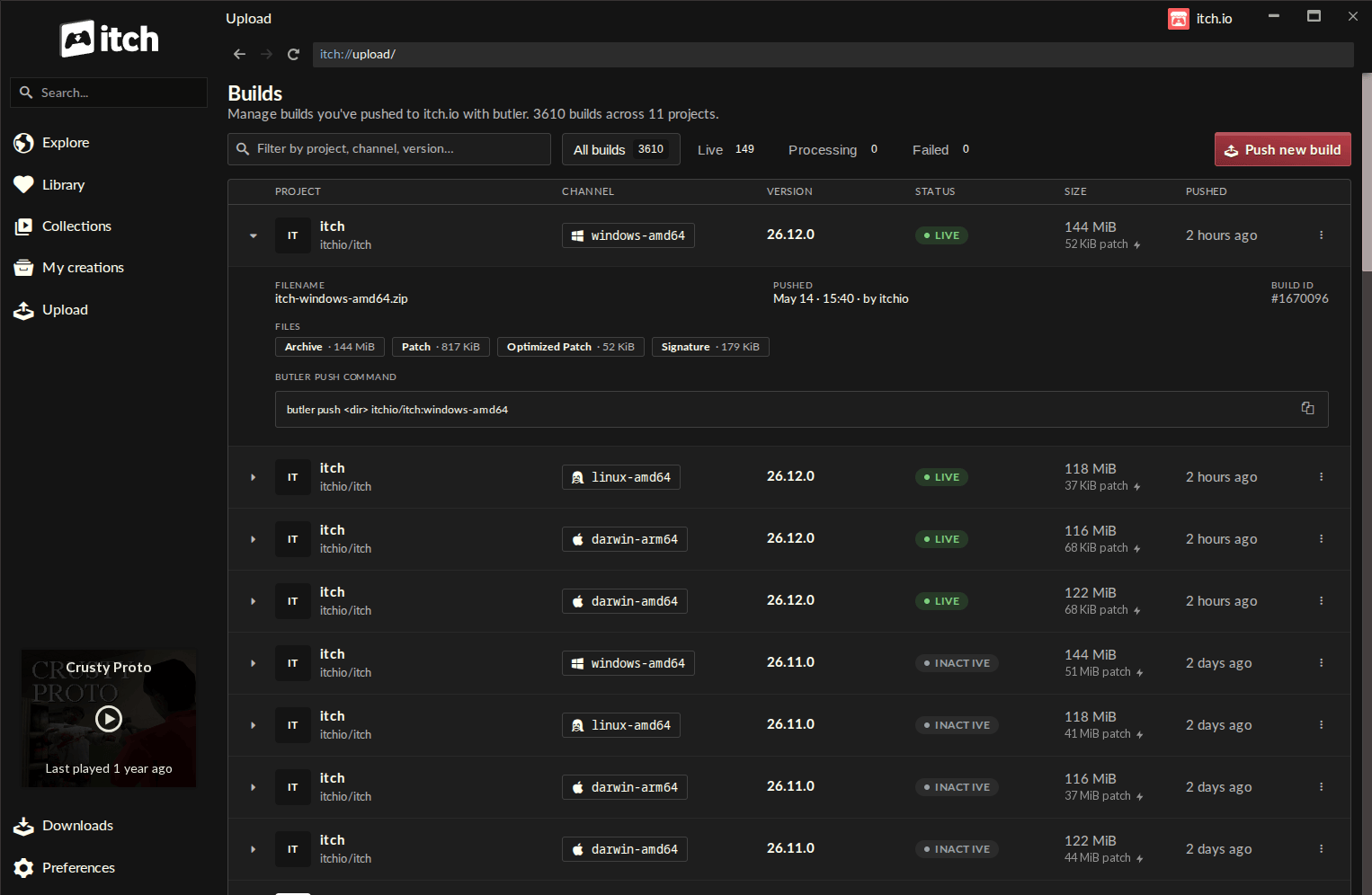
The new "Uploads" section in the itch.io app is not merely a wrapper for the CLI; it is a full-featured management suite. The integration provides several critical advantages that transform the development workflow.
1. Visual Verification and Change Detection
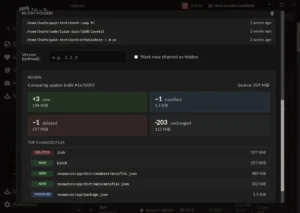
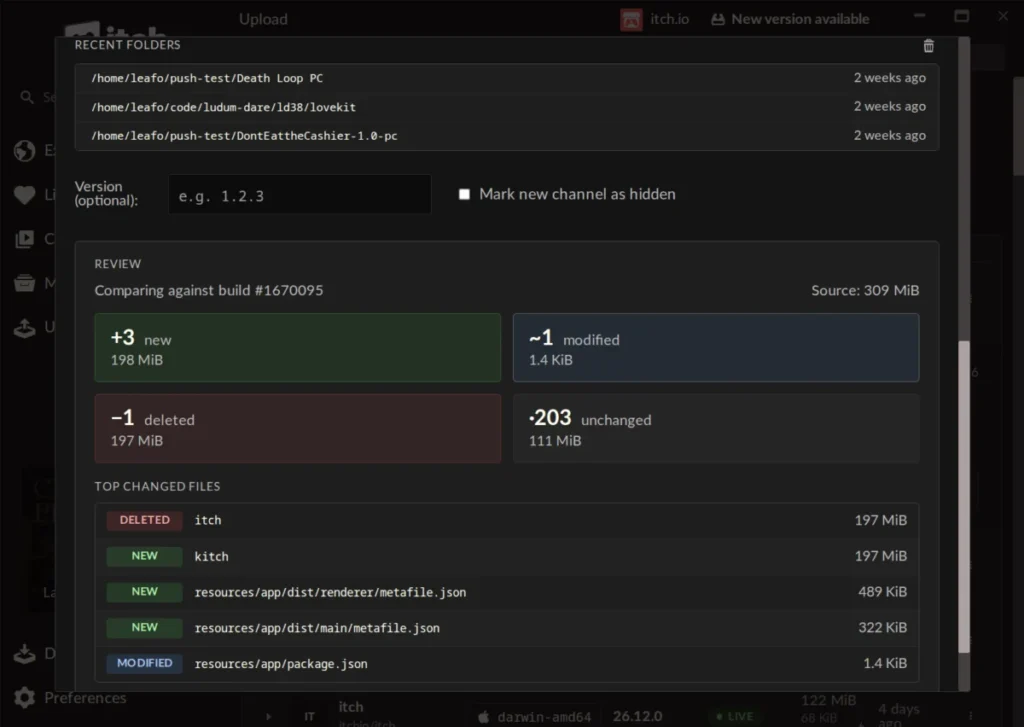
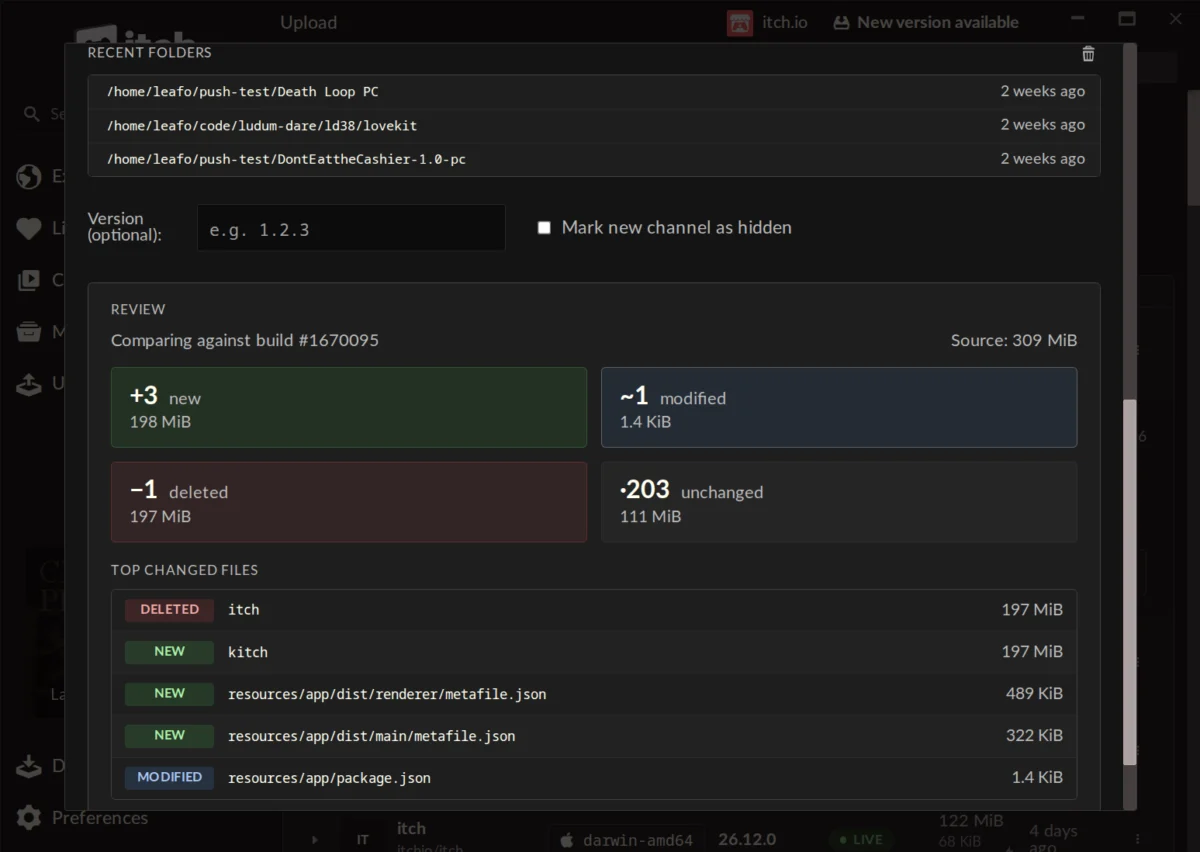
One of the most anxiety-inducing aspects of pushing a build is the uncertainty regarding what exactly is being overwritten. The new GUI includes a "Preview" feature that acts as a safety net. Before a single byte is uploaded, the app calculates the diff, providing the developer with a clear breakdown of:
- New files: Assets added to the build since the last push.
- Modified files: Existing assets that have been updated.
- Deleted files: Assets that will be removed from the remote version.
- Unchanged files: A summary of what remains untouched.
This transparency allows developers to catch mistakes—such as accidental inclusion of local config files or missing dependencies—before they reach the end user.
2. Automatic Maintenance and Updates
In the CLI era, developers were responsible for keeping their butler binary updated. Outdated versions frequently led to compatibility issues with the server-side infrastructure. With the integrated approach, the itch.io app handles butler versioning automatically. When the platform updates its distribution protocols, the app updates its internal engine accordingly, ensuring that developers are always using the most stable and optimized version of the software.
3. Multi-Account Management
For studios or developers managing multiple profiles, the previous CLI workflow required complex switching of authentication tokens or environment variables. The new app integrates seamlessly with the existing user profile system, allowing developers to switch between different itch.io accounts with a single click. This makes it significantly easier to manage collaborative projects or separate development branches without logging in and out of the system.
Data-Driven Distribution: Why Patching Matters
The core philosophy behind butler is data efficiency. For an indie game developer, bandwidth costs are not just financial—they are a user experience concern. When a player downloads a 10GB game, and the developer pushes a 50MB patch to fix a single line of code, forcing the user to download the entire 10GB again is poor practice.
Butler ensures that the user only downloads the optimized patch. Furthermore, once the patch reaches itch.io’s servers, the platform performs a secondary optimization, re-compressing the data to ensure the smallest possible footprint. This "double-optimization" process is what allows indie games on itch.io to feel as responsive and "live" as AAA titles with massive infrastructure budgets.
Official Responses and Community Feedback
The reception within the itch.io community has been largely positive, reflecting a clear demand for more accessible development tools.
"Honestly, this is a lot faster than manually updating the webpage," noted one developer in the community forums. "The self-enforcing nature of the Compare step means I almost literally can’t mess it up, even as a noob to the app."
However, the rollout has also opened a dialogue regarding the limitations of the current system. Some developers have inquired about the possibility of migrating older, manually uploaded projects to the butler ecosystem.
In a direct response to community queries, itch.io founder leafo clarified the technical constraints: "Unfortunately, it’s not possible right now, as a butler push needs additional metadata alongside the file that’s computed when you’re uploading. This could be something we add in the future but there are no immediate plans at the moment."
This transparency highlights the complexity of the backend infrastructure; because butler relies on a historical, file-by-file ledger of the project, it cannot simply "adopt" a project that was previously managed via static file uploads.
Broader Implications for the Indie Industry
The integration of butler into the itch.io desktop app is a microcosm of a larger trend in game development: the democratization of high-end distribution tools.
Reducing Technical Debt
For solo developers or small teams, the "technical debt" of managing complex CI/CD (Continuous Integration/Continuous Deployment) pipelines is often a deterrent. By providing a professional-grade distribution tool within the desktop app, itch.io is effectively providing a "CI/CD-lite" solution that requires zero configuration. This allows developers to focus on the creative aspects of their project rather than the logistical nightmare of server-side file management.
Platform Stickiness
From a business perspective, this update increases the "stickiness" of the itch.io platform. By providing a superior toolset that saves time and money (via bandwidth optimization), itch.io ensures that developers have a strong incentive to remain within their ecosystem. When the development experience is frictionless, the platform becomes an indispensable part of the creator’s workflow.
Accessibility and Inclusion
Finally, the transition from CLI to GUI is a win for accessibility. The terminal is a powerful tool, but it is also a gatekeeper. By removing the need to memorize flags, paths, and commands, itch.io is opening its doors to a broader demographic of creators, including those who may be proficient in game engines like Unity or Godot but are less experienced with low-level command-line interactions.
Conclusion: Looking Ahead
The move to bring butler into the itch.io app is more than a quality-of-life update; it is a strategic maturation of the platform. By providing robust, visual, and automated tools, itch.io is positioning itself not just as a storefront, but as a comprehensive partner in the game development cycle.
While the current version is a significant leap forward, the ongoing discussions in the community—ranging from requests for "tag exclusion" in searches to feature parity for legacy uploads—suggest that the itch.io team has a clear roadmap ahead. As the platform continues to iterate, the gap between "indie" workflows and "professional" deployment standards continues to shrink. For developers looking to streamline their pipeline, the message from the itch.io team is clear: you no longer need to be a systems administrator to manage your game’s distribution like a pro. With the latest update, the tools are ready, the interface is polished, and the barrier to entry has never been lower.